How to Remove Weeds by Hand in 2026 (Pro Tips & Tricks)
You’re standing in your garden, staring at a patch of weeds, and you figure it’s time to get them out. How to remove weeds by hand seems simple enough, but if you’ve ever pulled one only to see it pop back up a week later, you know there’s more to it than just yanking. The difference between a job that lasts and one you have to repeat comes down to technique, timing, and the right tool for the root type you’re fighting.
Research from university extension services shows that the most common reason weeds regrow after hand pulling is leaving root fragments behind. For taproot weeds like dandelions, even a half-inch of root left in the soil can regenerate a full plant within weeks. That’s why this article walks you through a simple decision tree so you can match your approach to the specific weed, soil, and situation you’re dealing with as of 2026.
Quick Answer
Remove weeds by hand when soil is damp, not soaking wet. Identify the root type first. Pull taproots straight up using a dandelion digger.
For fibrous roots, loosen soil with a hand fork first. Remove the entire root system. Fill the hole with soil.
Why Hand Weeding Fails (and How to Fix It)
Most people think hand weeding is as straightforward as grabbing the stem and pulling. That works for shallow-rooted annual weeds, but for perennials with deep or spreading roots, it’s a recipe for regrowth. The real problem is that we focus on the part we can see and ignore what’s happening underground.
When a taproot breaks off, the weed doesn’t die. It goes into survival mode and sends up new shoots from the root crown. Same goes for rhizome-spreading weeds like bindweed.
If you leave a piece of rhizome in the soil, it grows a new plant. That’s why your weed patch looks worse a month later, not better.
The fix is simple: match your technique to the root structure. That means knowing what you’re dealing with before you touch a single weed. It also means using the right tool for the job.
A standard trowel works fine for loose soil and shallow roots, but it’s terrible for deep taproots. You need the right approach for each situation, and that’s exactly what this decision tree helps you figure out.
The Three Variables That Decide Your Technique
Before you start pulling, ask yourself three questions. These three variables determine whether you’ll succeed or end up frustrated with half-removed weeds.
First, what type of root system does the weed have? Taproots, fibrous roots, and rhizomes all behave differently. A dandelion’s taproot grows straight down and stores energy. Crabgrass has a shallow, branching fibrous root system.
Bindweed spreads horizontally through underground stems. Each requires a different removal strategy.
Second, how moist is the soil? Damp soil is your best friend for hand weeding. It loosens the grip around roots and makes them slide out more easily. Dry soil is hard and compacted, making roots brittle and likely to snap.
Wet soil is muddy and slippery, which means you lose your grip on the weed and the soil clumps up around the roots.
Third, what size is the weed? Seedlings and young weeds are the easiest to remove because their roots haven’t fully established. Mature weeds have deep, tough roots that need more force and the right tool. If you catch a weed when it’s still small, you can often pull it by hand with no tool at all.
Let it grow for a few weeks, and you’ll need a digger.
These three variables work together. A mature dandelion in dry soil is a tough job. A young crabgrass in damp soil is almost effortless.
The decision tree below helps you match your approach to whatever combination you’re facing.
Decision Branch 1: Taproot vs Fibrous Roots
If the weed has a single thick root going straight down, you’re dealing with a taproot. Common examples include dandelion, thistle, burdock, and plantain. These roots can reach 6 to 12 inches deep or more. The goal is to remove the entire taproot in one piece.
If it breaks, the top half left in the soil will regrow.
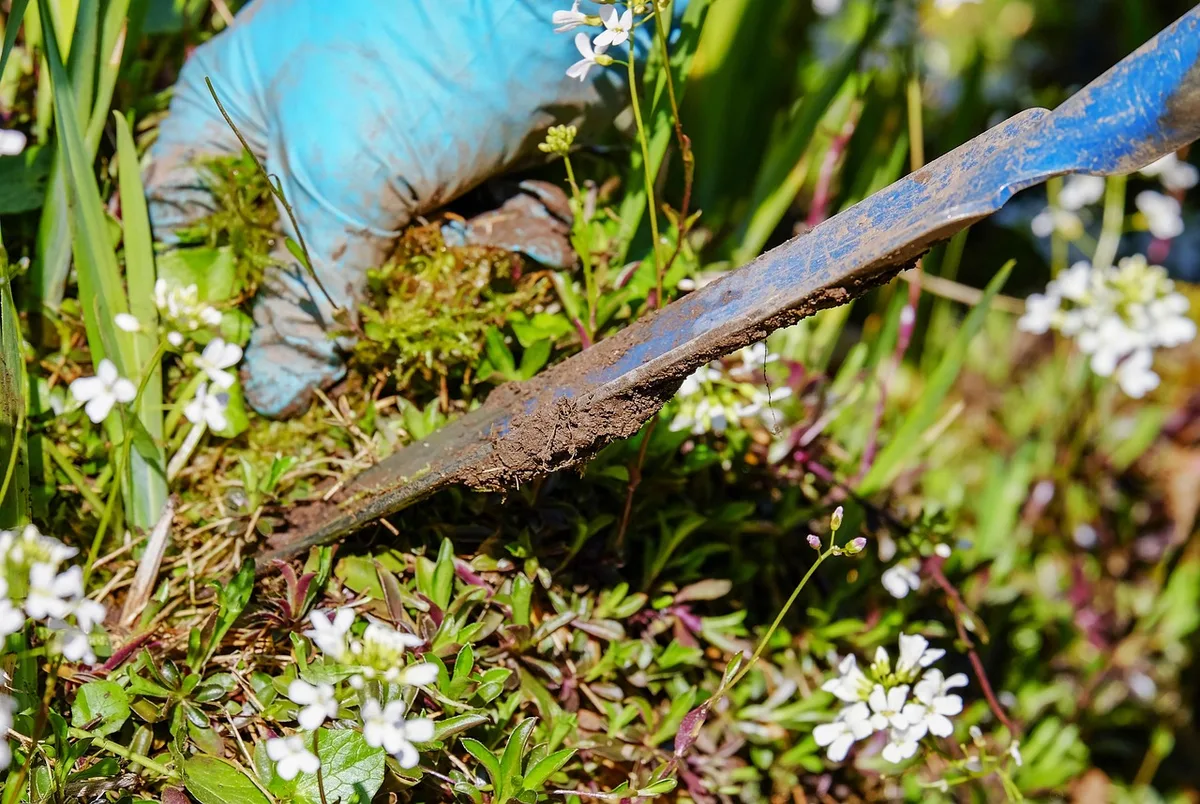
For taproots, use a dandelion digger or a hori hori knife. Insert the tool at a slight angle, about an inch from the base of the weed. Push it straight down alongside the root, then lever the tool upward to lift the root out.
Pull the weed straight up with steady pressure. Don’t twist or yank sideways; that snaps the root near the crown.
If the weed has a bushy, branching root mass, you’re dealing with fibrous roots. Common examples include crabgrass, chickweed, clover, and annual bluegrass. These roots spread out in a shallow network. They’re easier to remove because they don’t go deep, but you need to get the whole mass out to prevent regrowth.
For fibrous roots, use a hand fork or a trowel. Insert the tool a couple of inches from the base and gently loosen the soil around the root mass. Then grip the weed at the base and pull straight up.
The whole root ball should come out together. If the soil is loose enough, you can sometimes pull the entire weed by hand without any tool.
Decision Branch 2: Soil Moisture Level
If the soil is damp but not muddy, you’re in the sweet spot. Damp soil has enough moisture to soften the grip around roots, but it still holds together when you pull. This is the ideal condition for hand weeding. The roots slide out with less effort and less chance of breaking.
If the soil is dry and hard, you have two options. First, water the area thoroughly the day before you plan to weed. Let the water soak in overnight. The soil will be damp enough to work with the next morning.
Second, use a tool to loosen the soil around the weed before you pull. A hand fork or a weeding knife works well for this. Insert it a few inches away from the stem and work it in a circle to break up the compacted soil.
If the soil is wet and muddy, wait. Pulling weeds in saturated soil creates two problems. First, the soil clumps up around the roots, making it hard to see what you’re doing. Second, you risk compacting the soil further by stepping on it when it’s wet.
Wet soil is also more likely to cause roots to break off at the surface because the top part of the root slides out easily while the deeper part stays stuck.
The best time to weed is after a rain, once the soil has had a day to drain. The morning after a light rain is ideal. If you’re weeding in dry weather, water the area first and come back the next day.
Decision Branch 3: Weed Size and Growth Stage
If the weed is a seedling with just two or three true leaves, you can pull it by hand with no tool. The root system is shallow and not yet established. Grip the stem at the base and pull gently upward. The entire plant, including the root, should come out easily.
This is the easiest time to remove weeds, and it’s why regular garden maintenance is so effective.
If the weed is a mature plant with a thick stem and visible root mass, you need a tool. For taproots, use a dandelion digger or a hori hori knife. For fibrous roots, use a hand fork. The key is to get as much of the root system out as possible.
If you’re unsure whether the root is fully removed, insert your tool and feel for any resistance where the root might still be anchored.
If the weed has gone to seed, handle it carefully. Do not pull it roughly, because that can scatter seeds everywhere. Instead, place a plastic bag over the seed head before you pull. Then cut the seed head off into the bag and dispose of it in the trash, not your compost pile.
After that, remove the root as you normally would. This prevents the weed from spreading its seeds around your garden.
A good rule of thumb: if you have to tug hard and the weed feels like it’s anchored, stop. Loosen the soil more or use a different angle. Forcing it usually snaps the root and makes the problem worse.
Choosing the Right Tool for Your Situation
The tool you pick changes how easy or hard the job is. A dandelion digger works perfectly for taproots but is awkward for shallow fibrous roots. A hand fork is great for loosening soil around crabgrass but terrible for deep dandelions.
Here’s a quick comparison based on our research into what works best for each situation.
| Tool | Best For | Target Root Type | Key Feature |
|---|---|---|---|
| Dandelion digger | Deep taproots | Taproot | Notched V-shaped blade for leverage |
| Hori hori knife | Tough weeds, thick roots | Taproot, rhizome | Serrated edge for cutting through soil |
| Hand fork | Shallow weed clusters | Fibrous | Multiple times for loosening soil |
| Trowel | General purpose, loose soil | Any shallow root | Wide blade, good for digging around roots |
| Stand-up weeder | Lawn weeds, bending issues | Taproot | Long handle, foot pedal for leverage |
If you’re dealing with deep taproots in firm soil, a dandelion digger or hori hori knife is your best bet. The dandelion digger has a V-shaped notch at the tip that grips the root near the crown. You push it alongside the root, then lever the handle downward to pop the root upward. Aggregate user reviews consistently rank this tool as the most effective for dandelions and thistle.
If you’re working with fibrous roots in garden beds, a hand fork gives you more control. You insert it a few inches from the weed and gently rock it back and forth. This loosens the root’s grip on the soil without damaging nearby desirable plants. For dense clusters of chickweed or crabgrass, a hand fork saves time because you can loosen a whole patch at once.
If you have back or knee issues, a stand-up weeder is worth considering. These tools have a long handle and a foot pedal. You position the claw over the weed, step on the pedal to push the prongs into the soil, and then lean the handle back to lift the root. They’re not as precise as a hand tool, but they reduce bending significantly.
The most important rule is to match the tool to the root. Using a trowel on a dandelion almost guarantees a broken root. Using a dandelion digger on a patch of clover is overkill and slower than a hand fork.
A quick clean with a stiff brush and a light oiling after each use keeps the metal from rusting and the handle comfortable. You can apply that same principle to most basic tool maintenance.
Step-by-Step: Removing Taproot Weeds (Dandelions, Thistle)
Step 1: Check the soil moisture. Damp soil makes this job ten times easier. If the soil is dry, water the area the day before. If it’s muddy, wait a day or two until it drains.
Step 2: Identify the root crown. This is the thick part where the stem meets the root. It’s usually just below the soil surface. You want to insert your tool as close to the crown as possible, not into the center of the weed’s leaf rosette.
Step 3: Insert the dandelion digger or hori hori knife at a slight angle. Position it about an inch from the base of the weed. Push it straight down alongside the root, not into the root itself. You should feel the blade slide past the root and hit resistance at the bottom.
Step 4: Lever the tool upward. Use the edge of the hole as a fulcrum. Push the handle down while the blade lifts upward. You should see the soil crack and the root begin to rise.
If it doesn’t move, push the tool deeper and try again.
Step 5: Grip the weed low and pull straight up. Get your fingers as close to the soil surface as possible. Pull with steady, even pressure upward. Do not twist or yank sideways.
The root should slide out in one piece.
Step 6: Check the root. Look at the tip. If it’s a clean, tapered end, you got it all. If it looks broken or jagged, insert your tool again and try to get the remaining piece.
A broken taproot shorter than an inch can still regrow.
Step 7: Fill the hole. Use your tool to push soil back into the hole. Tamp it down lightly with your foot or hand. This prevents air pockets and helps the surrounding soil settle.
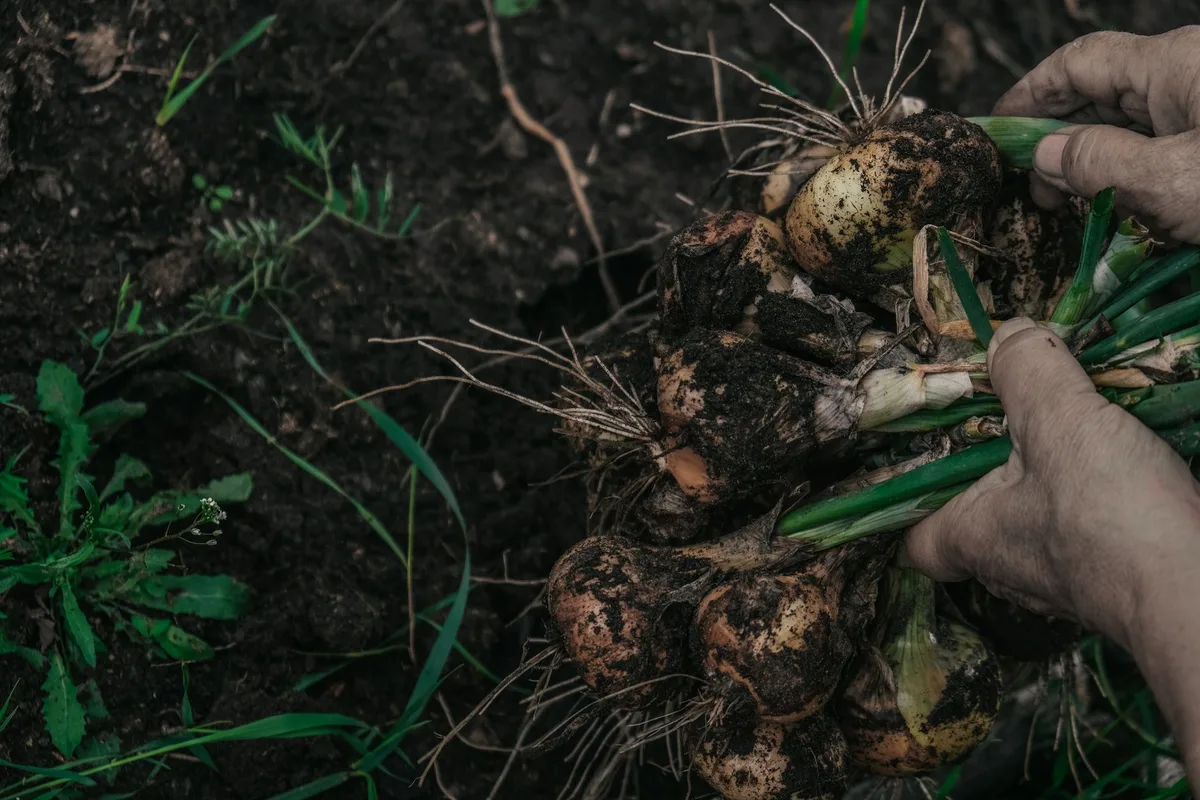
If you’re trying to keep your flower beds clean and weed-free, this technique is especially useful around established plants. A dandelion growing next to a perennial can be removed without disturbing the perennial’s roots if you slide the tool in parallel to the dandelion’s taproot. The same approach works for thistle, burdock, and plantain.
Step-by-Step: Removing Fibrous Root Weeds (Crabgrass, Clover)
Step 1: Loosen the soil around the weed. Use a hand fork or a trowel. Insert it two to three inches from the base of the weed. Gently rock the tool back and forth to break up the soil around the root mass.
Work your way around the weed in a circle.
Step 2: Grip the weed at the base. Get your fingers as low as possible, right where the stems meet the soil. For clover or chickweed, grab a handful of the stems together. For crabgrass, grip the main clump.
Step 3: Pull straight up with steady pressure. The entire root ball should lift out in one piece. If the weed doesn’t move, loosen the soil more. Do not yank hard.
Yanking usually leaves half the root system behind.
Step 4: Check for root fragments. Look at the soil where the weed was. If you see small white or brown root pieces still in the hole, remove them. Fibrous roots spread out in a mat.
Even a few left behind can regrow into new plants.
Step 5: Fill the hole and tamp it down. This step is the same as for taproots. Push the soil back into place and press it down lightly. A firm surface discourages new weed seeds from germinating.
Crabgrass is a common lawn weed. Keeping your lawn healthy with proper care, including the best fungicide for lawns when needed, helps prevent it from taking over. But when you spot it, removing the entire clump by hand is the most effective way to stop it from spreading.
For clover in garden beds, the same technique works. Clover has a shallow fibrous root system that usually comes out easily after loosening the soil. If the soil is damp, you can often pull it by hand with no tool at all.
Common Mistakes That Cause Regrowth
Not removing the entire root crown. The crown is the junction where stems meet roots. If you snap the stems off at soil level and leave the crown, the weed will regrow from that crown. This is the most common mistake people make when hand weeding.
Weeding after rain in clay soil. Clay soil becomes sticky when wet. Roots break off easily because the clay holds the root while the stem slides through your fingers. Wait for clay soil to dry to a damp but crumbly state before weeding.
Pulling when the soil is too dry. Dry soil is hard and compacted. Roots snap under tension because they’re brittle. Water the area the day before, or wait for rain.
Dry soil also makes it harder to insert your tool properly.
Using the wrong tool. A trowel on a taproot almost always leaves a broken root. A dandelion digger on fibrous roots is awkward and slow. Match the tool to the root type and save yourself the frustration.
Not filling the hole. Leaving an open hole in the soil creates a perfect spot for new weed seeds to settle and germinate. Fill every hole you make, even if it’s just a small one. Tamping the soil down prevents air pockets that can stress nearby plant roots.
Forgetting to clean your tools. Soil and plant matter on your tools can carry weed seeds and fungal spores from one spot to another. A quick rinse and dry after each use is enough to prevent cross-contamination.
Expert Tips for Easier Weeding
Weed after a light rain, not a heavy one. The morning after a gentle rain is the ideal time. The soil is soft enough for easy pulling but not so wet that it sticks to everything. If you don’t get rain, water the area the day before and weed the next morning.
Use a kneeling pad or a garden stool. Hand weeding is hard on your knees and lower back. A simple foam kneeling pad costs very little and makes a huge difference. A garden stool with wheels lets you sit and roll along the bed without getting up.
Weed in short sessions. Fifteen minutes a day keeps weeds from getting established. A weekly session prevents seedlings from becoming mature weeds with deep roots. Regular maintenance is much less work than a once-a-month deep weeding session.
Don’t compost weed seed heads. Most home compost piles don’t get hot enough to kill weed seeds. That means you’re just spreading weeds back into your garden when you use the compost. Throw seed heads in the trash instead.
Use the right grip. For taproots, grip as low as possible. For fibrous roots, grip the entire clump at the base. For rhizomes, grab the main stem and follow the horizontal root with your fingers before pulling.
Know when to give up on a weed. If a weed has a taproot that goes deeper than your tool can reach, accept that you might not get the whole thing. In that case, remove as much as you can and plan to pull the regrowth when it appears. A weed partially removed is still better than one left alone.
FAQ: Quick Answers for Tough Situations
How do I remove weeds with very deep taproots?
Use a dandelion digger or hori hori knife. Insert it alongside the root as deep as it will go. Lever the tool upward to lift the root.
If the root breaks, remove the top piece and plan to pull the regrowth when it appears.
What should I do with weeds that have gone to seed?
Place a plastic bag over the seed head before you pull. Cut the head off into the bag. Dispose of it in the trash.
Never compost seed heads because home compost piles rarely get hot enough to kill the seeds.
Can I hand weed in hot, dry weather?
It’s much harder. Water the area the day before you plan to weed. Let the water soak in overnight.
The damp soil makes roots slide out more easily and reduces the chance of breakage. If watering isn’t possible, use a tool to break up compacted soil before pulling.
How do I know if I got the whole root?
For taproots, look for a clean, tapered tip. If the root looks broken or jagged, some is still in the ground. For fibrous roots, check the hole for any remaining root fragments.
If you see white or brown pieces, remove them.
Is hand weeding better than using herbicides?
Hand weeding avoids chemicals entirely. It’s safer for pets, children, and beneficial insects. It also improves soil aeration as you work.
The tradeoff is that it takes more time and effort than spraying. For small gardens or targeted removal, it’s the better long-term choice.
Your Decision Guide: Which Method to Use Right Now
Stand in front of your weed. If it has a thick central root heading straight down, use a dandelion digger or hori hori knife. If it has a bushy root mass spreading out, use a hand fork.
If the soil is dry, water now and pull tomorrow. If the weed has seed heads, bag them before pulling. That sequence handles ninety percent of the weeds you’ll face.