When Should You Yard Drainage 2026: Beginner-Friendly Guide
You know when should you yard drainage? The moment water starts pooling near your foundation, or when you're still squelching through soggy grass three days after a storm. The answer isn't just about the calendar or the weather.
It's about reading the signals your property is sending and understanding which problems demand immediate action versus which ones you can plan around the seasons.
Most drainage contractors recommend waiting until you've observed at least one full rain cycle so you can map exactly where water collects and how fast it drains. According to the U.S. EPA, proper stormwater management starts with identifying problem areas during wet conditions, not guessing during a drought.
Let's walk through the decision framework that tells you whether to call someone today or start planning for next spring.
Quick Answer
Install yard drainage immediately if water pools within six feet of your foundation or you see basement seepage after rain. For lawn issues like standing water lasting 48 hours or more, plan installation during dry weather. Spring and fall offer the best conditions in most climates.
Winter work is possible in mild regions but frozen ground makes it impractical up north. Summer installation works if the ground isn't rock-hard and contractors are available.
What "Yard Drainage Timing" Really Means (And Why It Matters)
Timing yard drainage isn't just about picking a date on the calendar. It's about balancing three things: the urgency of your problem, the weather conditions needed for installation, and the availability of contractors or your own schedule if you're doing it yourself.
The stakes change depending on what's at risk. Water pooling six inches from your foundation creates hydrostatic pressure that can crack concrete and flood basements. That's a same-week fix.
A soggy patch in the middle of your lawn that kills grass? That's annoying, but you can wait for ideal installation conditions.
Installation itself requires dry ground. You can't dig drainage trenches in mud or frozen soil. Most systems need at least three to five consecutive dry days so contractors can excavate, set slope properly, and backfill without the trench collapsing.
Trying to rush a French drain during a wet spell just means you'll be digging twice.
Seasonal timing also affects cost and scheduling. Contractors are slammed in spring when everyone discovers winter damage. Fall is often easier to book and the ground is still workable.
Summer works in many regions, though clay soil can turn rock-hard in drought. Winter is off the table anywhere the ground freezes below six inches.
The other variable is observation time. You need to watch your yard through at least one heavy rain to see where water actually goes. That means if you just bought the house or just noticed a problem, you're waiting for the next storm before you can design a solution that works.
The Immediate Action Signals: When You Can't Wait
Some drainage problems escalate fast. If you see any of these, you're in the "call today" category, not the "plan for next season" group.
Water pooling within six feet of your foundation is the biggest red flag. Even a shallow pool creates hydrostatic pressure against your basement or crawlspace walls. As of 2026, foundation repair costs average $4,500 to $12,000 depending on severity.
A $3,000 drainage fix now beats a $10,000 structural repair later.
Basement seepage or dampness after rain means water is already winning. You might see wet spots on the floor, moisture on walls, or a musty smell. This isn't a "wait and see" situation.
The longer water sits against your foundation, the more it penetrates and the worse the damage gets.
Active erosion or washouts that expose tree roots, undermine walkways, or carve gullies through your yard also demand fast action. Erosion accelerates with every storm. What starts as a shallow channel can turn into a two-foot trench in one heavy rain event.
Standing water deeper than six inches anywhere on your property is another urgent signal, especially if it sits for more than 48 hours. Deep pooling near septic systems, wells, or utility lines creates contamination risk and can damage infrastructure.
Here's the decision rule: if the problem threatens your foundation, basement, or structural elements, act within days, not weeks. If it's actively eroding soil or creating safety hazards, same thing. Weather and scheduling still matter, but you work around them rather than waiting for perfect conditions.
Emergency drainage work often means temporary fixes first. Contractors might extend downspouts, dig shallow swales, or pump standing water while they wait for dry conditions to install a permanent system. That's fine.
The goal is to stop the damage while you plan the real solution.
The "Plan It for Next Season" Indicators
Not every drainage problem requires a 911 response. Some give you time to plan, budget, and schedule installation during ideal conditions. Here's what falls into the "fix it properly, but not today" category.
Soggy grass or a waterlogged lawn that isn't near your foundation can wait for the right season. If you're dealing with mushy turf in the spring that takes a week to dry, or a low spot that stays wet after rain, you're looking at a comfort and aesthetics issue, not structural damage. Plan the fix for late summer or early fall when the ground dries out.
Slow-draining flower beds or garden areas are another low-urgency problem. Plants don't love wet feet, and you might see root rot or yellowing foliage, but this won't escalate into a foundation crisis. You can schedule drainage work around your planting calendar and contractor availability.
Seasonal pooling that drains within 24 hours suggests your soil is just slow, not completely overwhelmed. Clay soil regions see this a lot. Water sits on the surface for a day or two, then percolates down.
It's annoying, but it's not an emergency. If you want to improve it, plan for dry-season installation.
Cosmetic issues like water stains on patios or water tracking into the garage also fall into this bucket. Yes, it's frustrating to mop the garage floor after every rain, but it's not threatening your home's structure. You can budget and plan without rushing.
The decision framework here is simple. If the problem stays stable, doesn't get worse with each rain, and isn't near critical infrastructure, you have time to do it right. Wait for dry weather, get three contractor quotes, and schedule the work when conditions are ideal.
This is also when you have the luxury of choosing between solutions. Do you regrade and add surface drains, or go with a full French drain system? Do you build a dry well or run drainage to the street?
You can research, compare costs, and make a thoughtful choice instead of taking the first available option.
Why Spring and Fall Are the Sweet Spot for Installation
Most drainage contractors will tell you their favorite seasons are late spring and early fall. There's a reason. These windows offer the best combination of dry ground, moderate temperatures, and predictable weather.
Spring installation works after the ground thaws and dries. You need at least two weeks of no hard freezes and enough sun to evaporate standing water. Late April through early June is ideal in northern climates. The ground is workable, contractors are available (before the summer rush), and you'll have the system in place before summer storms hit.
The downside? Spring is also when everyone else discovers their drainage problems. Contractors book up fast.
If you wait until mid-May to call, you might not get scheduled until July. The early bird wins here.
Fall is often the better choice. September through early November gives you dry ground, cooler temperatures that make digging easier, and less competition for contractor time. You'll also have the system ready before winter freeze-thaw cycles and spring runoff.
Fall installation has another advantage. You can observe your yard through the wet spring, map the problem areas all summer, and then fix everything in one shot when conditions are perfect. You're not guessing where water will go because you've already watched it happen.
Weather stability matters more than the calendar. A dry October beats a soggy May every time. The key is at least three to five consecutive dry days for installation, plus another few days for backfill to settle before rain hits again.
Here's a practical timeline for planning. If you want spring installation, call contractors in February or March. For fall work, reach out in July or August.
That gives you time to get quotes, schedule the work, and lock in a date before the season fills up.
One more thing. Some regions have rainy springs and dry falls. Others have dry springs and wet falls.
Check your local climate patterns. If you're in the Pacific Northwest, summer and early fall are your only real dry windows. If you're in the Southeast, late fall through winter might be drier than spring.
Adapt the timing to your local weather, not a generic national calendar.
When Winter or Summer Installation Makes Sense (And When It Doesn't)
Spring and fall aren't the only options. Summer and winter can work, depending on your climate and urgency. But both come with trade-offs.
Summer installation is fine if the ground isn't rock-hard. In regions with regular rain or irrigation, soil stays workable. The challenge is heat.
Digging drainage trenches in 95°F weather is brutal work, and contractors charge more or schedule shorter days to avoid heat stress. If you're in a drought-prone area with clay soil, the ground can turn into concrete by August. Trenching becomes almost impossible without heavy equipment.
Summer does have one advantage. Contractors often have more openings between spring and fall rushes. If you're flexible on timing and the ground is workable, you might get scheduled faster and even negotiate a slightly lower rate.
Winter installation is regional. If you're in the South or Southwest where freezing is rare and the ground stays above 40°F, winter drainage work is perfectly viable. Contractors stay busy year-round. If you're in the Midwest or Northeast, forget it.
Frozen ground is harder than concrete and impossible to excavate without specialized equipment that most residential contractors don't own.
Even in mild climates, winter installation depends on rain. You still need dry conditions. A wet winter with constant drizzle makes trenching a muddy mess and delays projects by weeks.
You'll also deal with shorter daylight hours, which limits how much work a crew can complete in a day.
Here's the decision matrix. Summer works if you're in an emergency (foundation risk), the ground is diggable, and you accept that it might cost more or take longer due to heat. Winter works only in mild climates with a dry forecast and when waiting until spring would let damage escalate.
For non-urgent problems, skip both extremes. There's no reason to fight frozen ground or scorching heat if your lawn is just soggy and you have time to wait for better conditions.
How Long Should Water Sit Before You Act?
The 24-hour rule is your baseline. If water is still standing a full day after rain stops, you've got a drainage problem that won't fix itself. Healthy soil with decent drainage clears surface water within 12 to 18 hours under normal conditions.
Pools deeper than two inches lasting 48 hours or more mean your soil is either compacted clay, you're in a natural low spot, or you have a high water table. All three require active drainage solutions. No amount of waiting will change the physics.
Water near your foundation gets a tighter timeline. If you see pooling within ten feet of your house that lasts more than six hours, start planning drainage work. You don't need to wait days to confirm the obvious. The risk to your foundation grows with every hour water sits.
Seasonal patterns matter too. A soggy yard in March after snowmelt might just be typical spring conditions. But if that same spot is still wet in June, or if it floods every single rain event, you're past the "wait and see" phase.
Here's a simple test. Mark the water level with a stick or spray paint after a storm. Check it every 12 hours.
If the level hasn't dropped noticeably after 24 hours, you need drainage. If it's gone in 12, your soil is handling it fine.
One exception: if you just had a record-breaking rainfall (three inches in an hour, for example), give your yard a pass. Even well-drained soil can be temporarily overwhelmed. Wait for a normal rain event before you decide the system is broken.
The Decision Tree: Matching Your Problem to the Right Timeline
Different drainage problems need different solutions on different schedules. Here's how to match what you're seeing to the right action and timeline.

Foundation and Basement Issues: Act Now
If water pools within six feet of your foundation, you're in the immediate-action category. Call a contractor within days, not weeks. Even if the ground is still wet, get the site visit scheduled so they can assess the problem and plan the fix as soon as conditions allow.
The typical solution is a French drain around the perimeter or extending downspouts away from the house. Installation takes three to five days once work starts. Cost runs $20 to $30 per linear foot for professional work, so a 100-foot perimeter drain is $2,000 to $3,000.
Basement seepage also triggers immediate action. You might need both exterior drainage (French drain, regrading) and interior work (sump pump, interior drain tile). Don't wait for the next storm to see if it happens again.
It will.
Soggy Lawn and Standing Water: Timing Depends on Severity
A waterlogged lawn falls into two buckets. If it's killing grass, creating mud pits, or making your yard unusable, plan installation for the next dry window. That might be late summer if you're dealing with spring problems, or next spring if you notice it in fall.
If it's just annoying but not damaging anything, you can wait for ideal conditions. Get quotes in the off-season, budget for the work, and schedule it when contractors have openings.
Solutions range from simple surface grading ($500 to $1,500 for small areas) to full French drain systems ($3,000 to $8,000 depending on size). A dry well costs $1,500 to $3,000 installed. If you're handy, DIY French drains run $8 to $15 per linear foot in materials.
Erosion and Washouts: Seasonal vs. Emergency Response
Active erosion that's carving gullies or exposing roots is an emergency. You need to stabilize the soil fast, even if it's a temporary fix. Contractors can install silt fencing, add riprap, or dig emergency swales to redirect water while you plan a permanent solution.
Minor erosion, like shallow channels in flower beds or slight washouts along paths, can wait for better conditions. Plan the work for fall when you can regrade, install drainage, and replant everything in one project.
New Construction or Landscaping Projects: Build Drainage In Early
If you're planning a patio, new flower beds, or major landscaping, design drainage into the project from day one. It's ten times easier to install a French drain before you pour concrete or plant expensive shrubs than to retrofit later.
Schedule drainage work first, let it settle for a few weeks, then build on top. This also lets you test the system with a rain event before you commit to the final landscape design. If water still pools in the wrong spot, you can adjust before everything is permanent.
Regional and Climate Factors That Change the Timeline
Where you live changes the rules. A drainage timeline that works in Georgia won't work in Minnesota. Here's how climate and soil type shift your planning.
Cold climates with freeze-thaw cycles (USDA zones 3 through 6) have a narrow installation window. You need ground temperatures above 40°F and no frost in the top 18 inches. That typically means late April through October.
Trying to dig frozen ground is pointless, and installing drainage in November means freeze-thaw can shift your pipe before spring.
Clay soil regions (common in Texas, Oklahoma, parts of the Midwest) need extra planning. Clay drains slowly, compacts easily, and turns rock-hard in summer drought. Plan installation for spring or early fall when the soil has some moisture but isn't saturated.
You'll also need more aggressive solutions like deeper French drains or dry wells, because surface grading alone won't fix clay's slow permeability.
High water table areas (coastal regions, low-lying properties, near rivers) face year-round challenges. You might need a sump pump system in addition to perimeter drains, and timing depends more on dry weather than season. Even a week without rain can drop the water table enough to make installation possible.
Monsoon and hurricane regions (Southwest, Gulf Coast, Southeast) get intense seasonal rainfall. Plan installation during the dry season so the system is ready before the next wet period hits. Waiting until monsoon season starts means you're digging in mud and the problem keeps getting worse while you wait.
Drought-prone areas with occasional heavy rain (much of California, parts of the Mountain West) need drainage that handles sudden runoff. The ground might look perfect 90% of the year, then flood during rare storms. Install during the long dry season, but design for the worst-case rainfall event, not average conditions.
One more factor: local regulations. Some municipalities require permits for drainage work, especially if you're discharging to the street or a stormwater system. Check with your local building department before you schedule anything.
Permit approval can add two to six weeks to your timeline.
The Pre-Installation Checklist: What Has to Happen First
You can't just call a contractor and start digging. Here's what needs to happen before installation begins.
Call 811 at least two to three business days before any digging. This is the national "Call Before You Dig" hotline. Utility companies will come mark gas lines, electric, water, sewer, phone, and cable for free. Hitting a gas line or electric cable isn't just dangerous, it's expensive.
Repairs can run thousands and you're liable.
Map your drainage problem during wet conditions. Walk your yard during or right after a heavy rain. Mark where water pools, which direction it flows, and where it exits (or doesn't). Take photos.
This helps contractors design the right solution and gives you a baseline to compare after installation.
Check local regulations and HOA rules. Some areas require permits for drainage work, especially if you're altering grading or connecting to municipal stormwater systems. HOAs might have restrictions on visible drainage features like catch basins or pop-up emitters. Get approvals before you sign a contract.
Get at least three contractor quotes. Prices vary widely. One contractor might quote $5,000 for a job another bids at $2,800. Get detailed written estimates that specify materials (pipe type, gravel size, filter fabric), labor, timeline, and warranty.
Avoid anyone who won't put it in writing.
Verify contractor licenses and insurance. Ask for proof of liability insurance and workers' comp. Check references. A botched drainage job can create bigger problems than you started with, and fixing someone else's bad work costs double.
Plan for yard disruption. Drainage installation means trenches, piles of dirt, and torn-up landscaping. If you have gravel paths or flower beds in the work area, they'll be disturbed. Budget for replanting and restoration after the drainage system goes in.
Confirm the outlet location. Where will the water go? To the street? A drainage easement?
A dry well? Make sure the plan is legal and won't just shift the problem to your neighbor's yard. Some municipalities prohibit discharging roof runoff to the street.
Know the rules before you dig.
How Long Does Installation Actually Take?
A typical residential French drain takes three to five days from start to finish, assuming good weather and no surprises. Here's the realistic timeline.
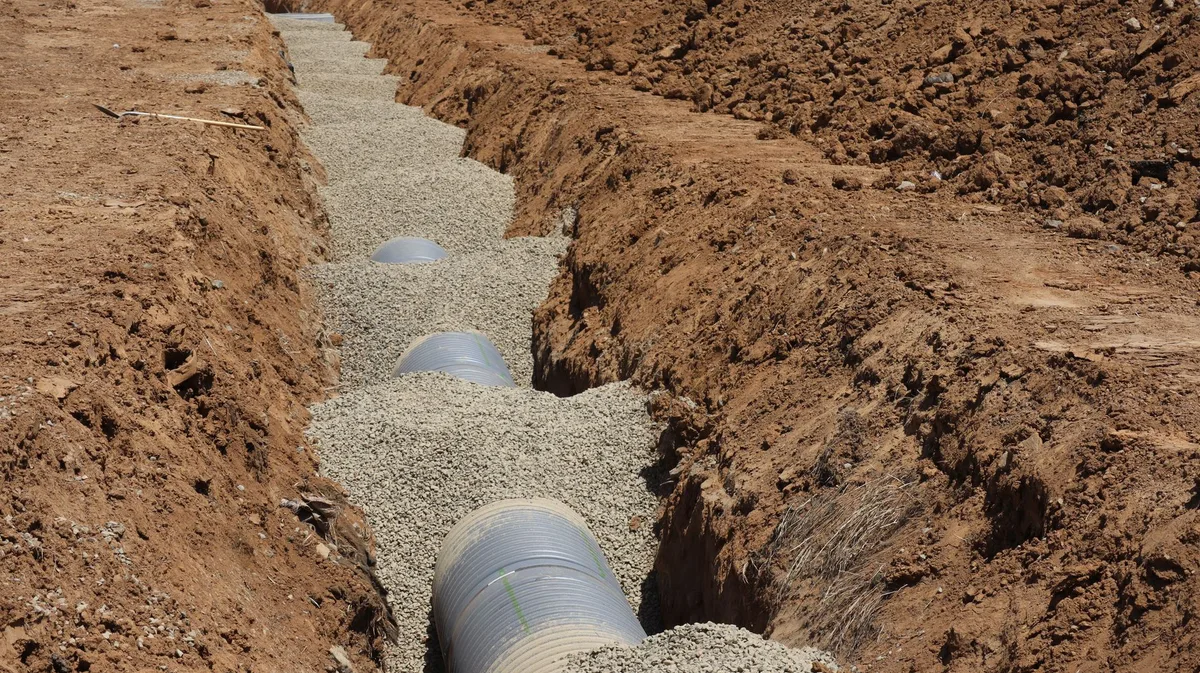
Day one: excavation. Contractors dig the trench, haul away excess soil, and prep the site. A 100-foot trench at two feet deep generates a lot of dirt. Expect noise, equipment, and a torn-up yard.
If they hit rock, tree roots, or unexpected utilities, this can stretch to two days.
Day two: pipe and gravel. The crew lays filter fabric, sets the perforated pipe at the correct slope (minimum 1% grade), and backfills with gravel. Proper slope is critical. Too flat and water won't flow.
Too steep and you waste trench depth. This is where contractor skill matters.
Day three: backfill and grading. They cover the gravel with more filter fabric, add topsoil, and regrade the surface. Some contractors compact the backfill, others just rough-grade and let it settle naturally. Ask which method they use.
Days four and five: finishing and cleanup. Seeding or laying sod, hauling away extra dirt, and final grading. If you opted for a dry well or catch basin, that adds another day for excavation and installation.
Smaller jobs go faster. Extending a downspout 20 feet with a buried solid pipe might take half a day. A simple surface swale can be cut and shaped in a few hours with a skid steer.
Larger or complex projects take longer. Whole-yard drainage systems with multiple catch basins, 300 feet of pipe, and a dry well can stretch to two weeks. Add time if you're dealing with rock, steep slopes, or tight access that limits equipment.
Weather can derail any timeline. One unexpected rainstorm can add three days while the ground dries. That's why contractors pad their schedules and why you shouldn't plan a big outdoor event the week after drainage work is supposed to finish.
The Cost of Waiting vs. Acting Fast
Delaying drainage work when you need it costs more than the installation itself. Foundation repairs average $4,500 to $12,000 depending on crack severity and wall movement. Basement waterproofing runs $3,000 to $7,000 for interior systems.
Both problems start small and escalate fast.
A $2,500 French drain installed today prevents a $10,000 foundation repair two years from now. The math is simple. Water damage doesn't plateau.
It compounds with every rain cycle.
There's also the hidden cost of a ruined yard. Dead grass, eroded soil, and damaged flower beds all need restoration after you finally fix the drainage. Waiting turns a drainage-only project into a drainage-plus-landscaping project that costs 40% more.
Common Timing Mistakes That Cost Homeowners Money
The biggest mistake is installing drainage during wet conditions because you can't wait. Contractors can't set proper slope in mud. Trenches collapse.
Pipe shifts before backfill settles. You end up paying twice when the system fails.
Another mistake is waiting too long to act on foundation issues. Homeowners see minor pooling near the house, ignore it for a year, then discover basement cracks or wall bowing. Early intervention costs a fraction of structural repair.
Skipping the observation phase also backfires. You install drainage based on a guess, then discover water actually flows from a completely different direction. Measure twice, dig once.
DIY vs. Contractor: How It Changes Your Timeline
DIY drainage stretches the timeline but cuts costs in half. A 100-foot French drain that costs $2,500 installed runs $800 to $1,200 in materials if you dig it yourself. Plan on two full weekends plus a few evenings for a typical project.
You'll need a trenching shovel, wheelbarrow, level, and either a pickup truck or rental trailer for gravel and pipe. Renting a mini excavator ($200 to $300 per day) speeds up trenching but adds cost.
The trade-off is time and guaranteed results. Contractors finish in days what takes you weeks. They also carry insurance if something goes wrong.
If you hit a utility line or the system doesn't work, that's on you with DIY.
When to Call a Professional the Same Day
Water inside your basement or crawlspace means call now. Don't wait for quotes or better weather. Get someone out to assess and stop the immediate damage, even if the permanent fix waits for dry ground.
Active foundation cracks that grow after rain also trigger same-day calls. You're watching structural damage happen in real time. Temporary pumping or emergency grading buys you time to plan the real solution.
If you see sinkholes forming or soil collapsing near your house, that's a call-today situation. You might have a bigger problem than surface drainage, like a broken sewer line or underground erosion.
Decision Framework: Your Personal Should I Do This Now Guide
Here's the final decision tree. If water threatens your foundation, basement, or structure, act within days regardless of season or weather. If it's damaging your yard but not the house, plan for the next dry season.
If it's just annoying, wait for ideal conditions and contractor availability.
Measure how long water sits. More than 24 hours means you need drainage. Observe at least one full rain cycle before you design the system.
Call 811 before anyone digs.
Spring and fall are your best windows in most climates. Summer works if the ground is soft. Winter only works in mild regions.
Get three quotes, verify insurance, and plan for a week of disruption. The right timing turns a drainage problem into a permanent solution instead of an expensive do-over.