What Causes Aphids 2026
You've probably noticed aphids clustering on your plants seemingly out of nowhere. What causes aphids to show up isn't just bad luck. It's a combination of plant stress, environmental conditions, and the insect's own explosive reproduction cycle that can turn a few individuals into a full-blown infestation in days.
Aphids (Aphidoidea) reproduce asexually for most of the year, with each female giving birth to 40 to 60 live young over her lifetime. A single generation takes just 7 to 10 days from birth to reproduction, which means populations can double every week under ideal conditions. Understanding what triggers their arrival and fuels their growth helps you fix the root problem instead of just spraying whatever's in front of you.
Quick Answer
Aphids appear when plants offer soft new growth rich in nitrogen. Stressed plants, warm weather, and lack of natural predators accelerate colonization. Asexual reproduction lets each female produce dozens of live offspring.
Indoor environments and overwintering eggs ensure year-round presence. Population explosions happen when all conditions align at once.
Why Aphids Show Up in the First Place
Aphids don't just wander onto your plants randomly. They arrive because your plants are sending signals that advertise food, safety, and ideal breeding conditions. The primary draw is accessible plant sap, especially in tender new shoots where cell walls are thin and phloem sap flows freely.
Winged aphids, called alates, fly or drift on air currents until they detect the right host plant. Different species prefer different plant families. Green peach aphids (Myzus persicae) attack a wide range of vegetables and ornamentals.
Black bean aphids (Aphis fabae) target beans, beets, and nasturtiums. Cabbage aphids (Brevicoryne brassicae) zero in on brassicas like kale and broccoli.
Once a scout aphid lands and feeds, it either stays or moves on. If the plant is suitable, it gives birth to wingless daughters. Those daughters stay put and form the foundation of a colony.
Within a week, they're reproducing too, and the population grows exponentially from there.
Temperature also matters. Aphids become active outdoors when temperatures consistently stay above 60°F. They reproduce fastest between 70°F and 80°F.
Below 50°F, development slows, and at freezing temperatures, most species die off unless they've laid overwintering eggs.
Indoor plants face a different problem. Without seasonal cold snaps, aphids can breed year-round. A single aphid hitchhiking on a new houseplant or drifting in through a window can establish a persistent colony in your home.
How Aphids Actually Multiply So Fast
Aphids reproduce through parthenogenesis, a form of asexual reproduction where females give birth to live daughters without mating. These offspring are clones of the mother and are born already pregnant with the next generation. This telescoping reproduction method is why populations explode so quickly.
During spring and summer, nearly all aphids are female and wingless. Each one reaches reproductive maturity in 7 to 10 days. Over her lifetime, she'll produce 40 to 60 offspring.
Because multiple generations overlap, you'll see adults, nymphs, and newborns clustered together on the same stem.
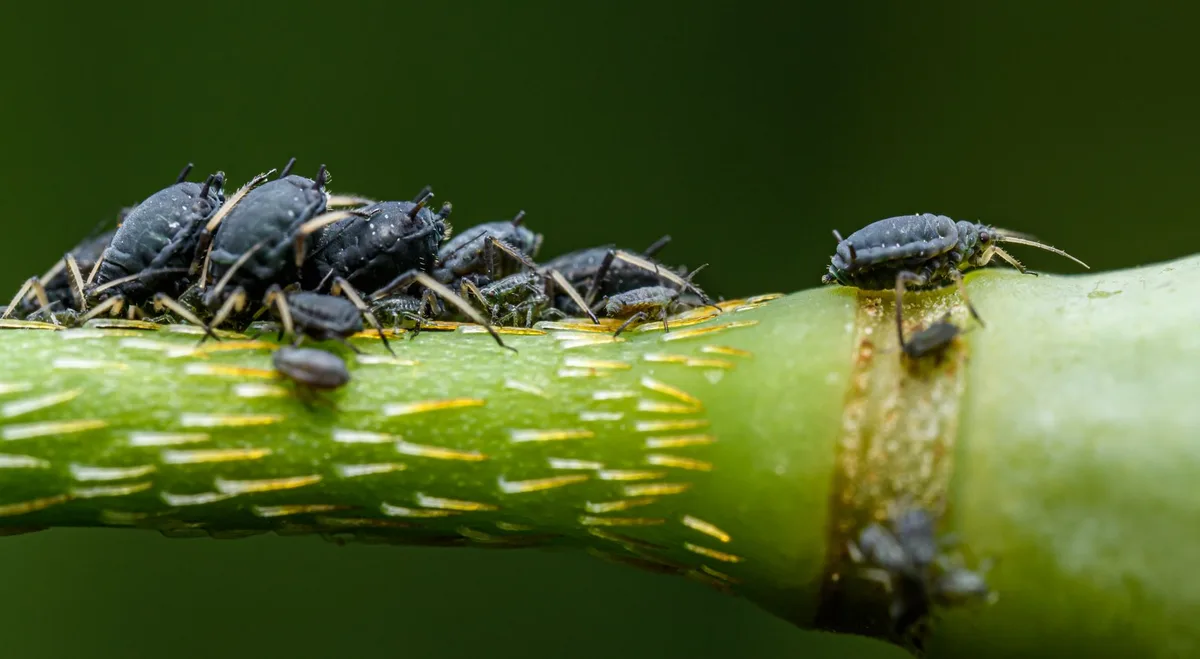
Under optimal conditions, a single aphid can produce 600 descendants in one month. By midsummer, one plant can host thousands of individuals. This rapid multiplication is why a minor problem on Monday becomes a sticky, curled-leaf disaster by Friday.
Aphids skip the egg stage during warm months. Live birth means no waiting for eggs to hatch, no vulnerable larval stage, and no pause in population growth. It's a streamlined system built for speed, not diversity, which is why environmental changes can sometimes crash populations as fast as they rise.
When resources get tight or the colony becomes overcrowded, some offspring develop wings. These alates fly off to colonize new plants, spreading the infestation to neighboring flowers for shade hanging baskets, vegetable beds, or indoor potted plants. Wing development is triggered by poor nutrition, physical crowding, or shortened day length in late summer.
The Real Triggers: What Invites Aphids to Your Plants
Aphids don't attack every plant equally. They're drawn to specific conditions that make feeding easy and reproduction fast. Knowing these triggers helps you identify why your plants are getting hit.
Soft New Growth and High Nitrogen Levels
Aphids target tender new shoots, young leaves, and flower buds. These tissues have thin cell walls and are packed with amino acids and sugars. The softer the tissue, the easier it is for aphids to pierce and suck out phloem sap.
Plants fertilized heavily with nitrogen produce lush, succulent growth. That sounds good, but it also means higher nitrogen content in the sap, which aphids love. Research from university extension programs shows that leaf tissue with nitrogen levels above 3.5% attracts significantly more aphids than plants with balanced nutrition.
Over-fertilizing with fast-release nitrogen products, especially during spring growth spurts, can inadvertently roll out the welcome mat. Slow-release or balanced fertilizers reduce this risk by avoiding the nitrogen spike that makes plants extra appealing.
Stressed Plants Are Aphid Magnets
Aphids prefer plants that are already struggling. Drought stress, transplant shock, poor soil, or root damage all weaken a plant's natural defenses. Stressed plants often produce higher levels of free amino acids in their sap, which makes feeding more rewarding for aphids.
Underwatered plants are particularly vulnerable. When a plant wilts, it concentrates nutrients in remaining sap, making it richer and more attractive. Overwatered plants also suffer because waterlogged roots can't absorb nutrients properly, leading to weak growth that aphids exploit.
Temperature extremes stress plants too. A sudden heat wave or unseasonably cool nights can slow growth and disrupt immune responses, giving aphids an opening. Indoor plants placed too close to heating vents, cold windows, or drafty doors face similar challenges.
Warm Weather and the Population Explosion
Aphids thrive in moderate to warm temperatures. Development accelerates as the mercury climbs. At 60°F, a generation takes about 14 days.
At 75°F, it drops to 7 days. At 80°F or higher, reproduction is nearly continuous, with multiple overlapping generations feeding and birthing simultaneously.
Spring and early summer are peak aphid seasons in most climates. As temperatures warm and plants flush new growth, conditions align perfectly. By midsummer, populations can reach their highest density, especially if natural predators haven't caught up yet.
Hot, dry weather above 90°F can slow aphid activity, but it also stresses plants, which can offset the benefit. In temperate regions, late summer often brings a second wave of aphids as day length shortens and winged generations migrate to new hosts.
Indoor Conditions That Create Year-Round Breeding
Indoor environments eliminate the seasonal checks that limit aphid populations outdoors. Without freezing temperatures, predators, or rain to knock them off, aphids can breed continuously on houseplants.
Low humidity indoors during winter heating season doesn't bother aphids much. They're adapted to a wide range of humidity levels, though they prefer 50 to 100%. Poor air circulation around crowded indoor plants creates microclimates where aphids thrive unnoticed.
Grow lights used for seedlings or bedroom plants can extend the photoperiod, mimicking long summer days. This suppresses the environmental cues that would normally trigger sexual reproduction and dormancy, keeping populations in the fast-breeding asexual phase year-round.
Why Some Plants Get Hit Harder Than Others
Not all plants are equally susceptible to aphids. Some species and varieties are magnets, while others are rarely bothered. Understanding these differences helps you predict where problems will show up.
Aphids are highly host-specific. Each species has a narrow range of preferred plants. Roses, for example, are targeted by the rose aphid (Macrosiphum rosae).
Milkweed hosts the yellow oleander aphid (Aphis nerii). If you're growing a plant that's a primary host for a local aphid species, you'll see more pressure.
Plants in the nightshade family, like tomatoes, peppers, and eggplants, are frequently attacked by green peach aphids. Brassicas such as cabbage, kale, and broccoli are prime targets for cabbage aphids. Beans, peas, and other legumes draw black bean aphids.
Certain varieties within a species show more resistance. Plant breeders have selected for traits like thicker leaf cuticles, higher levels of defensive compounds, or less palatable sap chemistry. If you're planting vegetables or fruit trees, look for varieties described as aphid-resistant.
Monoculture planting increases vulnerability. A whole bed of one crop type offers aphids an uninterrupted food source. Mixed plantings with diverse species and companion plants can disrupt aphid colonization by making it harder for scouts to locate their preferred host.
Young plants and seedlings are more susceptible than mature ones. Their tissues are softer, and they lack the structural defenses that develop as a plant ages. Seedlings under grow lights are especially at risk because they're often crowded together in controlled environments where aphids can spread rapidly.
The Seasonal Cycle: When and Why Aphids Appear
Aphid populations follow a predictable seasonal rhythm in temperate climates. Understanding this cycle helps you anticipate when infestations are most likely to start and when natural controls will kick in.
Spring Emergence from Overwintering Eggs
In northern climates, aphids overwinter as eggs laid on woody plant stems in fall. These eggs are cold-hardy and hatch when temperatures warm in early spring. The first generation, called stem mothers or fundatrices, are all female and give birth to live young without mating.
Egg hatch timing varies by species and region but typically occurs when daytime temperatures consistently reach 50°F to 60°F. In USDA hardiness zones 6 and colder, this is usually late March through April. In zones 7 to 9, it can be as early as February.
The stem mothers settle on emerging buds and tender growth. Their offspring form the foundation colonies that will multiply through the growing season. Because natural predators like ladybugs and lacewings are still scarce in early spring, these first generations often grow unchecked.
Summer Population Explosions
By late spring and early summer, aphid populations reach their peak. Warm temperatures, abundant new growth, and multiple overlapping generations create the perfect conditions for exponential increase. This is when gardeners typically notice aphids for the first time, even though the infestation started weeks earlier.
As colonies grow, competition for feeding sites increases. Overcrowding triggers the production of winged alates, which fly to nearby plants to start new colonies. This is why an infestation can suddenly appear on plants that were clean days before.
Natural predators start to catch up by midsummer. Ladybugs, lacewing larvae, parasitoid wasps, and hoverfly larvae feed heavily on aphids. In outdoor gardens with diverse plantings, predator populations can suppress aphids enough to prevent serious damage, though they rarely eliminate them completely.
Fall Sexual Reproduction and Egg-Laying
As day length shortens in late summer and early fall, aphids switch to sexual reproduction. Males and egg-laying females are produced. These aphids mate, and females lay cold-hardy eggs on woody stems of host plants.
This sexual generation ensures genetic diversity and produces the overwintering stage that will restart the cycle next spring. Not all aphid species follow this pattern. Some tropical and subtropical species remain asexual year-round, and indoor aphids skip the sexual phase entirely if conditions stay favorable.
Year-Round Activity in Warm Climates and Indoors
In USDA zones 9 and warmer, winters are mild enough that many aphid species never fully enter dormancy. Populations may decline during cooler months, but they don't disappear. A few warm weeks in winter can trigger new population growth.
Indoor aphids operate on a completely different schedule. Without seasonal cues, they breed continuously. A single aphid brought in on a new plant in January can produce a full colony by February.
Indoor infestations often go unnoticed longer because plants aren't inspected as frequently as outdoor gardens.
What Makes an Existing Infestation Worse
Once aphids establish a colony, certain factors accelerate their growth and make control much harder. Recognizing these amplifiers helps you break the cycle before populations spiral out of control.
Ants Farming and Protecting Aphids
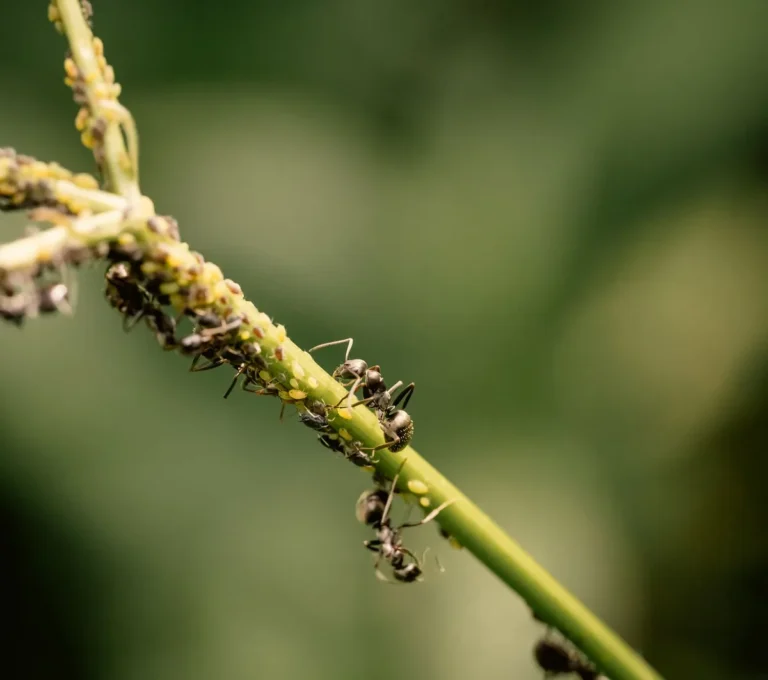
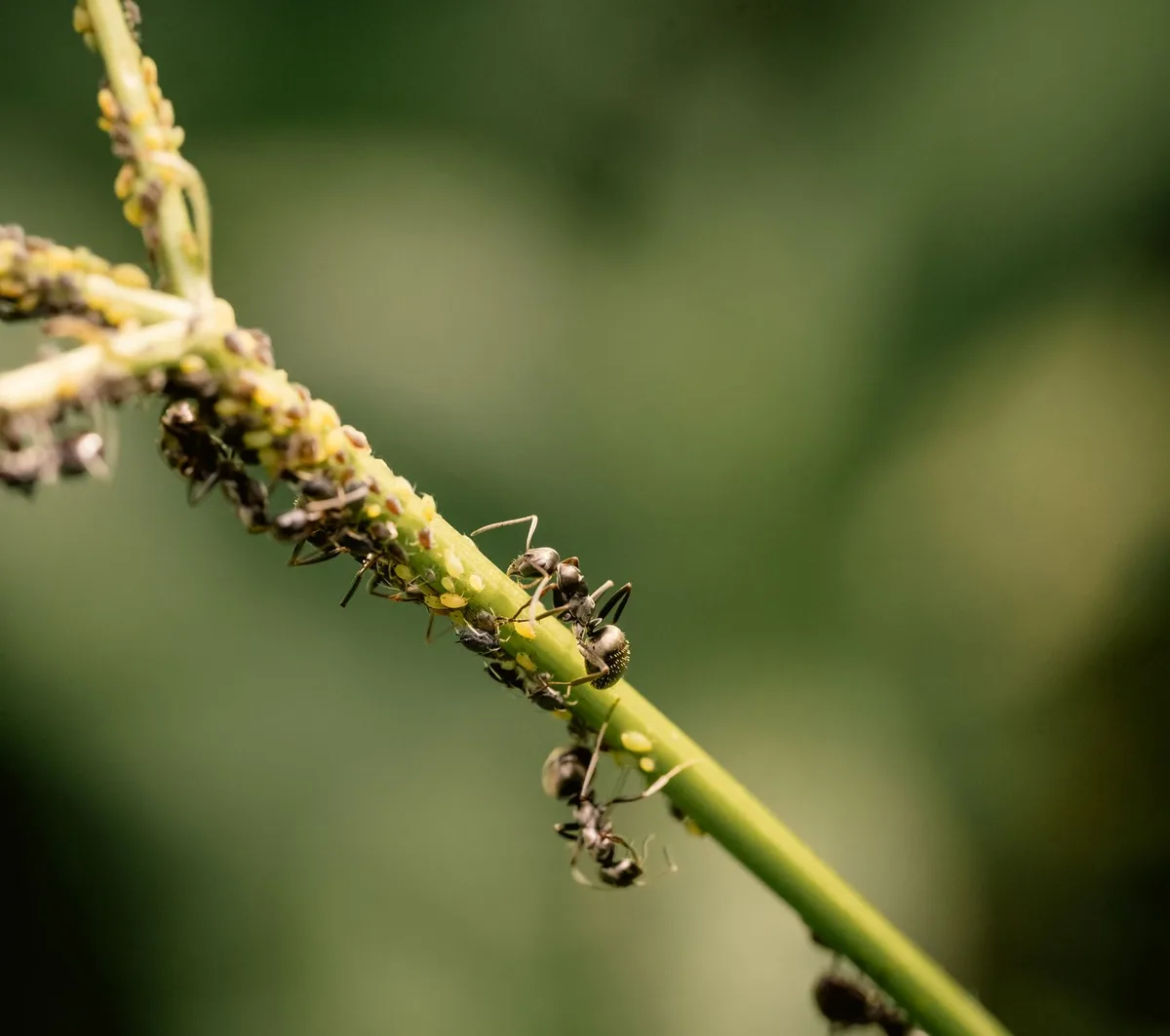
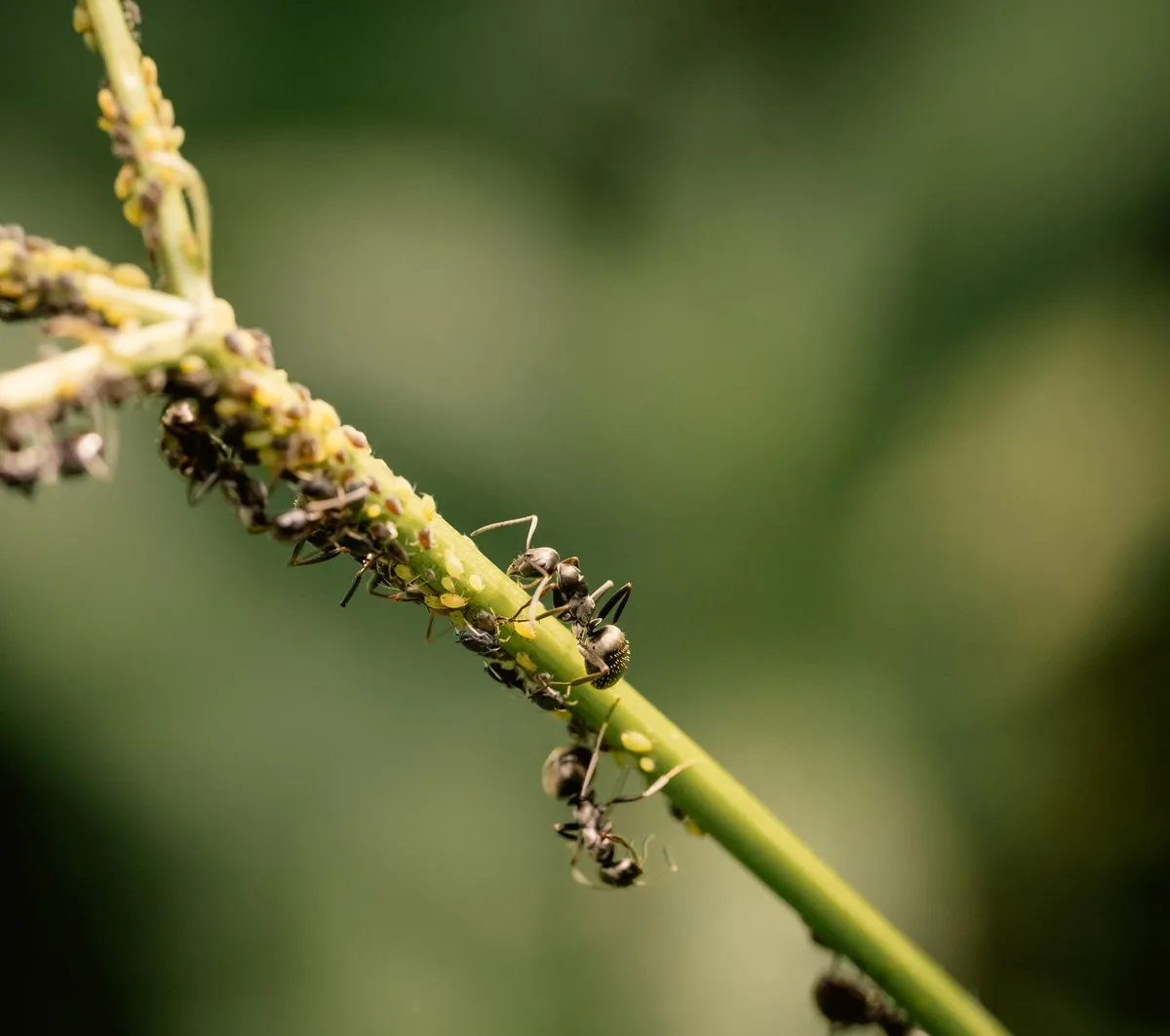
Ants and aphids have a symbiotic relationship called trophobiosis. Aphids excrete honeydew, a sugary waste product that ants harvest as food. In exchange, ants protect aphids from predators and move them to fresh feeding sites.
You'll often see ants trailing up and down stems where aphids are feeding. The ants actively defend the colony, attacking ladybugs, lacewing larvae, and parasitoid wasps that try to feed on aphids. This protection can reduce natural predator effectiveness by 50% or more.
Ants also transport aphids to new growth on the same plant or carry them to neighboring plants. They'll even move aphids indoors through cracks and windowsills if they're farming colonies on outdoor plants near your home. Controlling the ant population is often the first step in breaking up a stubborn aphid infestation.
Lack of Natural Predators
Outdoor aphid populations are normally kept in check by a diverse community of predators. Ladybugs (Coccinellidae), lacewing larvae (Chrysopidae), hoverfly larvae (Syrphidae), and parasitoid wasps (Aphidiinae) all feed heavily on aphids. When these predators are absent or scarce, aphid populations grow unchecked.
Broad-spectrum insecticides kill beneficial insects along with pests. If you've been spraying regularly, you may have wiped out the predator population that would otherwise control aphids naturally. It can take weeks or months for beneficial insects to recolonize after chemical treatments.
Indoor environments lack natural predators entirely unless you introduce them deliberately. Without lacewings or ladybugs, indoor aphid colonies can persist indefinitely. Greenhouse growers face similar challenges and often rely on purchased biological controls to fill the predator gap.
Overcrowding Triggers Winged Generations
As colonies grow denser, physical crowding and nutrient depletion trigger the production of winged alates. These dispersal forms fly to new plants, spreading the infestation rapidly across your garden or indoor collection.
Wing development is also triggered by declining food quality and shorter day length in late summer. Once winged aphids appear, the problem shifts from localized to widespread. A single plant with a heavy infestation can seed dozens of nearby plants in a matter of days.
Winged aphids are surprisingly good fliers. They can travel several miles on wind currents, though most settle within a few hundred feet of their birthplace. This mobility makes containment difficult once populations reach the winged stage.
Common Mistakes That Cause Aphid Problems
Gardeners often create the conditions that invite aphids without realizing it. Avoiding these mistakes reduces the likelihood of infestations before they start.
Over-fertilizing with high-nitrogen products is one of the most common errors. Pushing plants to produce lots of lush green growth makes them irresistible to aphids. Balanced or slow-release fertilizers support steady growth without the nitrogen spikes that attract pests.
Ignoring early signs of infestation lets small colonies grow into large ones. A few aphids on new growth today can become hundreds by next week. Regular scouting, especially on the undersides of leaves and around buds, catches problems early when they're easiest to manage.
Overwatering weakens root systems and stresses plants, making them more susceptible. Waterlogged soil reduces oxygen availability to roots, which in turn reduces the plant's ability to produce defensive compounds. Let soil dry slightly between waterings to keep roots healthy and plants resilient.
Planting susceptible varieties without considering pest pressure sets you up for repeated problems. If you've had aphid issues on tomatoes or roses in the past, choosing resistant varieties the next season can cut infestations significantly.
Relying solely on reactive sprays instead of addressing root causes means you'll fight the same battle every season. If your plants are stressed, over-fertilized, or lacking beneficial insects, spraying kills the current generation but doesn't stop the next wave from arriving.
How Your Growing Conditions Influence Aphid Pressure
The way you water, fertilize, and arrange your plants has a direct impact on how attractive they are to aphids. Small adjustments to your routine can make a big difference in pest pressure.
Watering Habits and Plant Stress
Consistent, moderate watering keeps plants healthy and better able to resist pests. Drought-stressed plants concentrate nutrients in their sap, making them more appealing to aphids. Overwatered plants develop weak growth that's easier to pierce and feed on.
Check soil moisture before watering rather than sticking to a fixed schedule. Plants in containers, especially those in pots for pothos or other fast-growing species, can dry out quickly in warm weather. Ground-planted vegetables and trees in hot dry climates need deep, infrequent watering to develop strong root systems.
Early morning watering gives foliage time to dry before evening, which reduces humidity around plants at night. Lower humidity doesn't directly repel aphids, but it discourages fungal diseases like sooty mold that often follow aphid infestations.
Fertilizer Choices and Nitrogen Overload
Choose fertilizers with balanced N-P-K ratios or those formulated for the specific crop you're growing. Fertilizer for bougainvillea in pots or pomegranate trees should match the plant's natural nutrient requirements, not push excessive leafy growth.
Organic fertilizers like compost, worm castings, and aged manure release nutrients slowly. They're less likely to cause the nitrogen spikes that attract aphids. Synthetic fast-release fertilizers can be useful for quick fixes, but they increase pest pressure if used too frequently.
Side-dress or top-dress plants during the growing season rather than mixing large amounts of fertilizer into soil at planting. This gives you more control over nutrient release and reduces the risk of overfeeding young plants when they're most vulnerable.
Air Circulation and Humidity Factors
Good air circulation helps plants stay healthy and makes it harder for aphid colonies to establish. Crowded plantings trap humid, stagnant air around leaves, creating microclimates where aphids thrive. Space plants according to their mature size, not their size at planting.
Indoors, use oscillating fans to keep air moving around bedroom plants or south-east facing window displays. Stagnant air allows aphid populations to grow unnoticed and also increases the risk of fungal problems on honeydew-coated leaves.
Prune dense growth to open up plant canopies. Removing crowded branches improves light penetration and airflow, which keeps foliage drier and less hospitable to pests. Pruning also removes aphid-infested tips before colonies can spread.
Container vs Ground Growing Differences
Container-grown plants face unique challenges. Roots are confined, which limits the plant's ability to access water and nutrients during stress periods. Potted plants also heat up faster in summer sun, stressing roots and foliage simultaneously.
Use high-quality potting mix that drains well but retains some moisture. Cheap mixes compact quickly and lead to waterlogged or bone-dry conditions that stress plants. Container plants often need more frequent monitoring than ground-planted ones.
Ground-planted gardens benefit from soil biology that container plants lack. Beneficial nematodes, predatory beetles, and other soil-dwelling organisms help control aphids and other pests naturally. Mulching around plants supports this beneficial community and keeps soil moisture more stable.
Regional and Climate Factors That Matter
Where you garden and what the local climate does throughout the year determines when aphids appear, how long they stay, and how severe infestations become.
In northern regions (USDA zones 3 to 6), aphids are a spring and early summer problem. Cold winters kill most adults, and populations restart each year from overwintering eggs. Peak pressure hits in May and June when temperatures warm but predators are still scarce.
Southern and coastal regions (zones 8 to 10) see aphid activity nearly year-round. Mild winters allow some species to continue breeding through December and January. Populations may dip during the coldest weeks but rarely disappear entirely.
Arid climates reduce aphid pressure compared to humid regions. Low humidity doesn't kill aphids, but it does slow reproduction slightly and makes it easier for plants to recover from feeding damage. Desert gardeners still see aphids on irrigated plants, especially during spring growth flushes.
Coastal gardens experience moderate temperatures and high humidity, both of which favor aphids. Fog and marine air keep plants lush and soft, providing ideal feeding conditions. Coastal gardeners often deal with persistent low-level infestations rather than dramatic population explosions.
Urban heat islands extend the aphid season in cities. Pavement, buildings, and reduced vegetation trap heat, keeping temperatures 5°F to 10°F warmer than surrounding rural areas. This extra warmth accelerates aphid development and allows populations to build earlier in spring and persist later into fall.
High-altitude gardens see shorter aphid seasons due to cooler temperatures and a compressed growing season. Aphids may appear in midsummer but rarely have time to build the massive populations seen at lower elevations.
Decision Guide: Why You Have Aphids Right Now
If aphids are on your plants today, one or more of these conditions is active. Check each factor to identify what's driving your specific infestation.
Your plants have soft new growth. Spring flushes, recent pruning, or heavy nitrogen fertilization all produce tender shoots that aphids target first. Reduce nitrogen inputs and let plants harden off between growth spurts.
Temperatures are between 70°F and 80°F. Aphid reproduction peaks in this range. If you're seeing population explosions, warm weather is accelerating the cycle. Populations may slow naturally once temperatures climb above 85°F or drop below 60°F.
Plants are stressed. Drought, transplant shock, root damage, or poor soil all weaken defenses. Address the underlying stress, and plants will recover faster even with some aphid feeding.
Ants are present. If you see ants on stems where aphids cluster, they're protecting the colony. Control ants first to allow natural predators access.
No beneficial insects are visible. Check for ladybugs, lacewing larvae, or parasitized aphid mummies. If you don't see any, predator populations haven't caught up yet, or prior pesticide use eliminated them.
You're indoors or in a greenhouse. Year-round warmth and lack of predators let aphids breed continuously. Introduce biological controls or improve scouting routines to catch colonies early.
How to Break the Cycle Once You Know the Cause
Knowing why aphids appeared tells you where to focus your efforts. Treating symptoms without fixing the cause means they'll be back next week.
If high nitrogen is the issue, switch to balanced or low-nitrogen fertilizers for the rest of the season. Top-dress with compost instead of synthetic feeds to slow nutrient release.
For stressed plants, improve watering consistency and check for root problems. Mulch around ground-planted vegetables and perennials to stabilize soil moisture. Repot container plants if roots are circling or the mix has broken down.
Break the ant-aphid partnership by applying ant bait stations around plant bases. Once ants stop defending the colony, ladybugs and lacewings can move in and feed freely.
Introduce or encourage beneficial insects if they're absent. Plant pollen and nectar sources like alyssum, dill, and yarrow to attract hoverflies and parasitoid wasps. Purchase ladybugs or lacewing larvae for indoor or greenhouse infestations where natural colonization won't happen.
Inspect plants weekly during peak season to catch new colonies before they explode. Early-stage infestations can often be controlled with a strong spray of water or by pinching off affected tips.
Frequently Asked Questions
Can aphids appear on plants that were clean yesterday?
Yes. Winged alates fly in from neighboring plants and establish new colonies within hours. A single aphid can give birth to dozens of offspring in a week, so populations grow fast once they land.
Do aphids only attack weak plants?
No, but weak plants are more attractive. Healthy plants can still host aphids, especially during spring growth flushes when all new tissue is soft and nutrient-rich.
Why do indoor plants get aphids if there's no garden nearby?
Aphids hitchhike on new plants, fly in through open windows, or arrive on cut flowers. Once indoors, they breed year-round without natural predators or seasonal interruptions.
Will cold weather kill aphids permanently?
Cold kills most adults, but overwintering eggs survive freezing temperatures. Aphids return each spring when eggs hatch on woody stems and new growth emerges.
Can over-fertilizing really cause aphid problems?
Yes. High nitrogen produces soft, lush growth with elevated sap nitrogen levels. Aphids reproduce faster and feed more successfully on over-fertilized plants than on those with balanced nutrition.