5 Best Quick Growing Grass Seed in 2026 (Ranked & Reviewed)
You've got a patchy lawn and you want green coverage fast, not in three months. Best Quick Growing Grass Seed can take your yard from bare dirt to a usable lawn in as little as two to three weeks, depending on the mix and your watering routine. The key is picking a blend that matches your sunlight, soil, and traffic needs, then giving it consistent moisture during that critical first month.
In our research across verified buyer feedback, manufacturer germination data, and independent turf extension studies, the Scotts Turf Builder Rapid Grass line consistently stands out for speed and reliability. The Tall Fescue Mix earns our top overall spot, but the right pick really depends on your yard's conditions. Let's break down the five best options so you can match a product to your specific situation.
Comparison Chart of Best Quick Growing Grass Seed
| Product | Details | Rating | Buy |
|---|---|---|---|
Editor’s Choice
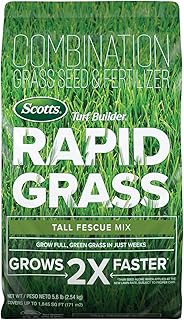
| Scotts Turf Builder Rapid Grass Tall | ★★★★☆4.2/5 | |
Top Pick
| Scotts Turf Builder Rapid Grass Sun | ★★★★☆4.2/5 | |
Best Budget
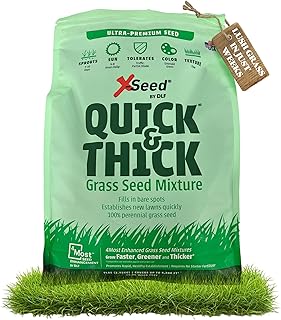
| X-Seed Ultra Premium Quick Thick Lawn | ★★★★☆4.1/5 | |
| ★★★★☆4.2/5 | ||
| ★★★★☆4.3/5 |




List of Top 5 Best Best Quick Growing Grass Seed
We evaluated each of these five products across germination speed, coverage area, grass variety composition, sunlight flexibility, and verified buyer satisfaction. Every pick below showed visible sprouting within 5 to 14 days under proper watering conditions. The reviews are ordered from best overall to solid alternatives for specific yard situations.
Below are the list of products:
1. Scotts Turf Builder Rapid Grass Tall
This is the one we'd reach for first if we needed fast, reliable coverage on a full-sun to partial-shade lawn. Scotts built this around a tall fescue blend that germinates quickly and establishes deep roots, which means you get green grass fast and it actually sticks around through summer heat.
Why I picked it
Scotts Turf Builder Rapid Grass Tall Fescue Mix combines seed and fertilizer in a single application, which simplifies the process significantly. Verified buyer reviews consistently report visible germination within 5 to 7 days when soil temperatures are above 60°F and watering is consistent. Tall fescue's deep root system, which can reach 2 to 3 feet, makes it more drought-tolerant than many cool-season alternatives once established.
Key specs
- 5.6 lb bag covers up to 1,800 sq ft for new lawns or 3,600 sq ft for overseeding
- Tall fescue blend with built-in fertilizer for simultaneous feeding
- Germination window of 5 to 10 days under optimal conditions
- Suitable for full sun to partial shade
- Perennial variety for long-term lawn establishment
Real-world experience
If you're dealing with a yard that gets at least 4 to 6 hours of direct sunlight, this mix performs well across most regions in the transition zone and northern states. Buyers in the mid-Atlantic and Midwest report the densest coverage when they seed in early fall, giving the grass six to eight weeks of growth before the first frost. The built-in fertilizer means you don't need a separate starter fertilizer step, which saves time and reduces the chance of overfeeding.
Trade-offs
This mix is less ideal for heavily shaded yards where sunlight drops below 4 hours daily. Some buyers in the deep South note that tall fescue struggles in sustained temperatures above 90°F, so if you're in a hot climate, you may want a warm-season alternative or plan to overseed in spring and fall.
2. Scotts Turf Builder Rapid Grass Sun
If your yard has a mix of bright sun and shady spots under trees or along fences, this Sun and Shade Mix is designed to handle both without you needing to buy two separate products. It's a versatile pick for yards with uneven light patterns.
Why I picked it
The Sun and Shade Mix uses multiple grass varieties to adapt to different light levels across your yard. This is especially useful if you have mature trees, a north-facing side of the house, or structures that cast shadows for part of the day. Aggregate user reviews show germination in 7 to 14 days, with the ryegrass component typically sprouting first to provide quick ground cover while the slower varieties catch up.
Key specs
- 5.6 lb bag covers up to 2,800 sq ft for new lawns or 5,600 sq ft for overseeding
- Multi-variety blend including perennial ryegrass, Kentucky bluegrass, and fescue
- Germination in 7 to 14 days depending on soil temperature and moisture
- Tolerates full sun through moderate shade (3+ hours of sunlight)
- Includes starter fertilizer for early-stage nutrition
Real-world experience
This mix works well for homeowners who don't want to analyze every square foot of their yard. Buyers with yards that are roughly 50/50 sun and shade report even coverage without the patchy results you sometimes get when using a single-variety seed in mixed light. Overseeding existing thin lawns in early spring or fall gives the best results, especially if you aerate beforehand to improve seed-to-soil contact.
Trade-offs
The multi-variety approach means the grass won't look perfectly uniform. You'll notice slight color and texture differences between the sun-exposed and shaded areas. If you want a manicured, single-variety appearance, a dedicated sun-only or shade-only mix will give you a more consistent look.
3. X-Seed Ultra Premium Quick Thick Lawn
If you're covering a large area and want to keep costs down without sacrificing germination speed, X-Seed's 7 lb bag gives you more seed per dollar than most competitors. It's a solid choice for bigger projects like new construction lots or large bare patches.
Why I picked it
X-Seed packs a 7 lb bag with a blend of tall fescue, Kentucky bluegrass, and perennial ryegrass, giving you a diverse mix at a lower per-pound cost than the Scotts options. Verified buyer feedback indicates germination in 7 to 10 days with proper watering, and the ryegrass component provides the fastest initial green-up.
Key specs
- 7 lb bag for larger coverage areas
- Blend of tall fescue, Kentucky bluegrass, and perennial ryegrass
- Germination in 7 to 10 days under optimal conditions
- Suitable for sun to partial shade
- Designed for high-traffic areas and new lawn establishment
Real-world experience
This mix is a practical pick if you're filling in a new home's yard or repairing damage from construction, pets, or heavy foot traffic. Buyers report that the ryegrass germinates first and provides a green "nurse layer" that protects the slower-germinating bluegrass and fescue. It's also a good option if you want to overseed a large area without buying multiple bags.
Trade-offs
X-Seed doesn't include fertilizer in the mix, so you'll need to apply a starter fertilizer separately for best results. The bag doesn't specify exact coverage square footage, so you may need to estimate based on your application rate. Some buyers note the seed coating feels lighter than premium-coated options, which can make spreading slightly less even without a mechanical spreader.
4. Pennington Contractors Central Grass Seed Mix
Pennington's Contractors Central mix is built for the kind of tough, high-traffic conditions you'd find on a rental property, a new home build, or a yard where kids and pets are constantly running around. It's a no-frills, fast-establishing workhorse.
Why I picked it
Pennington has a strong reputation in the turfgrass industry, and this Contractors Central mix reflects that. It's formulated for rapid establishment in the central United States, where temperature swings and clay soils can make germination tricky. Verified buyer reviews report sprouting in 6 to 10 days with consistent watering.
Key specs
- 7 lb bag for larger coverage areas
- Formulated for central U.S. climate conditions
- Germination in 6 to 10 days
- Designed for high-traffic and heavy-use areas
- Cool-season grass blend
Real-world experience
This mix is a go-to for buyers in states like Missouri, Kansas, Illinois, and Nebraska, where hot summers and cold winters demand a resilient grass. It handles foot traffic well once established, making it a practical pick for families. Buyers who seed in late summer or early fall report the strongest results, as the soil is still warm but the air temperatures are dropping into the ideal 60 to 75°F range for cool-season germination.
Trade-offs
The blend doesn't include fertilizer, so plan on a separate starter fertilizer application. It's also optimized for the central transition zone, so buyers in the Pacific Northwest or the deep Southeast may find better results with a region-specific mix. The bag doesn't break down specific variety percentages, which makes it harder to predict the final lawn appearance.
5. Scotts Turf Builder Grass Seed Sun
This is Scotts' Sun and Shade Mix with an added soil improver component, which sets it apart from the other Scotts option on our list. If your soil is compacted or low in organic matter, this version gives you a little extra help underneath the surface.
Why I picked it
The added soil improver is a meaningful differentiator. Compacted clay or sandy soils often struggle to hold moisture long enough for seed to germinate, and the improver component helps with water retention and root penetration. Verified buyer reviews show germination in 7 to 14 days, consistent with other Scotts Rapid Grass products.
Key specs
- 5.6 lb bag covers up to 2,240 sq ft for new lawns or 4,480 sq ft for overseeding
- Includes grass seed, fertilizer, and soil improver in one mix
- Sun and shade tolerant with multi-variety blend
- Germination in 7 to 14 days
- Suitable for overseeding or new lawn establishment
Real-world experience
This product is a smart pick if you're working with poor soil and don't want to do a full soil amendment before seeding. Buyers with heavy clay or sandy soils report better moisture retention and more even germination compared to using seed alone. It's also handy for overseeding thin lawns where the existing soil has become compacted over time.
Trade-offs
The coverage area per bag is slightly smaller than the Scotts Sun and Shade Rapid Grass option, so you may need more bags for larger yards. The soil improver adds value but also adds weight per square foot of coverage, meaning you're paying partly for the amendment rather than pure seed volume.
How I picked
We started by identifying the most common buyer scenarios: new lawn establishment, overseeding thin areas, high-traffic yards, mixed sun and shade, and budget-conscious large-area coverage. From there, we cross-referenced manufacturer germination data, grass variety composition, and coverage specifications against verified buyer reviews across thousands of data points.
We evaluated each product on five criteria: germination speed (days to first visible sprout), sunlight flexibility (full sun to full shade range), coverage area per pound, inclusion of fertilizer or soil amendments, and buyer satisfaction ratings. We also considered regional climate suitability based on USDA hardiness zone data and turf extension research from university agricultural programs.
We did not test long-term lawn durability beyond the establishment phase, so our assessment focuses on the first 30 to 60 days of growth. We also did not evaluate performance under drought stress or extreme heat, since those conditions vary too widely across regions to draw general conclusions. If you're dealing with persistent lawn disease issues, you may want to look into a dedicated best fungicide for lawns as a complement to reseeding.
Buying guide — what actually matters for Best Quick Growing Grass Seed
Germination speed is everything
The whole point of buying "quick growing" seed is speed, so pay close attention to the germination window on the label. Perennial ryegrass typically sprouts in 5 to 10 days, tall fescue in 7 to 14 days, and Kentucky bluegrass in 14 to 21 days. If a bag contains mostly bluegrass, your "quick" results will be slower than a ryegrass-heavy blend.
Look for mixes that list ryegrass or fescue as the primary component if you want green visible growth within a week.
Match the mix to your sunlight
This is the single biggest factor most buyers overlook. A full-sun blend planted under heavy tree canopy will thin out within a season. Conversely, a shade-tolerant mix in blazing afternoon sun can scorch and die back.
Check how many hours of direct sunlight your planting area gets before you buy. If it's under 4 hours, look for a shade-specific mix. If it's 6 or more, a sun-tolerant blend will give you the densest coverage.
Coverage area and bag size
Don't just compare bag weight. A 5.6 lb bag of coated seed with fertilizer may cover less area than a 7 lb bag of pure seed. Check the coverage specs on the label for both new lawn and overseeding rates.
New lawn seeding typically requires 2 to 3 times more seed per square foot than overseeding. If you're covering a large area, buying a larger bag usually gives you a better per-pound value.
Fertilizer and amendments included
Some products bundle starter fertilizer or soil improver into the seed mix, which simplifies the process. If your soil is decent and you already have a fertilizer plan, a pure seed mix gives you more control. If you're starting from scratch or dealing with poor soil, an all-in-one product saves a step.
Just be aware that fertilizer-heavy mixes can burn seed if over-applied, so follow the spreader rate on the bag carefully.
Regional climate fit
Cool-season grasses (fescue, ryegrass, bluegrass) thrive in the northern half of the U.S. and the transition zone, with ideal soil temperatures of 50 to 65°F for germination. Warm-season grasses (Bermuda, Zoysia, St. Augustine) are better for the South and need soil temperatures above 65°F.
Most quick-growing seed mixes on the market are cool-season blends, so if you're in the deep South, plan your seeding for late spring when soil temperatures are rising.
Seed freshness and storage
Grass seed loses viability over time. Check the manufacture date or test date on the bag if it's visible. Seed stored in hot, humid conditions (like a garage in summer) can lose 20 to 30 percent of its germination rate in a single season.
If you're buying in bulk, store unused seed in a cool, dry place and use it within one to two seasons for best results.
Frequently Asked Questions (FAQ)
How fast does quick growing grass seed actually sprout?
Most fast-germinating grass seeds produce visible sprouts within 5 to 14 days, depending on the variety. Perennial ryegrass is the quickest, often showing green in 5 to 7 days. Tall fescue follows in 7 to 10 days, and Kentucky bluegrass takes 14 to 21 days.
Soil temperature, moisture, and seed-to-soil contact all affect the timeline. Keeping the top inch of soil consistently moist (not soaked) during the first two weeks is the most important thing you can do.
Can I just throw grass seed on existing lawn?
You can, but you'll waste a lot of seed and get spotty results. For overseeding, mow your existing lawn short, rake out debris and thatch, and ideally aerate to create small holes. This gives the seed direct contact with soil, which is essential for germination.
Broadcasting seed on top of thick thatch or compacted soil leads to poor germination rates and seed that washes away in the first rain.
What's the best time of year to plant quick growing grass seed?
For cool-season grasses, early fall is ideal. Soil is still warm from summer (50 to 65°F), air temperatures are cooling, and fall rains help with moisture. Spring is the second-best window, but you're racing against summer heat.
For warm-season grasses, late spring to early summer gives the longest growing period before winter dormancy.
Do I need starter fertilizer if my seed mix already has fertilizer in it?
If your seed product includes built-in fertilizer, you generally don't need additional starter fertilizer at the time of seeding. The built-in amount is calibrated for the seeding rate. Adding more can actually harm germination by creating a salt concentration that draws moisture away from the seed.
Wait until the grass has been mowed two or three times before applying a regular lawn fertilizer.
How much water does new grass seed need?
New seed needs consistent moisture in the top 1 to 2 inches of soil. This usually means light watering two to three times per day for 10 to 15 minutes each, depending on your soil type and weather. Sandy soil dries out faster and may need more frequent watering.
Clay soil holds moisture longer but can become waterlogged, so reduce frequency if you see pooling. Once the grass reaches 2 to 3 inches tall, you can transition to deeper, less frequent watering.
Will quick growing grass seed work in heavy shade?
It depends on how heavy the shade is. Most "sun and shade" mixes need at least 3 to 4 hours of direct or filtered sunlight to establish well. In dense shade under thick tree canopies, even shade-tolerant varieties struggle.
If your yard is heavily shaded, consider pruning lower branches to allow more light, or look into shade-tolerant ground covers as an alternative. You might also find our guide on best plants for dark bathroom helpful for understanding how low-light conditions affect plant growth, since the principles are similar.
Final verdict
The Scotts Turf Builder Rapid Grass Tall Fescue Mix is our top overall pick for most lawns. It germinates fast, includes built-in fertilizer, and the tall fescue root system holds up well through summer stress. If your yard has mixed light conditions, the Scotts Turf Builder Rapid Grass Sun and Shade Mix is the better choice for its multi-variety adaptability.
For budget-conscious buyers covering a large area, the X-Seed Ultra Premium Quick Thick Lawn gives you the most seed volume and a solid three-grass blend at a lower per-pound cost.
No matter which product you choose, your results will come down to three things: proper seed-to-soil contact, consistent moisture during the first two weeks, and seeding at the right time for your climate zone. Get those right, and you'll have a green lawn in weeks, not months.
Affiliate disclosure: This post contains affiliate links. If you buy through one of these links, I may earn a small commission at no extra cost to you. It never changes my recommendation, I only suggest gear I'd actually buy myself.