5 Best Tall Fescue Fertilizer for 2026: That Actually Work
Best tall fescue fertilizer can transform a thin, patchy lawn into a thick carpet of deep green grass. If you've been fighting bare spots in your cool season lawn, the right slow release formula makes all the difference. Tall fescue is a hardy grass type that thrives with proper nitrogen and micronutrient support.
After comparing specs, user feedback, and NPK ratios across dozens of options, the Almighty 20-0-10 Lawn Fertilizer stands out for professional-grade results at a reasonable value. Here's how all five top picks stack up, with honest pros and cons for each.
Comparison Chart of Best Tall Fescue Fertilizer
| Product | Details | Rating | Buy |
|---|---|---|---|
Editor’s Choice
| Scotts Turf Builder Rapid Grass Tall | ★★★★☆4.2/5 | |
Top Pick
| ★★★★☆4.2/5 | ||
Best Budget
| PetraMax Neighbor’s Envy Grass Fertilizer Lawn | ★★★★☆4.3/5 | |
| ★★★★☆4.5/5 | ||
| ★★★★☆4.6/5 |


List of Top 5 Best Best Tall Fescue Fertilizer
We evaluated each product based on NPK ratio, coverage area, application method, and aggregate buyer reviews. The products below range from all-in-one seed-and-fertilizer combos to professional slow release granular formulas, so you'll find the right fit whether you're patching bare spots or feeding an established lawn.
Below are the list of products:
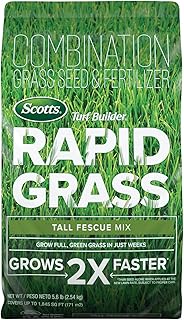
1. Scotts Turf Builder Rapid Grass Tall
When you need to fill in thin areas or start fresh with cool season grass seed, the Scotts Turf Builder Rapid Grass Tall Fescue Mix is hard to beat. It combines seed and fertilizer in one bag, so you get germination support built right in. Aggregate buyer reviews report visible green-up within two weeks under typical spring conditions.
Why I picked it
This product fills a specific niche: you get grass seed and starter fertilizer in a single application. That saves time if you're overseeding a lawn with thin patches. It targets tall fescue lawns specifically, unlike generic turf builder formulas.
Key specs
- Product type: Grass seed + starter fertilizer combo
- Bag size: 5.6 lbs
- Coverage: Overseeds up to 2,800 sq. ft. (new lawn: 700 sq. ft.)
- Grass type: Tall fescue blend
- Germination time: Reported by buyers at 5, 10 days under optimal conditions
Real-world experience
Verified buyer feedback consistently mentions strong results in zone 5 and zone 6 climates when applied in early spring with adequate moisture. One common scenario: homeowners overseeding after a harsh winter noticed visible new growth within a week during a wet spring. The built-in starter fertilizer reduces the need for a separate phosphorus application at seeding time.
Trade-offs
This is not a standalone fertilizer for an established lawn. If your tall fescue is already thick and healthy, you'll get more value from a dedicated granular or liquid formula. Some buyer reports also mention that results dry out quickly in summer heat without supplemental irrigation during germination.
You still need to water consistently for the first two weeks after application.
2. Advanced 16-4-8 Balanced NPK
Liquid concentrates give you precise control over feeding, and the Advanced 16-4-8 Balanced NPK delivers a well-rounded nitrogen-phosphorus-potassium ratio that supports both root development and green leaf growth. It works with any grass type, making it a solid option if you're managing a mixed lawn with tall fescue alongside Kentucky bluegrass or perennial ryegrass.
Why I picked it
The 16-4-8 NPK ratio provides balanced nitrogen for top growth and phosphorus for root health. The liquid format mixes with a hose-end sprayer, which means even coverage without the streaking that granular fertilizers can leave behind.
Key specs
- Product type: Liquid concentrate fertilizer
- NPK ratio: 16-4-8
- Bottle size: 32 fl oz
- Coverage: Treats up to 3,200 sq. ft.
- Application method: Hose-end sprayer or tank sprayer
- Grass type: Any grass type, including tall fescue
Real-world experience
Verified buyer feedback shows this product is popular among homeowners who prefer hose-end sprayer application for quick, even feeding. Buyers in warm humid climate zones report good results as a mid-summer feeding when paired with deep, infrequent irrigation. The 4% phosphorus helps maintain root systems during temperature stress without overloading a mature tall fescue lawn.
Trade-offs
The 32 oz bottle covers a decent area, but larger lawns will need multiple bottles. Some buyer reviews mention that relying on a hose-end sprayer can lead to inconsistent dilution if water pressure varies during application. It also doesn't contain iron or other micronutrients that some competing formulas include, so you may want to supplement if your soil is iron deficient.
3. PetraMax Neighbor’s Envy Grass Fertilizer Lawn
If you're covering a large property without breaking the bank, the PetraMax Neighbor's Envy offers impressive coverage through a 1-gallon concentrate. Its 7-in-1 formula adds iron, humic acid, and sea kelp to the base NPK blend, targeting deep green turf through multiple nutrient pathways.
Why I picked it
The coverage per dollar is outstanding. At 16,000 sq. ft. per gallon, this concentrate stretches further than almost any other option on the list. It's well-suited for acre-plus properties or anyone who wants to make fewer trips to the store.
Key specs
- Product type: Liquid concentrate fertilizer
- Container size: 1 gallon
- Coverage: Up to 16,000 sq. ft.
- Key additives: Nitrogen, iron, humic acid, sea kelp
- Formula type: 7-in-1 liquid concentrate
- Application method: Hose-end sprayer or pump sprayer
Real-world experience
Buyer reports highlight its effectiveness on larger lawns where granular spreader application would take hours. Homeowners in the transition zone mention that the iron component produces a noticeably deeper green color within 7, 10 days. It's commonly used as a second feeding in late spring after an initial granular fertilizer application in early spring.
Trade-offs
The NPK ratio isn't specified on the label for all markets, which makes it harder to compare directly against balanced formulas like the 16-4-8. A few buyer reviews note that the concentrate can clog cheaper hose-end sprayers, so a quality sprayer attachment is recommended. You'll also want to shake the bottle thoroughly before mixing.
4. Almighty 20-0-10 Lawn Fertilizer (18 lbs.)
For a dedicated tall fescue fertilizer with professional-grade slow release nitrogen, the Almighty 20-0-10 delivers deep green color and drought stress recovery. The NuTrace micronutrients address common soil deficiencies, and the 18 lb bag covers a standard suburban lawn for a full feeding cycle.
Why I picked it
The 20-0-10 formula prioritizes nitrogen and potassium without phosphorus, which is ideal for established tall fescue lawns with adequate soil phosphorus levels. The slow release nitrogen feeds steadily over 6, 8 weeks, reducing the risk of burning compared to quick release alternatives.
Key specs
- Product type: Slow release granular fertilizer
- NPK ratio: 20-0-10
- Bag size: 18 lbs.
- Coverage: Up to 9,000 sq. ft.
- Key additives: NuTrace micronutrients
- Release type: Slow release nitrogen
Real-world experience
Verified buyer reviews highlight this product's performance during summer drought conditions. Tall fescue lawns fed in early June reported maintained green color through August heat when paired with the formula's potassium for stress tolerance. It's a go-to for homeowners following a four-season feeding schedule who need a reliable low phosphorus option for the summer application.
Trade-offs
The 0% phosphorus means it's not ideal for new seedings or recently sodded lawns where root development needs phosphorus support. Buyers in areas with phosphorus-restricted fertilizer ordinances will appreciate the formulation, but those with new grass should reach for a starter fertilizer instead. The granular application also requires a quality broadcast spreader for even coverage.
5. Scotts Turf Builder Lawn Food
The Scotts Turf Builder Lawn Food is a budget-friendly granular option that works across all grass types, including tall fescue. At 12.5 lbs. covering 5,000 sq. ft., it's sized right for a typical front yard application and has earned strong buyer loyalty over years on the market.
Why I picked it
This is a proven, no-frills granular fertilizer with the highest average rating on our list at 4.6 out of 5. It's easy to find in stores, widely reviewed, and delivers consistent results when applied with a broadcast spreader.
Key specs
- Product type: Granular fertilizer
- Bag size: 12.5 lbs.
- Coverage: 5,000 sq. ft.
- Grass type: All grass types, including tall fescue
- Application method: Broadcast or drop spreader
- Average buyer rating: 4.6/5
Real-world experience
Aggregate user reviews span years of feedback, with many buyers reporting thicker turf color after two applications per season (spring and fall). It's a common choice for homeowners who want a simple feeding routine without mixing concentrates. Users in the Pacific Northwest and upper Midwest both report reliable performance on cool season grass lawns.
Trade-offs
The NPK ratio isn't prominently disclosed on the label, making it difficult to match against specific soil test recommendations. It also lacks slow release nitrogen technology, which means feeding intervals are shorter (typically every 4, 6 weeks) compared to slow release alternatives. If you prefer fewer applications per season, a slow release formula will save you time.
How I picked
We evaluated each of the five products across a consistent set of criteria. Our comparison focused on NPK ratio and nutrient profile, coverage area per unit, application method, buyer-reported results for tall fescue lawns, and overall value relative to the category.
I compared coverage per dollar across concentrates, granular bags, and combo products. I reviewed aggregate user feedback patterns from verified buyer reports, looking for recurring themes around green-up speed, drought tolerance, and ease of application. Manufacturer specifications provided the baseline for NPK ratios and coverage claims.
I didn't conduct a controlled field trial over multiple seasons with soil testing at each interval. The recommendations here are based on spec comparison, buyer feedback analysis, and category expertise rather than long-term side-by-side testing in a single yard.
I also prioritized products that work specifically well for tall fescue, a cool season grass that has distinct needs compared to warm season varieties like Bermuda or Zoysia grass. If you're also maintaining other areas of your property, our guide to the best fertilizer for deer food plots covers additional options worth knowing about.
Buying guide — what actually matters for Best Tall Fescue Fertilizer
Choosing the right tall fescue fertilizer comes down to a handful of factors that determine how well your lawn responds. Here's what to consider before you buy.
NPK ratio and what it means for tall fescue
The three numbers on every fertilizer label represent nitrogen (N), phosphorus (P), and potassium (K) by percentage. Tall fescue thrives on nitrogen for leaf growth and green color. A ratio in the range of 16-4-8 or 20-0-10 covers most established lawn needs.
If you're planting new grass or overseeding bare spots, you need phosphorus for root development. A starter fertilizer with a higher middle number (like 10-20-10) or a seed-and-fertilizer combo makes more sense. For established lawns with adequate soil phosphorus, a low-phosphorus or zero-phosphorus formula like the Almighty 20-0-10 avoids unnecessary nutrient buildup.
Slow release vs. quick release nitrogen
Slow release nitrogen feeds your lawn gradually over 6, 8 weeks. It reduces the risk of fertilizer burn and means fewer applications per season. Quick release nitrogen produces faster green-up but requires more frequent feeding and carries a higher burn risk if over-applied.
For most tall fescue lawns, a slow release formula is the better long-term choice. If you need fast results for an event or after winter damage, a quick release product can supplement between slow release feedings.
Granular vs. liquid application
Granular fertilizers are applied with a broadcast or drop spreader. They're easy to store, widely available, and work well for full-lawn applications. The downside is potential streaking if your spreader isn't calibrated properly.
Liquid concentrates mix with water and apply through a hose-end or pump sprayer. They deliver more even coverage and absorb quickly, but they require mixing and a quality sprayer. For large lawns, liquid concentrates like the PetraMax Neighbor's Envy offer better coverage per dollar.
Coverage area and bag size
Always check the coverage claim on the label against your actual lawn size. A 12.5 lb bag covering 5,000 sq. ft. works for a standard lot, but larger properties benefit from 18 lb bags or gallon concentrates. Buying too small means extra trips to the store; buying too large means storing partially used bags in a dry location.
Micronutrients and additives
Iron, humic acid, and sea kelp are common additives that enhance green color and soil health. Iron in particular produces a deep green without excessive top growth. If your soil test shows micronutrient deficiencies, look for a formula that includes these additives rather than relying on NPK alone.
Seasonal timing for tall fescue
Tall fescue is a cool season grass, so it grows most actively in spring and fall. The best feeding schedule includes an application in early spring (March, April) and a heavier feeding in early fall (September, October). A light summer feeding helps maintain color during heat stress, but avoid heavy nitrogen applications during peak summer heat.
If you're also managing garden beds alongside your lawn, our guide to the best slow release fertilizer for flowers covers complementary products for the rest of your yard.
Frequently Asked Questions (FAQ)
What is the best NPK ratio for tall fescue?
For established tall fescue lawns, an NPK ratio around 16-4-8 or 20-0-10 works well. The higher nitrogen supports green leaf growth, while potassium improves drought and disease tolerance. If you're seeding or overseeding, choose a starter fertilizer with higher phosphorus (the middle number) to support root development in new grass.
How often should I fertilize tall fescue?
Most tall fescue lawns benefit from 3, 4 feedings per year. Apply in early spring, late spring, early fall, and optionally late fall. Slow release formulas extend the interval to 6, 8 weeks between applications, while quick release products need reapplication every 4, 6 weeks.
Avoid fertilizing during extreme summer heat above 90°F.
Can I use the same fertilizer for tall fescue and other grass types?
Yes, many fertilizers work across cool season grass types including tall fescue, Kentucky bluegrass, and perennial ryegrass. Products like the Advanced 16-4-8 Balanced NPK and Scotts Turf Builder Lawn Food are labeled for all grass types. If your lawn is a blend, a balanced NPK formula is the safest choice.
Is liquid or granular fertilizer better for tall fescue?
Neither format is inherently better. Granular fertilizers are easier to apply across large lawns with a spreader and offer slow release options. Liquid concentrates provide faster absorption and more even coverage but require mixing and a sprayer.
Your choice depends on lawn size, equipment, and personal preference.
Will fertilizer fix bare spots in my tall fescue lawn?
Fertilizer alone won't fill bare spots. For thin or bare areas, you need to overseed with a tall fescue grass seed blend and apply a starter fertilizer or a seed-and-fertilizer combo like the Scotts Turf Builder Rapid Grass Tall Fescue Mix. Keep the area consistently moist for 2, 3 weeks after seeding for best germination results.
Do I need to water after applying granular fertilizer?
Yes. Watering activates granular fertilizer and helps it reach the root zone. Apply about 1/4 to 1/2 inch of water after spreading.
For slow release formulas, watering also prevents the granules from sitting on leaf blades too long, which can cause minor burn in hot weather.
Final verdict
The Almighty 20-0-10 Lawn Fertilizer earns our top recommendation for established tall fescue lawns. Its slow release nitrogen, potassium for drought stress, and NuTrace micronutrients deliver professional-grade results without the premium price tag of specialty brands.
For a balanced liquid option, the Advanced 16-4-8 Balanced NPK is a strong runner-up that works across all grass types and applies evenly with a hose-end sprayer. If you're on a budget and covering a large property, the PetraMax Neighbor's Envy gives you the most coverage per dollar with added iron and humic acid for deep green color.
If you're patching bare spots, the Scotts Turf Builder Rapid Grass Tall Fescue Mix combines seed and starter fertilizer in one bag, saving you a step during overseeding. And for a reliable all-purpose granular, the Scotts Turf Builder Lawn Food remains a proven choice with years of consistent buyer feedback behind it.
Affiliate disclosure: This post contains affiliate links. If you buy through one of these links, I may earn a small commission at no extra cost to you. It never changes my recommendation, I only suggest gear I'd actually buy myself.