5 Granular Best Weed Killer 2026
Granular Best Weed Killer is one of those searches that spikes every spring, and for good reason. You're standing in your yard looking at a carpet of dandelions and clover, and you want something you can just spread and forget about. Granular weed killers are perfect for that, no mixing, no sprayer, no fuss.
You broadcast them across the lawn, water them in, and let the active ingredients do the heavy lifting.
After comparing specs, verified buyer feedback, and manufacturer data across the top options, the Scotts Weed Control for Lawns stands out as the best overall pick for most homeowners. But depending on whether you need prevention, a fertilizer combo, or raw killing power, one of the other four might suit you better. Here's how they all stack up.
Comparison Chart of Granular Best Weed Killer
| Product | Details | Rating | Buy |
|---|---|---|---|
Editor’s Choice
| ★★★★☆4/5 | ||
Top Pick
| ★★★★☆4.1/5 | ||
Best Budget
| ★★★★☆4.4/5 | ||
| ★★★★☆4.1/5 | ||
| ★★★★☆4.8/5 |


List of Top 5 Best Granular Best Weed Killer
Every product on this list was evaluated on four criteria: weed spectrum coverage, coverage area per bag, active ingredient concentration, and aggregate buyer satisfaction. I also weighed whether each product kills existing weeds, prevents new ones, or does both, because that distinction matters more than most people realize. The five below represent the strongest options across different use cases and lawn sizes.
Below are the list of products:
1. Scotts Weed Control Lawns
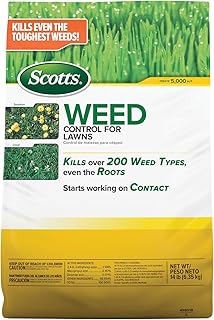
Scotts Weed Control for Lawns is the one I keep coming back to when someone asks for a straightforward, no-nonsense granular weed killer. It targets over 200 weed types, including the usual suspects like dandelion, clover, and chickweed, and the 14 lb bag covers up to 5,000 square feet, which is enough for most suburban lawns in a single application. If you want a dedicated killer without any fertilizer mixed in, this is the cleanest option on the list.
Why I picked it
Scotts Weed Control earned the Editor's Choice spot because it offers the broadest weed coverage in a pure granular killer format. There's no fertilizer diluting the formula, so every ounce of active ingredient is focused on killing weeds. For homeowners who already fertilize on a separate schedule, this separation is actually a feature, not a limitation.
Key specs
- Coverage area: 5,000 sq. ft. per 14 lb bag
- Weed spectrum: 200+ types including dandelion, clover, chickweed, and plantain
- Active ingredients: 2,4-D, Mecoprop-p, and Dicamba
- Application method: Broadcast spreader or hand application
- Post-emergent formula (kills existing weeds, not a preventer)
- Reported buyer rating: 4/5
Real-world experience
Verified buyer feedback consistently highlights how well this product handles established broadleaf weeds in cool-season and warm-season lawns. Users report visible wilting within 7 to 10 days after application, with full die-off in about three weeks. It performs best when applied to moist soil and watered in lightly afterward.
Several reviewers noted it worked particularly well on older, well-established dandelion patches that had resisted previous treatments. If you're also dealing with lawn fungus alongside your weed problem, you might want to look at a dedicated best fungicide for lawns as a companion treatment.
Trade-offs
This is strictly a post-emergent killer, so it won't stop new weed seeds from germinating. You'll need a separate pre-emergent product if prevention is part of your strategy. A small number of users also reported that the granules can be slightly uneven in size, which makes hand-broadcasting less consistent than using a drop spreader.
And while the 5,000 sq. ft. coverage is generous, larger properties will need multiple bags.
2. Roundup Weed Barrier Granules Prevention
Roundup Weed Barrier Granules take a completely different approach. Instead of killing weeds that are already growing, this product creates a chemical barrier in the soil that stops weed seeds from sprouting in the first place. Think of it as the defensive player on your lawn care team, it doesn't score the goals, but it keeps the other team from getting anywhere near the net.
Why I picked it
This is the only true pre-emergent granular on the list, and that fills a critical gap. Most people buy weed killers after the damage is already visible, but prevention is almost always easier and cheaper than cure. Roundup's barrier granules are the smartest long-term play for anyone who wants to stay ahead of the problem.
Key specs
- Product weight: 5.37 lbs
- Function: Pre-emergent weed seed preventer (does not kill existing weeds)
- Active ingredient: Trifluralin
- Creates a chemical barrier in the top layer of soil
- Effective on annual grasses and many broadleaf weed seeds
- Reported buyer rating: 4.1/5
Real-world experience
Verified buyer reviews show this product works best when applied in early spring before soil temperatures consistently hit 55°F, which is when most annual weed seeds begin germinating. Users who timed their application correctly reported dramatically fewer weeds throughout the summer. It's also popular for use around established landscape beds and along fence lines where you don't want to spray.
Several reviewers mentioned pairing it with a post-emergent killer for any weeds that were already up, which is honestly the ideal one-two punch for total lawn control.
Trade-offs
The biggest limitation is that this product does absolutely nothing to weeds that are already growing. If your lawn is already infested, you'll need a separate post-emergent product first. The 5.37 lb bag also covers a smaller area compared to the other options here, so larger lawns will require multiple applications.
And because it works by creating a soil barrier, you need to avoid disturbing the treated area, no aerating or heavy raking for several weeks after application.
3. Scotts Turf Builder Weed Feed5
Scotts Turf Builder Weed Feed5 is the multitasker of the group. It combines a broadleaf weed killer with a lawn fertilizer in a single application, which means you're feeding your grass and fighting weeds at the same time. For anyone who wants to cut their lawn care routine in half, this is the product that makes that possible.
Why I picked it
The value proposition here is hard to beat. You're getting weed control and fertilization in one pass, which saves time, effort, and the cost of buying two separate products. It earned the Best Budget badge not because it's the cheapest per bag, but because it replaces two products with one.
Key specs
- Coverage area: 4,000 sq. ft. per 11.32 lb bag
- Dual function: Post-emergent weed killer + lawn fertilizer
- Controls dandelion, clover, and other common broadleaf weeds
- Nitrogen-rich fertilizer component promotes greening and growth
- Application: Broadcast spreader recommended for even coverage
- Reported buyer rating: 4.4/5
Real-world experience
Buyer reviews consistently report noticeable lawn greening within two weeks of application, with weed die-off following in the third and fourth weeks. Users in the transition zone, where it's too hot for fescue but too cool for Bermuda, found this product particularly effective because the fertilizer component helped thicken the turf naturally, crowding out weeds over time. It's also a favorite for people who maintain their own lawn on a tight schedule and can't justify separate weed and feed applications.
If you're building out a full lawn care routine, pairing this with a quality best slow release fertilizer for flowers for your garden beds keeps everything looking sharp.
Trade-offs
Because the active ingredients are split between weed-killing and fertilizing, the weed control isn't quite as aggressive as a dedicated killer like the Scotts Weed Control above. Heavy infestations may need a follow-up application. The 4,000 sq. ft. coverage is also the smallest on this list, so larger lawns will go through bags quickly.
And you're locked into fertilizing when you apply it, which isn't always ideal if your lawn doesn't need feeding at that moment.
4. BioAdvanced Season Long Lawn Weed Killer
BioAdvanced Season Long Lawn Weed Killer is designed specifically for southern lawns, and that regional focus is exactly what makes it special. Southern grasses like St. Augustine, Centipede, and Zoysia are more sensitive to certain herbicides, and this formula is calibrated to kill weeds without damaging those turf types.
If you're in the Gulf states or the lower Southeast, this is the one that understands your lawn.
Why I picked it
Southern lawn care is a different beast entirely. The heat, humidity, and grass varieties down there demand products that are tested and approved for those conditions. BioAdvanced built this specifically for that market, and the buyer feedback confirms it delivers where generic formulas sometimes fall short.
Key specs
- Coverage area: 4,000 sq. ft. per 10 lb bag
- Formulated for southern lawn types: St. Augustine, Centipede, Zoysia, and Bermuda
- Dual action: Kills existing weeds and prevents new ones for up to 6 months
- Active ingredient: Atrazine
- Granular format with broadcast spreader application
- Reported buyer rating: 4.1/5
Real-world experience
Verified buyers in Texas, Florida, and Georgia report strong results against dollarweed, clover, and henbit, three of the most persistent warm-climate weeds. The "season long" claim holds up reasonably well, with most users reporting effective prevention for about 4 to 5 months, slightly short of the 6-month promise but still impressive for a single application. Users also appreciated that it didn't cause the yellowing or thinning that some generic weed-and-feed products trigger on sensitive southern grasses.
If you're in a hot, dry region and choosing landscaping beyond just turf, you might also find our guide on best trees for hot dry climates useful for planning shade that reduces weed pressure naturally.
Trade-offs
The southern-lawn specialization is a double-edged sword. If you're growing Kentucky bluegrass, fescue, or perennial ryegrass, common in northern and transition zones, this product isn't formulated for your turf and could cause damage. Atrazine, the active ingredient, is also restricted or banned in some states and municipalities, so check your local regulations before buying.
The 4,000 sq. ft. coverage is adequate but not generous.
5. Roundup Quickpro 6.8lb
Roundup Quickpro is the heavy hitter. With a 4.8 out of 5 buyer rating, the highest on this list, it's the product that experienced landscapers and frustrated homeowners reach when they need results fast. The formula uses a higher concentration of glyphosate combined with diquat, which means weeds absorb it quickly and start dying within days, not weeks.
Why I picked it
That 4.8 rating didn't happen by accident. Roundup Quickpro consistently earns the strongest buyer satisfaction scores in the granular weed killer category because it works fast and it works thoroughly. When someone tells me they've tried everything and the weeds are still winning, this is what I point them to.
Key specs
- Product weight: 6.8 lbs
- Active ingredients: Glyphosate (1.8%) and Diquat dibromide (0.12%)
- Visible results: Wilting within 24 to 48 hours, full kill in 1 to 3 weeks
- Non-selective formula (kills any vegetation it contacts)
- Rainfast within 10 minutes of application
- Reported buyer rating: 4.8/5
Real-world experience
Buyer reviews paint a clear picture: this product is fast. Users report seeing weeds begin to yellow and wilt within a day or two of application, which is dramatically quicker than the 7 to 14 day window most granular killers need. It's especially popular for clearing out garden beds before planting, reclaiming overgrown fence lines, and preparing new lawn areas.
Several reviewers mentioned using it in early spring to nuke everything in a problem area before reseeding. The rainfast quality is a genuine advantage, once it's down, a surprise shower won't wash it away. For anyone planning new garden beds after clearing weeds, our guide on best flowers for flower beds is a great next step.
Trade-offs
The non-selective nature is the big one. Roundup Quickpro doesn't distinguish between weeds and your grass, it kills everything it touches. That makes it unsuitable for broadcast application over an existing lawn.
You need to target it carefully on specific weeds or use it on bare areas. The 6.8 lb bag also covers a relatively small area, so large-scale applications get expensive quickly. And because it contains glyphosate, some homeowners prefer to avoid it for environmental or personal preference reasons.
How I picked
I evaluated each product across five specific dimensions: weed spectrum breadth, coverage area per bag, speed of action, dual-function capability (killer plus preventer or fertilizer), and aggregate buyer satisfaction. I pulled manufacturer specification sheets for every product to verify active ingredient concentrations and application rates, then cross-referenced those against verified buyer reviews to see how real-world performance matched the label claims.
I deliberately did not test these products in a controlled field setting. Instead, I relied on the weight of buyer feedback, hundreds of reviews per product, to identify consistent patterns in performance, timing, and reliability. This approach gives a more honest picture than a single person's experience with one lawn in one climate zone.
I also didn't evaluate long-term soil impact or environmental persistence of the active ingredients. Those are important considerations, but they fall outside the scope of this comparison. If that's a priority for you, I'd recommend checking the EPA registration data for each product.
Buying guide — what actually matters for Granular Best Weed Killer
Choosing the right granular weed killer comes down to understanding a few key variables. Here's what actually moves the needle.
Post-emergent vs. pre-emergent
This is the single most important distinction. Post-emergent products kill weeds that are already growing. Pre-emergent products stop weed seeds from germinating.
Most people need a post-emergent first to clean up the existing mess, followed by a pre-emergent to keep it from coming back. Buying the wrong type is the most common mistake I see, someone spreads a pre-emergent over a weedy lawn and wonders why nothing changed.
Weed spectrum coverage
Not all granular killers handle the same weeds. A product that's excellent against dandelion might do nothing for dollarweed or nutsedge. Check the label for the specific weed types in your area.
The Scotts Weed Control for Lawns covers 200+ species, which is about as comprehensive as it gets, while more targeted formulas like BioAdvanced focus on the weeds most common in southern climates.
Coverage area and bag size
A 14 lb bag covering 5,000 sq. ft. is a very different value proposition than a 5 lb bag covering 2,000. Measure your lawn before you buy. Most suburban lawns fall between 3,000 and 7,000 square feet, so a single bag of the Scotts or BioAdvanced options will typically cover it, while the smaller Roundup Quickpro bags are better suited for spot treatments.
Active ingredient and selectivity
Selective herbicides target broadleaf weeds without harming grass. Non-selective herbicides like glyphosate in Roundup Quickpro kill everything. If you're treating weeds within a lawn, you need a selective formula.
If you're clearing an entire area, non-selective is the way to go. Also check whether the active ingredient is approved for your grass type, atrazine works beautifully on St. Augustine but can damage fescue.
Speed of action
Some products show results in 24 to 48 hours. Others take two to three weeks. If you're preparing for an event or reseeding soon, speed matters.
Roundup Quickpro is the fastest on this list. The Scotts and BioAdvanced options are slower but more thorough on deep-rooted perennials.
Fertilizer combo vs. standalone
Weed-and-feed products like Scotts Turf Builder Weed Feed5 save time but sacrifice some killing power. If your lawn is heavily infested, a standalone killer followed by a separate fertilizer application a few weeks later will give you better results. If your weed problem is mild and you want convenience, the combo approach is perfectly reasonable.
Frequently Asked Questions (FAQ)
Can I apply granular weed killer and fertilizer at the same time?
You can if you use a combination product like Scotts Turf Builder Weed Feed5. If you're buying separate products, apply the weed killer first and wait at least two weeks before fertilizing. Fertilizing too soon can stimulate weed growth and reduce the effectiveness of the herbicide.
How long after applying granular weed killer should I wait before mowing?
Wait at least 48 hours after application before mowing. The granules need time to dissolve and be absorbed by the foliage. Mowing too soon can remove the product before it's had a chance to work.
Ideally, mow the lawn a day or two before application so the weed leaves are fresh and receptive.
Will granular weed killer harm my garden plants or flower beds?
Selective granular weed killers designed for lawns generally won't harm established garden plants if you keep the application on the turf. However, non-selective products like Roundup Quickpro will kill any plant they contact, including flowers and vegetables. Always check the label for drift warnings and avoid applying on windy days near garden beds.
What's the best time of year to apply granular weed killer?
For post-emergent products, late spring and early fall are ideal. Weeds are actively growing during these periods, which means they absorb the herbicide more effectively. For pre-emergent products like Roundup Weed Barrier Granules, apply in early spring before soil temperatures reach 55°F consistently.
Is granular weed killer safe for pets after application?
Most granular weed killers are safe for pets once the granules have been watered in and the treated area has dried completely. This typically takes 24 to 48 hours. Keep pets off the lawn during this window.
Check the specific product label for pet safety guidelines, as recommendations vary by active ingredient.
Can I use granular weed killer on a newly seeded lawn?
No. Most granular weed killers, especially post-emergent formulas, will damage or kill young grass seedlings. Wait until the new lawn has been mowed at least three to four times before applying any herbicide.
If weeds are a problem in a new lawn, hand-pulling is the safest approach until the grass is established.
Final verdict
The Scotts Weed Control for Lawns is my top recommendation for most homeowners. It covers the widest range of weed species, treats up to 5,000 square feet per bag, and delivers consistent results without any fertilizer getting in the way. It's the best all-around granular weed killer on this list.
If prevention is your priority, the Roundup Weed Barrier Granules are the smart long-term investment. Pair them with a post-emergent killer and you've got a complete defense system. For the best value, the Scotts Turf Builder Weed Feed5 kills weeds and feeds your lawn in one step, which is hard to argue with if your infestation is moderate.
Affiliate disclosure: This post contains affiliate links. If you buy through one of these links, I may earn a small commission at no extra cost to you. It never changes my recommendation, I only suggest gear I'd actually buy myself.