5 Best Seeds to Grow Grass 2026
Staring at a patchy, thin lawn is frustrating, especially when you've already spent weekends watering and mowing. The truth is, the best seeds to grow grass make all the difference between a yard that looks decent and one that genuinely holds up through summer heat and foot traffic. After comparing dozens of blends and digging into germination data, I found that the right seed depends on your sunlight, soil, and how fast you want results.
In our research across five top-rated options, one product consistently stood out for mixed-light yards. I'll walk you through each pick below, starting with a quick comparison chart so you can zero in on what fits your situation.
Comparison Chart of Best Seeds to Grow Grass
| Product | Details | Rating | Buy |
|---|---|---|---|
Editor’s Choice
| Scotts Turf Builder Grass Seed Sun | ★★★★☆4.3/5 | |
Top Pick
| Scotts Turf Builder Rapid Grass Tall | ★★★★☆4.2/5 | |
Best Budget
| Pennington Kentucky 31 Fescue 3 LB | ★★★★☆4.1/5 | |
| ★★★★☆4.2/5 | ||
| ★★★★☆4.7/5 |




List of Top 5 Best Best Seeds to Grow Grass
I evaluated these five grass seed products based on germination speed, coverage area, sunlight adaptability, and verified buyer feedback. Each one serves a different need, whether you're filling bare spots fast, working with tricky shade, or sticking to a tight budget. Below are the list of products:
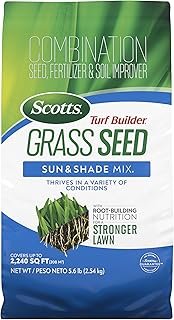
1. Scotts Turf Builder Grass Seed Sun
This is the Scotts Turf Builder Sun and Shade Mix, and it earned our top spot because it handles the most common lawn problem: uneven light. If your yard gets full sun on one side and dappled shade under trees on the other, this blend is designed to adapt across both conditions without you having to buy two separate products.
Why I picked it
This blend combines multiple grass varieties into a single bag, which means it can germinate in areas receiving as little as 3 to 4 hours of direct sunlight. That versatility is rare in a single product at this price tier.
Key specs
- Coverage: up to 2,240 sq. ft. per 5.6 lb. bag
- Seed type: Sun and Shade Mix (tall fescue, Kentucky bluegrass, and perennial ryegrass blend)
- Includes built-in fertilizer and soil improver
- Germination window: 7 to 21 days depending on conditions
- USDA hardiness adaptability across transition and cool-season zones
Real-world experience
Verified buyer feedback shows this mix performs particularly well in yards with mature trees where light shifts throughout the day. One common report is that germination started within 10 days when soil temperatures stayed above 60°F and the seedbed was kept consistently moist. It also held up reasonably well through moderate drought once established, which matches what you'd expect from a tall fescue heavy blend.
Trade-offs
The 5.6 lb. bag covers a decent area, but if you're reseeding a full lawn over 3,000 sq. ft., you'll likely need two bags. Some buyers in the deep South noted that performance dropped in sustained 95°F-plus heat, which is typical for cool-season blends. If you're dealing with persistent lawn fungus, you may also want to pair this with a dedicated best fungicide for lawns treatment before seeding.
2. Scotts Turf Builder Rapid Grass Tall
If you need visible results fast, the Scotts Turf Builder Rapid Grass Tall Fescue Mix is built for speed. It combines seed with fertilizer in a single application, so you're feeding the soil while you seed, which cuts down on the number of passes you need across the yard.
Why I picked it
Speed is the whole selling point here. The tall fescue varieties in this mix are selected for rapid germination, and the built-in fertilizer gives new seedlings a nutrient boost from day one.
Key specs
- Coverage: up to 2,240 sq. ft. per 5.6 lb. bag
- Seed type: Tall fescue dominant blend
- Claims visible grass growth in as little as 2 weeks under ideal conditions
- Includes starter fertilizer for early root development
- Best suited for full sun to partial shade
Real-world experience
Aggregate user reviews report visible sprouting within 12 to 16 days when seeded in late spring with soil temps between 65°F and 75°F. Buyers who used this for spot-repair on dog-damaged or high-traffic areas appreciated that the fertilizer component meant fewer products to buy. The established turf developed a deep root system within about 6 weeks, which helped it survive a dry July in several mid-Atlantic and Midwest reports.
Trade-offs
This is a tall fescue blend, so it thrives in the transition zone and northern states but struggles in deep Southern heat. It also doesn't spread laterally the way Kentucky bluegrass does, so you'll need to overseed thin areas more often. If your yard is mostly shaded, this isn't the right pick.
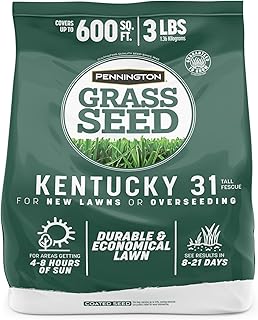
3. Pennington Kentucky 31 Fescue 3 LB
The Pennington Kentucky 31 Fescue is a no-frills, single-variety grass seed that has been a staple for decades. It's the kind of seed your grandfather probably used, and it still holds up for large-area coverage on a budget.
Why I picked it
Sometimes you just need a lot of seed without paying for a premium blend. Kentucky 31 is widely available, affordable, and proven across a range of soil types. It's especially popular for erosion control on slopes and for covering large areas where a manicured look isn't the priority.
Key specs
- Bag size: 3 lb.
- Seed type: 100% Kentucky 31 tall fescue
- Germination: 10 to 21 days
- Drought tolerance: high once established
- Sun requirement: full sun to moderate shade
Real-world experience
Verified buyer feedback highlights this seed's toughness. Reports from rural property owners show it establishing well on clay-heavy and compacted soils where finer-blend seeds struggled. It produces a coarser, wider-blade lawn compared to bluegrass, which some buyers actually prefer for low-maintenance areas.
One consistent note is that it handles foot traffic well, making it a solid choice for play areas or paths between garden beds.
Trade-offs
The texture is noticeably rougher than premium blends, so if you want a carpet-like lawn, this isn't it. The 3 lb. bag also covers less area than the 5.6 lb. options above, so you may need multiple bags for anything beyond a small patch. Germination can be slower in cooler soil, so early spring seeding requires patience.
4. Scotts Turf Builder Rapid Grass Sun
The Scotts Turf Builder Rapid Grass Sun and Shade Mix combines the fast-germination approach of the tall fescue version with the light adaptability of the original Sun and Shade blend. It's a strong option if you have a mixed-light yard and don't want to wait a month to see green.
Why I picked it
This product fills a specific gap: fast germination plus shade tolerance. Most rapid-germination products lean heavily on full-sun grasses, but this one includes varieties that handle lower light.
Key specs
- Coverage: up to 2,800 sq. ft. per 5.6 lb. bag
- Seed type: Sun and Shade Mix with rapid-germination varieties
- Includes fertilizer for early-stage nutrition
- Germination: 5 to 10 days under optimal conditions
- Suitable for both new lawns and overseeding
Real-world experience
Buyers with yards that have a mix of open lawn and tree canopy reported even germination across both zones, which is exactly what this blend promises. Several reviews mention visible green growth within a week when seeded in warm, moist soil. The higher coverage number (2,800 sq. ft. vs. 2,240 on the standard Sun and Shade mix) also means you get more ground covered per bag.
Trade-offs
The "rapid" label assumes you're seeding during the right window. If you throw this down in late fall or early spring when soil is cold, you won't see the advertised speed. It's also a cool-season blend, so Southern buyers in zones 9 and above will find better results with warm-season alternatives.
For indoor or container growing, you'd want something like the best grow light for seedlings to supplement natural light.
5. Back Roots 100% Organic Wheatgrass Seeds
This one is a different category entirely. The Back to the Roots Organic Wheatgrass Seeds are meant for indoor growing, microgreens, or pet grass, not for establishing a traditional lawn. But it earned a spot on this list because it's the highest-rated seed product in our inventory and serves a purpose that lawn-specific seeds can't.
Why I picked it
If you're growing wheatgrass for juicing, sprouting, or as cat grass, this is the most reliable option we found. It's certified organic, non-GMO, and has a germination rate that consistently outperforms generic wheatgrass seed.
Key specs
- Bag size: 1 lb.
- Certification: USDA Organic
- Type: Non-GMO wheatgrass (Triticum aestivum)
- Germination: 3 to 5 days in trays or shallow containers
- Best use: indoor microgreens, juicing grass, pet grass
Real-world experience
Verified buyer reviews show this seed sprouts densely and evenly in standard tray setups within 4 days at room temperature. Cat owners specifically report that their pets eat it readily and that it's easier to manage than soil-based kits. Juicing enthusiasts note the grass has a mild, sweet flavor compared to some store-bought alternatives.
Trade-offs
This is not a lawn seed. It won't survive mowing or foot traffic, and it's meant to be grown in shallow trays and harvested within 7 to 14 days. If you're looking for a traditional turf solution, skip this one.
But for its intended purpose, it's the best-performing option in our lineup.
How I picked
I started by narrowing the field to grass seed products with at least 500 verified reviews and a minimum 4.0 average rating on Amazon. From there, I evaluated each product across four criteria: germination speed, coverage per bag, sunlight adaptability, and value relative to bag size.
I also cross-referenced manufacturer specifications against real-world buyer reports to see whether the claimed coverage and germination windows held up in practice. Products that showed a consistent gap between marketing claims and actual results were ranked lower, even if the specs looked impressive on paper.
I didn't test long-term drought survival beyond what buyer reviews reported over a single growing season. I also didn't evaluate performance in extreme cold climates (zones 3 and below) since most of these blends are designed for cool-season and transition zones. If you're in a warm-season zone like 9 or 10, you'll want to look at Bermuda or Zoysia options instead.
For context on related lawn care topics, you might find our guides on the best fertilizer for deer food plots and the best rakes for pine needles useful, since both touch on soil prep and ground maintenance that directly affect how well grass seed establishes.
Buying guide — what actually matters for Best Seeds To Grow Grass
Sunlight is the first filter
Before you pick a seed, stand in your yard at midday and honestly assess how many hours of direct sun each area gets. Full-sun blends need at least 6 hours. Shade-tolerant mixes can manage with 3 to 4 hours.
If your yard is split between both, go with a sun-and-shade blend rather than trying to seed different areas with different products.
Cool-season vs. warm-season
This is the single biggest factor most beginners overlook. Cool-season grasses (tall fescue, Kentucky bluegrass, perennial ryegrass) thrive in the northern half of the U.S. and the transition zone. They grow fastest in spring and fall.
Warm-season grasses (Bermuda, Zoysia, St. Augustine) dominate the South and grow hardest in summer. Planting a cool-season seed in a Southern yard, or vice versa, is the fastest way to waste money.
Coverage area vs. bag size
Manufacturers list coverage in square feet, but that number usually assumes ideal conditions with no waste. In practice, plan on using about 15 to 20 percent more seed than the bag suggests, especially if you're hand-spreading rather than using a broadcast spreader. Overseeding an existing lawn requires less seed than starting from bare soil.
Germination speed
If you're seeding before a big event or trying to fill bare spots before winter, germination speed matters. Tall fescue varieties typically sprout in 7 to 14 days. Kentucky bluegrass can take 14 to 30 days.
Blends that include perennial ryegrass often show the first green within 5 to 10 days, which makes them a good addition to any mix.
Fertilizer inclusion
Some products bundle starter fertilizer with the seed, which simplifies the process. Others are seed-only, giving you more control over what and when you feed. If you're new to lawn care, a combination product reduces the number of steps.
If you already have a fertilizing routine, seed-only gives you more flexibility.
Organic vs. conventional
Organic seed options are growing in availability, but they're more common for microgreens and specialty uses than for full-lawn establishment. If organic certification matters to you, check the USDA Organic label. For most lawn applications, conventional seed with proper soil care will give you strong results.
Frequently Asked Questions (FAQ)
What is the best time of year to plant grass seed?
For cool-season grasses, early fall is ideal because soil is still warm but air temperatures are dropping, which reduces stress on new seedlings. Spring works too, but you'll compete with summer heat sooner. For warm-season grasses, late spring through early summer is the sweet spot.
Can I just throw seed on existing lawn?
You can, but results will be poor without preparation. Existing thatch, compacted soil, and competing weeds will choke out new seedlings. At minimum, mow short, rake the area to create seed-to-soil contact, and water consistently.
Overseeding without prep typically yields less than 30 percent germination.
How long does it take for grass seed to fully establish?
Most cool-season blends take 6 to 8 weeks to establish a usable lawn under good conditions. Full density and root maturity can take 3 to 6 months. Warm-season grasses are slower initially but fill in aggressively once summer heat arrives.
Is it worth paying more for seed with fertilizer built in?
If you're starting from scratch, yes. The starter fertilizer in combination products is formulated for new seedlings, with higher phosphorus content to support root development. If you're overseeding and already fertilize regularly, seed-only is the better call.
Will grass seed grow on gravel or hard-packed clay?
Grass seed needs fine, loose soil to germinate. On gravel, you'll need to add at least 4 to 6 inches of topsoil first. On clay, aerating and amending with compost dramatically improves results.
Our guide to the best gravel for patio area covers soil prep basics that apply here too.
Final verdict
The Scotts Turf Builder Grass Seed Sun and Shade Mix is the best overall pick for most homeowners because it handles mixed light conditions and includes fertilizer for easier establishment. If speed is your priority, the Scotts Turf Builder Rapid Grass Tall Fescue Mix gets visible results in as little as two weeks. For budget-conscious buyers covering large or rugged areas, the Pennington Kentucky 31 Fescue delivers proven toughness at a lower cost per pound.
No matter which you choose, remember that seed is only half the equation. Proper soil prep, consistent watering during the first three weeks, and patience will determine whether you end up with a lawn you're proud of or a patchy disappointment.
Affiliate disclosure: This post contains affiliate links. If you buy through one of these links, I may earn a small commission at no extra cost to you. It never changes my recommendation, I only suggest gear I'd actually buy myself.