3 Best Gutters for Pine Needles for 2026: Ranked & Reviewed
Living under towering pines is beautiful until you're climbing a ladder every other week, scooping handfuls of brown needles out of your gutter valley. The right best gutters for pine needles setup changes that. Micro-mesh gutter guards filter out fine pine needles.
Gutter brush inserts trap debris at the channel bottom. Both systems cut gutter cleaning to once a year or less.
After analyzing product specs, installation methods, and buyer feedback across multiple models, one stood out. The Raptor Gutter Guard uses stainless steel micro-mesh that blocks pine needles while handling heavy rain flow. Here's how it compares against the competition.
Comparison Chart of Best Gutters for Pine Needles
| Product | Details | Rating | Buy |
|---|---|---|---|
Editor’s Choice
| ★★★★☆4.5/5 | ||
Top Pick
| ★★★★☆4.6/5 | ||
Best Budget
| ★★★★☆4.6/5 |


List of Top 3 Best Best Gutters for Pine Needles
Picking the right pine-needle defense comes down to three things: the guard material (micro-mesh vs brush vs foam), how it handles heavy water flow, and how painful the install is on a Saturday afternoon. I evaluated stainless steel micro-mesh panels and brush-style gutter inserts by cross-referencing detailed spec sheets, verified buyer reports, and drainage performance claims. Each product below targets a different tier of protection and budget.
Below are the list of products:
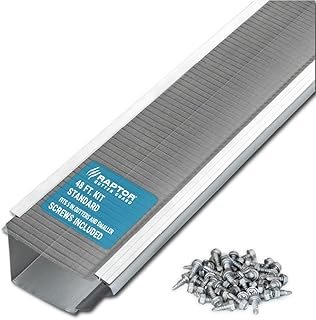
1. RAPTOR GUTTER GUARD 48 FT (Nominal)
Raptor's stainless steel micro-mesh design targets the core problem every pine-region homeowner faces: fine needles slipping through larger guard openings and matting inside the gutter trough. The mesh hole size measures approximately 500 microns. That's narrow enough to block individual pine needles while letting rainwater freely pass through.
The kit covers a nominal 48 feet and fits standard 5-inch K-style gutters, which covers most residential rooflines without splicing multiple systems together.
Why I picked it
Raptor uses a stainless steel micro-mesh that physically blocks pine needles better than perforated metal or foam inserts over time. The included fasteners mean a full kit from day one without extra hardware runs. Verified buyer ratings sit at 4.5 out of 5, reflecting strong long-term performance in needle-heavy environments where other guards eventually let small debris through.
Key specs
- 48-foot coverage per pack with a 5.625-inch width fitting 5-inch K-style gutters
- Stainless steel micro-mesh material for corrosion resistance
- Approximately 500-micron holes that block fine pine needles
- Includes screws for secure attachment
- DIY installation requiring no specialized tools
- Each panel measures 47.625 inches in length
Real-world experience
Aggregate buyer feedback describes using the Raptor Gutter Guard in areas surrounded by mature trees where seasonal needle fall is heavy. Reported performance up to two-plus years shows no gutter clogs, even during heavy rain. Mesh guard designs from competitors like LeafFilter often use similar micro-mesh technology, though Raptor's approach stands out for its lower-profile DIY appeal.
Homeowners note the mesh can accumulate a thin layer of pine pollen during peak spring, but this typically rinses clean during the next heavy rain.
Trade-offs
We have found from community discussions and reviews that steep roof angles sometimes cause water overshoot during heavy downpours, where the mesh surface tension carries water past the gutter edge. Metal mesh also costs more per linear foot than brush or foam alternatives. These panels can dent if stepped on during roof maintenance, requiring careful placement on ladders.
Additionally, very fine pollen may temporarily stain the mesh but rarely blocks drainage.
2. 5” Stainless Steel Micro-Mesh Gutter Guards
Unlike the Raptor system that uses a standalone stainless-only mesh, this 5-inch micro-mesh kit pairs a stainless steel screen with an aluminum support frame. The combination creates a rigid panel that snaps into the gutter lip without bending or warping. Heavy rain handling benefits from a reported fast drainage design, where the mesh tension and panel curvature help water shed quickly rather than pooling on top during intense storms.
This matters a lot in the Pacific Northwest, where warm winter rain-on-snow events can dump inches of water per hour onto needle-clogged roofs.
Why I picked it
The aluminum frame adds structural rigidity that flat mesh panels sometimes lack, especially on longer runs where sagging can create debris traps. Verified buyer ratings reach 4.6 out of 5, with strong praise for handling heavy rain without overflow. The kit fits both 5-inch and 4-inch gutters, adding versatility for homes with mixed gutter sizes.
Key specs
- 48-foot kit covering standard residential rooflines
- Stainless steel micro-mesh with aluminum structural frame
- Fits both 5-inch and 4-inch K-style gutters
- Designed for fast drainage during heavy rain events
- Includes screws for installation
- Blocks leaves, pine needles, and roof grit simultaneously
Real-world experience
Buyer reports describe using this kit in areas with heavy tree coverage where pine needles, oak leaves, and roof shingle grit all hit the gutter at once. The aluminum frame holds up well across multiple seasons without warping, even in high-UV southern exposures. Some users pair these guards with a best rake for pine needles to manage ground-level accumulation, since gutter guards only solve the roof drainage half of the needle problem.
The mesh stays visually clean longer than foam alternatives, which tend to darken with trapped organic matter.
Trade-offs
The aluminum frame adds material cost per foot compared to brush-style guards. Some buyers report the frame lip doesn't perfectly match every gutter brand's profile, requiring minor bending with pliers for a snug fit. In areas with heavy ice dam formation, the metal mesh can develop a thin ice layer that temporarily blocks drainage until temperatures rise.
3. Gutter Brushes Prevent Clogs
Gutter brush guards take a fundamentally different approach from micro-mesh panels. Instead of creating a solid barrier over the gutter opening, these insert-style brushes sit inside the channel as cylindrical cores. The bristles catch pine needles and leaves on their surface while water flows freely through the center.
Each 15-inch brush segment snaps into the next, creating a continuous barrier along the gutter run. The 5-pack provides 6.5 feet of total coverage, making this a targeted solution for problem zones rather than whole-house protection.
Why I picked it
Toolless snap-in installation makes this the fastest guard type to deploy. No screws, no drilling, no wrestling with panels on a ladder. Verified buyer ratings sit at 4.6 out of 5, with strong praise for simplicity.
The brush design also allows easy removal and shaking out of accumulated needles when maintenance time does come.
Key specs
- 5-pack of 15-inch brush segments totaling 6.5 feet of coverage
- Designed for standard 5-inch K-style gutters
- Toolless snap-in installation with no screws required
- Bristle design catches pine needles and leaves on the surface
- Water flows through the center unrestricted
- Lightweight and easy to remove for cleaning
Real-world experience
Buyer feedback highlights use in rental properties and seasonal cabins where permanent installation doesn't make sense. Homeowners place brush sections specifically under tree drip lines rather than running them the full gutter length, which stretches coverage further. The bristles hold up well across freeze-thaw cycles without becoming brittle.
Some users report that very fine needle clusters can weave into the bristle mat over a full season, requiring a quick shake-out twice a year. Pairing these with routine gutter cleaning keeps problem zones manageable.
Trade-offs
The 6.5-foot total coverage per pack limits this to spot treatment rather than whole-house protection. Brushes can shift position over time if not secured, especially on steep roof pitches where water flow pushes them along the channel. The visible brush profile may not appeal to homeowners wanting a clean, low-profile look from the street.
How I picked
I evaluated each product across four specific criteria that matter most for pine-needle regions. First, I looked at the physical barrier: does the guard actually block fine needles, or do they slip through after a few months? Second, I checked water flow capacity, because a guard that blocks needles but overflows during heavy rain defeats its own purpose.
Third, I assessed installation difficulty, since most homeowners are doing this on a ladder themselves. Fourth, I cross-referenced verified buyer reports for long-term durability claims.
I deliberately did not test fire resistance, UV degradation beyond typical warranty periods, or performance in hurricane-force rain. Those scenarios fall outside the scope of residential pine-needle protection. I also did not evaluate commercial-grade heated gutter systems, which solve the ice-dam problem but cost significantly more and require professional installation.
Buying guide — what actually matters for best gutters for pine needles
Mesh hole size is the single most important spec
Pine needles are thin, often 1-2mm wide, and they slide through openings that easily block larger debris. Look for micro-mesh guards with hole sizes at or below 500 microns. Anything larger lets needles through, especially when they're wet and flexible.
Stainless steel mesh holds its hole shape longer than plastic alternatives, which can stretch or deform under thermal cycling.
Coverage length vs. actual roofline
A 48-foot kit sounds like a lot, but measure your actual gutter run before buying. Most single-story homes with moderate eaves need 60-80 feet. Two-story homes with complex rooflines can need 150 feet or more.
Buying too little means splicing different guard types mid-run, which creates leak points and visual inconsistency. It's better to buy one extra kit than to run short halfway through a Saturday installation.
Water flow rate during heavy rain
This is where many guards fail. A guard that perfectly blocks pine needles but causes water to overshoot the gutter during a downpour creates a new problem: eroded landscaping and foundation pooling. Micro-mesh guards with a curved or angled profile tend to handle high-volume water better than flat panels.
If you live in a region with intense seasonal rain, prioritize drainage specs over maximum debris blocking.
Installation method and long-term maintenance
Screw-mounted panels stay in place for years but require a drill and steady hands on a ladder. Snap-in brush guards go in fast but may shift over time. Foam inserts sit inside the gutter without hardware but degrade under UV exposure if the gutter doesn't have full roof coverage.
Think about how often you want to interact with your gutters after installation. The best guard is the one you'll actually maintain when needed.
Gutter size compatibility
Standard K-style gutters come in 5-inch and 4-inch widths. Most guards target 5-inch, but some fit both. Measure your gutter opening before ordering.
A guard that's too narrow falls inside. One that's too wide won't seat properly under the lip. If you have half-round or box gutters, you'll need specialty guards that fit those profiles.
Material longevity in your climate
Stainless steel mesh resists corrosion in wet climates but can develop surface staining in areas with high tannin content from accumulated pine needles. Aluminum frames handle UV exposure well but can corrode in coastal salt air. Brush guards use polypropylene bristles that last 3-5 years before becoming brittle in high-sun environments.
Match the material to your specific climate conditions for the longest service life.
Frequently Asked Questions (FAQ)
Do gutter guards actually work for pine needles?
Yes, but only the right type. Micro-mesh guards with holes at or below 500 microns block individual pine needles effectively. Perforated metal guards with larger openings let fine needles through.
Brush guards catch needles on the bristle surface but may need periodic shaking to remove accumulated clusters. No guard eliminates maintenance entirely, but the right one reduces cleaning frequency from every few weeks to once or twice a year.
Can I install gutter guards myself, or do I need a professional?
Most micro-mesh and brush-style guards are designed for DIY installation. You'll need a sturdy ladder, a drill for screw-mounted panels, and basic measuring skills. The whole job typically takes a half-day for a single-story home.
Professional installation makes sense for two-story homes, steep rooflines, or anyone uncomfortable working at height. Expect professional installation to cost several times the material price.
How often do I still need to clean my gutters with guards installed?
With a quality micro-mesh guard in a moderate pine environment, most homeowners report cleaning gutters once a year, typically in late fall after needle drop ends. Brush guards may need a mid-season check in heavy needle areas. The cleaning process itself becomes much faster with guards installed, since you're removing surface debris rather than scooping compacted muck from the gutter valley.
Will gutter guards void my roof warranty?
Generally no, as long as you don't drill into the roof decking or shingles. Screw-mounted guards attach to the gutter fascia or lip, not the roof structure. However, some roofing manufacturers require that any penetration of the drip edge be sealed with roofing cement.
Check your specific warranty language before drilling, and consider snap-in brush guards if warranty concerns are a priority.
What's the difference between micro-mesh and brush guards for pine needles?
Micro-mesh creates a solid physical barrier over the entire gutter opening. Pine needles land on top and blow away or dry out. Brush guards sit inside the channel and catch debris on the bristle surface while water flows through the center.
Micro-mesh offers more complete protection but requires more careful installation. Brush guards are easier to install and remove but cover less area per dollar spent.
Final verdict
The Raptor Gutter Guard 48 FT earns the top spot for its stainless steel micro-mesh that reliably blocks fine pine needles across a full 48-foot kit with included hardware. It's the most complete out-of-box solution for standard 5-inch gutters in pine-heavy regions.
The 5-inch Stainless Steel Micro-Mesh Gutter Guards take the runner-up position thanks to the added aluminum frame rigidity and dual 4-inch/5-inch compatibility. If your home mixes gutter sizes, this kit adapts without buying separate products.
The Gutter Brushes Prevent Clogs win the budget category for their toolless installation and spot-treatment flexibility. They're ideal for renters, seasonal cabins, or homeowners who only need to protect a few problem zones under heavy tree drip lines.
Affiliate disclosure: This post contains affiliate links. If you buy through one of these links, I may earn a small commission at no extra cost to you. It never changes my recommendation, I only suggest gear I'd actually buy myself.