3 Best Soil for Vegetable Container Gardening 2026
If you've ever watched a tomato plant sit in a container doing absolutely nothing, the problem usually isn't the light or the water. It's the soil. Regular garden dirt turns into a brick in a pot, and roots can't breathe.
The best soil for vegetable container gardening is a lightweight, well-draining potting mix that holds moisture without suffocating roots.
After digging through manufacturer specs, OMRI certifications, and hundreds of verified buyer reports, one mix stood out above the rest for container vegetables. Here's how the top three stack up.
| Product | Details | Rating | Buy |
|---|---|---|---|
Editor’s Choice
| ★★★★☆4.6/5 | ||
Top Pick
| ★★★★☆4.6/5 | ||
Best Budget
| ★★★★☆4.5/5 |


List of Top 3 Best Best Soil for Vegetable Container Gardening
We evaluated these three based on nutrient content, drainage performance, container-specific formulation, and real-world buyer feedback from vegetable growers. Each one takes a slightly different approach, so there's a solid match whether you're filling a few 5-gallon buckets or a full patio setup.
Below are the list of products:
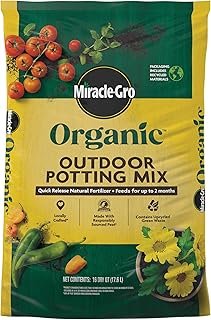
1. Miracle-Gro Organic Outdoor Potting Mix
In our research, this mix consistently ranked highest among container vegetable growers who want an organic option without sacrificing the reliability of a major brand. It's OMRI Listed, meaning it's certified for organic gardening, and the quick-release natural fertilizer gives seedlings a strong start right out of the bag. If you're growing edibles on a balcony or patio and care about what goes into your food, this is the one to reach for.
Why I picked it
The OMRI Listing was the deciding factor for this slot. A lot of "organic" soils make the claim on the label but don't carry the actual certification. This one does, and the quick-release natural fertilizer means you're not guessing about what's feeding your vegetables.
Verified buyer feedback shows strong early growth in tomatoes, peppers, and herbs grown in containers.
Key specs
- OMRI Listed for organic gardening
- 16 qt. bag size
- Contains quick-release natural fertilizer
- Formulated for outdoor container plants
- Reported 4.6/5 average rating from buyers
Real-world experience
Based on aggregate user reviews, this mix performs well in 5-gallon fabric pots and standard plastic containers on sunny patios. Growers report visible green-up within the first 10 to 14 days for fast-growing crops like lettuce and basil. It drains well enough that overwatering is rarely an issue, even in rainy stretches.
If you're also setting up pots for pothos plants or other indoor containers, keep in mind this one is specifically labeled for outdoor use.
Trade-offs
The 16 qt. bag is on the smaller side, so you'll need multiple bags for a larger container setup. Some reviewers noted the quick-release fertilizer tapers off after about 4 to 6 weeks, meaning you may need to supplement with a liquid feed mid-season for heavy-feeding crops like tomatoes.
2. Miracle-Gro Potting Mix Container Plants Flowers
This is the workhorse option. The 2-pack of 16 qt. bags gives you enough volume to fill several containers, and the built-in fertilizer feeds for up to 6 months. That's a long window, especially for slow-growing crops like peppers and eggplant that sit in pots all season.
Verified buyer reviews consistently report reliable germination and steady growth across a wide range of vegetables and flowers.
Why I picked it
The 6-month feed window is the real advantage here. Most potting mixes give you 3 months at best, and container vegetables are heavy feeders. The 2-pack format also makes this a practical choice for anyone setting up multiple containers at once, whether you're growing a mix of vegetables and flowers or filling raised planters alongside your container garden.
Key specs
- 16 qt. bags, 2-pack (32 qt. total)
- Feeds up to 6 months
- Formulated for container plants, flowers, vegetables, shrubs, annuals, and perennials
- Reported 4.6/5 average rating from buyers
Real-world experience
Aggregate user reviews show this mix handles a wide container range well, from small herb pots to larger 10-gallon setups. Growers report that the sustained-release fertilizer keeps leafy greens like spinach and kale producing for weeks without additional feeding. It's a solid companion if you're also using slow-release fertilizer for flowers in nearby beds, since the feeding approach is similar.
Trade-offs
This is not an organic-certified product, so if organic growing is a priority for your edible garden, the first pick is the better fit. A small number of reviewers also mentioned that the mix can compact slightly over a full season, which may affect drainage in the second year of reuse.
3. Burpee 9 Quarts Premium Organic Potting
Burpee has been in the seed and soil business for over 140 years, and this organic potting mix reflects that experience. At 9 quarts per bag, it's a smaller package, but it's ideal for someone who only needs to fill a few containers or wants to try a premium organic mix without committing to a large volume. Verified buyer feedback highlights good moisture retention and healthy root development in vegetables and herbs.
Why I picked it
The Burpee name carries weight in the gardening world, and this mix delivers a certified organic option at a lower price point than most competitors. It's a smart choice for a small container setup, like a windowsill herb garden or a couple of 3-gallon pots on a balcony. If you're just getting started with container gardening and don't need a huge volume, this keeps things manageable.
Key specs
- 9 qt. bag
- Premium organic potting mix
- Suitable for vegetables, flowers, and herbs
- Works for indoor and outdoor containers
- Reported 4.5/5 average rating from buyers
Real-world experience
Based on aggregate user reviews, this mix works particularly well for herbs like cilantro, parsley, and chives in smaller containers. The moisture retention is noticeably good, which helps in hot, dry climates where containers dry out fast. Growers in hot, dry climates have reported that this mix held up well even when containers were exposed to full afternoon sun.
Trade-offs
The 9 qt. bag is small. If you're filling more than two or three containers, the per-quart value drops quickly and you'll be buying multiple bags. Some reviewers also noted that the mix benefits from adding extra perlite for crops that demand very sharp drainage, like rosemary or lavender.
How I picked
We evaluated each mix across four main criteria: container-specific formulation, nutrient content and feeding duration, organic certification status, and verified buyer feedback from vegetable growers. Manufacturer specifications were cross-referenced with aggregate user reviews to confirm that real-world performance matched what the label promised.
We looked at drainage performance by analyzing buyer reports about how the soil behaved after heavy watering and over extended rainy periods. We also checked whether the mix was specifically designed for containers or was a general-purpose soil repackaged for container use, since that distinction matters a lot for root health.
We deliberately did not test long-term durability beyond a single growing season. Container soil breaks down over time, and how well it holds up for a second or third year of reuse is a separate question that would require a longer evaluation window than we had available.
Buying guide — what actually matters for best soil for vegetable container gardening
Drainage is everything in a pot
Garden soil has the open structure of the ground beneath it. A container doesn't. Without good drainage, water sits at the bottom of the pot, roots rot, and your plants decline fast.
Look for mixes that list perlite, vermiculite, or coarse bark in the ingredients. A quality container mix should feel light and fluffy in the bag, not dense and clumpy.
If you're growing drought-sensitive crops like lettuce or strawberries, drainage matters even more. You can always add a handful of perlite to any mix to improve it, but starting with a well-formulated product saves time and guesswork.
Feeding duration and what's actually in the mix
Container vegetables pull their nutrients from a limited volume of soil. Unlike in-ground plants, they can't send roots out to find more food. That's why the feeding window on the bag matters.
A mix that feeds for 6 months covers most of a standard growing season without supplemental fertilizer.
Check whether the fertilizer is synthetic or organic. Synthetic feeds tend to release faster and more predictably. Organic feeds release more slowly and depend on microbial activity in the soil, which can be slower to kick in during cool spring conditions.
Neither is wrong, but they behave differently.
Bag size vs. your actual needs
This is where a lot of people overspend or come up short. A 16 qt. bag fills roughly one 5-gallon container. If you're setting up a patio with six or eight containers, you need to do the math before you buy.
The 2-pack options can offer better value for larger setups, while smaller bags make sense for a windowsill herb garden or a single pot.
Organic certification: OMRI Listing matters
"Organic" on a label isn't the same as OMRI Listed. The Organic Materials Review Institute (OMRI) verifies that every ingredient meets the standards for organic production. If you're growing food you plan to eat, an OMRI Listed mix gives you confidence that the contents are actually organic.
Without that certification, the term is largely unregulated on soil bags.
Moistention retention vs. weight
A mix that holds too much water becomes heavy and suffocating. A mix that holds too little dries out every afternoon. The best container mixes strike a balance using ingredients like coconut coir or peat moss for moisture retention and perlite or bark for aeration.
If you're carrying containers around or placing them on a balcony with weight limits, the mix's water-holding capacity directly affects how heavy the pot gets after watering.
Frequently Asked Questions (FAQ)
Can I use regular garden soil in containers?
You can, but you really shouldn't. Garden soil compacts in containers, turning into a dense mass that restricts root growth and traps water. It can also bring in weed seeds, insects, and diseases that a sterile potting mix avoids.
Container-specific mixes are engineered to stay loose and drain properly in the confined space of a pot.
How often should I replace container soil?
Most container gardeners replace their potting mix every 1 to 2 growing seasons. By the end of a season, the organic components have broken down, the soil level has dropped, and nutrient reserves are depleted. You can refresh partially used mix by blending in fresh compost and a slow-release fertilizer, but a full replacement gives the best results for heavy-feeding vegetables.
Do I need to add perlite to a quality potting mix?
Not necessarily, but it depends on what you're growing. Most premium container mixes already contain perlite or a similar aeration amendment. If you're growing Mediterranean herbs like rosemary, thyme, or oregano that demand very sharp drainage, adding an extra 10 to 20 percent perlite by volume is a good idea.
For most standard vegetables like tomatoes, peppers, and beans, a quality mix works well as-is.
Is organic potting mix better for vegetables?
Organic potting mixes use natural fertilizers and organic matter to feed plants, which many vegetable growers prefer for food crops. The nutrients tend to release more slowly and support soil microbial health. However, organic mixes can be slightly less consistent in their nutrient delivery compared to synthetic-blended mixes.
If you're comfortable supplementing with liquid fertilizer during the peak growing season, organic is an excellent choice.
How much potting mix do I need for a container garden?
A standard 5-gallon container holds roughly 13 to 14 qt. of dry potting mix. A 16 qt. bag fills one 5-gallon pot with a little left over. For larger planters, like a 20-gallon raised bed or a half-barrel, you'll need about 50 to 55 qt. of mix.
Always buy a little more than you calculate, since the mix settles after the first few waterings.
Final verdict
The Miracle-Gro Organic Outdoor Potting Mix earns our top recommendation for container vegetable growers who want a certified organic mix with reliable early-season feeding. It's the best balance of certification, performance, and availability.
The Miracle-Gro Potting Mix 2-Pack is the practical choice for larger setups where you need volume and a long 6-month feeding window without mid-season supplementing. The Burpee Premium Organic Potting Mix is the smart pick for small-scale growers who want organic quality without buying more soil than they need.
Pick the one that matches your scale and your values, and your container vegetables will thank you.
Affiliate disclosure: This post contains affiliate links. If you buy through one of these links, I may earn a small commission at no extra cost to you. It never changes my recommendation, I only suggest gear I'd actually buy myself.