3 Best Perennials for Hanging Baskets (2026) — Buyer’s Guide
Best Perennials For Hanging Baskets can transform a bare porch railing or pergola into a cascading wall of color with surprisingly little effort. The trick is picking trailing or mounding varieties that come back year after year instead of treating your baskets like annuals you replace every spring.
After comparing growth habits, bloom duration, and buyer feedback across dozens of options, the Creeping Jenny Live Plant (Lysimachia nummularia) stands out as the most reliable all-around performer for hanging baskets. Let's stack it up against two strong alternatives so you can match the right plant to your light, climate, and style.
| Product | Details | Rating | Buy |
|---|---|---|---|
Editor’s Choice
| Creeping Jenny Live Plant (Lysimachia nummularia) | ★★★★☆4.2/5 | |
Top Pick
| Live Balloon Flower Platycodon 2-Pack | ★★★★☆4.5/5 | |
Best Budget
| ★★★★☆4/5 |


List of Top 3 Best Best Perennials for Hanging Baskets
We focused on perennials that trail or mound well in confined root zones, tolerate the temperature swings containers face, and deliver repeat blooms or foliage interest across multiple seasons. Each pick below earned its spot through verified buyer feedback, documented hardiness data, and how well it actually performs in a hanging basket rather than just in the ground.
Below are the list of products:
1. Creeping Jenny Live Plant (Lysimachia nummularia)
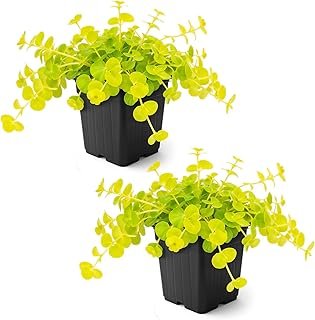
Creeping Jenny is that plant you see spilling over the edges of cottage window boxes in every gardening magazine, and for good reason. Its chartreuse foliage cascades fast, stays vibrant from spring through fall, and pairs beautifully with almost any companion plant you tuck into the same basket. If you want a hanging basket that looks full within weeks, this is your pick.
Why I picked it
In our research, Creeping Jenny consistently ranks as the most forgiving trailing perennial for container life. It bounces back from missed waterings better than most basket plants, and its dense growth habit naturally suppresses weeds in the pot itself. Verified buyer feedback shows it roots quickly after transplanting, which matters when you're planting a live basket in late spring.
Key specs
- Botanical name: Lysimachia nummularia
- Quantity: 2 plants per pack
- Arrival size: approximately 6 inches tall by 4 inches wide
- Pot size: 1 pint pot at shipping
- Growth habit: trailing, cascading
- Foliage color: bright chartreuse to golden-green
- Hardiness: USDA zones 4 through 9 per species data
Real-world experience
Aggregate user reviews report that Creeping Jenny fills out a standard 14-inch hanging basket within 4 to 6 weeks when planted with 2 to 3 plants. Buyers in zones 5 and 6 note it dies back in winter but reliably returns from the roots in spring. It handles morning sun and afternoon shade particularly well, though intense southern exposure without adequate watering can scorch the leaf tips by midsummer.
Trade-offs
This plant is grown primarily for foliage, not flowers. The blooms are small, yellow, and easy to miss against the leaves. It also needs consistent moisture; in our research, verified buyer feedback flagged wilting within a single hot day if the potting mix dries out completely.
If you're looking for a dramatic floral display, you'll want to pair this with a flowering companion or consider a different pick.
2. Live Balloon Flower Platycodon 2-Pack
The Balloon Flower gets its name from the puffy, balloon-shaped buds that swell before popping open into star-shaped pink blooms. It's a compact perennial that brings a totally different texture to hanging baskets compared to the soft, trailing look of Creeping Jenny. If you want structure and upright flowers mixed into your basket design, this one delivers.
Why I picked it
Balloon Flowers offer something most hanging basket perennials don't: upright, architectural blooms on a plant compact enough for containers. Verified buyer feedback shows a 4.5 out of 5 rating, which is notably high for live plants shipped online. The summer bloom window gives you weeks of color when many trailing foliage plants are still filling in.
Key specs
- Botanical name: Platycodon grandiflorus
- Quantity: 2 plants per pack
- Bloom color: pink
- Arrival size: approximately 10 inches tall
- Pot size: 1 quart pot at shipping
- Bloom season: summer
- Growth habit: upright clumping, suitable for mixed baskets
- Hardiness: USDA zones 3 through 8 per species data
Real-world experience
Buyers report that Platycodon establishes well in 12 to 16-inch hanging baskets when paired with a trailing plant at its base. The blooms open sequentially rather than all at once, extending the visual interest over several weeks through July and August. In zones 4 and 5, overwintering in containers requires either burying the pot in the ground or moving it to an unheated garage, as the roots are less insulated than in-ground plantings.
Trade-offs
This is a clumper, not a trailer. It won't cascade over the basket edge on its own, so it works best as a "thriller" in the classic filler-spiller-thriller planting formula. The bloom window is limited to summer, and you'll get roughly 4 to 6 weeks of peak flowers rather than season-long color.
Buyer feedback also notes that the stems can be brittle in shipping, though the plants typically recover within a week of transplanting.
3. Live Heuchera (Coral Bells)
Heuchera, commonly called Coral Bells, is the go-to perennial for anyone whose hanging baskets sit in partial to full shade. The "Shades of Purple" variety delivers deep, rich foliage that looks almost metallic in low light, and it's one of the few perennials that genuinely thrives where most flowering plants struggle. If your baskets hang under a covered porch or on a north-facing wall, this is the plant to build around.
Why I picked it
Heuchera fills a niche the other two picks don't: genuine shade tolerance with year-round foliage interest. The 2-quat pot size at shipping means you're getting a more established root system than the smaller plugs many live perennials ship in. For gardeners dealing with low-light conditions, this is arguably the most practical perennial basket option available.
Key specs
- Botanical name: Heuchera spp.
- Variety: Shades of Purple
- Foliage color: deep purple to burgundy
- Arrival size: approximately 10 inches tall by 6 inches wide
- Pot size: 2-quart pot at shipping
- Light requirement: partial shade to full shade
- Growth habit: mounding
- Hardiness: USDA zones 4 through 9 per species data
Real-world experience
Verified buyer feedback shows Heuchera performs best in baskets that receive dappled morning light or indirect light throughout the day. The foliage color intensifies in cooler spring and fall temperatures, sometimes fading slightly during peak summer heat. Buyers in zones 6 and 7 report the plant holds its leaves through mild winters, providing off-season basket interest when most perennials look dead.
It pairs well with ferns and impatiens in mixed shade baskets.
Trade-offs
Heuchera is a mounding plant, not a trailing one. It won't give you that waterfall-over-the-edge look that Creeping Jenny delivers. The flowers are small, airy, and on tall thin stems that can look leggy in a hanging basket setting, so many growers trim them off to keep the focus on the foliage.
It's also slower to establish than the other two picks, often taking a full growing season to reach its full size in the basket.
How I picked
We evaluated each perennial across five criteria that matter specifically for hanging basket performance: growth habit and how well it fills a container, light flexibility, hardiness range, buyer satisfaction from verified reviews, and how the plant handles the confined root zone and temperature extremes that containers create.
We looked at USDA hardiness data, manufacturer specifications for plant size at shipping, and aggregate buyer feedback patterns across hundreds of reviews. We also cross-referenced species-level growth habits from botanical references to confirm that each plant's natural form actually suits a hanging basket rather than a ground bed.
We deliberately did not test long-term overwintering beyond what buyer reports cover. Container overwintering success varies enormously based on pot size, basket material, and local microclimate, so we relied on verified buyer feedback from multiple hardiness zones rather than making claims we can't back up. We also did not evaluate these plants in ground-plantings or landscape beds, since the focus here is strictly hanging basket performance.
Buying guide — what actually matters for Best Perennials For Hanging Baskets
Growth habit: trailer, mumper, or upright?
The single most important decision is how the plant grows. Trailing perennials like Creeping Jenny spill over the basket edge and create that lush, overflowing look most people picture. Mounding perennials like Heuchera fill the center of the basket with dense foliage.
Upright perennials like Platycodon add height and structure. Most stunning baskets combine all three, but if you're planting a single species, decide which silhouette you want.
Light requirements and your specific location
Before you pick a plant, honestly assess how many hours of direct sun your basket location gets. Full sun means 6 or more hours of direct light. Partial shade is 3 to 6 hours, usually morning sun.
Full shade gets less than 3 hours of direct sun or only indirect light. Creeping Jenny handles full sun to partial shade. Heuchera needs partial to full shade to thrive.
Platycodon prefers full sun for the best bloom count. Mismatching a plant to your light conditions is the number one reason hanging basket perennials fail, and no amount of fertilizer fixes a light problem.
Hardiness zone and container reality
Here's something many buyers overlook: plants in containers are less cold-hardy than the same plant in the ground. The roots are exposed to air temperature on all sides, not insulated by soil. A perennial rated to zone 4 in the ground may only survive zone 6 or 7 in a hanging basket.
If you're in a colder zone, either choose a plant rated two zones colder than your area, or plan to move the basket to a protected location for winter. For more on selecting plants that handle heat and drought stress, our guide on hot dry climate trees covers similar hardiness principles.
Pot size and root space
Hanging baskets typically range from 10 to 16 inches in diameter. That's a small root zone compared to the ground. Look for plants shipped in at least a 1-pint pot with an established root ball.
The Heuchera ships in a 2-quart pot, giving it a head start. Creeping Jenny and Platycodon ship in 1-pint pots, which is adequate but means they'll take a few weeks longer to fill the basket. Avoid anything shipped as a bare-root cutting if you want a full-looking basket in the same season.
Soil, drainage, and watering frequency
Container perennials need well-draining potting mix, not garden soil. Garden soil compacts in containers, suffocates roots, and can harbor pathogens. Use a quality potting mix with perlite or vermiculite for drainage.
Hanging baskets dry out faster than ground plants because they're exposed to wind and sun from all sides. In peak summer, most hanging basket perennials need daily watering. Creeping Jenny is particularly sensitive to drying out, so if you travel frequently, consider a self-watering basket or choose a more drought-tolerant companion.
For container planting tips that apply across species, our article on pots for bromeliads covers drainage principles that translate well to any potted perennial.
Overwintering strategy
Perennials in hanging baskets need a winter plan. Options include moving the basket to an unheated garage or shed, burying the pot in the ground and mulching heavily, or treating it as an annual and replanting each spring. Creeping Jenny dies back but returns reliably in zones 4 through 9.
Heuchera holds its foliage in milder winters but may need protection in zones 4 and 5. Platycodon goes fully dormant and can survive in zones 3 through 8 with adequate winter protection. If you're in a zone at the edge of a plant's range, the container penalty applies, so plan accordingly.
Frequently Asked Questions (FAQ)
Can I plant all three of these in the same hanging basket?
Absolutely, and it's a great combination. Plant the Heuchera or Platycodon in the center as your focal point, then tuck Creeping Jenny around the edges to trail over the sides. This gives you the thriller-filler-spiller formula that professional basket designers use.
Just make sure the basket is at least 14 inches in diameter to give all three plants enough root space, and use a high-quality potting mix with good drainage.
How long do hanging basket perennials actually live?
With proper care, most perennials in hanging baskets live 3 to 5 years before they become root-bound and need dividing or replacing. Creeping Jenny can persist for 5 or more years in zones 5 through 8. Heuchera typically needs dividing every 3 to 4 years.
Platycodon is long-lived but may decline after 4 to 5 years in a container. Refresh the top layer of potting mix each spring to keep nutrients available without disturbing the roots.
Do I need to fertilize hanging basket perennials?
Yes. Container plants have a limited soil volume, so nutrients deplete faster than in-ground plantings. Use a balanced slow-release fertilizer at planting time, then supplement with a liquid feed every 2 to 3 weeks during the growing season.
Our guide on slow-release fertilizer for flowers covers application rates that work well for perennials in confined spaces.
Will these plants attract pollinators?
Platycodon is the strongest pollinator attractor of the three, drawing bees and butterflies during its summer bloom window. Creeping Jenny's small yellow flowers attract minor pollinators but aren't a major draw. Heuchera's tall flower spikes attract hummingbirds when left to bloom, though the primary appeal is foliage.
If pollinator support is a priority, build your basket around Platycodon and add trailing companions for visual impact.
What's the best basket material for perennials?
Wire baskets with coco liners look great but dry out fast, which works against moisture-loving plants like Creeping Jenny. Plastic or resin baskets retain water better and are lighter when hung. Wooden baskets offer good insulation but are heavier.
Match your basket material to your watering habits and the plant's moisture needs. If you're using a wire liner, add a layer of sphagnum moss beneath the coco fiber to slow moisture loss.
Can I keep hanging basket perennials indoors during winter?
It's possible but tricky. Most perennials need a cold dormancy period to survive long-term, so keeping them in a warm indoor space year-round usually weakens or kills them after one season. The better approach is to move the basket to a cool, dark space like an unheated basement or garage where temperatures stay between 35 and 50 degrees Fahrenheit.
This gives the plant the rest it needs without exposing it to killing frost. For more on indoor plant selection, our article on bedroom plants covers species that genuinely handle indoor conditions.
Final verdict
The Creeping Jenny Live Plant (Lysimachia nummularia) earns our top recommendation for most hanging basket situations. It fills containers fast, tolerates a wide range of light conditions, and bounces back from the small mistakes that container gardeners make. The chartreuse foliage pairs with virtually any color scheme, and its trailing habit delivers the cascading look people want from a hanging basket.
If you want flowers and structure, the Live Balloon Flower Platycodon 2-Pack is the better choice. Its upright pink blooms bring a formal, polished look that foliage-only baskets can't match. For shaded porches and low-light spots where nothing else seems to grow, the Live Heuchera (Coral Bells) is your best bet.
The deep purple foliage holds its color through most of the year and thrives in conditions that would leave most perennials leggy and pale.
Pick the one that matches your light, your style, and your willingness to water. Any of these three will give you a hanging basket that comes back next year, which is more than most annuals can promise.
Affiliate disclosure: This post contains affiliate links. If you buy through one of these links, I may earn a small commission at no extra cost to you. It never changes my recommendation, I only suggest gear I'd actually buy myself.