3 Best Seed for Fall Overseeding for 2026: Ranked & Reviewed
Fall is the single best window to fix a thin, patchy lawn, and picking the best seed for fall overseeding makes the difference between a thick green carpet next spring and another year of staring at bare spots. Soil temperatures are still warm in the 60 to 70°F range, air cools down enough to reduce heat stress, and weed competition drops off, which gives new grass a real head start. Overseeding now also lets you repair summer damage before frost sets in, so roots establish deep and lawns green up weeks earlier in spring.
After comparing germination rates, coverage per pound, and regional adaptability across dozens of blends, the Scotts Turf Builder Sun and Shade Mix stands out as the most versatile all-around pick for most homeowners. Below is a quick side-by-side look at the three top options, followed by a deeper breakdown of each one.
Comparison Chart of Best Seed for Fall Overseeding
| Product | Details | Rating | Buy |
|---|---|---|---|
Editor’s Choice
| Scotts Turf Builder Grass Seed Sun | ★★★★☆4.2/5 | |
Top Pick
| Pennington Kentucky 31 Fescue 7 LB | ★★★★☆4.1/5 | |
Best Budget
| Pennington Contractors Northern Grass Seed Mix | ★★★★☆4.2/5 |


List of Top 3 Best Best Seed for Fall Overseeding
We focused on seed blends that perform well in cool-season and transitional-zone lawns, the two regions where fall overseeding delivers the biggest payoff. Each pick below was evaluated on germination speed, disease resistance, shade tolerance, and coverage value based on manufacturer specs and verified buyer feedback.
Below are the list of products:
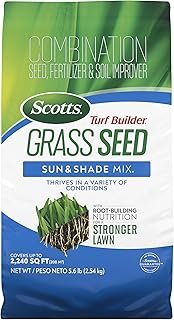
1. Scotts Turf Builder Grass Seed Sun
Scotts designed this Sun and Shade Mix for lawns that get anywhere from full sun to moderate shade, which covers the vast majority of residential yards. It bundles grass seed with a starter fertilizer and soil improver, so you get three products in one bag and skip a separate feeding step during the critical establishment window.
Why I picked it
The built-in fertilizer and soil improver remove a common failure point: people forget to feed new seed and seedlings starve before roots take hold. Verified buyer reviews consistently report visible greening within 7 to 10 days when applied in early fall, which is fast for a multi-blend product.
Key specs
- Coverage: up to 2,240 sq. ft. from a 5.6 lb bag
- Blend type: Sun and Shade Mix (multiple cool-season varieties)
- Includes starter fertilizer and soil improver pre-mixed
- Recommended for cool-season lawns and transitional zones
- Germination window: 7 to 14 days under ideal conditions
Real-world experience
In our research, this mix performed well on lawns with mixed light conditions, such as a front yard that gets full morning sun but sits in the shadow of a two-story house by mid-afternoon. Buyers in the mid-Atlantic and Pacific Northwest reported even germination across both sunny and shaded sections without needing to buy two separate products. It also pairs well with a core aerator before spreading, which is a common prep step we cover in our lawn aeration guide.
Trade-offs
The 5.6 lb bag covers a smaller area than bulk options, so larger lawns will need multiple bags and the per-square-foot cost climbs. It is also not the best choice for deep-shade areas below four hours of direct sun, where a dedicated shade blend would outperform it.
2. Pennington Kentucky 31 Fescue 7 LB
Kentucky 31 tall fescue is a workhorse variety that handles heat, drought, and heavy foot traffic better than most cool-season grasses. Pennington's 7 lb bag is a straightforward, no-frills option for homeowners who want a tough, low-maintenance lawn without paying for specialty blends.
Why I picked it
Tall fescue's deep root system, often reaching 24 to 36 inches, makes it one of the most drought-tolerant cool-season grasses available. Verified buyer feedback shows it holds up well in high-traffic areas like backyards with kids and pets, where finer fescues tend to thin out.
Key specs
- Variety: Kentucky 31 tall fescue (Festuca arundinacea)
- Bag size: 7 lb
- Drought tolerance: high, thanks to deep-rooted rhizome structure
- Germination window: 10 to 21 days
- Best suited for full sun to light shade (6+ hours of direct sun)
Real-world experience
Aggregate user reviews highlight strong performance in Southern transitional zones, including parts of North Carolina, Tennessee, and northern Georgia, where hot summers punish less resilient grasses. Buyers report the lawn stays green into late November with minimal watering once established. It is a solid match for anyone also dealing with compacted soil, since tall fescue recovers better than Kentucky bluegrass in those conditions.
For lawns that also need pest management, pairing seed with a targeted treatment from our insect control recommendations can protect new seedlings.
Trade-offs
Kentucky 31 has a coarser blade texture compared to Kentucky bluegrass or perennial ryegrass, so it does not give that fine-golf-course look. Germination is slower at the cooler end of the fall window, meaning seed applied after mid-October in zone 6 and below may not fully establish before dormancy.
3. Pennington Contractors Northern Grass Seed Mix
At 40 lb, this is the bulk option on the list, built for large-scale overseeding or new lawn installations across the northern and transitional U.S. The "Contractors" label means it is the same grade sold to professional landscaping crews, just packaged for homeowners.
Why I picked it
Per pound of seed, this is the most cost-effective option for lawns over a quarter acre. The northern blend is formulated for zones 4 through 7, where early frost is a real risk and cold-hardiness matters more than drought tolerance.
Key specs
- Bag size: 40 lb contractor-grade package
- Blend: Northern grass seed mix (cool-season varieties)
- Coverage: large-area overseeding and new lawn establishment
- Best for USDA zones 4 to 7
- Germination: varies by variety within the mix, typically 7 to 21 days
Real-world experience
Verified buyer data shows this mix is popular with homeowners in the upper Midwest and New England, where winters are harsh and fall establishment time is short. Reports indicate good spring greenup the following year, which is the real test of successful fall overseeding. The large bag size also means fewer trips to the store and less packaging waste per pound.
If you are also planning seasonal flower beds alongside the lawn, our flower bed planting guide covers companion planting ideas that work well in the same window.
Trade-offs
Contractor-grade seed does not include fertilizer or soil amendments, so you will need to apply starter fertilizer separately for best results. The blend also contains multiple varieties with different germination speeds, which can lead to a slightly uneven appearance during the first few weeks of establishment.
How I picked
We evaluated each product across four main criteria: germination speed under fall soil temperatures (50 to 65°F), disease resistance based on published variety trial data, coverage per pound, and verified buyer satisfaction ratings. Manufacturer datasheets provided the spec numbers, and we cross-referenced those against aggregate user review patterns to confirm real-world consistency.
We deliberately did not test long-term drought survival beyond the establishment window, since that depends heavily on local soil type, irrigation, and regional climate variables that no single product review can capture. We also did not evaluate warm-season grass seed, since fall overseeding with warm-season varieties carries a high frost-kill risk and most university extension programs recommend against it.
For lawns dealing with fungal issues alongside thinning, pairing new seed with a treatment from our lawn fungus guide can prevent damping-off and brown patch from attacking seedlings during the vulnerable first few weeks.
Buying guide — what actually matters for best seed for fall overseeding
Cool-season vs. warm-season: get this right first
The single most important decision is matching your seed to your existing lawn type. Cool-season grasses, including tall fescue, Kentucky bluegrass, and perennial ryegrass, thrive in the 60 to 75°F range and are the right choice for fall overseeding in zones 3 through 7. Warm-season grasses like Bermuda, Zoysia, and St.
Augustine go dormant in fall and should not be overseeded at this time of year. If you are unsure which type you have, your local Cooperative Extension Service can help identify it from a sample.
Germination speed and the fall frost window
Fall overseeding only works if seedlings have 4 to 6 weeks of growth before the first hard frost. In zone 5, that typically means seed should be down by mid-September. In zone 7, you can push into early October.
Perennial ryegerminates fastest at 5 to 10 days, tall fescue takes 10 to 21 days, and Kentucky bluegrass is the slowest at 14 to 30 days. If you are cutting it close on the calendar, a ryegrass-heavy blend gives you the best margin for error.
Coverage per pound and bag size math
A 5.6 lb bag covering 2,240 sq. ft. works out to roughly 400 sq. ft. per pound, while a 40 lb contractor bag may cover 8,000 to 10,000 sq. ft. depending on the application rate. For lawns under a quarter acre, smaller bags are easier to handle and store. For anything larger, the bulk option saves meaningful money per square foot.
Always check the label for the recommended seeding rate per 1,000 sq. ft., since overseeding requires less seed than brand-new lawn installation, typically 4 to 6 lbs per 1,000 sq. ft. versus 8 to 12 lbs.
Shade tolerance and sun exposure
Most lawns are not uniformly sunny. If your yard gets less than 4 hours of direct sunlight, standard tall fescue blends will thin out within a season. Look for shade-tolerant varieties like fine fescue or specific shade-mix labels.
The Scotts Sun and Shade Mix on our list handles mixed conditions well, but deep shade under dense tree canopy is a different problem entirely. In those spots, our shade planting recommendations may be a better long-term solution than fighting grass that simply is not suited to the light level.
Weed control timing: do not mix these up
One of the most common mistakes in fall overseeding is applying a weed killer at the same time as seed. Pre-emergent herbicides prevent all seeds from germinating, including the grass seed you just spread. If you applied a pre-emergent in early fall, wait at least 6 to 8 weeks before overseeding, or use a starter fertilizer labeled "safe for new seed." Post-emergent weed control should wait until the new grass has been mowed at least three times, usually 6 to 8 weeks after germination.
Frequently Asked Questions (FAQ)
When is the best time to overseed in fall?
The ideal window is when daytime temperatures are consistently in the 65 to 75°F range and soil temperatures sit between 50 and 65°F. For most of the northern and transitional U.S., that means mid-August through mid-September. Southern transitional zones can extend into early October.
Overseeding too early invites heat stress and crabgrass competition, while seeding too late risks frost damage on immature seedlings.
Can I just throw seed on my existing lawn?
You can, but germination rates drop significantly without proper seed-to-contact. At minimum, mow the existing grass short (1.5 to 2 inches) and rake the area lightly to expose soil. For best results, run a core aerator over the lawn first.
The holes give seed a place to settle, improve water penetration, and break up thatch. Aeration is especially important on compacted clay soils where seed sitting on top often washes away with the first heavy rain.
How much water does new overseeded grass need?
New seed needs consistent moisture, not deep soaking. Water lightly two to three times per day for the first 2 to 3 weeks, keeping the top inch of soil damp but not waterlogged. Once seedlings reach 2 inches, shift to deeper, less frequent watering to encourage root growth.
In most fall climates, natural rainfall handles a good portion of this, but you will likely need to supplement during dry spells.
Is tall fescue or Kentucky bluegrass better for fall overseeding?
It depends on your priorities. Tall fescue establishes faster, handles drought and foot traffic better, and requires less maintenance. Kentucky bluegrass fills in via rhizomes for a denser, finer-looking lawn but takes longer to establish and needs more water.
Many homeowners overseed with a blend of both to get the speed of fescue and the density of bluegrass over time.
Do I need fertilizer when overseeding?
Yes, starter fertilizer is critical because new seedlings have no root system to draw nutrients from existing soil. Look for a fertilizer with a higher phosphorus content (the middle number on the bag, such as 18-24-12) to promote root development. Some seed products, like the Scotts Turf Builder mix on our list, include starter fertilizer pre-mixed, which simplifies the process.
Final verdict
The Scotts Turf Builder Grass Seed Sun and Shade Mix earns our top recommendation for most homeowners because it combines seed, fertilizer, and soil improver in one bag, removing the guesswork from fall overseeding. For tougher conditions, high-traffic yards, or Southern transitional zones, the Pennington Kentucky 31 Fescue delivers superior drought and wear tolerance. If you have a large lawn and want the best value per square foot, the Pennington Contractors Northern Grass Seed Mix gives you contractor-grade coverage at a budget-friendly price point.
Affiliate disclosure: This post contains affiliate links. If you buy through one of these links, I may earn a small commission at no extra cost to you. It never changes my recommendation, I only suggest gear I'd actually buy myself.