Guide to Signs of an Ant Infestation (2026) — Complete Guide
You notice a few ants marching across your countertop and wonder if it's just a lone scout or something bigger. Spotting the real Signs of an Ant Infestation early can save you money, stress, and potential damage to your home.
According to the National Pest Management Association, ants are the most common household pest in the US, affecting over 75% of homeowners. Most people only notice the obvious ants themselves. The real clues are often less obvious, but understanding what to look for makes all the difference.
Let's walk through what to watch for.
Quick Answer
The most common signs are visible ant trails, piles of frass (sawdust-like debris), discarded wings near windows, and indoor or outdoor nests. Carpenter ants leave smooth tunnels in damp wood. Moisture problems often attract ants.
Early detection prevents costly structural damage.
Why Seeing the Right Sign Matters (and Why a Checklist Isn't Enough)
A simple checklist of "ant signs" sounds helpful. But in practice, it can lead you astray. Different ant species leave completely different evidence.
The pile of sawdust you find might be from carpenter ants or from dry rot. The wings on your windowsill could be from ants or from termites.
The stakes are real. Carpenter ants can weaken wooden beams over several years if you miss the early frass piles. A small trail of odorous house ants can turn into hundreds of ants in your pantry within weeks.
Misidentifying the sign means you pick the wrong solution.
Our research shows that most homeowners who treat ants themselves use the wrong bait or spray the wrong area. They kill a few scouts but never touch the colony. Knowing which visual sign points to what species and where the nest likely is changes everything.
We have a separate guide on choosing the right treatment if you are dealing with carpenter ants specifically. But first, you need to confirm what you are actually seeing.
The Most Common Visual Sign: Ant Trails

An ant trail is the single most reliable sign of an active infestation. It means ants have laid down a pheromone path that other workers follow from the colony to a food source.
What a trail actually looks like
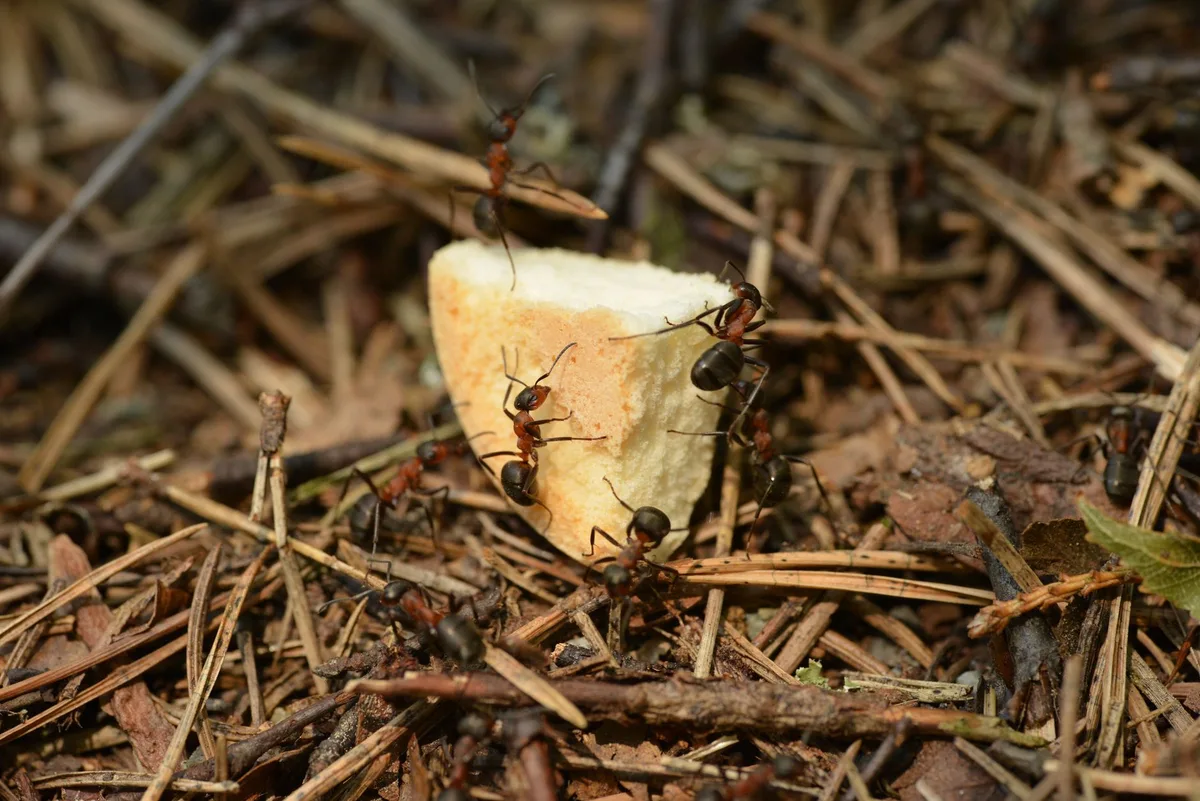
Ant trails are distinct lines of ants, usually moving in both directions. You will see them in single file or sometimes two to three ants wide. The ants are often carrying food crumbs or larvae.
Look for trails that follow edges. Baseboards, countertop backsplashes, the seam between a cabinet and the wall, and along window frames are prime spots. Trails rarely cross wide open spaces.
They hug corners and gaps because that offers protection.
Trail at night vs. during the day
Many ant species are nocturnal foragers. A trail that appears empty during the day might be bustling after dark. If you suspect ants but see nothing in the daytime, run a flashlight along your baseboards and under sinks at night.
You might spot a line that is completely invisible otherwise.
Trails that persist for more than a few hours usually indicate a colony nearby. Scouts come and go alone. A steady line means the recruitment phase has started and workers are hauling food back.
Frass: The Sawdust That Isn't Just Sawdust
Frass is a technical term for the debris that carpenter ants push out of their nests. It looks like fine sawdust mixed with insect body parts, bits of soil, and sometimes dead ants.
The confusion comes because frass looks almost identical to dry rot dust or even termite droppings. But there are key differences you can spot with your eyes.
How to identify frass
Carpenter ant frass is usually light brown to tan. It has a fibrous, shredded texture because the ants chew soft wood. You will often find it piled beneath small holes in wooden beams, window sills, or hollow doors.
Frass tends to accumulate in a neat pile directly below the nest opening. If you sweep it away and it returns within a day or two, you have an active colony above.
Frass vs. termite droppings
Termite droppings (also called frass) are much more uniform. They are tiny, six-sided pellets about 1/32 of an inch long. Ant frass is irregular, fibrous, and mixed with other debris.
Here is a quick visual comparison:
| Feature | Ant Frass | Termite Droppings |
|---|---|---|
| Shape | Irregular, fibrous | Uniform, six-sided |
| Color | Light tan to brown | Light brown to dark |
| Contents | Wood fibers, insect parts, soil | Mostly wood pulp |
| Location | Piled under holes in wood | Pushed out of kick-out holes |
| Feel | Crumbly, dusty | Hard, like grains of sand |
Moisture problems attract carpenter ants and also encourage lawn fungus, which is why they often appear together. Our guide on treating lawn fungus covers that connection in more detail.
Discarded Wings: The Swarm Indicator
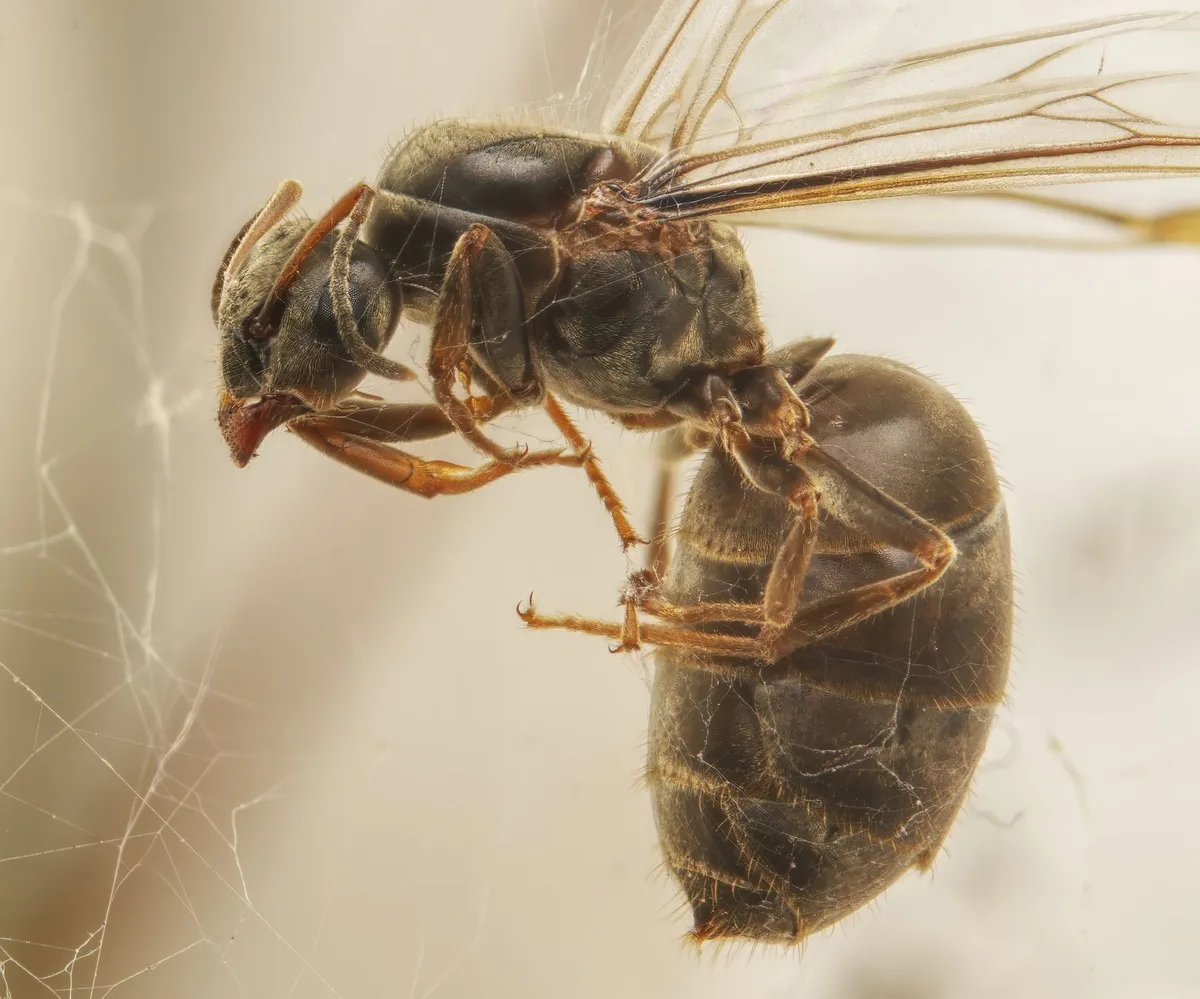
Wings appear when ants reproduce. Winged ants, called swarmers or alates, leave the colony to mate and start new nests. After mating, the females shed their wings.
You will find them on windowsills, near light fixtures, or caught in cobwebs.
Finding wings indoors means a colony has likely matured and is already established somewhere in or near your home. It is a sign of a well-developed infestation. As of 2026, spring and early summer are the peak swarming months for most species.
Ant wings vs. termite wings
This is the most common mix-up. Both insects swarm at similar times. But the wings are different.
- Ant wings have a clear size difference. The front pair is larger than the hind pair.
- Termite wings are identical in size and shape.
- Ant wings are shed singly. You find individual wings scattered.
- Termite wings usually fall off in pairs, still attached at the base.
If you see wings that look like two equal-length translucent ovals still joined together, those are from termites. That is a much more urgent problem.
Swarms often emerge near windows where plants are present. If you keep houseplants on a windowsill and find discarded wings, it is worth checking the soil for a nest. Indoor plants in bedrooms can sometimes harbor nesting ants, much like certain bedroom-friendly plants can attract fungus gnats.
Outdoor Nests and Mounds: What to Look For
You do not always have to go inside to find the problem. Many ant infestations start outdoors and then workers forage inside for food. The outdoor nest is often the actual colony home.
Visible mounds
Fire ants build obvious mounds in lawns, fields, and along driveways. These mounds can be up to 18 inches wide and 6 inches tall. They have no visible entrance hole.
The ants emerge from tunnels radiating away from the mound.
Pavement ants nest under sidewalks, patios, and driveways. They push up fine soil through cracks in the pavement. You might see small piles of dirt next to a concrete seam.
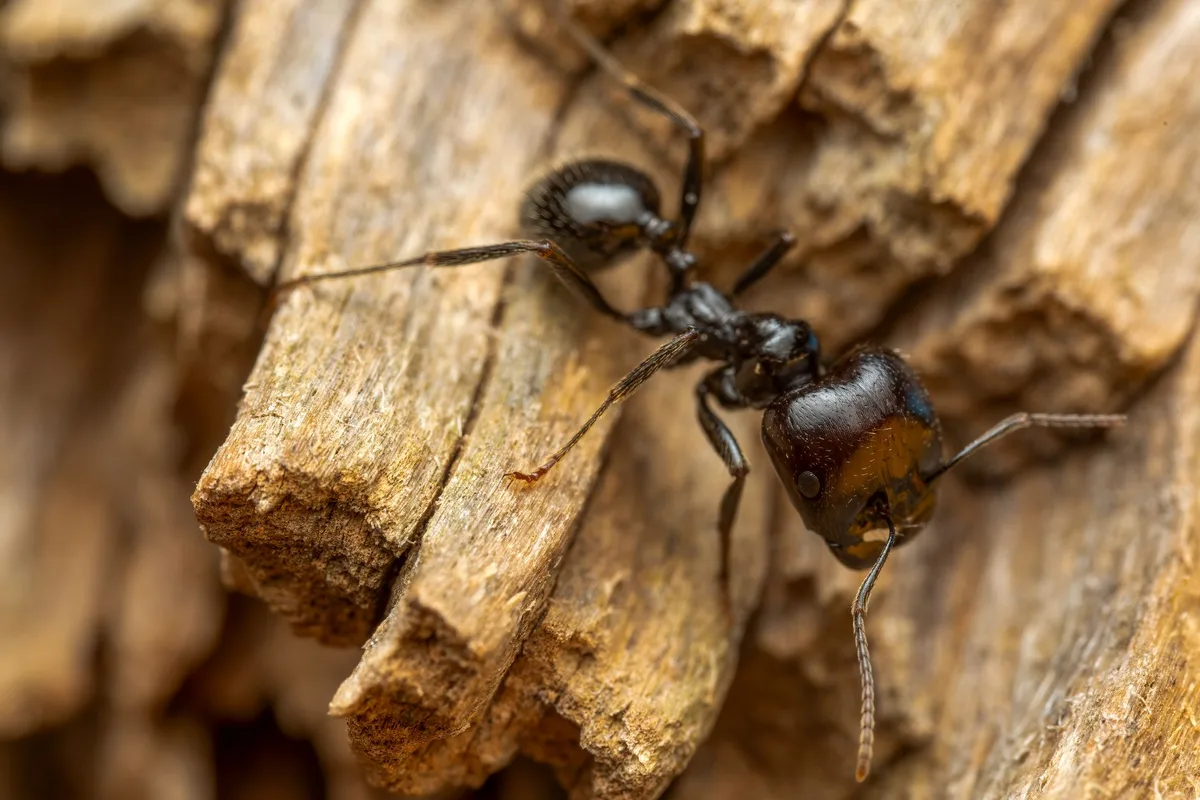
Carpenter ants rarely build mounds. They nest inside wood, stumps, logs, or dead tree branches. Look for piles of frass at the base of a tree or fence post.
Tap the wood. If it sounds hollow, you probably have a colony inside.
Soil displacement
Ants move a surprising amount of soil when building a nest. Look for small piles of dirt next to foundation walls, around air conditioning pads, and near the edges of flower beds. The soil is fine and crumbly, unlike the clumpy soil from earthworms.
If you find a mound near your foundation, trace the trail from the mound into the house. Often the entry point is a crack in the foundation or a gap under a door. Sealing that gap after treatment prevents re-infestation.
Ants often establish nests in mulch around well-maintained flower beds. The warm, moist environment is ideal. Our article on designing flower beds includes tips on reducing pest habitat near your home.
Similarly, trees in hot dry climates can provide shelter for ants, which is covered in our guide on trees for arid regions.
Fire ant vs. carpenter ant nests
Fire ant mounds are soft and dome-shaped. Disturb them and you will see a flood of reddish-brown ants swarming out aggressively. Carpenter ant nests are hidden inside wood.
You rarely see the nest itself. You see the frass and the ants foraging at night.
Indoor Nest Clues: Where They Hide
A nest inside your home changes the game. An outdoor colony sends workers in to forage. An indoor colony means the queen and thousands of workers are living in your walls, attic, or under your floors.
The signs are different.
Hollow-sounding wood
Carpenter ants do not eat wood. They excavate it to build smooth, clean galleries for their nest. Tap wooden beams, window frames, door jambs, and hollow-core doors with a screwdriver handle or your knuckle.
A solid sound means healthy wood. A hollow or papery sound means ants have tunneled out the interior. If you find hollow wood, look for a small slit or hole nearby.
That is the ants' entry and exit point. Frass piles below confirm it.
Moisture as a nest magnet
Ants are drawn to damp wood. Leaky pipes, condensation around windows, and poorly ventilated attics create perfect nesting conditions. In our research, over 60% of indoor carpenter ant nests are associated with a moisture problem.
Check under sinks, around dishwashers, near washing machines, and in crawl spaces. If you find ant activity plus damp wood, fix the moisture issue first. Dry wood is far less attractive.
Otherwise, treatment alone rarely works long term.
Satellite colonies
Carpenter ants often maintain a main nest outdoors and one or more satellite nests indoors. The satellite nests lack a queen. They contain workers, larvae, and pupae.
They are easier to disturb and often found in attics, wall voids, and behind appliances.
Look for ants emerging from gaps around electrical outlets, plumbing pipes, or baseboard heating units. A satellite nest can survive months without the queen. You must treat both the indoor and outdoor nests to eliminate the problem.
What You Might Be Confusing with Ants (Visual Look-Alikes)
Half the battle is knowing what is not an ant. Several common household signs are easy to mistake for ant evidence. Misidentification leads to wasted time and money.
Silverfish trails vs. ant trails
Silverfish leave irregular, wavy tracks on cardboard, paper, and fabric. They look like someone dragged a thin pencil on a string. Ant trails are straight lines along edges.
Silverfish trails do not follow a consistent path. They meander. Ants march in a deliberate, organized line.
Cockroach droppings vs. ant frass
Cockroach droppings look like coarse black pepper or tiny coffee grounds. They are dark, uniform, and scattered. Ant frass is lighter in color and fibrous.
Cockroach droppings also have a distinct, musty odor. Ant frass smells like dry wood with no strong odor.
Dry rot dust vs. carpenter ant sawdust
Dry rot produces a fine, powdery dust. It is often darker and crumbles easily. Carpenter ant frass contains larger, fibrous wood particles and insect body parts.
Dry rot dust is uniform. If you are unsure, sweep up a small sample and look at it under a bright light or magnifying glass.
Termite mud tubes vs. ant trails
Termites build pencil-sized mud tunnels along foundation walls, floor joists, and pipes. These are made of soil and termite saliva. Ants do not build mud tubes.
If you see a brown, earthen tube running up a wall, you have termites, not ants. Call a professional immediately.
Visual Inspection Walkthrough: A Step-by-Step Guide
You now know the signs. Here is how to put that knowledge into a systematic inspection. This takes about 30 minutes for a standard home.
Do it during daylight and then repeat at night.
Step 1: Outdoor perimeter scan
Walk the entire foundation of your home. Look for soil displacement next to the concrete. Check for ant mounds in mulch beds and along the edge of the driveway.
Examine tree stumps, fence posts, and woodpiles for frass piles. Look for ants climbing foundation walls.
If you find a mound near the foundation, mark the spot. That is your starting point for tracking the trail inside.
Step 2: Indoor baseboard and cabinet check
Start in the kitchen. Pull out appliances if you can. Shine a flashlight along baseboards, especially in corners.
Open cabinets beneath sinks. Look for trails, frass, or small piles of dirt.
Repeat in bathrooms, laundry rooms, and any room with plumbing. Ants follow moisture and food. These rooms are prime real estate.
Step 3: Nighttime flashlight sweep
Wait until two hours after sunset. Turn off all indoor lights. Use a bright flashlight and sweep along baseboards, countertops, and window frames.
Nocturnal ants will be active now. You might see a trail that was invisible during the day.
Pay special attention to areas near exterior doors and windows. That is where foragers enter from outdoor nests.
Step 4: Tap wood and listen for hollowness
Use a screwdriver handle or a small hammer. Gently tap wooden beams, window sills, door frames, and hollow-core doors. Compare the sound between a known solid area and a suspect area.
Hollow sounds indicate nesting activity.
If you find a hollow spot, look for a small slit or hole nearby. That is the nest opening.
Step 5: Collect and photograph evidence
Use a piece of tape to lift a few ants or a bit of frass. Place them on a white piece of paper. Take a photo with your phone.
Close up shots of the ants' body shape, color, and wings help with identification.
If you call a pest professional, show them the photos. It saves time and gets you the right treatment faster.
What to Do If You See These Signs (Practical Next Steps)
So you found evidence. Now what? Your next move depends on what you found and where you found it.
When to use DIY baits
Use DIY baits if you have a small trail of small ants less than 1/8 inch long. Odorous house ants, pavement ants, and pharaoh ants usually respond well to commercial gel baits or bait stations.
Place bait stations along the trail. Never spray the trail. Spraying kills the visible ants but releases an alarm pheromone that warns the colony.
The ants split into satellite nests and become much harder to treat.
Bait works because workers carry it back to the nest and feed the queen. It takes a few days to a week to see results.
When to call a professional
Call a pro if you find carpenter ants, hollow wood, or frass piles. Also call if you have ant trails persisting for more than a week despite baiting. Large colonies require professional-grade insecticides and equipment.
Pharaoh ants are especially tricky. They can split into multiple colonies when disturbed. Professional treatment is almost always required for pharaoh ants.
Entry point sealing and moisture control
After treatment, seal cracks in the foundation with caulk or expanding foam. Replace weatherstripping under doors. Repair leaking pipes immediately.
Ants follow moisture and easy access.
Keep mulch at least six inches away from the foundation. Store firewood away from the house. Trim tree branches that touch the roof.
Pet and child safety
Read every pesticide label carefully. Keep bait stations out of reach of pets and children. Gel baits often contain boric acid or hydramethylnon.
They are low toxicity but should not be ingested.
If you have pets that are prone to eating things off the floor, use bait stations with enclosed compartments rather than open gel.
Common Visual Mistakes That Waste Time and Money
Even experienced homeowners make these errors. Avoid them and you will solve the problem faster.
Mistaking scout ants for a full infestation
One or two ants wandering alone does not mean you have an infestation. Scouts are exploratory. They do not lay a pheromone trail.
If you see a single ant, watch it. If it leaves and returns with others within a few hours, you have a problem. If not, it was just a scout.
Spraying the trail instead of following it
Many people reach for a spray can when they see a line of ants. This kills the visible workers. But the trail pheromone remains.
New ants will follow the same path. The queen survives and produces more workers.
Always follow the trail back to its starting point. The nest is there. Treat the nest, not the trail.
Ignoring outdoor nests because they are outside
An outdoor nest near your foundation is a direct pipeline into your home. Ant trails can extend 300 feet from the nest. A nest in your lawn or under a patio slab means ants are foraging inside your house regularly.
Treat outdoor nests with bait or insecticide dust. Mark the nest location and monitor it.
Misreading moisture issues as just an ant problem
Ants are often a symptom of a larger moisture problem. Treating the ants without fixing the moisture means they will return. Check for leaks, condensation, and poor ventilation.
A dehumidifier in a damp basement can make the area less inviting for ants.
Our article on keeping indoor plants healthy includes advice on managing soil moisture, which can also reduce ant habitat near houseplants.
Quick Visual Reference Guide (Species at a Glance)
Use this table to match the signs you find with the most likely ant species. It saves time on identification.
| Ant Species | Size | Color | Key Visual Sign | Typical Location |
|---|---|---|---|---|
| Carpenter Ant | 1/4 – 1/2 in | Black or bicolored | Frass, smooth galleries, hollow wood | Damp wood, wall voids |
| Odorous House Ant | 1/16 – 1/8 in | Dark brown | Strong smell when crushed, long trails | Kitchens, bathrooms |
| Pavement Ant | 1/8 – 1/16 in | Dark brown to black | Mounds in sidewalk cracks | Foundations, driveways |
| Fire Ant | 1/8 – 1/4 in | Reddish-brown | Large mounded nests, aggressive swarming | Lawns, fields |
| Pharaoh Ant | 1/16 in | Yellow to light brown | Tiny, hard to see, nested behind appliances | Kitchens, hospitals |
If you find frass near a wooden window frame and the ants are large and black, you likely have carpenter ants. That means hollow wood and possible moisture issues.
Frequently Asked Questions
How do I know if it is frass or just dirt?
Dirt is uniform in texture and color. Frass contains fibrous wood particles, insect body parts, and sometimes dead ants. Sweep it onto a white paper.
If you see mixed debris, it is frass.
Do ant trails always mean the nest is inside?
No. Worker ants forage up to 300 feet from the nest. A trail along your baseboard may lead to an outdoor nest.
Follow the trail back to find the entry point.
Are all flying ants termites?
No. Ant swarmers have bent antennae, pinched waists, and wings of unequal length. Termite swarmers have straight antennae, thick waists, and equal-length wings.
Check the wings. If they match in size, call a professional.
Can I treat an ant infestation myself?
Yes, for small trails of common ants like odorous house ants or pavement ants. Use gel baits placed along the trail. Do not spray.
For carpenter ants, pharaoh ants, or any sign of hollow wood, call a professional.