What Causes Lawn Grubs 2026
Your lawn was green last week. Now there are brown patches spreading fast, and something has been digging through the turf at night. What causes lawn grubs starts with adult beetles flying in during summer to lay eggs in your soil.
Those eggs hatch into small white larvae that feed on grass roots until the turf dies back in patches.
University turf research confirms that a single female Japanese beetle can lay up to 60 eggs over a few weeks. Each one becomes a root-feeding grub. By the time you see dead grass, these larvae have already been working underground for weeks.
Identifying the culprit starts with knowing what to look for in the soil.
Quick Answer
What causes lawn grubs is simple. Adult beetles lay eggs in your soil. The eggs hatch into larvae that eat grass roots.
The root damage creates brown patches. Different beetle species lay eggs at different times.
Why Visual ID Is the Only Way to Know What’s Eating Your Lawn
Several beetle species produce lawn grubs. Each one follows a slightly different life cycle. The treatment that works on Japanese beetle grubs may fail against European chafer larvae.
Visual identification is the only way to know which species you are dealing with. It also helps you tell grub damage apart from drought stress or fungal disease. Many homeowners apply grub preventer at the wrong time because they misidentified the pest.
Getting it right starts with looking at what is actually in the soil. Once you know the species, you can match the treatment to the life stage. That is how you stop the damage before it gets worse.
A quick soil sample is all it takes. Dig a small patch about 3 inches deep and sift through the dirt. Count the grubs you find and note their appearance.
The Beetle Life Cycle: What You’re Actually Seeing in the Soil
Every lawn grub starts as an egg laid by a female beetle. She burrows into moist soil about 1 to 3 inches deep and deposits her eggs. The eggs are small, round, and almost invisible to the naked eye.
The eggs hatch into first instar larvae within two weeks. These tiny grubs are less than 1/4 inch long. They immediately start feeding on fine grass roots.
As they grow, they molt into second and third instar stages. The final instar is the largest, reaching 1/2 to 3/4 inch long. This is the stage that causes the most visible damage to your lawn.
In late fall the grubs burrow deeper into the soil to overwinter. They stop feeding and wait out the cold. Come spring, they move back up to the root zone and feed again before pupating into adult beetles.
Adult beetles emerge in early to mid summer. They mate and the females start the cycle all over again. Understanding this timeline is the key to effective control.
Here is a quick look at when each species is most active:
| Beetle Species | Peak Egg Laying | Peak Grub Feeding |
|---|---|---|
| Japanese Beetle | Mid July to August | Late summer to fall |
| European Chafer | August to September | Fall and spring |
| June Beetle | June to July | Late summer |
| Masked Chafer | Late July to August | Fall |
Visual Cue #1: The C-Shaped Grub (And What Imposters Look Like)
The classic C-shape is the first thing to look for. When you dig up a grub and it curls into a tight C, you are looking at a scarab beetle larva. This is the main group that damages lawns.
Not every white worm in your soil is a grub. Wireworms are thin, wiry, and orange-brown. Leatherjackets are gray-brown and look like small leathery tubes.
Neither curls into a C shape.
Earthworms are also common but they are beneficial. They do not damage grass roots. If you find C-shaped grubs in the soil, you have identified the pest.
A good rule of thumb is to look at the head. Grubs have a distinct brown head capsule. Earthworms have no head capsule at all.
Visual Cue #2: The Raster Pattern on the Underside (Species-by-Species Guide)
Turn the grub over and look at the underside of the last segment. You will see a pattern of hairs and spines. This is called the raster pattern and it is unique to each species.
Japanese beetle grubs have a V-shaped pattern of two rows of spines. European chafer grubs have a Y-shaped pattern. June beetle grubs have two parallel rows of hairs.
A magnifying glass helps, but you can often see the pattern with the naked eye once you know what to look for. Compare your grub to a reference image to confirm the species.
Getting the species right matters. The treatment window for Japanese beetle grubs is different from the window for European chafer. Applying pesticide at the wrong time wastes money and does not solve the problem.
If you cannot identify the pattern yourself, take a photo. Many university extension services offer free identification help. A clear photo of the raster pattern is all they need.
Visual Cue #3: Lawn Damage Patterns That Scream “Grubs, Not Drought”
Grub damage has a distinct look that sets it apart from other lawn problems. The grass turns brown in irregular patches that can be pulled up like loose carpet. This happens because the roots have been eaten away.
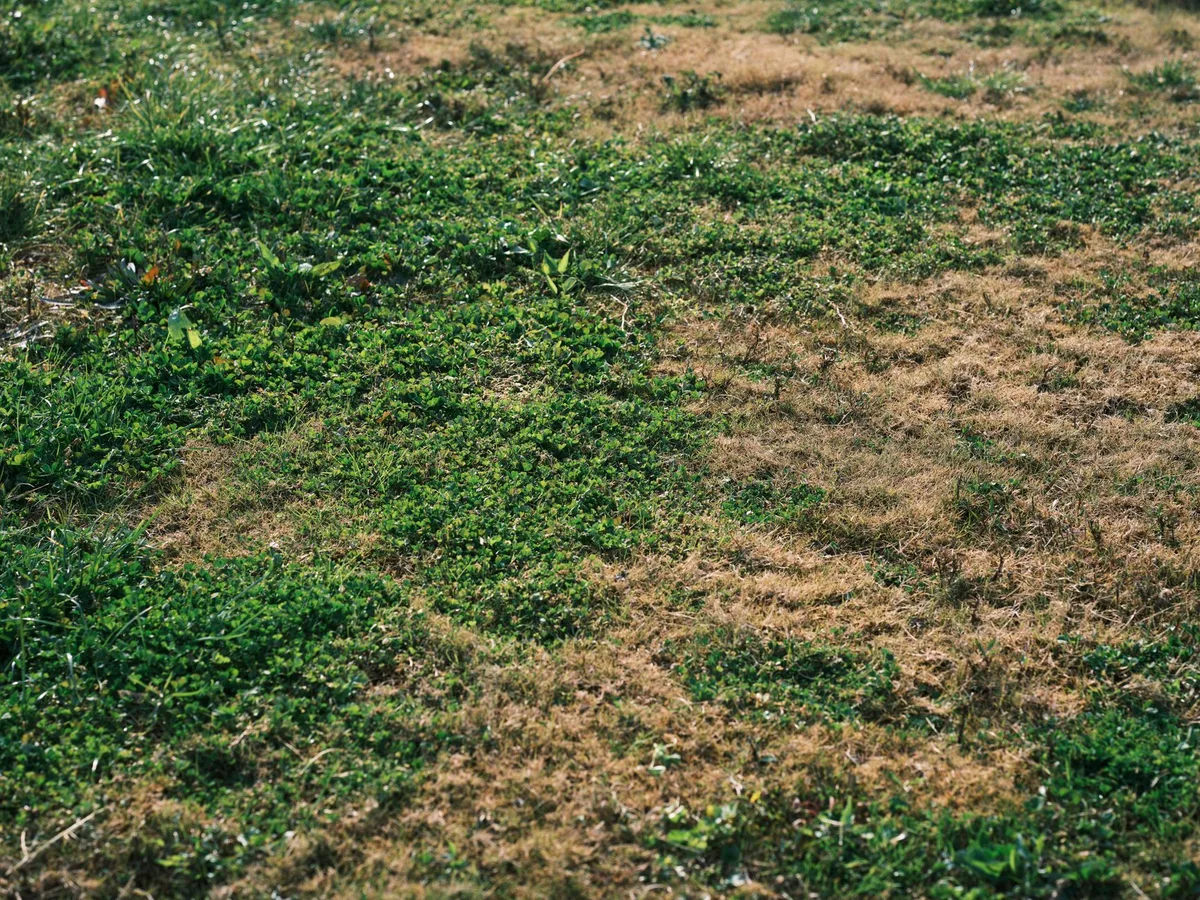
Drought damage looks different. The entire lawn browns evenly and the grass stays firmly rooted. Fungal disease creates circular patches with a distinct edge pattern.
Another clear sign is animal digging. Skunks and raccoons will tear up your lawn at night looking for grubs. If you wake up to torn turf, grubs are almost certainly the cause.
The damage often appears first in sunny areas. Grubs prefer warm, well-watered soil. If you have a shady lawn that stays cooler and a sunny section that browns first, grubs are a likely suspect.
You can test for grubs by grabbing a handful of brown grass and pulling gently. If it lifts up like a piece of sod with little resistance, the roots are gone. Dig underneath and you will find the grubs responsible for the damage.