Guide to Pre-emergent Vs Post-emergent Herbicides in 2026
If you're staring at a lawn full of weeds, you're probably already wondering whether you should have sprayed something weeks ago. That's the core of the Pre-Emergent vs Post-Emergent Herbicides decision. It's not about which product is "better." It's about whether you're trying to prevent trouble or fix trouble that's already here.
Most homeowners pick the wrong one because they don't check the single most important condition: have the weeds actually sprouted?
University extension services have been studying this for decades. Research from turfgrass programs consistently shows that timing a pre-emergent application to a soil temperature of exactly 55°F at a two-inch depth gives you the best shot at season-long control. Miss that by a week and you're already playing catch-up.
Let's walk through exactly how to make the call so you stop guessing and start winning.

Quick Answer
Use pre-emergent before weeds sprout. Use post-emergent after weeds appear. Pre-emergents stop seeds from germinating.
Post-emergents kill active weeds. Your soil temperature tells you when to apply pre-emergent.
The Real Problem: Are You Preventing or Fixing?
Here's the thing. Most people walk into a garden center, grab a bag or a bottle, and spray it on whatever weeds they see. That's a post-emergent move.
And sometimes it works. But if you had applied a pre-emergent six weeks earlier, you wouldn't have any weeds to spray in the first place.
The real problem is that your lawn's weed population runs on a schedule. Annual weeds like crabgrass and foxtail germinate from seed every spring. They don't come back from roots.
They come back from seeds that were dormant in the soil all winter. That's the weed seed bank. A pre-emergent herbicide puts a chemical barrier in the top inch of soil.
When a weed seed tries to sprout, it hits that barrier and dies. No seedling ever breaks the surface.
If you skip that step and wait until you see green, you're past prevention. You're now in fixing mode. Post-emergent herbicides are designed to kill plants that are already growing.
They get absorbed through leaves or roots and disrupt the weed's ability to grow. It works, but it's reactive. You're playing whack-a-mole all season.
Decision rule: If you haven't seen any weeds yet and the ground has warmed up, go pre-emergent. If you already see green shoots, go post-emergent. If you see both?
You're about to learn the tricky part.
How Pre-Emergent and Post-Emergent Actually Work

What a pre-emergent does (and doesn't do)
A pre-emergent herbicide doesn't kill existing weeds. That's the first thing people get wrong. It targets germinating seeds.
The active ingredient forms a thin layer in the soil. When a weed seed absorbs water and starts to grow, it takes in the chemical and dies before it ever sees sunlight.
Manufacturer specifications show that most granular pre-emergents need about a half-inch of water to activate. That means either rain or irrigation within 24 to 48 hours after application. Without that water, the barrier never forms.
You've just spread expensive dust.
Pre-emergents are also selective. They're designed to stop grassy weeds like crabgrass and foxtail. Most will not stop broadleaf weeds like dandelions or clover.
That's a big distinction. If your main weed is broadleaf, a pre-emergent might not help much at all.
What a post-emergent does (and its limits)
Post-emergent herbicides kill plants that are already visible. They work by being absorbed through the leaves (foliar application) or sometimes through the roots. Once inside, they disrupt growth processes like cell division or photosynthesis.
The weed stops growing, turns yellow, and dies within a week or two.
But there's a catch. Post-emergents are often non-selective. Glyphosate, for example, kills anything green it touches.
That means if you spray it on crabgrass in the middle of your fescue lawn, you'll kill the fescue too. That's why you need to read the label carefully. Many post-emergents are formulated to be selective for lawns, they'll kill broadleaf weeds without harming grass.
But they won't touch grassy weeds.
Aggregate reviews from turf managers indicate that the most common mistake is using a broadleaf post-emergent on crabgrass. It simply doesn't work. You need a product specifically labeled for grassy weed control.
The First Question: Have the Weeds Sprouted Yet?

This is the first branch in your decision tree. If no weeds are visible, you're in prevention territory. If you see any green at all, you need a post-emergent.
But it's not always that simple. Some weeds germinate in flushes. You might see a few early crabgrass seedlings, spray them, and think you're done.
Meanwhile, hundreds more seeds are still dormant in the soil. That's where a split approach works best: apply a post-emergent to kill what's up, and then apply a pre-emergent immediately after to stop the next wave. Just be careful, some pre-emergents can't be applied within a certain window after a post-emergent.
Check the label.
For annual weeds, the ideal time to apply a pre-emergent is when the soil temperature reaches 55°F and is trending upward. For most of the US, that's early to mid-spring, around the time forsythia bushes bloom. For perennial weeds like dandelions, pre-emergents won't stop them because they come back from roots, not seeds.
You need a post-emergent for those.
Practical tip: If you're not sure whether you have annual or perennial weeds, look at the root. Annuals have shallow, fibrous roots. Perennials have thick taproots or spreading rhizomes.
Pull one up. If it's one big carrot-like root, it's a perennial. Mulch or hand-pull won't remove it.
You need a post-emergent.
The Second Question: What Weed Type and Where Are You?
Now that you know whether you're preventing or fixing, you need to know what kind of weed you're dealing with. And what kind of grass you're growing. Because if you pick the wrong herbicide, you can kill your lawn faster than the weeds.
Grassy weeds vs. broadleaf weeds
Herbicides are formulated to target either grassy weeds, broadleaf weeds, or both. Knowing the difference is critical.
| Weed type | Examples | Pre-emergent option | Post-emergent option |
|---|---|---|---|
| Grassy | Crabgrass, foxtail, goosegrass | Yes, most effective | Needs specific grassy weed killer |
| Broadleaf | Dandelion, clover, chickweed | Limited effectiveness | Broadleaf-specific herbicide works well |
| Sedge | Yellow nutsedge | Rarely effective | Needs sedge-specific herbicide |
Most common lawn products are designed for broadleaf post-emergent control. If your problem is crabgrass, you need a product labeled for grassy weed control. And if you have nutsedge, you're in for a different battle entirely.
Your lawn type (cool-season vs. warm-season grass)
Herbicides don't care about your feelings, they care about the plant's biology. Different grass species have different tolerances. For example, a product containing 2,4-D is safe on most cool-season grasses like fescue and bluegrass.
But it can damage warm-season grasses like St. Augustine and centipede if applied at the wrong rate or in hot weather.
Warm-season grass owners in the South often need to use products specifically formulated for their turf. The same goes for northern lawns with cool-season grass. If you live in a transition zone (like the Midwest), you have both types and need to be extra careful.
Bottom line: Before you buy anything, check the label to see if it's safe for your specific grass species. If it says "safe for all lawns," be skeptical. Read the fine print.
If you're not sure, look up your region's extension service recommendations. They've already done the trial and error for you.
As of 2026, most major herbicide manufacturers have easy-to-read tables on their product labels that list tolerant grass species. Use them. Ignoring this step can mean a brown, dead lawn and a trip to the garden center for sod.
A Decision Branch: What to Use When You're Overseeding
Here's where things get tricky. If you're planning to overseed your lawn, most pre-emergents will kill your new grass seed just as effectively as they kill weed seeds. They don't discriminate.
The chemical barrier stops all seeds from germinating.
So what do you do?
You have three options. Option one: skip the pre-emergent entirely during your overseeding year. Overseed in the fall after summer weed pressure drops.
Then apply a pre-emergent the following spring once the new grass is well established. This is the safest route for cool-season grasses.
Option two: use a pre-emergent that's labeled as safe for seeding. Some products like mesotrione (the active ingredient in Tenacity) allow you to apply at seeding time. It suppresses weeds but lets your grass seed grow.
This is the most common recommendation for people who overseed in spring.
Option three: spot-treat with a post-emergent instead. If only a small area has weeds, you can kill them one by one without jeopardizing your new grass. It's more labor, but it works.
The key rule: Don't apply a traditional pre-emergent within four to six weeks of seeding. Check the label for the exact waiting period. If you're planning aeration and overseeding, apply your pre-emergent in early spring and then seed in the fall.
That gives the barrier time to break down.
When to Use Both (And How to Sequence Them)
A lot of homeowners think it's an either-or choice. In practice, the most effective lawn care programs use both. They just use them at different times.
Think of it as a one-two punch. Apply a pre-emergent in early spring to stop the first weed flush. Then follow up with a post-emergent in late spring or summer to catch anything that snuck through.
The pre-emergent handles the seeds. The post-emergent handles the survivors.
But the order matters. If you apply a post-emergent first and then immediately apply a pre-emergent, you risk burning your lawn. Many post-emergents recommend waiting two to three weeks before any other application.
Some pre-emergents have the same waiting period.
Here's the safe sequence:
- Early spring: Apply pre-emergent when soil hits 55°F. Water it in.
- Late spring: If you see weeds, use a post-emergent spot spray. Don't broadcast it.
- Mid-summer: If weed pressure is high, consider a second pre-emergent application (check the label for timing).
- Fall: Spot-treat remaining broadleaf weeds with a selective post-emergent.
One major warning: Never mix a pre-emergent and a post-emergent in the same tank sprayer unless the label explicitly allows it. Some combinations create a chemical reaction that damages grass. When in doubt, apply them separately with at least two weeks between applications.
The Step-by-Step Workflow for Timing Both Applications
Step 1: Check soil temperature (the pre-emergent trigger)
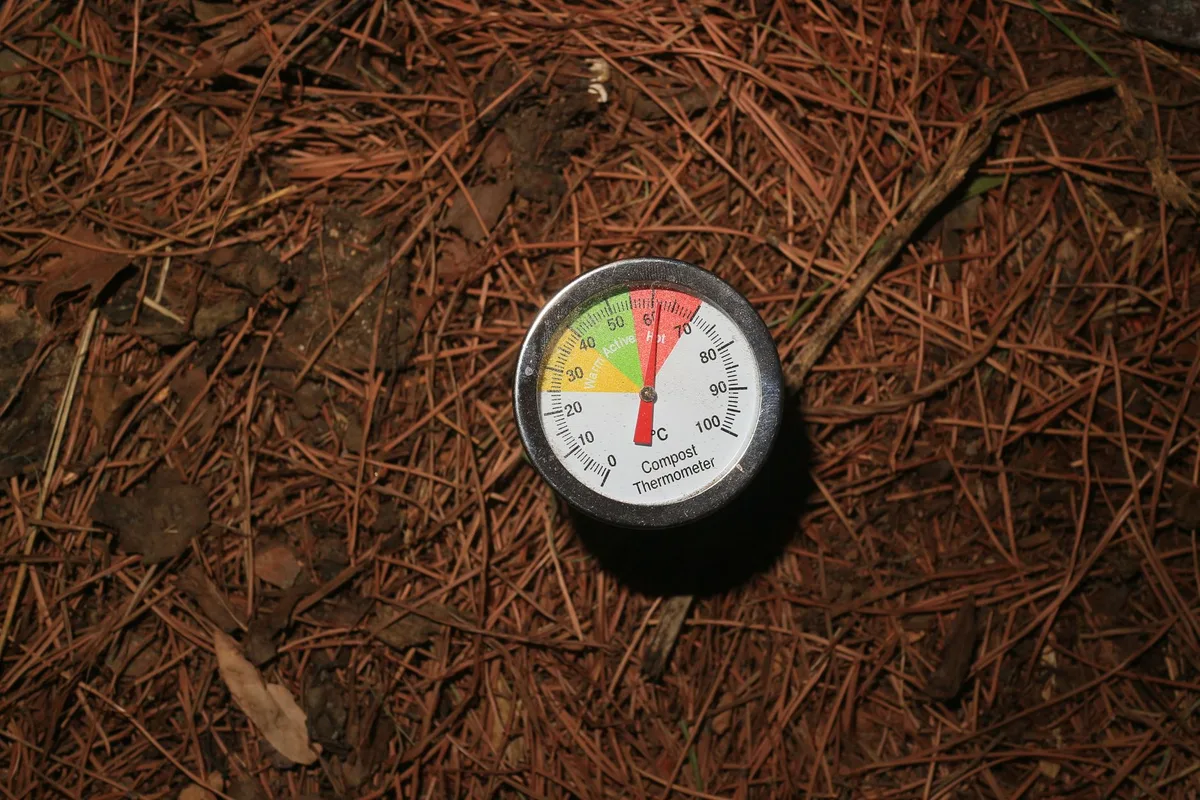
Get a soil thermometer. Push it two inches into the ground. Check it each morning for three consecutive days.
When the average temperature hits 55°F and the forecast shows no cold snap, it's time. For most of the northern US, that's between mid-March and mid-April. In the South, it can be February.
Don't rely on air temperature. Soil warms up slower than air. A warm day in March doesn't mean the ground is ready.
Step 2: Identify if weeds are already up
Walk your lawn. Get down on your hands and knees. Look for small green shoots.
If you see any, you need a post-emergent first. Apply it according to the label, wait the recommended time (usually 7 to 14 days), and then apply your pre-emergent.
If you see nothing, proceed directly to pre-emergent.
Step 3: Pick your product based on weed type and grass type
Read the label. Not the front, the back. Find the table that lists which grass species are tolerant.
Find the section that lists which weeds are controlled. If either list doesn't match your situation, keep shopping.
Step 4: Apply correctly for your spreader or sprayer
Calibrate your spreader. This is the step almost everyone skips. A granular pre-emergent needs to be applied at a specific rate.
Too little and it won't work. Too much and you risk burning the lawn.
For a rotary spreader, use a mid-range setting and walk at a steady pace. For a drop spreader, run a test strip on a driveway first. Adjust until you get the right rate.
For liquid post-emergents, use a pump sprayer with a spray shield. Keep the nozzle low to avoid drift. Spray only the weed and a small area around it.
Step 5: Follow up on the label's schedule
Most pre-emergents provide 8 to 12 weeks of control. After that, the chemical breaks down. If you have a long growing season, you may need a second application in early summer.
Mark your calendar. Set a reminder. Don't guess.
Mistakes That Wreck Your Results
If you make any of these errors, don't be surprised when your lawn looks the same in a month.
Applying pre-emergent too late
This is the single most common mistake. People see crabgrass in June and grab a bag of "crabgrass preventer." But preventer means it stops seed germination. The crabgrass you see already germinated in April or May.
You're just spreading expensive powder on a problem that's past prevention. Switch to a post-emergent instead.
Spraying post-emergent in the heat of the day
Many post-emergents break down or evaporate in direct sunlight. The ideal time to spray is early morning or late evening when temperatures are below 80°F. Spraying in the middle of a hot day reduces effectiveness and increases the risk of grass burn.
Skipping the second pre-emergent application
One application isn't always enough. If your product says 8 weeks of residual control and you have a 16-week growing season, you need a second application. Mark your calendar for 8 weeks after the first.
If you forget, the weed seed bank gets a second chance.
Other common errors:
- Applying pre-emergent to frozen ground. It won't activate and will wash away with snowmelt.
- Not watering in a granular pre-emergent. Without a half-inch of water, the barrier never forms.
- Using a non-selective post-emergent on your lawn. Always choose selective unless you're prepared to replant.
- Overlapping spray passes. This doubles the dose and can kill grass. Use a marking agent or flagging spray.
The Simple Judgment Flowchart (In Words)
Here's the decision logic for any weed problem. Read it as a series of if/then statements.
If no weeds are visible and soil temperature is over 55°F: Apply pre-emergent. Water it in. Done.
If no weeds are visible but soil temperature is under 55°F: Wait. Check again next week.
If weeds are visible and they're annual (shallow roots, loose soil): Apply a selective post-emergent for your weed type. If you want to prevent future flushes, apply a pre-emergent after the post-emergent has dried and the waiting period passes.
If weeds are visible and they're perennial (taproots, returning yearly): Apply a selective broadleaf post-emergent. Pre-emergent won't help. You're killing the established plant.
If you're overseeding: Skip the pre-emergent. Use mesotrione if you need something. Otherwise, spot-treat with post-emergent.
If weeds are visible and you have a mix of grassy and broadleaf: Treat the broadleaf first with a selective post-emergent. Then switch to a grassy weed killer. Don't mix them unless the label says it's safe.
If you're in the South with warm-season grass: Double check that any product is safe for St. Augustine or centipede. Some common post-emergents will kill these grasses.
One Real Scenario That Ties It All Together
Let's look at a typical situation. A homeowner in the Midwest notices crabgrass popping up in mid-May. They grab a bag of crabgrass preventer and spread it.
Nothing happens.
Here's what went wrong. The crabgrass germinated in April when soil temperatures hit 55°F. By mid-May, those seedlings were already two inches tall.
A pre-emergent won't kill them. The homeowner needed a post-emergent labeled for grassy weeds applied in late April, followed by a pre-emergent application that same week.
The fix? They switched to a selective post-emergent spray for the visible crabgrass. It took about 10 days to see results.
Then they spot-treated any stragglers. The following spring, they checked soil temperature from late March and applied pre-emergent at exactly 55°F. They watered it in with a half-inch of irrigation.
Results were clean all season.
The Bottom Line: Your 3-Step Plan for Weed-Free Turf
Step one: Know your timing. Measure soil temperature. Apply pre-emergent at 55°F. If you see green, use post-emergent instead.
Step two: Know your weed. Grassy weeds need different products than broadleaf weeds. Pull one up. Check the root.
Then buy the right product.
Step three: Know your grass. Cool-season and warm-season lawns have different tolerances. Read the label's grass species table. If you skip this, you risk killing your lawn.
That's it. Three decisions. Every weed problem fits into one of these branches.
Make the right call and you'll spend less money and less time fighting weeds.
Frequently Asked Questions
Can I apply pre-emergent and post-emergent at the same time?
Only if the label explicitly allows tank mixing. Most manufacturers recommend at least two weeks between applications. When in doubt, apply them separately.
A mixed product that isn't labeled for it can damage your grass.
How long does a pre-emergent stay active in the soil?
Most granular pre-emergents provide 8 to 12 weeks of residual control. Some liquid formulations last up to 16 weeks. Check the label for specific timing.
After the barrier breaks down, weed seeds can germinate again.
Will pre-emergent kill my existing grass?
No. Pre-emergents are formulated to target germinating weed seeds. They won't harm established grass roots.
But they will kill new grass seed. Don't apply pre-emergent within four to six weeks of overseeding.
What's the best time of day to spray post-emergent?
Early morning or late evening. Temperatures should be below 80°F. Direct sunlight breaks down many post-emergent herbicides and reduces effectiveness.
Spraying in cooler weather also reduces the risk of grass burn.
Do I need to water in a pre-emergent after applying it?
Yes. Most granular pre-emergents need about a half-inch of water within 48 hours to activate the chemical barrier. Without water, the granules just sit on the soil surface.
They won't prevent anything.
Can I use a post-emergent on my vegetable garden?
Only if it's labeled for edible gardens. Most lawn post-emergents are not safe for vegetables. For garden beds, hand-pulling or organic options like corn gluten meal are safer choices.
Always check the label before spraying near anything you plan to eat.