Guide to Common Weed Identification Guide 2026
If you’ve ever stared at a mystery plant in your lawn and wondered if it’s a weed or a keeper, you’re not alone. Most of us have been there, standing over something green, phone in hand, trying to match a blurry photo to a name. The problem is, common names vary by region, and two totally different plants can look nearly identical at first glance.
That’s why a solid Common Weed Identification Guide matters more than a random internet search. As of 2026, over 30 weed species regularly appear in residential lawns across North America. Getting the ID right is the difference between a quick fix and a season-long battle.
Let’s start with why the name itself is less important than what you actually see.
Quick Answer
A common weed identification guide uses leaf shape, growth habit, flowers, and stems to tell plants apart. Start with leaf arrangement. Check if it’s a broadleaf, grass, or sedge.
Match what you see to clear photos. Confirm with a second feature before deciding. Get the ID right, and control becomes straightforward.
Why Visual ID Matters More Than a Name
Common names are messy. What one neighbor calls “creeping Charlie” might be “ground ivy” to someone else. And “henbit” versus “deadnettle”?
Good luck figuring that out from a text description.
Visual features are the reliable anchor. Leaf shape, growth habit, and flower structure don’t change based on who you ask. They stay consistent across regions and seasons.
That’s why any good weed ID guide leans hard on what you can see with your own eyes.
Here’s what visual ID gives you that a name alone can’t:
- Confidence, you’re not guessing based on a vague description
- Accuracy, you match multiple features, not just one
- Transferability, the same features work for weeds you’ve never seen before
- Control strategy, knowing the growth habit tells you how to remove it
The hero image at the top of this guide shows three weeds side by side. Notice how different their leaves and growth patterns are. That’s the kind of visual comparison that makes identification click.
You wouldn’t try to identify a bird by its call alone. Same logic applies here.
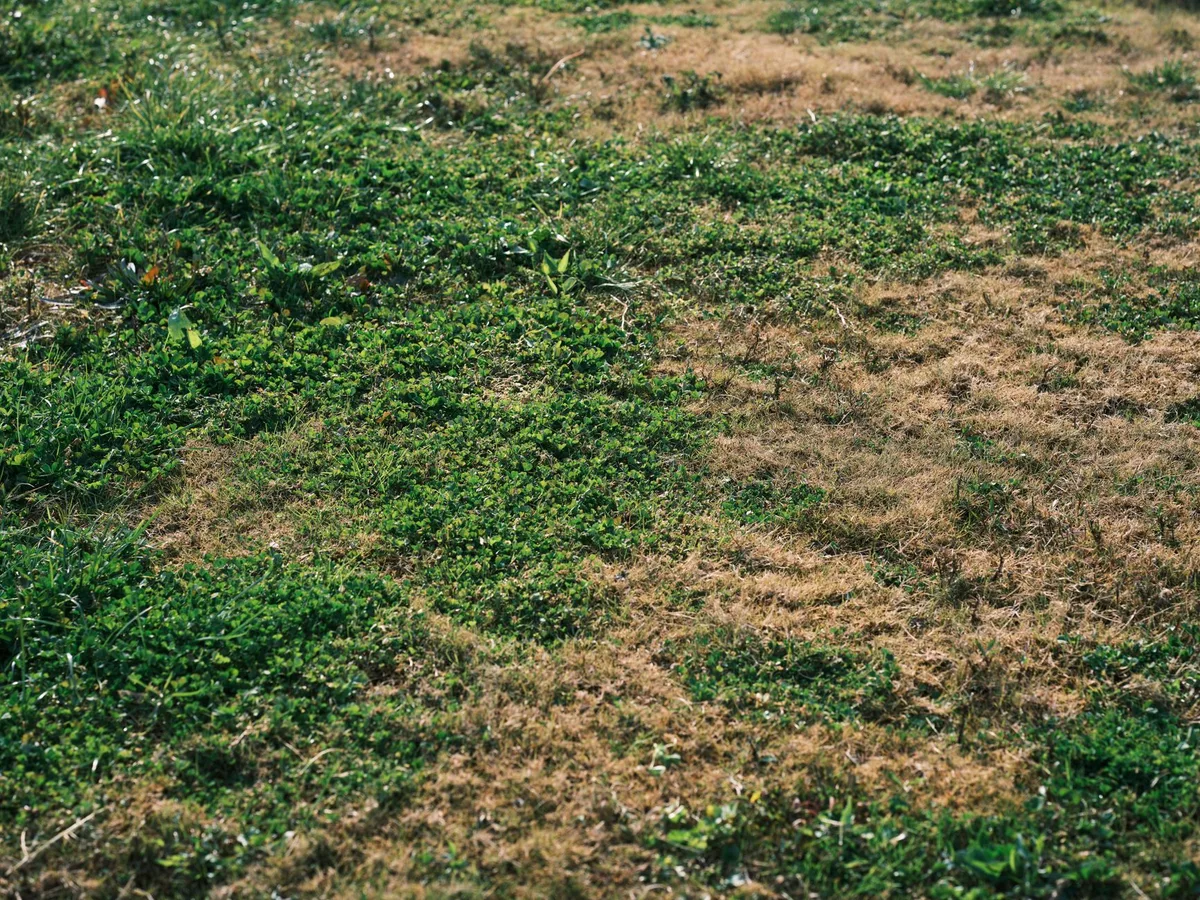
The Three Core Weed Categories (And Why They Look Different)
Every weed falls into one of three categories: broadleaf, grassy, or sedge. These groups are based on plant family, not leaf shape alone. Getting this wrong means you might spray the wrong herbicide and kill your lawn instead of the weed.
Broadleaf weeds are the easiest to spot. They have wide, flat leaves with a prominent central vein and a network of smaller veins. Dandelions, clover, plantain, all broadleaves.
They grow from a taproot or fibrous root system and often produce showy flowers.
Grassy weeds look like your lawn grass but behave differently. Crabgrass, quackgrass, and annual bluegrass are common examples. They have narrow leaves with parallel veins, hollow or jointed stems, and a fibrous root system.
The trick is telling them apart from desirable grass species.
Sedge weeds are the sneaky ones. They look like grass at first but have solid, triangular stems (roll one between your fingers and you’ll feel the edges). Nutsedge is the most common offender.
Sedges thrive in wet soil and laugh at standard grass-killing herbicides.
| Category | Leaf Appearance | Stem Shape | Root System | Common Examples |
|---|---|---|---|---|
| Broadleaf | Wide, flat, network of veins | Round or square | Taproot or fibrous | Dandelion, clover, plantain |
| Grassy | Narrow, parallel veins | Round, hollow or jointed | Fibrous | Crabgrass, quackgrass, foxtail |
| Sedge | Narrow, parallel veins | Triangular, solid | Rhizomes or tubers | Nutsedge, yellow nutsedge |
If you’re unsure which category you’re dealing with, look at the stem first. Roll it between your thumb and finger. Triangular means sedge.
Round with joints means grass. Anything else is almost certainly broadleaf.
Once you know the category, you’ve already narrowed the field by two-thirds. That’s why every good weed identification process starts here.
Leaf Shape & Arrangement: Your First Clue
After you know the category, look at the leaves. This is where most people get their first solid clue. Leaf shape and arrangement are consistent across a species, even when the plant is young or stressed.
Leaf arrangement refers to how leaves are positioned on the stem. There are three main patterns:
- Opposite, two leaves grow directly across from each other at the same node (think mint, ground ivy, henbit)
- Alternate, one leaf per node, staggered along the stem (dandelion, plantain, thistle)
- Whorled, three or more leaves circle the stem at a single node (less common, but shows up in some bedstraw species)
Opposite leaves are a strong clue. Many common lawn weeds with opposite leaves are in the mint family. They often have square stems and a strong smell when crushed.
Leaf shape matters just as much. Look at the edge of the leaf (the margin).
- Smooth margins, no teeth or lobes (chickweed, purslane)
- Toothed margins, saw-like edges (dandelion, ground ivy)
- Lobed margins, deep cuts or divisions (wild violet, creeping Charlie)
- Compound leaves, multiple leaflets on one stem (clover, black medic)
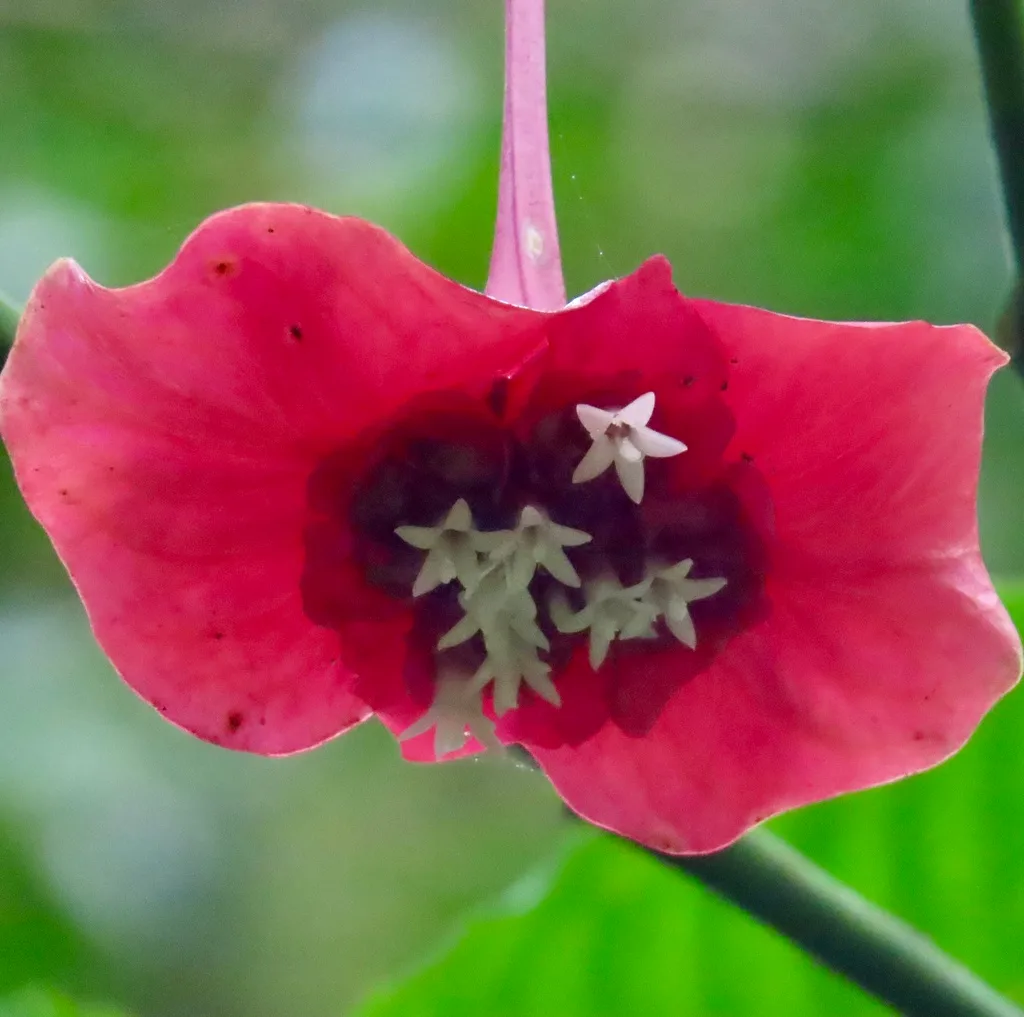
The image below shows the three main arrangement types side by side. Notice how opposite and alternate leaves look completely different even from a quick glance.
Here’s a practical trick. Take a photo of the weed from directly above. That top-down view shows arrangement clearly.
Also snap a side shot to capture the leaf shape and any stem features. These two angles give you 90 percent of what you need.
Start with arrangement. Then look at margin shape. If both match a known weed, you’re probably on the right track.
If not, move to growth habit for the next clue.
Growth Habit: Where to Look for the Second Clue
Leaf shape narrows it down. Growth habit locks it in. This is the single most underused feature in weed ID, and it’s the one that separates beginners from people who can name a weed in five seconds flat.
Growth habit describes how the plant grows in space. Does it hug the ground? Stand up straight?
Spread out in a mat? Each habit is tied to a survival strategy, and once you recognize it, you’ll start seeing patterns everywhere.
Rosette: Leaves radiate from a central point at ground level. The plant looks like a flat star. Dandelions and plantains are classic examples.
A rosette tells you the weed is a perennial that stores energy in a deep taproot. Pull it without getting the whole root, and it’ll come right back.
Upright / clumping: The plant grows upward from a central crown. Thistles, foxtail, and annual bluegrass all do this. These weeds are often fast-growing and compete for sunlight.
They’re easier to hand-pull when young but get tough as they mature.
Spreading / mat-forming: The plant sends out runners (stolons) or low branches that root at the nodes. Ground ivy, creeping Charlie, and chickweed all spread this way. They form dense mats that choke out grass.
These are the most frustrating to remove because even a small piece left behind can regrow.
Prostrate: Similar to spreading but the stems lie flat on the ground without rooting at every node. Purslane and spurge grow this way. They’re low enough to escape the mower blade, which is why they thrive in lawns cut too short.
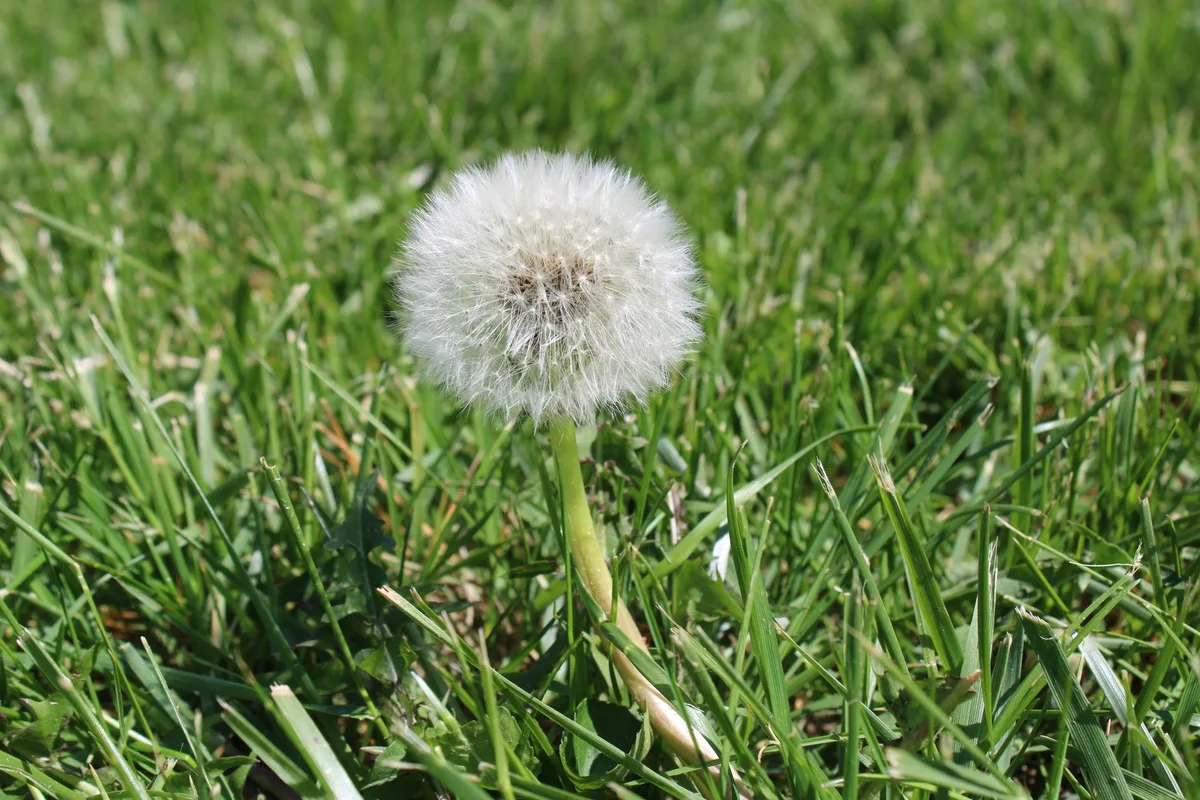
Here’s the real-world payoff from knowing growth habit. A rosette weed like dandelion requires a weeding tool that gets the whole taproot. A mat-forming weed like ground ivy needs smothering or spot treatment because pulling is nearly impossible.
And an upright annual like crabgrass can be blocked with pre-emergent before it sprouts.
Your control strategy changes completely based on this one feature. That’s why growth habit is the second most important clue after leaf arrangement.
Take a step back and look at the whole plant before you touch it. Is it flat? Upright?
Running sideways? That ten-second observation will save you hours of wasted effort later.
Flowers, Seed Heads, and Stems: The Final Confirmation
Leaves and growth habit get you most of the way there. But sometimes you hit a dead end. Two weeds have the same leaf shape and arrangement.
What then?
Flowers, seed heads, and stems are the tiebreakers. They provide confirmation when everything else looks the same. These features are also the most reliable across different seasons and growing conditions.
Flower structure varies widely between species. Look at three things. First, the flower type.
Composite flowers like dandelions look like a single bloom but are actually dozens of tiny florets packed together. Spike flowers like plantain grow on a tall stalk. Umbel flowers like wild carrot spread out like an umbrella.
Second, flower color. White, yellow, purple, pink, or blue narrows things down fast. For example, henbit has pink-purple flowers while chickweed has small white ones.
Third, bloom season. Some weeds flower only in spring, others in late summer.
Stem features matter more than most people realize. Is the stem square or round? Square stems almost always mean the mint family.
That includes henbit, deadnettle, ground ivy, and creeping Charlie. Round stems could be almost anything.
Is the stem hairy or smooth? Hairy stems are common on plants that need protection from sun and wind. Is it hollow?
Hollow stems are typical of grasses and some annual broadleaves. A solid stem packed with pith suggests a perennial.
Seed heads are your last resort. They only appear late in the season, but they are highly distinctive. Crabgrass produces a set of fingers that look like a turkey foot.
Dandelion seed heads are the classic puffball. Foxtail looks exactly like a fox tail. Burdock produces spiny burs that stick to clothing.
Use this order of operations. Start with leaves. Check growth habit.
Confirm with flowers or stems. Only then make your final call.
Common Look-Alike Pairs That Trip People Up
Some weeds are nearly impossible to tell apart without close inspection. Even experienced gardeners mix them up. Knowing the differences saves you from spraying the wrong plant or pulling something you wanted to keep.
Henbit versus deadnettle is the most common confusion pair. Both have square stems, opposite leaves, and purple flowers. Here is the trick.
Henbit leaves attach directly to the stem with no stalk. Deadnettle leaves have a short stalk. Henbit also has flowers that appear in whorls around the stem.
Deadnettle flowers cluster at the top.
Wild violet versus ground ivy is another headache. Both have rounded leaves and grow low to the ground. Look at the leaf attachment.
Wild violet leaves have a long stem attaching them to the center of the plant. Ground ivy leaves attach directly to creeping stems. Wild violet also produces distinct purple flowers in spring.
Ground ivy flowers are smaller and tubular.
Poison hemlock versus wild carrot (Queen Anne's lace) is the dangerous one. Both have fern-like leaves and white umbrella-shaped flower clusters. But poison hemlock can kill you if you eat it.
The key differences are on the stem.
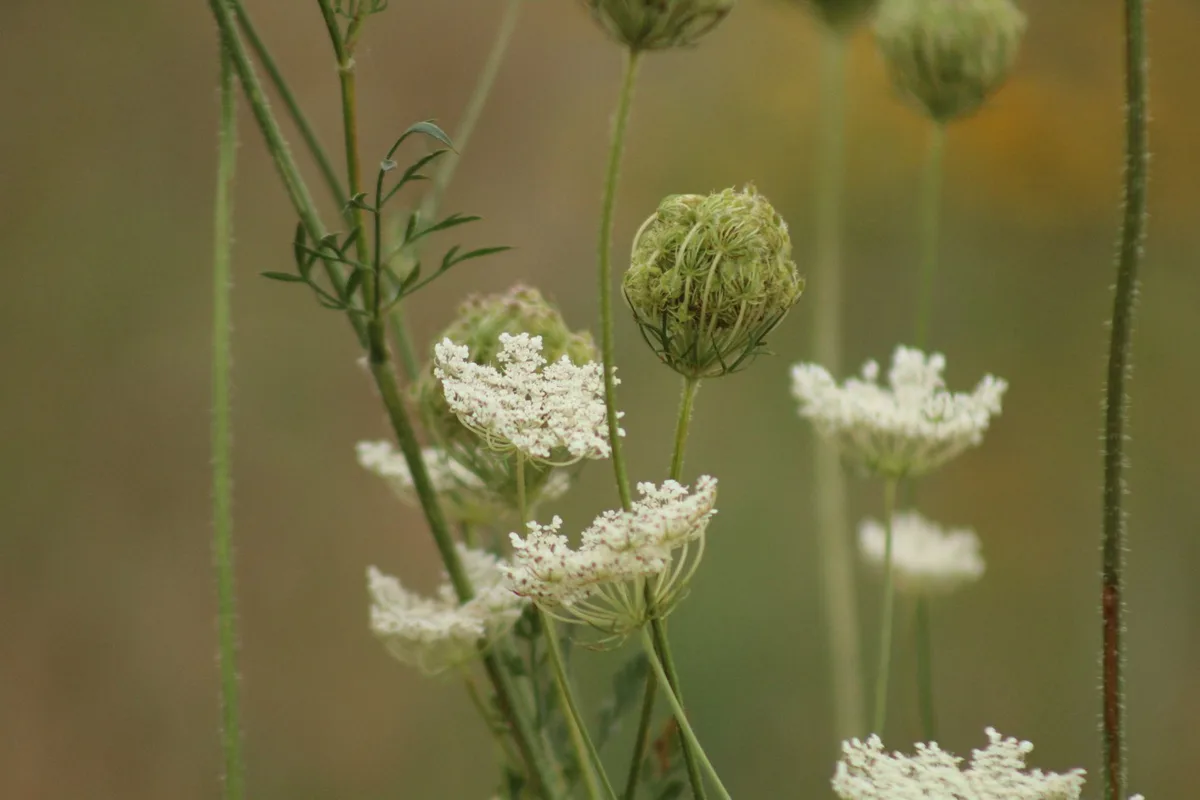
Look at the stem. Poison hemlock has purple spots on a smooth, hollow stem. Wild carrot has a hairy, solid stem with no spots.
Also check the flowers. Wild carrot usually has a single dark purple floret in the center of each cluster. Poison hemlock does not.
And the smell. Crushed wild carrot smells like carrots. Crushed poison hemlock smells musty or like mouse urine.
Crabgrass versus bermudagrass in the seedling stage is a common lawn care frustration. Both are grassy weeds that look similar. The difference is in the growth habit.
Crabgrass grows in clumps and dies after one season. Bermudagrass spreads via underground runners and comes back every year. If you see stolons running across the soil surface, it is bermudagrass.
If the plant stays in a tight clump, it is crabgrass.
The Before-and-After Problem: Seedlings vs. Mature Weeds
Weeds change appearance as they grow. A dandelion seedling looks nothing like a mature dandelion. The seedling has small, rounded leaves with smooth edges.
The mature plant has deeply lobed, jagged leaves. If you only know what the adult looks like, you might walk right past a seedling infestation.
This is the most common identification trap. People wait until a weed is large enough to recognize. By then, it has already set seed.
The problem compounds every season.
Features that stay consistent across growth stages. Leaf arrangement does not change. Opposite remains opposite.
Alternate stays alternate. Stem shape is also consistent from early growth onward. A square stem is square at every stage.
Features that change include leaf shape, leaf size, and color. Many weeds have simpler leaves as seedlings and more complex leaves as adults. Pigweed starts with oval leaves and develops lobed ones later.
This is called heteroblasty. It confuses even experienced identifiers.
The best time to photograph a weed for identification is when it has at least four true leaves. That is usually two to three weeks after sprouting. The first two leaves you see are cotyledons or seed leaves.
They look different from the true leaves and can mislead you. Wait for the third and fourth leaves to appear.
Also photograph the plant at flowering stage if you can wait. Flowers are the most reliable identifier. But if you need to act immediately, focus on leaf arrangement and stem features.
Those do not change.
Using the Right Tool for Your Situation
You have options for weed identification beyond this guide. Each tool has strengths and weaknesses. Choosing the right one depends on your situation.
Printed field guides work best when you have no cell service. They cover a specific region and include high-quality photos of both seedlings and mature plants. The downside is weight and limited species coverage.
A good regional guide covers about 100 to 200 plants.
Identification apps use your phone camera to match images against a database. They are fast and convenient. The accuracy varies widely.
Our research suggests that apps correctly identify common weeds about 70 to 80 percent of the time. Accuracy drops with uncommon species and poor lighting. Use apps as a first guess, not a final answer.
Your local extension office offers free identification services. You can email a photo or bring in a physical sample. The staff includes trained horticulturists who know your region's weeds.
This is the most reliable option for tricky identifications. As of 2026, most extension offices respond within one to two business days.
The two-minute photo checklist before you snap any weed picture:
- Include a ruler or coin for scale
- Photograph the leaf top and bottom
- Photograph the leaf arrangement on the stem
- Photograph the base of the plant where it meets the soil
- If flowers are present, photograph them close up
- Photograph the whole plant from above
One good photo is worth a dozen blurry ones. Take five seconds to get a clear shot in good light. That single image can save you hours of research.
What to Do After You Identify It
Identification is not the end goal. Control is. But the right control depends entirely on what you found and when you found it.
Manual removal works for young annual weeds with shallow roots. Grab the base and pull straight up. Do it after rain when soil is soft.
For taprooted weeds like dandelion, use a weeding tool that gets the entire root. Any piece left behind regenerates.
Spot treatment works when manual removal is impractical. Use a selective herbicide that targets the weed type you identified. Broadleaf herbicide for dandelions and clover.
Grass-specific herbicide for crabgrass. Sedge-specific herbicide for nutsedge. Read the label twice.
The wrong product wastes your time and may kill your lawn.
Leave it is sometimes the right answer. Some weeds are beneficial to pollinators and soil health. Clover fixes nitrogen.
Dandelions provide early spring food for bees. If the weed is not aggressive and you can tolerate it, leaving it alone is fine.
Timing matters more than the method. Apply pre-emergent herbicides before the weed germinates. Apply post-emergent herbicides when the weed is young and actively growing.
Pull annual weeds before they flower. Dig perennial weeds before they store energy for winter.
Prevention stops the cycle. Keep your lawn thick and healthy with proper fertilizer maintenance and mowing height. Bare soil invites weeds.
Overseed thin patches in fall. Water deeply but less often. A healthy lawn crowds out most weed seedlings before they establish.