Guide to First Time Homeowner Lawn Care Guide 2026
You just closed on your first house. The yard looks decent enough from the front porch, but now it's yours. And you have zero idea what to do with it.
This First Time Homeowner Lawn Care Guide is the only one you'll need to get from overwhelmed to a healthy, green lawn without wasting money or making costly beginner mistakes.
Research from university turfgrass programs shows that 80 percent of lawn problems come from just three basic errors: wrong mowing height, poor watering habits, and skipping a soil test. Master those and you're already ahead of most new homeowners. Let's break it all down step by step.
Quick Answer
Start with a soil test. It tells you exactly what your lawn needs. Mow tall and keep blades sharp.
Water deeply but less often. Apply fertilizer based on your grass type. Use pre-emergent in early spring.
That's the whole foundation.
Why Getting Lawn Care Right From Day One Matters
A new lawn isn't forgiving. The grass that came with your house is likely a mix of whatever the builder threw down or what survived neglect during the construction process. If you jump in with random products and a "mow it short and hope for the best" approach, you can set yourself back two full growing seasons.
First impressions matter for your property, too. A well-maintained lawn raises curb appeal and even neighborhood resale values. But more than that, a healthy lawn is self-regulating.
It crowds out weeds, handles light foot traffic, and recovers from dry spells faster. Get it right in the first year and maintenance gets easier every season after.
On the flip side, common mistakes like scalping the grass or overwatering invite disease, pests, and weeds that take real effort to undo. That's why spending a little time upfront learning the basics pays off in fewer headaches and less money spent on fixes later.
The Two Things You Absolutely Need to Know First (Grass Type and Growing Zone)
Before you buy a single bag of fertilizer or set your mower deck, you have to know two things: what grass you have and where you live. They determine every decision you'll make.
What grass is growing in your yard?
Warm-season grasses (Bermudagrass, Zoysiagrass, St. Augustinegrass) thrive in the South. They turn brown in winter and green up in late spring.
Cool-season grasses (Tall Fescue, Kentucky Bluegrass, Perennial Ryegrass) dominate the North and the transition zone. They stay green through fall and grow actively in spring and fall.
If you aren't sure, look at the turf blades. Fine fescue has narrow, needle-like leaves. Tall fescue has wide blades with visible veins.
Bermudagrass has small, flat leaves that feel tough. You can also use the USDA Plant Hardiness Zone map as a starting clue.
Why growing zone matters
Your zone tells you timing. Cool-season lawns need overseeding and fertilizing in early fall. Warm-season lawns get their big feeding in late spring.
Applying the wrong fertilizer at the wrong time just feeds weeds or burns the grass.
If your property sits in the transition zone (roughly from Virginia to Kansas), you can grow either type, but each comes with trade-offs. Zoysia handles heat but stays brown longer. Tall fescue needs more water in summer.
How New Homeowners Wreck Their Lawn (And How You Won't)
I've seen the same pattern over and over. A new homeowner gets excited, buys a cheap mower, sets it at the lowest setting to save time, then waters every evening because the grass looks thirsty. By August, the lawn looks patchy, weedy, and half-dead.
Here are the top three ways beginners sabotage their grass:
- Scalping: Cutting off more than one-third of the blade at once shocks the plant. Grass needs those leaf tips for photosynthesis. Cut too short and the roots stop growing.
- Frequent shallow watering: Sprinkling for fifteen minutes every day trains roots to stay near the surface. That makes the lawn weak in dry spells. Deep, infrequent watering is what builds drought tolerance.
- No soil test: Throwing down a bag of generic fertilizer without knowing your soil's pH or nutrient levels is like treating a fever with random pills. You might make things worse.
Avoid those three and you've already dodged the biggest headaches. The rest is just fine-tuning.
The Soil Test: Your Lawn's Owner's Manual
Your soil holds the key to everything. Without a test, you're guessing. And guessing costs money.
Where to get a test
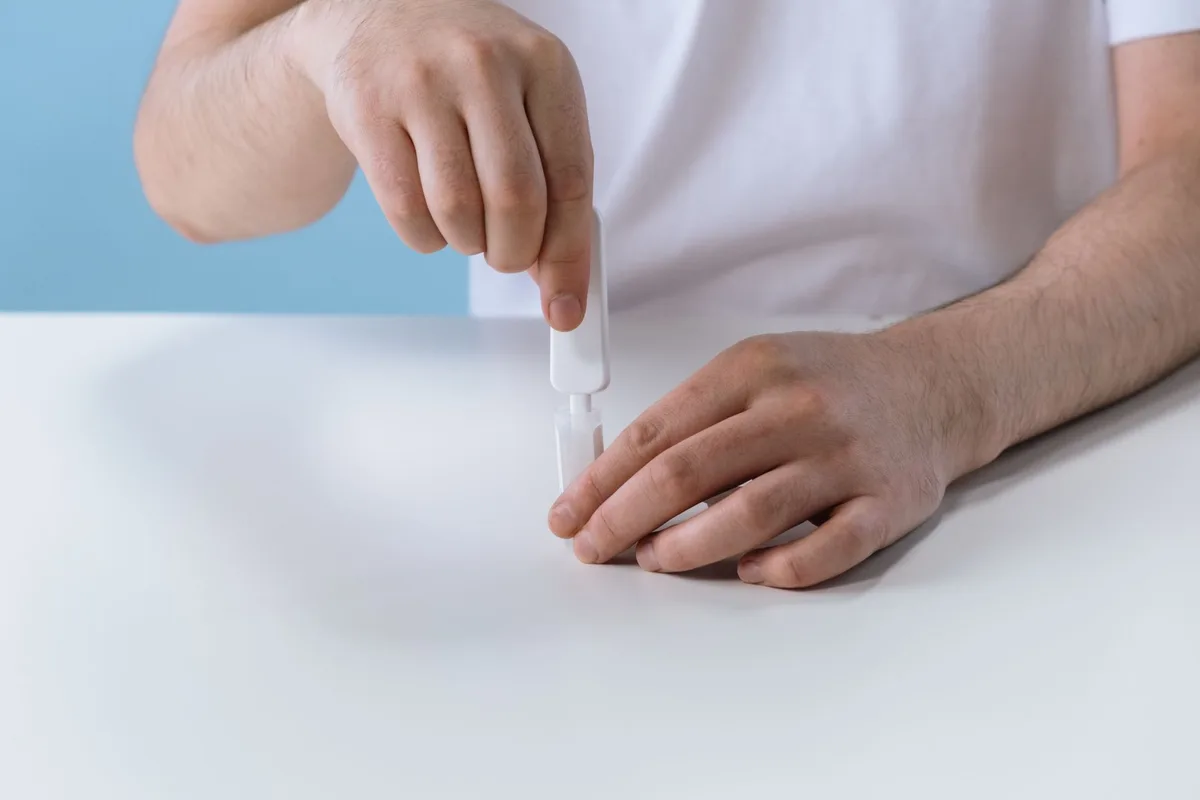
Your state's Cooperative Extension Service offers soil testing for a small fee. Sample kits cost $10 to $30. You dig a few small plugs from different spots, mix them together, dry the sample, and mail it in.
You'll get back a report with your soil's pH, levels of nitrogen (N), phosphorus (P), potassium (K), and organic matter.
What the numbers mean
Ideal pH for most lawn grasses is between 6.0 and 7.0. Below that, nutrients like phosphorus get locked up. Above that, iron and manganese availability falls.
If your pH is off, you'll add lime to raise it or sulfur to lower it.
Your test also tells you exactly how much fertilizer your lawn needs. That saves you from buying products you don't need. Many homeowners apply a phosphorus-heavy "starter" fertilizer when their soil already has plenty, leading to runoff into local waterways, and in some states, that's actually illegal unless a test shows deficiency.
Mowing Rules That Save Your Grass (Height, Frequency, Blade Sharpness)
Most people mow too short and too infrequently. Here's the rule: never take off more than one-third of the grass blade at a time. That means if you want your lawn at 3 inches, you mow when it reaches 4.5 inches.
If you let it get to 6 inches, you're scalping it back to 3, which stresses the grass badly.
Height guidelines by grass type
| Grass Type | Ideal Height (inches) | Cut at (inches) |
|---|---|---|
| Tall Fescue | 3–4 | 4.5–6 |
| Kentucky Bluegrass | 2.5–3 | 3.75–4.5 |
| Perennial Ryegrass | 2–2.5 | 3–3.75 |
| Bermudagrass | 1–2 | 1.5–3 |
| Zoysiagrass | 1–2 | 1.5–3 |
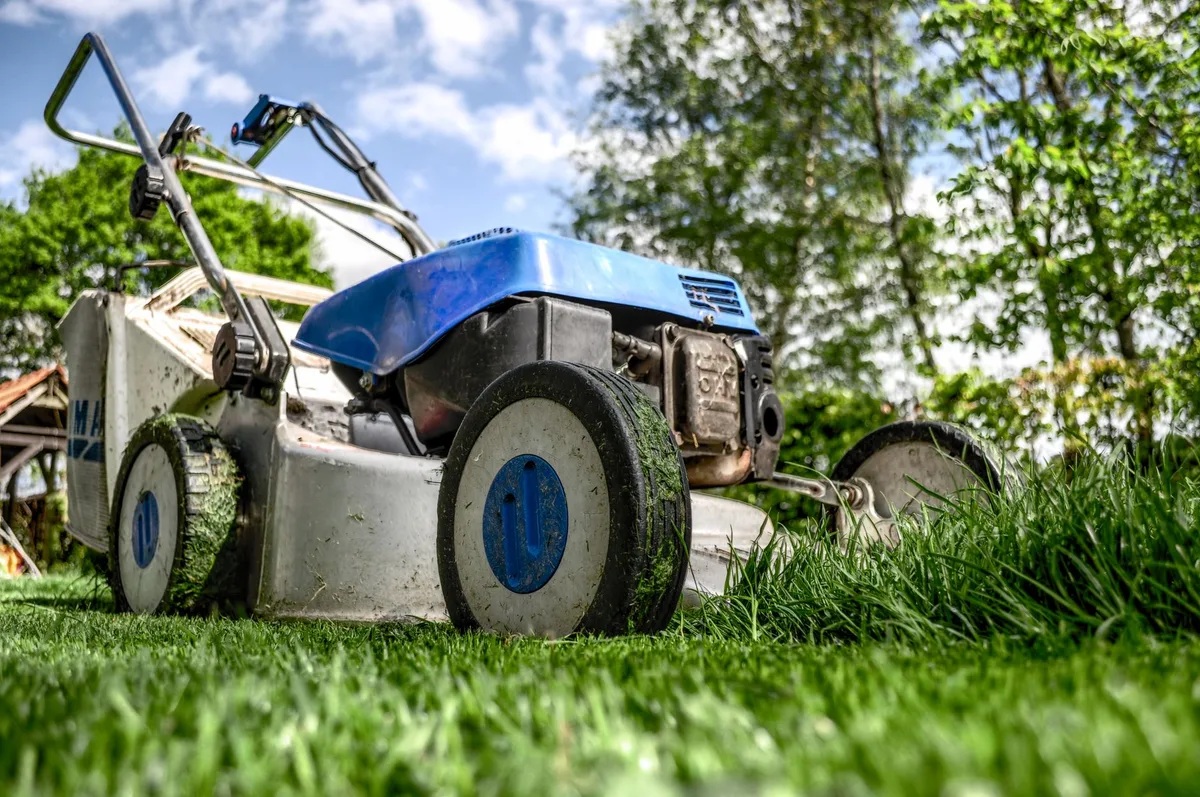
Mow with sharp blades only. Dull blades tear the grass instead of cutting cleanly, leaving ragged tips that turn brown and invite disease. Sharpen your blade at least twice per season or after every 10 hours of use.
You can do it with a file or take it to a local sharpening shop.
How often to mow
During peak growing season, that might mean mowing every 5 to 7 days. When growth slows in midsummer heat or early fall, you can stretch it to 10 days. The key is consistency.
Letting grass get tall then cutting it short is the worst pattern.
Leave clippings on the lawn unless they form thick clumps. Clippings return nitrogen to the soil, up to one-third of your lawn's annual fertilizer needs. If you're mowing frequently and the clippings are short, they decompose quickly and feed the grass for free.
Watering: Less Is More When You Do It Right
New homeowners water like it's a hobby. A little sprinkle every evening feels productive. In reality, it's the fastest way to grow a weak lawn.
Deep, infrequent watering builds deep roots. Shallow, daily sprinkling builds shallow roots that panic during a dry week.
How much and how often
Your lawn needs about 1 inch of water per week total, including rain. The best way to measure is to set out an empty tuna can or rain gauge. Run your sprinkler until the can fills to an inch.
Note the time it took. That's your zone's runtime.
In most climates, one deep watering per week is plenty. During extreme heat, you might need two. The goal is to wet the soil 6 inches deep.
That's where the roots live.
When to water
Morning is the only good time. Watering between 5 AM and 9 AM means the grass dries during the day, reducing disease pressure. Evening watering leaves blades wet overnight.
That invites fungus, especially in humid areas.
Signs you're overwatering
If you see puddling, runoff, or mushrooms popping up, you're giving too much. If the grass feels spongy underfoot, that's a red flag. Cut back immediately.
If you want to improve your garden's water management, take a look at the best slow release fertilizer for flowers. It can help reduce the need for frequent feeding. That's a separate topic, but healthy soil holds moisture better.
Fertilizing Without Fear (N-P-K, Timing, and Avoiding Burn)
Fertilizer scares a lot of people. It shouldn't. The science is straightforward once you know the numbers.
Understanding the N-P-K
Every fertilizer bag has three numbers. 10-10-10 means 10 percent nitrogen, 10 percent phosphorus, 10 percent potassium. Nitrogen makes grass green and grow. Phosphorus supports root development.
Potassium helps the plant handle stress and disease.
Lawns mainly need nitrogen. Phosphorus is rarely needed unless a soil test says otherwise. In many states, phosphorus lawn fertilizer is restricted because of runoff.
Stick with a high-nitrogen, low-phosphorus formula like 30-0-4 or 24-0-11.
When to fertilize
Cool-season grass: fertilize in early spring (April) and again in late fall (November). Skip midsummer unless you have irrigation. Warm-season grass: fertilize in late spring (May) and midsummer.
Never fertilize dormant grass.
How to avoid burn
Overapplying nitrogen burns leaf tips and can kill patches. Always follow the bag rate for your spreader setting. Water the fertilizer in with at least a quarter inch of water after application.
That moves it into the root zone where it works.
Slow release vs. quick release
Slow release (coated granules) feeds over 6 to 8 weeks. Quick release gives a fast green-up but can cause growth surges. For a first year lawn, slow release is safer.
It lowers the risk of burn and gives steady feeding.
Weed Control for Beginners (Pre-Emergents, Spot Treatments, Safety)
Weeds show up when the lawn is weak. The best weed control is a thick, healthy lawn. But even the best lawn gets a few invaders.
Pre-emergent herbicides
A pre-emergent stops weed seeds from germinating. Crabgrass is the classic target. Apply pre-emergent when soil temperatures reach 55 degrees Fahrenheit for three days straight.
That's usually mid-April in the North, early March in the South.
Use a broadcast spreader for even coverage. Water it in within 24 hours. One application lasts about 6 to 8 weeks.
You may need a second application in early summer for long-season grasses.
Post-emergent spot treatment
If you see dandelions or clover already growing, use a spot spray with a selective broadleaf herbicide. Look for products containing 2,4-D, dicamba, or MCPP. Spray only the weed, not the whole lawn.
Follow the label on drying time and keep kids and pets off until the spray dries.
Safety rules
Always wear gloves, long sleeves, and eye protection when handling herbicides. Store them out of reach in a locked cabinet. Never spray on a windy day.
Never dump leftover mix down a drain.
If a fungus issue pops up alongside the weeds, check our guide on the best fungicide for lawns to handle it before it spreads.
Tools You Actually Need (Skip the Gimmicks)
You don't need a garage full of gadgets. The right tools make the job faster and safer. Here's what matters.
Must-have tools
- A good mower. For a typical suburban lawn, a self-propelled gas or battery mower with a 21-inch deck is fine. Electric models are quieter and need less maintenance.
- A string trimmer. Essential for edges and spots the mower can't reach. Battery models are convenient.
- A broadcast spreader. For even fertilizer and seed application. A drop spreader is more precise but slower.
- A garden hose with a spray nozzle. For watering, spot treatments, and filling the tank.
- A rake. A leaf rake for debris and a metal bow rake for leveling soil.
- A soil test kit. Either a DIY kit or a mail-in service from the extension office.
- A sharpening tool. A flat file or a blade sharpening kit keeps your mower blade sharp.
Tools you can skip
- Tow-behind aerators and dethatchers for a small lawn (rent if needed).
- Soil moisture meters (your finger works fine).
- Lawn tractors for anything under half an acre.
For specific tasks like collecting pine needles, a specialized rake can save time. Check our review of the best rakes for pine needles if that applies to your yard.
Your First Year Lawn Care Calendar: Month-by-Month
A calendar keeps you on track. Here's a simplified version for both grass types.
| Month | Cool-Season Lawn | Warm-Season Lawn |
|---|---|---|
| January | Do nothing. Stay off frozen grass. | Do nothing. Dormant. |
| February | Still dormant. Plan spring purchases. | Still dormant. Plan purchases. |
| March | Soil test. Apply lime if needed. | Soil test. Apply lime if needed. |
| April | Apply pre-emergent. First mow. | Pre-emergent. Wait for full green-up. |
| May | Fertilize lightly. Water if dry. | Fertilize. Start weekly mowing. |
| June | Mow tall, deep water. No fertilizer. | Fertilize again. Water as needed. |
| July | Deep water. Watch for disease. | Deep water. Mow often. |
| August | Prepare for overseeding. | Last fertilizer application. |
| September | Overseed. Fertilize. Aerate. | Reduce mowing frequency. |
| October | Continue mowing as needed. | Mow lower for winter prep. |
| November | Final fertilizer. Last mow. | Final mow. Apply winterizer. |
| December | Clean and store tools. | Clean and store tools. |
Adjust dates by two weeks earlier or later depending on your local frost dates. Your extension office can give precise timing for your county.
When to Call a Pro (and When to Save Your Money)
Not every lawn problem needs a professional. Some you can handle yourself. Others are worth paying for.
When to DIY
You can handle mowing, watering, fertilizing, and spot weed control on your own. Overseeding and aeration are also DIY-friendly with a rented machine. A soil test is easy to do yourself.
When to call a pro
Call a professional if you have a severe thatch problem over an inch thick. That requires a power dethatcher that most homeowners don't own. If your lawn has large dead patches from grubs or disease, a pro can diagnose and treat it faster.
If you need heavy grading or drainage work, that's also a pro job. Reseeding a half acre by hand is doable. Reshaping the entire yard with a skid steer is not.
What it costs
A full lawn renovation from a pro runs $500 to $1,500 for a typical quarter-acre lot. Aeration and overseeding runs $200 to $400. Compare that to doing it yourself for under $100 in materials.
The choice depends on your time and comfort level.
When to Call a Pro (and When to Save Your Money)
Some jobs are worth paying for. Others are a waste of cash.
DIY confidently
You can handle mowing, watering, fertilizing, spot weed control, and overseeding. Aeration is easy with a rented machine. Soil testing is cheap and simple.
Call a pro for these
If your lawn has severe thatch over an inch thick, a power dethatcher is the right tool. Most homeowners don't own one. If you have large dead patches from grubs or disease, a pro can diagnose the exact cause and treat it.
If your yard needs major grading or drainage work, that's a pro job. Reshaping the land requires heavy equipment and experience. The same goes for installing an irrigation system from scratch.
The cost comparison
DIY aeration and overseeding for a quarter acre runs about $80 in materials. A pro charges $200 to $400. For a full renovation with grading and sod, expect $1,000 to $3,000.
Decide based on your time and comfort level.
Your Lawn Care Cheat Sheet for the First Season
Here's the condensed version. Print it. Stick it on the garage wall.
- Mow tall. Never remove more than one third of the blade.
- Water deep. One inch per week, all at once.
- Fertilize by season. Spring and fall for cool season. Late spring and summer for warm season.
- Test soil first. Then buy what the test says you need.
- Prevent weeds. Apply pre-emergent before soil hits 55 degrees.
- Sharpen blades. Twice per season minimum.
- Leave clippings. They feed the lawn for free.
- Aerate once a year. Fall for cool season. Late spring for warm season.
Frequently Asked Questions
How often should I water my lawn as a new homeowner?
Water once per week with about 1 inch of water total. Morning is best. Skip watering if rain is expected.
Deep, infrequent watering builds stronger roots than daily sprinkling.
When should I fertilize my lawn for the first time?
Fertilize after your soil test results come back. For cool-season grass, apply in early spring and late fall. For warm-season grass, apply in late spring and midsummer.
Never fertilize dormant grass.
What is the best grass seed for a beginner?
Tall fescue is the most forgiving for cool-season lawns. It tolerates shade, drought, and foot traffic. For warm-season lawns, Bermudagrass is tough and easy to establish.
Both are widely available and hard to mess up.
How do I fix bare patches in my lawn?
Rake the bare spot to loosen soil. Spread a thin layer of compost. Apply grass seed matching your existing lawn.
Lightly rake it in. Keep the area moist until the seed germinates. That takes 7 to 21 days depending on the grass type.
Should I use a lawn service or do it myself?
DIY saves money and gives you control. A lawn service costs $50 to $100 per visit. For basic mowing, watering, and fertilizing, DIY is straightforward.
For complex issues like disease or severe thatch, a pro can save time and prevent further damage.
Frequently Asked Questions
How do I know what type of grass I have?
Look at the leaf width and growth habit. Fine fescue has thin, needle-like blades. Tall fescue has wide blades with visible veins.
Bermudagrass has small, flat leaves that feel tough. Your local extension office can help identify it from a photo.
When should I start mowing in the spring?
Start mowing when the grass reaches about 3 inches tall. For cool-season lawns, that's usually early April. For warm-season lawns, wait until the grass is fully green and actively growing.
Never mow dormant grass.
How do I fix a bumpy lawn?
Small bumps can be leveled with a topdressing of sand and compost. Spread a thin layer over the low spots. Rake it smooth.
For larger bumps, you may need to lift the sod, remove soil, and reset it. That's a bigger job best done in early fall.
Can I use weed and feed products?
Weed and feed combines fertilizer with herbicide. It works best when applied at the right time. For cool-season lawns, apply in early spring.
For warm-season lawns, apply in late spring. Follow the label exactly to avoid damaging the grass.
What should I do if my lawn turns brown in summer?
Cool-season grass goes dormant in heat. That's normal. Water deeply once every two weeks to keep the crown alive.
Do not fertilize. The grass will green up when temperatures drop and rain returns. Warm-season grass should stay green with proper watering.