How to Keep Mulch From Washing Away 2026: Step-by-Step Guide
You’ve spent hours mulching your garden beds. Then a heavy rain comes through and half of it is scattered across the lawn or washed into the street. If you’ve ever wondered how to keep mulch from washing away, you’re not alone, it’s one of the most common frustrations for homeowners and gardeners.
The good news is that the fix isn’t complicated, but it does depend on a few specific things about your yard.
According to the USDA Natural Resources Conservation Service, even a slope as gentle as 5% can cause significant water runoff and erosion. That means your mulch is fighting gravity every time it rains. The key is to match the right solution to your exact situation, slope steepness, mulch type, and local rainfall patterns.
Let’s walk through the decision process step by step.
Why Your Mulch Keeps Washing Away
Mulch is light. Water is heavy. Put them together on a slope and physics takes over.
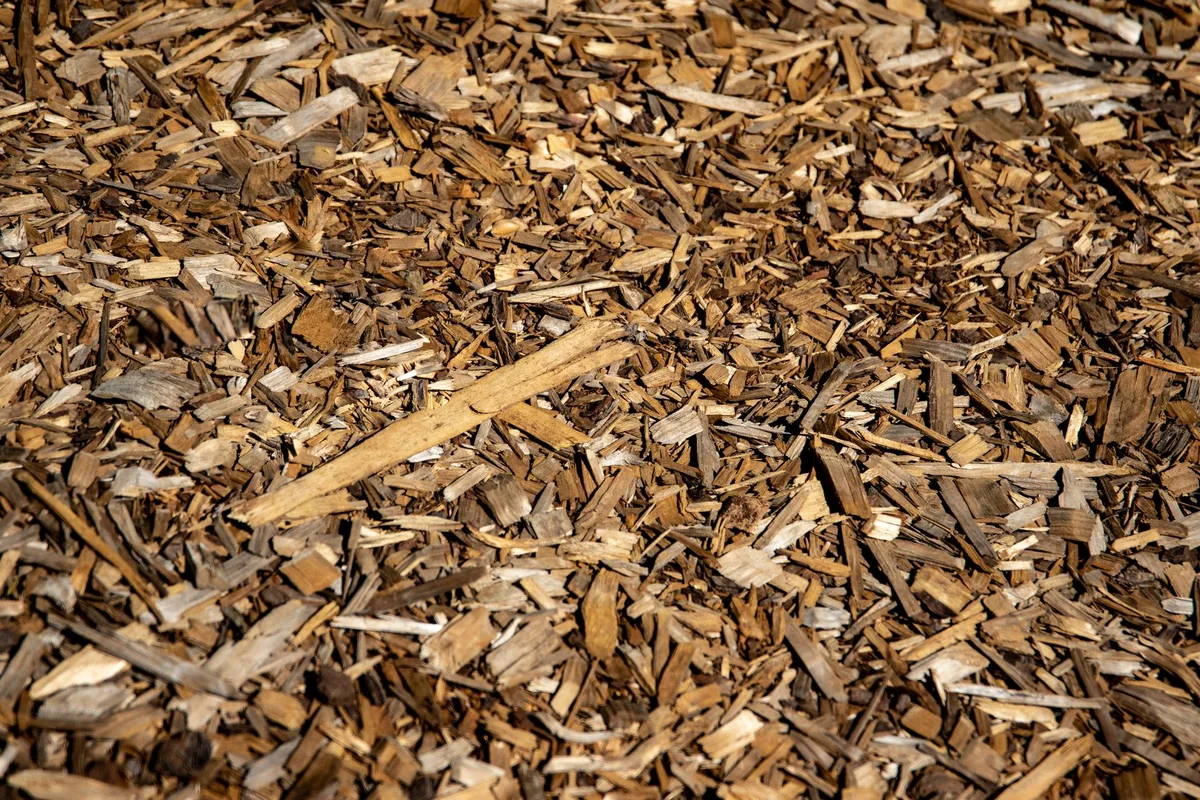
When rain hits bare mulch, the water soaks in and starts flowing downhill underneath the surface. That flowing water lifts the lighter pieces and carries them away. The finer the mulch, the easier it floats.
Shredded hardwood acts like a sponge that can actually hold together, but it still moves if the slope is steep enough.
The problem is worse when your mulch is too fresh and hasn’t settled yet. It’s also worse when there’s no edging to stop the water from running straight off the bed. In our research, the number one reason people lose mulch is that they skip the barrier at the bottom of the slope.
The Three Variables That Decide Your Fix: Slope, Mulch Type, and Rain
Before you buy anything or start digging, you need to understand three things about your yard. The answer to how to keep mulch from washing away always comes down to these:
- Slope steepness, How many degrees or percent does your garden bed tilt?
- Mulch material, Fine shreds, coarse nuggets, or heavy bark chunks?
- Local rainfall, Do you get quick downpours or long steady rains?
Each variable changes the best solution. A flat bed with light rain needs almost nothing. A steep bed in a thunderstorm zone needs serious reinforcement.
We’ll show you exactly how to match your situation.
Choosing the right plants for your beds also helps hold soil and mulch in place. If you’re starting fresh, consider adding ground covers or perennials that anchor the ground, check out our guide to best flowers for flower beds for ideas that double as erosion fighters.
Quick Answer: What to Do Based on Your Situation
Here’s the short version. Pick your slope:
- Slope under 10% (mild), Use shredded hardwood mulch, 2 to 3 inches deep, with a 4-inch rigid edging. No extra reinforcement needed.
- Slope 10% to 30% (moderate), Use coarse pine bark nuggets or a heavy cedar mulch. Add metal or stone edging that’s at least 6 inches tall. Consider jute netting if you get heavy rain.
- Slope over 30% (steep), Use only large nuggets or chunky bark. Install a jute erosion control blanket over the entire bed before mulching. Terrace the bed if possible. Edging alone won’t hold.
This is your decision tree. The rest of the article explains each step in detail so you can apply it to your exact yard.
Step 1 – Measure Your Slope and Know Your Risk
You can’t fix what you haven’t measured. The simplest way is to use a 4-foot level and a tape measure.
How to do it:
- Lay the level on the ground lengthwise along the slope.
- Lift the low end until the bubble is centered.
- Measure the height gap at the low end (in inches).
- Divide that number by 48 (the length of the level in inches).
- Multiply by 100 to get the percent slope.
For example, a 3-inch gap over 48 inches equals a 6.25% slope, that’s mild. An 8-inch gap equals a 16.7% slope, moderate. Anything above 15 inches (over 30%) is steep.
Your smartphone can also do this. Apps like “Clinometer” or “Bubble Level” give you degrees or percent instantly. Just set the phone on a flat board on the slope for a reading.

Once you know your slope, you know your risk. A slope under 5% rarely needs special measures. Between 5% and 15%, you need basic edging.
Above 15%, you need reinforcement. Above 30%, you need serious erosion control.
Step 2 – Pick the Right Mulch for Your Grade (Fine vs. Coarse vs. Nuggets)
Not all mulches behave the same way in the rain. The particle size and weight make a huge difference. Here’s a breakdown:
| Mulch Type | Particle Size | Best For | Worst For | Float Risk |
|---|---|---|---|---|
| Shredded hardwood | Fine to medium | Flat beds, moderate slopes under 10% | Steep slopes | Moderate |
| Pine bark nuggets | Large, chunky | Moderate to steep slopes (10-30%) | Flat beds (looks odd) | Low |
| Cedar chips | Medium to coarse | Mild to moderate slopes | Steep slopes over 20% | Medium |
| Rubber mulch | Heavy, irregular | Any slope (very heavy) | Flower beds near edibles | Very low |
| Cocoa bean hulls | Fine, light | Flat beds only | Any slope | High |
Our take: For most homeowners, shredded hardwood works well on flat or gently sloping beds because it mats together and resists washing. For slopes above 10%, switch to pine bark nuggets. They’re heavier and interlock less, but they don’t float.
For the steepest areas, use only oversized nuggets or rubber mulch (if you don’t have edible plants nearby).
If you’re using pine needles or leaf mulch, those are very light and will wash away even on mild slopes unless you pin them down with netting. A pine needle rake can help you collect them, but consider mixing them with heavier material for better hold.
One more tip: always apply mulch to a depth of 2 to 3 inches. Deeper than 3 inches on a slope can actually make the problem worse because the extra layer slides on itself. Thinner is better on hills.
Now that you know your slope and your mulch, the next steps will cover edging, erosion blankets, and drainage fixes. But this foundation is the most important part, get these two variables right, and everything else becomes much easier.
Step 3 – Choose Edging That Actually Holds (Metal, Plastic, Stone, or Wood)
Edging is your first line of defense. It creates a physical wall that stops water from carrying mulch out of the bed. But not all edging works the same way on a slope.
The key rule: your edging needs to be tall enough and rigid enough to handle flowing water. A shallow plastic strip that works fine on flat ground will get overwhelmed on a 15% slope.
Here are your main options:
| Edging Type | Best Height | Best For | Lifespan | Cost per Foot |
|---|---|---|---|---|
| Metal (steel or aluminum) | 4 to 6 inches | Moderate to steep slopes | 20+ years | $2 to $4 |
| Heavy-duty plastic | 4 to 5 inches | Mild to moderate slopes | 5 to 10 years | $0.50 to $1 |
| Stone or brick | 4 to 6 inches | Any slope (looks great) | Indefinite | $5 to $10 |
| Pressure-treated wood | 4 to 6 inches | Temporary or budget builds | 3 to 7 years | $1 to $2 |

Our research shows metal edging is the best long-term choice for any slope above 10%. It holds its shape, doesn't rot, and stands up to freeze-thaw cycles. Plastic edging works on mild slopes but can buckle under heavy runoff.
Stone is beautiful but expensive and harder to install correctly.
Installation tip: always set the edging so the top lip sits at least 2 inches above the finished mulch level. That lip is what catches the water and stops the mulch from washing over the top.
Step 4 – Add Erosion Control Blankets or Jute Netting on Steep Slopes
For slopes over 25%, edging alone won't cut it. You need something that holds the mulch to the soil surface. That's where erosion control blankets come in.
A jute erosion control blanket is a biodegradable mesh made from natural fibers. You roll it out over the bare soil, staple it down with landscape pins, then apply mulch on top. The netting traps the mulch particles and keeps them from sliding downhill.
When to use it:
- Slope over 25%
- You've already lost mulch twice in one season
- The soil underneath is bare or eroded
- You're planting a new bed on a hillside
Installation steps:
- Clear the slope of weeds and debris.
- Lay the blanket across the slope (parallel to the contour lines).
- Overlap each roll by 4 to 6 inches.
- Secure with U-shaped landscape staples every 12 inches.
- Apply 1 to 2 inches of coarse mulch over the blanket.
The blanket breaks down naturally over one to two growing seasons. By then, your plants' roots will have established enough to hold the soil themselves.
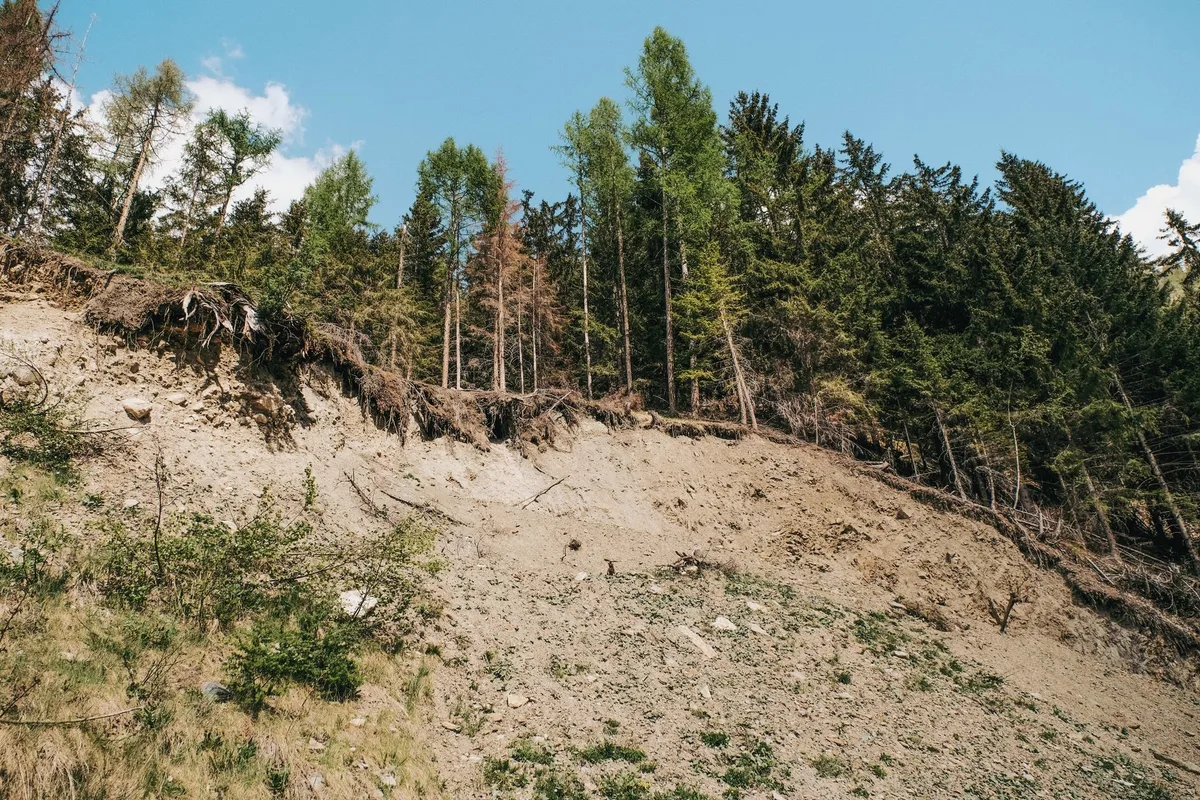
If you're on a budget, you can also use jute netting without the full blanket. It's a lightweight mesh that does the same job for less money. Just pin it down every 6 inches on steep sections.
Step 5 – Fix the Drainage Before It Reaches the Mulch
Sometimes the problem isn't the mulch itself. It's the water that's flowing into the bed from higher ground. If your garden sits at the bottom of a roof downspout or a driveway slope, all that water will carry your mulch away no matter what edging you use.
The solution is to redirect the water before it hits the mulch bed.
French drains are the most effective option. You dig a trench, line it with landscape fabric, add perforated pipe, and cover it with gravel. The water flows into the pipe and is carried away to a safe outlet.
A simpler option is a swale, a shallow, grass-lined ditch that catches runoff and slows it down. Swales work well for wide, gentle slopes where water spreads out rather than channeling.
If you only have one problem spot (like a downspout), install a ** splash block** or a dry creek bed to spread the water and let it soak in before it reaches your mulch. For the dry creek bed itself, you'll want the right materials. Check our guide on choosing gravel for a patio area for ideas on size and color that also work for drainage features.
The goal is simple: keep the water volume low enough that your edging and mulch can handle what's left.
Common Mistakes That Make Mulch Float Away
Even with good intentions, people make the same errors over and over. Here are the ones we see most often:
- Using fine mulch on a slope. Shredded hardwood and cocoa hulls are too light. They float at the first heavy rain.
- Applying mulch too thick. A 4-inch layer on a slope slides like a blanket. Stick to 2 to 3 inches maximum.
- No edging at all. This is the biggest mistake. Without a barrier, water flows straight through and carries mulch with it.
- Edging that's too short. A 2-inch strip won't catch anything on a moderate slope. You need at least 4 inches above the mulch line.
- Ignoring the water source. If runoff is pouring into your bed from above, you need drainage, not stronger edging.
- Skipping the settling period. Fresh mulch is loose. A light watering right after application helps it settle and mat together before the next storm.
One more thing. Don't lay landscape fabric on a steep slope thinking it will help. The fabric itself can float and lift the mulch off the ground.
Use erosion control blankets instead. They're designed for slopes.
How to Inspect and Maintain After a Heavy Rain
The best time to check your work is the morning after a storm. Walk your beds and look for these signs:
- Mulch piled against the edging. That means the water pushed it downhill but the edging caught it. Good news. Just rake it back into place.
- Bare spots at the top of the slope. Water pulled mulch from the top down. Add more coarse mulch to those areas and consider jute netting.
- Erosion channels in the soil. These look like small ditches cut into the ground. You need to fill them and redirect the water flow.
- Edging that shifted or tilted. Reset it immediately and drive the stakes deeper. Use longer stakes if needed.
After heavy rains, do a quick rake to redistribute mulch evenly. Don't let it build up too deep at the bottom of the slope. That thick pile can smother plants and trap moisture against stems.
If you're establishing a new bed on a slope, expect to do maintenance for the first two seasons. Once the plants' roots grow deep, they'll help hold everything in place. Trees with deep root systems are especially good for this in hot, dry climates where erosion is a constant battle.
Plan on a top-up of mulch once a year in spring. That keeps the depth consistent and fills the thin spots before summer storms hit.
Decision Guide: Match the Right Method to Your Yard
Here’s how to take everything we’ve covered and apply it to your specific situation. Think of this as your one-page cheat sheet.
If your slope is under 10%:
- Use shredded hardwood or cedar mulch, 2 to 3 inches deep.
- Install 4‑inch metal or heavy‑duty plastic edging.
- No extra reinforcement needed.
- Check once after a heavy rain and rake back any minor drift.
If your slope is 10% to 25%:
- Switch to pine bark nuggets or chunky cedar.
- Use 6‑inch metal or stone edging.
- Add jute netting if you get intense downpours.
- Consider a French drain if water flows into the bed from above.
If your slope is over 25%:
- Use only large nuggets or rubber mulch (not near edibles).
- Install 6‑inch metal edging with deep stakes.
- Cover the entire bed with a jute erosion control blanket before mulching.
- Terrace the slope into two or three flat steps if possible.
If your mulch keeps washing away despite doing everything right:
- Recheck the water source. Redirect runoff from downspouts or higher ground.
- Dig a shallow swale or dry creek bed above the garden.
- Add ground cover plants or deep‑rooted perennials to anchor the soil. A mix of flowers and low shrubs works well. For ideas on what thrives in shadier spots, our guide on choosing plants for dark bathrooms offers resilient options that also work in covered, low‑light garden corners.
If you’re starting a new bed from scratch:
- Measure the slope first.
- Choose coarse mulch for anything over 10%.
- Install edging before adding mulch.
- Water the mulch lightly right after spreading to settle it.
- Inspect after the first storm.
Frequently Asked Questions
How deep should mulch be on a slope?
Keep it 2 to 3 inches. Deeper than 3 inches on a slope can slide as a single layer. Thinner layers hold better because they don’t create a heavy, slippery mass.
Will landscape fabric keep mulch from washing away?
No. Landscape fabric can actually make things worse. Water flows across the fabric surface and carries the mulch with it.
Use jute erosion control blankets instead. They let water through while trapping the mulch.
What mulch is least likely to wash away?
Coarse pine bark nuggets and rubber mulch are the heaviest options. Rubber mulch barely moves in rain but isn’t suitable near vegetable beds. For most gardens, pine bark nuggets offer the best balance of hold and safety.
How do I keep mulch from washing away on a hill without edging?
You can’t rely on mulch alone. At minimum, create a shallow trench along the downhill edge of the bed and fill it with large stones. That acts as a makeshift barrier.
For long‑term results, install proper edging.
Should I wet mulch after spreading it?
Yes. A light watering right after spreading helps the pieces settle and mat together. Overwatering can float the mulch.
Use a gentle spray setting and just dampen the top layer.
Can plants help hold mulch in place?
Absolutely. Once established, ground covers, perennials, and shrubs anchor the soil with their roots. Their foliage also breaks the force of falling rain.
Adding a few well‑chosen plants makes everything more stable.