When Should You Japanese Beetles for 2026: Explained Simply
You've spotted Japanese beetles turning your roses into lace or noticed brown patches in your lawn, and now you're wondering when you should actually do something about them. The answer isn't one date on the calendar. It depends entirely on which life stage you're targeting, what you're seeing right now, and where you live.
Japanese beetles (Popillia japonica) spend roughly 10 months as grubs in your soil and only 4 to 6 weeks as flying adults. Miss the narrow treatment windows for either stage, and you've wasted your time and money. Let's walk through exactly when to act based on what's happening in your yard.
Quick Answer
Treat adult Japanese beetles from late June through early August when you see active feeding damage on plants. Target grubs in late summer through mid-October, ideally when soil temperatures are 60 to 70°F and young larvae are feeding near the surface. Spring grub treatments exist but are far less effective.
Your timing matters more than the product you choose, because both life stages are only vulnerable during short windows each year.
What "When Should You Treat Japanese Beetles" Really Means
This question actually breaks into two completely different decisions. Are you dealing with the metallic green adults chewing your plants right now, or are you trying to stop next year's beetles by killing the white grubs living in your soil?
Most people see adult beetles and panic-spray whatever's on the shelf. That's reactive and often too late to prevent major damage. Others treat their lawn for grubs without ever checking if they actually have a problem worth solving.
The smarter approach is understanding which life stage you're up against and whether the population has crossed the threshold that justifies treatment. You don't need to kill every beetle or grub. You need to act at the right time to protect what matters to you, whether that's your roses, your vegetable garden, or your lawn.
Timing also varies by geography. A gardener in southern Ohio will see adults emerge three weeks earlier than someone in northern Michigan. Soil type, irrigation, and local weather all shift the windows slightly.
The Two Treatment Windows You Need to Know
Japanese beetle control boils down to two separate campaigns, each with its own target and timing.
Adult beetle window: Late June through early August in most of the northern U.S. You're spraying contact or systemic insecticides on ornamental plants, fruit trees, or vegetables when beetles are actively feeding. This window is short.
Once adults finish their feeding frenzy and die off, there's nothing left to treat until next year.
Grub window: Late July through mid-October, with peak effectiveness in August and early September. You're applying grub control products to the soil to kill larvae before they grow large, burrow deep, and become harder to reach. This is your chance to reduce next year's adult population.
Spring grub treatments do exist. They target large, mature grubs that survived winter and are feeding again as soil warms in April and May. But these grubs are tougher, closer to pupating, and far less vulnerable than the young grubs you can hit in late summer.
Spring treatments work only if you use a curative product and apply it early enough.
Here's the key insight: you can't do both at once. When adults are flying in July, the next generation of grubs hasn't hatched yet. When grubs are small and vulnerable in late August, the adults are already gone.
Plan your strategy around the life stage that causes the most damage in your situation.
How the Japanese Beetle Life Cycle Dictates Timing
Japanese beetles live on a one-year cycle, and every stage happens on a predictable schedule tied to soil temperature and day length.
Eggs (mid-summer): Adult females lay eggs in moist soil, usually in turf, from mid-July through August. Each female deposits 40 to 60 eggs about 2 to 3 inches deep. Eggs hatch in roughly two weeks, depending on soil moisture and temperature.
Young grubs (late summer to fall): Newly hatched larvae are tiny, translucent, and start feeding on grass roots immediately. This is when they're most vulnerable. As soil cools in October, grubs grow to about half an inch long and begin moving deeper to overwinter.
Overwintering (late fall through early spring): Grubs burrow 4 to 8 inches down, below the frost line, and enter a dormant state. They're not feeding and they're nearly impossible to kill during this phase.
Mature grubs (spring): When soil warms to around 50°F in April or May, grubs move back toward the surface and resume feeding. They're now C-shaped, plump, and about three-quarters of an inch long. Within a few weeks they pupate.
Pupae (late spring): Grubs transform into adult beetles in the soil. This stage lasts about two weeks and happens in late May to early June depending on your location.
Adults (summer): Beetles emerge from the soil when temperatures and day length align, usually late June in northern zones and mid-May in the South. They feed heavily for 4 to 6 weeks, mate, lay eggs, and die. The cycle starts over.
Every treatment product works on a specific stage. Contact sprays kill adults on plants. Grub killers target larvae in soil.
There's no product that does both jobs, and no single application date that covers the whole season. You have to match your timing to the biology.
Treating Adult Beetles: Late June Through August
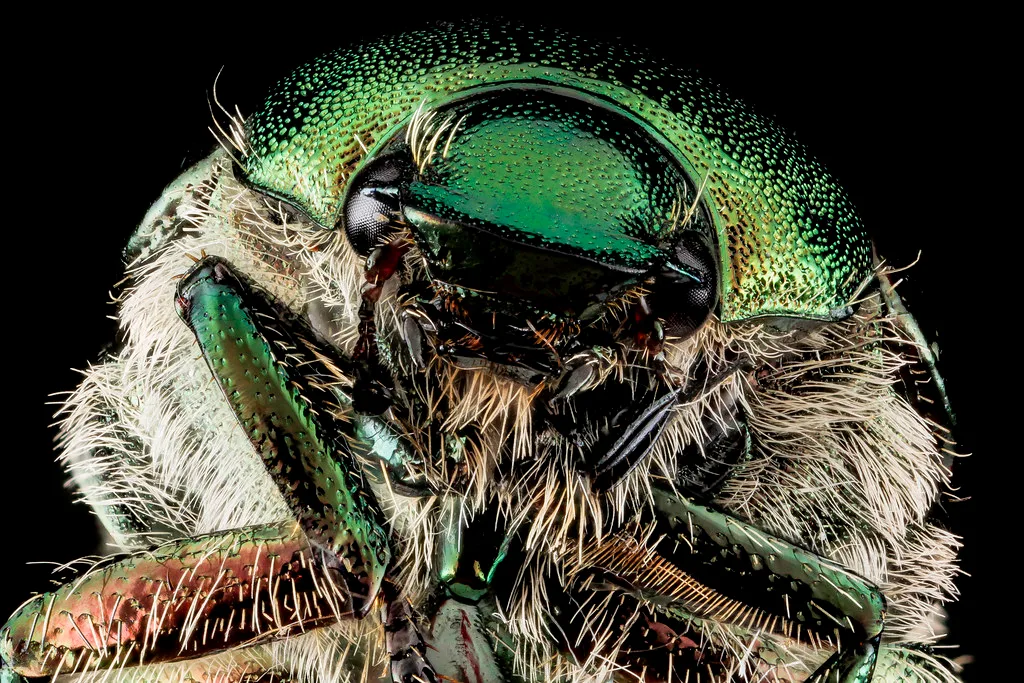
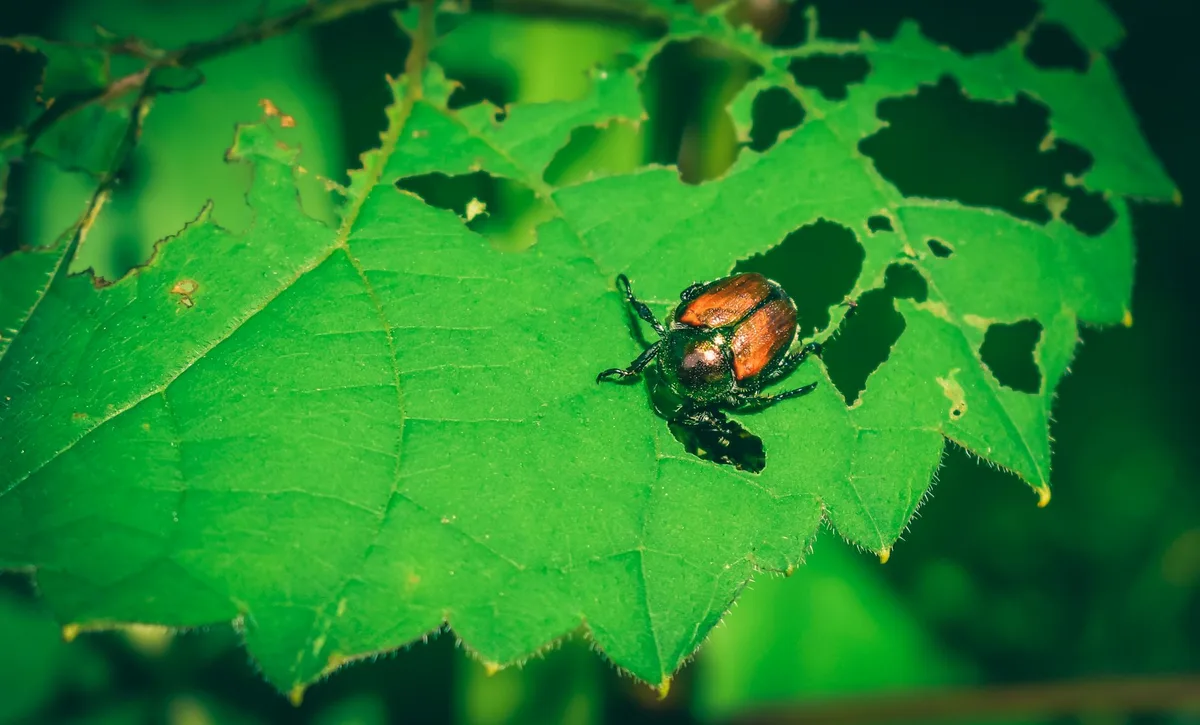
Adult beetles are the ones you actually see. They're metallic green with copper-brown wing covers and small white tufts along the sides of their abdomen. They show up suddenly, often in groups, and skeletonize leaves by eating the tissue between the veins.
The adult feeding window is short. In most northern states, emergence peaks in late June and continues through the end of July. By mid-August, the population crashes as beetles die off naturally.
If you're going to treat adults, you need to act during that 4 to 6 week period, not before or after.
When Adult Damage Justifies Treatment
Not every sighting requires action. A few beetles on a large shrub won't hurt the plant. But once feeding accelerates, damage compounds fast because beetles release aggregation pheromones that attract more beetles to the same plant.
Here's a rough threshold: if you're seeing 10 or more beetles per plant on ornamentals, or any feeding damage on high-value plants like roses, fruit trees, or vegetables, treatment makes sense. For crops with a pre-harvest interval, check the product label to make sure you can legally spray.
On the other hand, if beetles are hitting a mature oak tree or a large shade-tolerant shrub, the tree can usually tolerate moderate defoliation without long-term harm. You're weighing aesthetics and plant health against the cost and effort of repeat applications.
How to Scout and Set Your Threshold
Walk your property every few days during peak beetle season. Check plants that Japanese beetles prefer, including roses, grapes, lindens, birch, fruit trees, beans, and raspberries. Count the number of beetles you see on a single plant and estimate the percentage of leaves showing skeletonized damage.
If you're protecting a vegetable garden or a high-value ornamental bed, your threshold is lower. If you're managing a large landscape, focus your efforts on the plants that matter most and let the rest ride out the season.
Don't bother with beetle traps. Research from multiple land-grant universities shows that traps attract more beetles than they catch, increasing damage in the area around the trap. You'll end up with a yard full of beetles that never would have landed there otherwise.
Best Time of Day and Weather Conditions to Spray
Spray adults in early morning or late evening when beetles are less active and temperatures are cooler. Avoid treating during the heat of the day, especially on blooming plants, to reduce the risk to pollinators.
Most contact insecticides (pyrethrins, neem oil, carbaryl) provide 24 to 48 hours of residual control, so you'll need to reapply every few days during peak activity. Systemic products like imidacloprid last longer but take several days to move through the plant, so they work better as a preventive than a knockdown treatment.
Never spray open blooms. Even if the label allows it, you're killing bees and other beneficial insects. If a plant is flowering and beetles are feeding on the blooms, your best option is to hand-pick beetles early in the morning when they're sluggish, or use physical barriers like row covers.
Treating Grubs: Your Late Summer to Fall Window
Grub control is where you actually reduce future beetle populations. Kill the larvae in your lawn, and you're preventing next summer's adults from emerging. This is a proactive strategy that pays off long-term, especially if your lawn or garden has had beetle problems for multiple years.
The treatment window opens in late July when eggs start hatching and runs through mid-October. The sweet spot is August through early September, when grubs are small, feeding actively near the surface, and most vulnerable to insecticides and biological controls.
Why Grub Timing Is More Critical Than Adult Timing
Young grubs are soft-bodied and haven't developed much of a protective cuticle yet. They're feeding heavily on grass roots within the top 2 to 3 inches of soil. Hit them during this phase, and most grub control products, whether chemical or biological, work well.
Wait too long, and grubs grow larger, move deeper, and become harder to reach. By late October, grubs start burrowing down to overwinter, and they stop feeding entirely. Once that happens, products that require ingestion won't work at all.
Spring grub treatments face the same problem in reverse. Overwintered grubs are large, have thicker cuticles, and are only active for a few weeks before they pupate. Curative products like trichlorfon can still kill them, but you've missed the easy window.
Timing your application to the narrow late-summer window is the single most important factor in grub control success. It matters more than which product you choose.
Soil Temperature and the Narrow Treatment Window
Grub activity tracks soil temperature closely. When soil at 2 to 4 inches deep hits 60°F, newly hatched grubs start feeding. The optimal range is 60 to 70°F, which typically corresponds to late July through early September in the northern U.S. and a few weeks earlier in warmer zones.
You can check soil temperature with an inexpensive soil thermometer, or look up local data from your state's Cooperative Extension or agricultural weather network. Once soil drops below 55°F in fall, grub feeding slows and they begin their descent for winter.
As of 2026, many university Extension offices publish degree-day models and local emergence forecasts for Japanese beetles, which can help you time both adult scouting and grub treatments. These tools account for your specific location and current-year weather, making them more accurate than a generic calendar date.
How to Check Your Lawn for Grubs
Pull back a square foot of turf in an area showing symptoms or near where you saw adult beetles earlier in summer. Use a spade to cut three sides of a 12-inch square, then peel the sod back like you're opening a book. Examine the soil and root zone for white, C-shaped grubs.
Count the grubs you find in that square foot, then check two or three more spots across your lawn. Average the counts. If you're finding fewer than 5 grubs per square foot, your lawn can usually tolerate the damage without treatment.
Between 5 and 10 grubs per square foot is a gray zone. Healthy, well-watered turf often survives this level. Stressed or thin lawns may show brown patches by late summer.
Treatment Thresholds: When 10 Grubs Per Square Foot Matters
The widely accepted treatment threshold for Japanese beetle grubs in turf is 10 per square foot. At that density, root damage becomes visible as irregular brown patches that don't respond to watering. The turf feels spongy underfoot because the roots have been severed.
This threshold assumes you're managing a maintained lawn where aesthetics and playability matter. If you're dealing with a low-maintenance area or a meadow planting, you can tolerate higher grub populations without treatment.
For high-value turf like golf courses or sports fields, the threshold drops to 5 or even 3 grubs per square foot. For home lawns, 10 is the standard. Below that number, you're better off improving cultural practices like aeration, overseeding, and proper watering to help the lawn outgrow minor damage.
Keep in mind that not all white grubs are Japanese beetles. May beetles, June beetles, and other scarab species produce similar-looking larvae. Japanese beetle grubs have a distinct V-shaped pattern of spines on the underside of the last abdominal segment, but you need a hand lens to see it clearly.
Preventive vs. Curative Grub Control: Which Timing Fits Your Situation
Grub control products fall into two categories, and your timing depends entirely on which type you're using.
Preventive products contain active ingredients like chlorantraniliprole, thiamethoxam, or imidacloprid. You apply them in late June or July, before eggs hatch. The chemical binds to the soil and kills grubs as they hatch and begin feeding.
These products work for 3 to 4 months and handle season-long grub pressure. They're your best choice if you've had grub problems in the past and want to stop the next generation before it starts.
Curative products use trichlorfon or carbaryl, which kill grubs on contact or through ingestion within days. You apply them after grubs have already hatched and you've confirmed they're present above threshold. Curative products work fast but only for a few weeks.
They're the right call if you're seeing damage in late summer and need to knock down an active infestation.
Here's the decision tree. If your lawn had visible grub damage last year, or if you saw heavy adult beetle activity in July, apply a preventive product in late June or early July. You're betting that eggs will be laid in your turf, and you're covering that bet with a long-lasting product.
If you didn't see problems last year and you're not sure whether you have grubs, wait until late August. Dig a few test squares. If you find 10 or more grubs per square foot, apply a curative product immediately while grubs are still small and near the surface.
Don't apply a preventive product in August or later. By that point, grubs have already hatched, and you've missed the window. A curative product will do the job faster and cheaper.
Regional Timing Differences: When Beetles Emerge in Your Zone
Japanese beetle emergence is tied to soil temperature and day length, both of which vary widely across the U.S. A gardener in Kentucky will see adults three to four weeks earlier than someone in Maine.
In USDA Hardiness Zones 7 and 8 (parts of the Mid-Atlantic and Southeast), adult emergence often starts in mid to late May and peaks in June. Grub hatch begins in July, and the treatment window runs from late July through September.
In Zones 5 and 6 (the Midwest, southern New England, and the central Plains), adults emerge in late June and peak in July. Grub treatments work best from mid-August through early October.
In Zone 4 and colder areas (northern New England, the Upper Midwest), emergence can be delayed until early July, with peak activity in late July. The grub window opens in late August and closes by mid-September as soil cools faster.
Coastal areas tend to have later, more prolonged emergence compared to inland locations at the same latitude due to cooler soil in spring. Irrigated lawns also stay warmer longer in fall, extending the grub treatment window slightly.
Your state's Cooperative Extension service often publishes local phenology reports or trap counts that tell you when beetles are active in your area. Those reports are more reliable than a generic calendar date pulled from a national guide.
The Biggest Timing Mistakes That Waste Money and Miss the Window
Applying grub control in June is the most common error. If you're using a curative product, there are no grubs in the soil yet. If you're using a preventive, you've applied it too early and the active ingredient may degrade before eggs hatch.
Late June is the earliest you should apply a preventive, and only in warmer zones.
Spraying adult beetles after peak emergence is another money pit. By mid-August, most adults are already dead or dying. You're killing stragglers that weren't going to cause additional damage anyway.
If you missed the July feeding frenzy, skip the spray and focus on grub control instead.
Treating lawns for grubs without checking population levels wastes product and exposes your yard to unnecessary pesticide. Dig first, treat second. If you're below threshold, save your money and let natural predators like birds and parasitic wasps do the work.
Using Japanese beetle traps anywhere near plants you want to protect is counterproductive. Traps lure beetles from hundreds of yards away using floral and sex pheromones. Research from the USDA and multiple land-grant universities shows traps increase local beetle density and feeding damage.
If you must use a trap for monitoring, place it at the far edge of your property, downwind from valuable plantings.
Ignoring soil moisture during grub treatment is another failure point. Most grub control products require watering in with at least half an inch of irrigation immediately after application. The chemical needs to move into the root zone where grubs are feeding.
If you apply to dry soil and don't water, the product sits on the surface and grubs remain unaffected.
Should You Treat Both Life Stages or Pick One?
You don't need to treat both unless you're managing a high-value landscape or you've had severe, recurring infestations for multiple years.
For most homeowners, treating grubs in late summer is the better investment. You're reducing next year's adult population at the source, protecting your lawn from root damage, and avoiding repeat spray applications on ornamental plants. One well-timed grub treatment can cut adult numbers by 70 to 90 percent the following season.
Treating adults makes sense if you're protecting specific high-value plants like roses, grapes, or fruit trees and you've crossed the damage threshold. But it's reactive, labor-intensive, and doesn't stop the next generation. You'll be spraying again next year unless you also address the grubs.
If your property has a history of heavy infestations, a two-pronged approach works. Apply a preventive grub control in late June, then spot-treat adults on vulnerable plants as they emerge. This combination delivers both immediate protection and long-term population suppression.
For organic gardeners, treating adults with neem oil or pyrethrin-based sprays is often the only practical option, since biological grub controls like milky spore and beneficial nematodes take multiple seasons to establish and work best in specific soil conditions.
When NOT to Treat Japanese Beetles
Skip treatment if you're seeing fewer than 5 beetles per plant and leaf damage is minimal. The cost and environmental impact outweigh the benefit when populations are low.
Don't treat grubs if your soil sample shows fewer than 10 per square foot. Healthy turf tolerates that density without visible damage, and you'll spend money solving a problem that doesn't exist.
Avoid spraying during bloom on any plant. You'll kill pollinators and beneficial insects that help control other pests. If beetles are feeding on flowers, hand-pick them early in the morning or use physical barriers instead.
Decision Guide: What to Do Based on What You're Seeing Right Now
You're Seeing Adult Beetles on Plants
Count the beetles. If you've got 10 or more per plant, apply a contact spray like pyrethrin or neem oil in early morning. Repeat every 3 to 5 days during peak activity.
Your Lawn Has Brown Patches in Late Summer
Dig a square foot of turf and count grubs. If you find 10 or more, apply a curative grub control immediately and water it in with half an inch of irrigation.
It's Early Spring and You Had Beetles Last Year
Apply a preventive grub control in late June, before eggs hatch. This stops the next generation before they damage your lawn or emerge as adults.
You Want to Prevent Future Damage
Focus on grub control in August. One well-timed application can reduce next year's adult population by 70 to 90 percent, protecting both your lawn and your garden plants.
Quick Timing Reference by Month and Life Stage
| Month | Life Stage | Action |
|---|---|---|
| Late June | Eggs being laid | Apply preventive grub control |
| July | Adult beetles feeding | Spray adults if damage threshold met |
| August | Young grubs hatching | Apply curative grub control (best window) |
| September | Grubs feeding near surface | Last chance for effective grub treatment |
| October | Grubs moving deeper | Treatment window closes |
| April-May | Overwintered grubs active | Curative treatment possible but less effective |