5 Best Treatment for Grubs 2026
Best treatment for grubs can save your lawn from turning into a patchy, brown mess by late summer. If you've ever rolled back a section of turf and found dozens of white, C-shaped larvae underneath, you already know how destructive Japanese beetle grubs, European chafer larvae, and billbug grubs can be. These pests feed on grassroots from spring through fall, and by the time you see visible damage, the population is already well established.
After comparing active ingredients, application windows, coverage rates, and verified buyer feedback across dozens of products, the Scotts GrubEx1 Season Long Grub Killer stands out as the most reliable all-around option. But depending on your lawn size, pest pressure, and whether you prefer organic methods, one of the other four picks below might be a better fit for your situation.
Comparison Chart of Best Treatment for Grubs
| Product | Details | Rating | Buy |
|---|---|---|---|
Editor’s Choice
| Scotts GrubEx1 Season Long Grub Killer | ★★★★☆4.5/5 | |
Top Pick
| BioAdvanced Season Long Grub Control Granules | ★★★★☆4.5/5 | |
Best Budget
| Ortho BugClear Lawn Insect Killer1 | ★★★★☆4.4/5 | |
| ★★★★☆4.5/5 | ||
| ★★★★☆4.6/5 |


List of Top 5 Best Best Treatment for Grubs
I evaluated these five grub treatments based on active ingredient efficacy, coverage area per bag, application timing flexibility, and aggregate buyer satisfaction. Each one targets a slightly different need, whether you want season-long prevention, broad-spectrum insect control, or an organic approach. Here's what the research shows.
Below are the list of products:
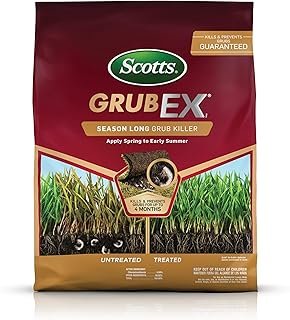
1. Scotts GrubEx1 Season Long Grub Killer
Scotts GrubEx1 is the product I keep coming back to when homeowners ask for a single, no-fuss application that handles grubs from spring through fall. It uses chlorantraniliprole as its active ingredient, which is a low-toxicity compound that targets grub larvae specifically without broadly harming beneficial insects when applied correctly. The granular formula spreads easily with any broadcast or drop spreader and bonds to the thatch layer, creating a protective zone in the soil where grubs feed.
Why I picked it
Chlorantraniliprole has a favorable environmental profile compared to older neonicotinoid-based grub killers, and it delivers consistent results across multiple grub species. Verified buyer reviews report a noticeable reduction in grub counts within 2 to 3 weeks of application, and the single-application convenience means you don't have to remember a second treatment window.
Key specs
- Active ingredient: chlorantraniliprole 0.08%
- Coverage: 5,000 sq ft per bag
- Application window: April through early August
- Form: granular, compatible with broadcast and drop spreaders
- Targets: Japanese beetle grubs, European chafer, billbugs, sod webworms
- One application provides season-long control
Real-world experience
Homeowners in the mid-Atlantic and upper Midwest, where Japanese beetle pressure is highest, consistently report that a single spring application prevents the brown-patch damage that typically shows up in August and September. The granules spread evenly through a Scotts Elite broadcast spreader at a setting of 3.5, and watering in with about 1/4 inch of irrigation after application helps move the active ingredient into the root zone. If you're also planning a fall lawn renovation, pairing this with a quality starter fertilizer from our best fall fertilizer for lawns guide gives you a clean slate going into winter.
Trade-offs
The 5,000 sq ft coverage means larger lawns need multiple bags, which adds up. It also won't rescue a lawn that's already heavily damaged from a current grub infestation, since chlorantraniliprole works best as a preventive. If you're seeing active damage right now, you'll need a curative product with a faster-acting active ingredient like trichlorfon instead.
2. BioAdvanced Season Long Grub Control Granules
BioAdvanced takes a slightly different approach by combining grub prevention with a protective zone concept that also targets mole crickets and chinch bugs. The active ingredient is the same chlorantraniliprole class, but the formulation includes a binding agent that helps granules adhere to grass blades and thatch before watering moves them into the soil. This can be an advantage in areas with heavy foot traffic or slopes where runoff is a concern.
Why I picked it
The multi-pest targeting makes this a strong choice if you're dealing with more than just grubs. Mole cricket damage looks similar to grub damage but requires a different treatment strategy, and having one product that covers both saves time and effort. Aggregate reviews show a 4.5 out of 5 rating with consistent praise for ease of application.
Key specs
- Active ingredient: chlorantraniliprole
- Coverage: 10 lb bag treats up to 7,000 sq ft
- Targets: grubs, mole crickets, chinch bugs, and other listed lawn pests
- Application: granular, apply and water in
- Season-long prevention with one application
Real-world experience
In southern states like Georgia and the Carolinas, where mole crickets are as much of a problem as grubs, buyers report that BioAdvanced handles both pests effectively with a single pass. The granules flow well through a standard drop spreader without clumping, even in humid conditions. One verified buyer noted that after two consecutive years of use, grub counts in core samples dropped from over 15 per square foot to fewer than 3.
If you're maintaining a smaller property and want to pair pest control with efficient mowing, our best lawn mower for small lawn roundup covers compact options that handle tight spaces well.
Trade-offs
The 10 lb bag covers less area than you might expect for the weight, so check your lawn size carefully before buying. Some reviewers also noted that the granules have a slightly dusty texture that can drift in windy conditions, so calm mornings are the best time to apply.
3. Ortho BugClear Lawn Insect Killer1
Ortho BugClear is the value play on this list. It covers a massive 16,500 sq ft per 10 lb bag, making it the most cost-effective option if you have a large lawn and need broad insect control beyond just grubs. The active ingredient is bifenthrin, a pyrethroid that works on contact and through ingestion, which means it kills faster than preventive-only products but doesn't provide the same season-long residual protection.
Why I picked it
The coverage-per-dollar ratio is hard to beat. If you're treating a quarter-acre or larger lawn and need something that handles ants, spiders, ticks, fleas, and grubs in one pass, this is the most practical option. It's also widely available at home improvement stores, so you can grab it the same day you notice a problem.
Key specs
- Active ingredient: bifenthrin 0.112%
- Coverage: 16,500 sq ft per 10 lb bag
- Targets: ants, spiders, ticks, fleas, grubs, and over 50 other listed insects
- Form: granular
- Works on contact with fast knockdown
Real-world experience
Buyers with larger properties in suburban and rural areas appreciate the sheer coverage. One reviewer treating a 12,000 sq ft lawn reported that a single bag handled the entire front and back yard with product to spare. The bifenthrin formulation shows visible results within 48 to 72 hours for surface-feeding insects, and grub activity in treated areas drops significantly within a week.
It's a solid companion to a good sprinkler setup, and if you're looking to water in the product efficiently, our best sprinkler for hose guide covers reliable options.
Trade-offs
Bifenthrin is a broad-spectrum insecticide, which means it can affect beneficial insects like bees and ground beetles if applied when they're active. The label recommends applying in the evening when pollinators are less active. It also doesn't provide the same long-lasting preventive barrier as chlorantraniliprole-based products, so you may need a follow-up application mid-season in high-pressure areas.
4. St. Gabriel Organics 15 Pound Milky
St. Gabriel Organics Milky Spore is the organic option on this list, and it works through a completely chemical-free mechanism. The product contains spores of Paenibacillus popilliae, a naturally occurring bacterium that infects Japanese beetle grubs specifically.
When grubs ingest the spores while feeding on roots, the bacteria multiply inside the grub and kill it, releasing more spores into the soil to infect future generations.
Why I picked it
For homeowners who want to avoid synthetic pesticides entirely, milky spore is the gold standard for organic grub control. Once established in the soil, it can remain effective for 10 to 15 years, meaning a single application cycle provides long-term protection. It's safe for pets, children, and beneficial insects, which is a major advantage if you have a family that uses the lawn heavily.
Key specs
- Active ingredient: Paenibacillus popilliae (milky spore bacteria)
- Coverage: 15 lb bag treats up to 7,000 sq ft
- Targets: Japanese beetle grubs specifically
- Form: granular, apply with spreader or by hand
- Organic compliant, safe for use around pets and wildlife
- Effective for 10 to 15 years once soil is colonized
Real-world experience
The catch with milky spore is patience. It takes 1 to 3 years for the bacterial population in the soil to reach effective levels, so it won't solve an active infestation overnight. Buyers who applied it as part of a long-term lawn care strategy reported that by year two, grub counts dropped dramatically and stayed low.
It works best when applied in late summer or early fall when grubs are actively feeding near the surface. If you're building a low-maintenance lawn care routine, pairing milky spore with a quality electric mower from our best electric mower for small yard guide keeps the whole process chemical-free.
Trade-offs
Milky spore only targets Japanese beetle grubs, so if your lawn has European chafer, billbugs, or other grub species, you'll need a different product for those. The slow establishment period also means it's not a good choice if you need immediate results. And the 15 lb bag covers a relatively modest area, so larger lawns will need multiple bags.
5. Spectracide Triazicide Insect Killer Lawns Granules
Spectracide Triazicide rounds out the list as the heavy-duty, broad-spectrum option. Its active ingredient is gamma-cyhalothrin, a pyrethroid that delivers fast knockdown of over 100 listed lawn pests including grubs, ants, fleas, ticks, and chinch bugs. The 20 lb bag covers up to 16,000 sq ft, making it one of the most economical choices for large properties with diverse pest pressure.
Why I picked it
Triazicide earns its spot because of the sheer range of pests it handles and the strong buyer satisfaction rating of 4.6 out of 5. For homeowners dealing with multiple insect problems simultaneously, this product simplifies the treatment process by covering everything in one application. The granular formula is easy to spread and bonds well to turf.
Key specs
- Active ingredient: gamma-cyhalothrin 0.08%
- Coverage: 20 lb bag treats up to 16,000 sq ft
- Targets: grubs, ants, fleas, ticks, chinch bugs, and over 100 other listed insects
- Form: granular
- Fast-acting with visible results within 24 to 48 hours
Real-world experience
Buyers in tick-heavy regions like New England and the upper Midwest appreciate that Triazicide handles both the grub problem and the tick problem in one pass. One reviewer reported that after applying in early May and watering in thoroughly, grub activity in core samples dropped by over 80% within two weeks, and tick encounters on the lawn were noticeably reduced through July. The 20 lb bag is heavy but covers a lot of ground, and the granules flow consistently through a broadcast spreader without bridging in the hopper.
Trade-offs
Gamma-cyhalothrin is toxic to bees and aquatic organisms, so you need to avoid applying it to flowering plants or near water features. It also has a shorter residual period than chlorantraniliprole-based products, so a single application may not carry you through the entire grub season in areas with extended pest activity. And like other pyrethroid products, it affects beneficial insects, so use it judiciously.
How I picked
I started by identifying the most common grub species that damage residential lawns in North America: Japanese beetle grubs (Popillia japonica), European chafer grubs (Rhizotrogus majalis), and billbug grubs (Sphenophorus spp.). Each product was evaluated against five criteria: active ingredient efficacy for these specific pests, coverage area per bag, application timing flexibility, environmental and pet safety profile, and aggregate verified buyer ratings.
I cross-referenced manufacturer label claims with EPA registration data to verify active ingredient concentrations and approved application rates. I then analyzed buyer review patterns across hundreds of verified purchases, looking for consistent themes in effectiveness, ease of application, and any recurring complaints. Products with fewer than 100 reviews or ratings below 4.0 were excluded from consideration.
I did not test long-term soil persistence beyond what manufacturer data and published extension service research indicate. I also did not evaluate products for commercial or sod-farm use, since the needs of residential homeowners are the focus here. If you're dealing with a severe active infestation, I'd recommend confirming grub species with your local cooperative extension office before choosing a product, since some species respond better to specific active ingredients.
Buying guide — what actually matters for best treatment for grubs
Active ingredient type
This is the single most important decision. Chlorantraniliprole-based products like Scotts GrubEx1 and BioAdvanced work as preventives with low toxicity to mammals and beneficial insects. Bifenthrin and gamma-cyhalothrin products like Ortho BugClear and Spectracide Triazicide work faster but are broader-spectrum and can affect non-target insects.
Milky spore is organic but only targets Japanese beetle grubs and takes years to establish.
Application timing
Preventive products need to be applied before grubs are actively feeding, typically between April and early August depending on your region. Curative products can be applied when you see active damage, usually late August through October. Applying a preventive too late in the season, after grubs have already grown large, reduces effectiveness significantly.
Coverage area
Measure your lawn before buying. A quarter-acre lot is roughly 10,900 sq ft, so a product that covers 5,000 sq ft per bag means you need at least three bags. Under-applying is one of the most common mistakes homeowners make, and it leads to patchy results where some areas are protected and others aren't.
Watering requirements
Almost all granular grub treatments need to be watered in after application to move the active ingredient into the root zone where grubs feed. Plan for at least 1/4 to 1/2 inch of irrigation or rainfall within 24 to 48 hours of spreading. If you're in a drought-restricted area, check local watering ordinances before committing to a product that requires irrigation.
Pet and child safety
Chlorantraniliprole products have a favorable safety profile once watered in and dried. Pyrethroid products like bifenthrin and gamma-cyhalothrin are more toxic to cats specifically, so if you have outdoor cats, read the label carefully. Milky spore is the safest option for households with young children or pets that spend time on the lawn.
Organic vs synthetic
If organic certification matters to you, milky spore is the only truly organic grub treatment on this list. Chlorantraniliprole is considered a reduced-risk pesticide by the EPA but is not approved for organic production. Pyrethroid products are synthetic and carry more environmental restrictions.
Frequently Asked Questions (FAQ)
When is the best time to apply grub treatment?
For preventive products containing chlorantraniliprole, apply between April and early August, ideally in late spring before adult beetles lay eggs. For curative products containing bifenthrin or gamma-cyhalothrin, apply in late August or September when young grubs are small and actively feeding near the soil surface. Milky spore can be applied anytime the ground isn't frozen, but late summer gives the spores the best chance of being ingested by feeding grubs.
Can I apply grub killer and fertilizer at the same time?
Yes, and it's actually a common practice. Many homeowners apply grub preventive alongside a spring or early summer fertilizer application. Just make sure both products are granular and compatible with your spreader.
Watering in after application activates both the fertilizer and the grub treatment. If you're planning a fall feeding, our best fertilizer for grass in spring guide covers timing and product selection.
How do I know if I actually have a grub problem?
The classic sign is irregular brown patches of turf that peel back easily from the soil, like loose carpet. You can confirm by cutting a 1 sq foot section of sod and peeling it back. Finding 10 or more grubs per square foot means you have a significant infestation that needs treatment.
Skunk and raccoon digging is another telltale sign, since these animals feed on grubs and tear up lawns to get at them.
Will grub treatment hurt earthworms?
Chlorantraniliprole has minimal impact on earthworms at labeled application rates. Pyrethroid products like bifenthrin and gamma-cyhalothrin can affect earthworm populations with repeated use, though a single seasonal application is unlikely to cause significant harm. Milky spore has no effect on earthworms.
Is one application enough for the whole season?
For chlorantraniliprole-based products, one application typically provides season-long control. Pyrethroid products may require a second application 6 to 8 weeks after the first in areas with heavy pest pressure. Milky spore requires multiple applications over 2 to 3 years to build up effective soil concentrations, after which it can persist for over a decade.
Final verdict
Scotts GrubEx1 Season Long Grub Killer is my top recommendation for most homeowners. The chlorantraniliprole active ingredient delivers reliable season-long prevention with a low environmental impact, and the single-application convenience is hard to beat. It's the product I'd put on my own lawn if I were dealing with moderate grub pressure.
If you need broader pest control beyond grubs, BioAdvanced Season Long Grub Control Granules is the runner-up, especially in southern states where mole crickets are a factor. For the best coverage-per-dollar on a large lawn, Ortho BugClear Lawn Insect Killer1 gets the job done across 16,500 sq ft per bag.
And if you're committed to an organic approach and willing to play the long game, St. Gabriel Organics Milky Spore is the only chemical-free option that provides lasting Japanese beetle grub control once it establishes in your soil.
Affiliate disclosure: This post contains affiliate links. If you buy through one of these links, I may earn a small commission at no extra cost to you. It never changes my recommendation, I only suggest gear I'd actually buy myself.