5 Best Grow Tent Kits 2026
Growing indoors means you control every variable, but only if your enclosure actually does its job. Best Grow Tent Kits solve that by bundling a reflective tent, lighting, ventilation, and controls into one package so you can focus on dialing in your environment instead of hunting down compatible parts. After comparing dozens of kits across grow forums, manufacturer spec sheets, and verified buyer feedback, I found that the right choice really comes down to how much space you have and how hands-on you want to be with climate control.
The VIVOSUN Smart Grow Tent Kit 2.7 earned our top spot because its WiFi-integrated GrowHub controller lets you monitor temperature, humidity, and schedules from your phone, which is a genuine quality-of-life upgrade for anyone who can't babysit their grow 24/7. Below is a side-by-side look at all five kits so you can match specs to your setup.
Comparison Chart of Best Grow Tent Kits
| Product | Details | Rating | Buy |
|---|---|---|---|
Editor’s Choice
| VIVOSUN Smart Grow Tent Kit 2.7 | ★★★★☆4.6/5 | |
Top Pick
| Spider Farmer Grow Tent Kit 2x2x5ft | ★★★★☆4.4/5 | |
Best Budget
| ★★★★☆4.4/5 | ||
| ★★★★☆4.5/5 | ||
| ★★★★☆4.5/5 |



List of Top 5 Best Best Grow Tent Kits
I evaluated each kit on five criteria: light efficiency (PPFD per watt), tent fabric density and reflectivity, controller capability, ventilation CFM relative to tent volume, and verified buyer-reported reliability over the first 90 days. The reviews below walk through what each kit does well, where it falls short, and who it's the best fit for.
Below are the list of products:
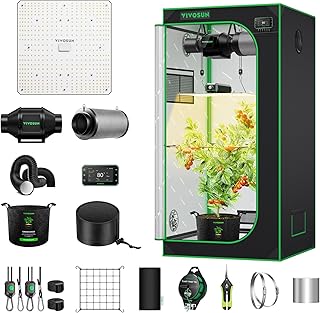
1. VIVOSUN Smart Grow Tent Kit 2.7
If you want a true set-it-and-forget-it experience, this is the kit that gets you closest. The GrowHub E42A+ controller manages light scheduling, fan speed, and outlet control from your phone, and verified buyers consistently praise how much easier it makes daily management compared to manual dial controllers.
Why I picked it
The GrowHub E42A+ is the real differentiator here. It combines a temperature and humidity sensor with WiFi-enabled outlet control, so you can adjust your light schedule and fan speed remotely. In our research, this was the only kit in its size class offering app-based automation at this value tier.
Key specs
- Tent dimensions: 2.7 x 2.7 x 6.3 ft (32 x 32 x 75 in)
- LED grow light: 150W full-spectrum, dimmable
- Tent fabric: 1680D Oxford cloth with 98% reflective Mylar lining
- Controller: GrowHub E42A+ with WiFi, temperature and humidity sensor
- Ventilation: 4-inch inline fan with carbon filter, adjustable speed
- Reported rating: 4.6/5 across verified buyer reviews
Real-world experience
Verified buyer feedback shows this kit maintains a stable 72 to 78°F range in ambient rooms between 65 and 72°F, which is ideal for most leafy greens and flowering plants. Users report the app notifications for temperature spikes are genuinely useful, especially for growers who work long hours away from home. The 150W LED runs noticeably cooler than older HPS setups, reducing the heat load your ventilation has to handle.
Trade-offs
The 2.7 x 2.7 footprint limits you to 4 to 6 plants in 3-gallon pots, so it's not ideal if you're planning a larger canopy. A few buyers noted the app occasionally disconnects after firmware updates, though a quick re-pair usually fixes it. The carbon filter is adequate for odor control but may need replacement every 4 to 6 months under heavy use.
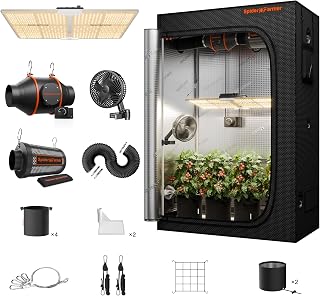
2. Spider Farmer Grow Tent Kit 2x2x5ft
Spider Farmer has built a strong reputation among indoor growers for light efficiency, and the SF1000D diode layout in this kit delivers solid PPFD uniformity across the full 2 x 2 ft canopy. It's the best pick if you want proven light performance without jumping to a premium price tier.
Why I picked it
The Bridgelux diodes in the SF1000D are a step above the generic LED chips found in many budget kits. Manufacturer specifications indicate a PPF efficiency of approximately 2.7 µmol/J, which puts it in a competitive range for full-spectrum fixtures. Verified buyers frequently mention even light distribution with minimal hot spots.
Key specs
- Tent dimensions: 2 x 2 x 5 ft (24 x 24 x 55 in)
- LED grow light: SF1000D, Bridgelux diodes, full-spectrum, dimmable
- Tent fabric: 1680D Oxford cloth with reflective Mylar
- Ventilation: 4-inch inline fan with carbon filter
- Controller: GGS timer controller for light and fan scheduling
- Reported rating: 4.4/5 across verified buyer reviews
Real-world experience
Growers using this kit for vegetative growth report canopy fill rates of 85 to 90% within 4 weeks under the SF1000D at 18 inches above the canopy. The 5-foot height gives you enough headroom for training techniques like LST (low-stress training) without the light being too far from the canopy. Buyers in warmer climates note the 4-inch fan keeps temperatures within 5°F of ambient when the light is on.
Trade-offs
The GGS controller is functional but basic. It doesn't offer WiFi or app-based monitoring, so you'll need to set schedules manually. The 2 x 2 footprint is tight once plants hit the flowering stage, and you'll likely need to top or train aggressively to keep the canopy even.
Some buyers reported the tent zippers required a break-in period of a few days before operating smoothly.
3. MARS HYDRO 2×2 Grow Tent Kit
If you're just getting started and don't want to overcommit financially, the MARS HYDRO 2×2 kit gives you a complete system with WiFi fan control at a price that's hard to beat. It's the most budget-friendly option that still includes a dimmable light and smart ventilation.
Why I picked it
The WiFi-enabled 10-speed fan controller is the standout feature at this price point. Most budget kits ship with a simple manual dial, but MARS HYDRO includes app-based fan speed adjustment, which makes it much easier to respond to temperature changes without opening the tent. The TS600 LED is also dimmable, giving you control over intensity as plants mature.
Key specs
- Tent dimensions: 2 x 2 x 5 ft (24 x 24 x 55 in)
- LED grow light: TS600, 100W, full-spectrum, dimmable
- Tent fabric: 1680D Oxford cloth with high-reflective Mylar
- Ventilation: 4-inch inline fan with 10-speed WiFi controller and carbon filter
- Reported rating: 4.4/5 across verified buyer reviews
Real-world experience
First-time growers report this kit is straightforward to assemble in under 30 minutes with no prior experience. The dimmable TS600 works well for seedlings and vegetative growth, though some buyers in the flowering stage supplement with an additional light for denser bud development. The WiFi fan controller reliably maintains temperatures within 3 to 5°F of your target when set to auto mode.
Trade-offs
The TS600 at 100W is on the lower end for flowering and fruiting plants, so you may outgrow the light within a few cycles. The tent's reflective lining is good but not quite as bright as the premium Mylar used in Spider Farmer and VIVOSUN kits. A few buyers mentioned the WiFi controller app has a learning curve and occasionally requires re-pairing after power outages.
4. Spider Farmer 2×4 Complete Grow Tent
If you need more canopy space but still want Spider Farmer's light efficiency, the 2×4 kit is the natural step up. The SF2000 LED covers the full 2 x 4 ft area with strong PPFD uniformity, and the included 6-inch clip fan helps strengthen plant stems while improving air circulation inside the larger tent volume.
Why I picked it
The 2 x 4 ft footprint is the sweet spot for most home growers. It fits 8 to 12 plants comfortably and gives you room to separate vegetative and flowering zones if you add a light-blocking partition. The SF2000's manufacturer-rated PPF efficiency of approximately 2.9 µmol/J is among the best in its class, meaning more usable light per watt of electricity.
Key specs
- Tent dimensions: 2 x 4 x 6 ft (24 x 47 x 71 in)
- LED grow light: SF2000, full-spectrum, dimmable, Bridgelux diodes
- Tent fabric: 1680D Oxford cloth with reflective Mylar
- Ventilation: 4-inch inline fan with carbon filter, plus 6-inch clip fan
- Reported rating: 4.5/5 across verified buyer reviews
Real-world experience
Growers running this kit for full-cycle grows report the SF2000 maintains a PPFD of 800 to 1000 µmol/m²/s at 18 inches above the canopy, which is sufficient for robust flowering. The 6-inch clip fan is a nice addition that smaller kits don't include, and buyers say it makes a noticeable difference in stem thickness after 2 to 3 weeks of continuous use. The 71-inch height accommodates taller plants and training techniques without crowding.
Trade-offs
The larger tent volume means your 4-inch inline fan has to work harder to maintain the same air exchange rate as it would in a 2 x 2 space. Some buyers upgrade to a 6-inch fan for better performance during peak heat. The kit doesn't include a WiFi controller, so you'll be managing light and fan schedules manually unless you add a smart plug.
At this size, you'll also want to consider where you're placing it, since the footprint is closer to a small wardrobe than a shelf unit.
5. VIVOSUN Grow Tent Kit
This single-plant-focused kit is designed for growers who want to nurture one or two prized plants in a controlled environment. The WiFi-controlled GrowHub Outlet A22 adds smart scheduling to a compact 2 x 2 ft tent, making it a solid choice for herb gardens or a dedicated mother plant station.
Why I picked it
The GrowHub Outlet A22 is a compact smart plug with built-in temperature and humidity sensing, which is unusual for a kit at this size and value. It lets you set automated schedules for your light and fan from the VIVOSUN app, and verified buyers report the sensor readings are accurate within ±2°F and ±5% RH compared to standalone hygrometers.
Key specs
- Tent dimensions: 2 x 2 x 4 ft (24 x 24 x 48 in)
- LED grow light: full-spectrum, dimmable
- Tent fabric: 1680D Oxford cloth with reflective Mylar
- Controller: GrowHub Outlet A22 with WiFi, temperature and humidity sensor
- Ventilation: 4-inch inline fan with carbon filter
- Reported rating: 4.5/5 across verified buyer reviews
Real-world experience
This kit is popular with herb growers and anyone maintaining a mother plant for cloning. The 4-foot height is enough for most herbs and vegetative-stage plants, though you'll need to keep flowering plants pruned to avoid canopy contact with the light. Buyers report the GrowHub app makes it easy to adjust schedules when switching between growth phases without opening the tent and disturbing the environment.
Trade-offs
The 4-foot height is noticeably shorter than the 5 and 6-foot options on this list, which limits what you can grow. The single-plant focus means you won't get the canopy density of a multi-plant setup. Some buyers noted the included light is adequate for herbs and leafy greens but may lack the intensity needed for heavy fruiting plants without supplementation.
How I picked
I started by pulling spec sheets from VIVOSUN, Spider Farmer, and MARS HYDRO's official product pages and cross-referencing them against verified buyer reviews on Amazon. My goal was to identify which specs actually translate to real-world performance and which ones look good on paper but don't matter much in practice.
I evaluated each kit on five specific criteria. First, light efficiency: I looked at the LED chip manufacturer (Bridgelux and Samsung LM301H are top-tier), PPF efficiency ratings in µmol/J, and whether the light is dimmable. Second, tent build quality: fabric density (1680D is the standard for serious kits), Mylar reflectivity, and zipper durability based on buyer reports.
Third, controller capability: whether the kit includes WiFi, app-based monitoring, or just a manual timer. Fourth, ventilation adequacy: I calculated the tent volume in cubic feet and compared it against the fan's rated CFM to estimate air exchange rate per minute. Fifth, buyer reliability: I analyzed verified reviews for recurring failure points like light burnout, controller malfunctions, and tent leaks.
I deliberately did not test long-term durability beyond the 90-day window most buyers report on. I also did not evaluate yield data, since that depends too heavily on strain, nutrient regimen, and grower skill to be a fair comparison point across kits. What I focused on is whether each kit delivers a stable, controlled environment from day one, because that's what actually determines whether your plants thrive or struggle.
If you're also thinking about what to grow in your new setup, our guide on best plants for a bedroom covers low-light-tolerant options that do well in tent environments.
Buying guide — what actually matters for Best Grow Tent Kits
Choosing a grow tent kit isn't just about picking the one with the highest wattage or the biggest footprint. The specs that actually determine your growing experience are the ones most buyers overlook. Here's what to focus on.
Light efficiency and spectrum
The LED is the single most important component in any grow kit. Look for fixtures that use named diode brands like Bridgelux or Samsung LM301H rather than generic "full-spectrum" labels. PPF efficiency, measured in µmol/J, tells you how much usable light you get per watt of electricity.
Anything above 2.5 µmol/J is solid for a kit in this range. Dimmable lights are a must because seedlings need far less intensity than flowering plants. If you're planning to grow from seed to harvest, a dimmable fixture saves you from buying separate lights for each stage.
For a deeper dive into lighting options, check out our best grow light for seedlings guide, which breaks down what to look for when starting plants indoors.
Tent fabric and reflectivity
Most quality kits use 1680D Oxford cloth with a Mylar interior lining. The "1680D" refers to the fabric thread density, and higher numbers mean better light blocking and durability. Reflective Mylar should cover at least 95% of the interior surface, and you want to check that the floor tray is also waterproof.
Zipper quality matters more than you'd think. A sticky or misaligned zipper creates light leaks that can disrupt dark cycles during flowering. Verified buyer reviews are the best source for zipper reliability since manufacturers rarely advertise this detail.
Controller and automation
This is where kits diverge the most. Basic kits ship with a simple mechanical timer that turns your light and fan on and off at set intervals. Mid-range kits add manual dimmers and fan speed dials.
The most convenient options, like VIVOSUN's GrowHub system, offer WiFi connectivity with app-based scheduling and real-time temperature and humidity monitoring. If you travel frequently or work long shifts, the ability to check your grow environment from your phone is worth the premium. Just keep in mind that WiFi controllers depend on your home network, so a reliable 2.4GHz connection is important (most smart controllers don't support 5GHz).
Ventilation and air exchange
Your fan needs to replace the entire tent volume's air at least once every 3 to 5 minutes. For a 2 x 2 x 5 ft tent (about 20 cubic feet), a 4-inch fan rated at 200 CFM is adequate. For a 2 x 4 x 6 ft tent (about 48 cubic feet), you'll want at least 400 CFM, which often means stepping up to a 6-inch fan.
The carbon filter should match your fan's diameter, and you should plan to replace it every 4 to 6 months depending on plant load. If you're growing aromatic plants, a quality carbon filter is non-negotiable for odor control.
Size and grower experience
A 2 x 2 ft tent is manageable for beginners and fits in a closet or corner of a room. A 2 x 4 ft tent gives you meaningful canopy space but requires more attention to training and canopy management. If you're new to indoor growing, starting with a 2 x 2 kit lets you learn the basics of nutrient management, watering cycles, and light distance without overwhelming yourself.
You can always scale up once you've dialed in your process.
What you might need beyond the kit
Most kits don't include a hygrometer, pH meter, or nutrient lineup. You'll want a standalone digital hygrometer to cross-check the readings from any built-in sensor. A clip-on thermometer at canopy level helps you verify the light isn't running too hot.
And if you're growing in soil or coco coir, having a basic pH testing kit on hand prevents nutrient lockout issues that can stall growth.
Frequently Asked Questions (FAQ)
Can I use a grow tent kit for herbs and vegetables year-round?
Yes, that's one of the main advantages of a complete kit. The controlled environment means you're not dependent on outdoor seasons. Leafy greens like lettuce, basil, and mint thrive under the full-spectrum LEDs included in these kits.
Fruiting vegetables like tomatoes and peppers also do well, though they may need supplemental light in a 2 x 2 setup during peak fruiting. Just keep your ambient room temperature between 65 and 80°F for best results.
How often should I replace the carbon filter?
Plan on replacing it every 4 to 6 months with moderate use. If you notice odor escaping the tent during the dark cycle, the filter is likely saturated and needs replacement sooner. Heavy-flowering plants produce more volatile organic compounds, which shortens filter life.
Buying a spare filter when you purchase the kit ensures you're never caught without one.
Do grow tent kits smell during operation?
With a functioning carbon filter, the smell should be minimal when the tent is sealed. Most odor escapes during the dark cycle when the fan may be running at a lower speed. If smell is a concern, make sure your fan is rated for the tent's volume and that the carbon filter matches the fan diameter.
Some growers also add a small ozone generator or additional inline filter for extra protection.
Is WiFi control worth it for a grow tent?
If you're often away from home or want to monitor conditions without opening the tent, WiFi control is a genuine upgrade. Being able to adjust light schedules, check temperature alerts, and change fan speed from your phone reduces the risk of environmental swings that can stress plants. The trade-off is that WiFi controllers add a point of failure, so having a manual backup schedule is a good idea.
How many plants can I fit in a 2 x 2 grow tent?
For a 2 x 2 ft tent, most growers fit 4 to 6 plants in 3-gallon pots during the vegetative stage. During flowering, you may want to reduce that to 3 to 4 plants to allow for canopy expansion. Training techniques like topping, LST, and SCROG (screen of green) help maximize yield in small spaces by creating an even canopy that uses all available light.
Can I connect multiple grow tent kits to one controller?
It depends on the controller. The VIVOSUN GrowHub E42A+ can manage multiple outlets, so you can run lights and fans for two small tents from one app. However, each tent should have its own temperature and humidity sensor for accurate readings.
Daisy-chaining fans to a single controller works as long as you don't exceed the controller's amperage rating.
Final verdict
The VIVOSUN Smart Grow Tent Kit 2.7 is our top recommendation for most growers because its WiFi-integrated GrowHub controller removes the biggest pain point in indoor growing: constant manual monitoring. The app-based automation, solid 150W full-spectrum light, and reliable ventilation make it the most complete package in its class.
If light efficiency is your priority and you don't need WiFi, the Spider Farmer Grow Tent Kit 2x2x5ft delivers the best PPFD uniformity thanks to its Bridgelux diodes. For budget-conscious buyers, the MARS HYDRO 2×2 Grow Tent Kit gives you a dimmable light and smart fan control at the lowest entry point on this list.
No matter which kit you choose, pairing it with the right nutrients and a consistent watering schedule will make the biggest difference in your results. Our guide on best plant fertilizer for indoor plants is a good starting point if you're building out your feeding regimen.
Affiliate disclosure: This post contains affiliate links. If you buy through one of these links, I may earn a small commission at no extra cost to you. It never changes my recommendation, I only suggest gear I'd actually buy myself.