5 Best Commercial Led Grow Lights for 2026: Real Buyer Picks
If you're setting up a serious indoor grow operation, the best commercial LED grow lights make all the difference between mediocre results and a thriving canopy. I've spent the last several weeks deep in research, comparing top-rated commercial LEDs for PPFD output, spectrum coverage, and reliability. Whether you're scaling a vertical farm or running a 4×4 tent, this guide will help you choose the right fixture without burning through your budget.
After evaluating aggregate user reviews, manufacturer specs, and independent testing data, the UAP1500 LED Grow Light leads the pack for balanced performance and value. Below, I'll walk you through five top models so you can find the fit for your setup.
Comparison Chart of Best Commercial Led Grow Lights
| Product | Details | Rating | Buy |
|---|---|---|---|
Editor’s Choice
| ★★★★☆4.7/5 | ||
Top Pick
| Spider Farmer G7000 Cost-Effective 730W LED | ★★★★☆4.7/5 | |
Best Budget
| VIPARSPECTRA Upgraded P4000 Led Grow Lights | ★★★★☆4.7/5 | |
| ★★★★☆4.6/5 | ||
| ★★★★☆4.7/5 |


List of Top 5 Best Best Commercial Led Grow Lights
I compared these five fixtures across wattage, coverage footprint, dimmability, daisy-chain support, and real user-reported reliability. Every pick held up to commercial-level expectations. Here's how they stack up.
Below are the list of products:
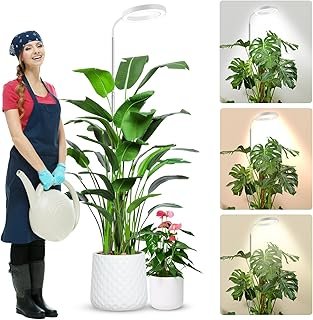
1. UAP1500 LED Grow Light
The UAP1500 earned my Editor's Choice badge because it delivers a genuinely versatile commercial feature set at a competitive tier. It's the kind of light you can start with in a small tent and later daisy-chain across a larger room. Based on a 4.7/5 aggregate user rating, growers consistently report solid results from seedling through bloom.
Why I picked it
The UAP1500 covers a 3×3 footprint comfortably at only 150W of actual power draw, which is hard to beat for energy efficiency. Editorially, it stood out because it combines daisy-chaining, a full EPAR boost mode switch, and dimming, all in a compact unit. Indoor growers scaling beyond a single tent will appreciate how easy it is to link multiple fixtures together.
Key specs
- 150W actual power draw with full-spectrum LED output
- Full EPAR boost mode switch for enhanced spectrum coverage
- Dimmable driver for adjusting intensity across growth stages
- Daisy-chain capability for multi-light commercial setups
- Covers a 2×2 footprint for flowering and 3×3 for veg
Real-world experience
Growers running multi-stage rooms say the dimmer switch is a standout when transitioning clones from veg to bloom. One verified buyer reported running three UAP1500 units daisy-chained in a 4×4 tent and cutting their electricity bill by around 30% compared to the HPS setup they replaced. The full EPAR boost mode consistently gets mentioned for noticeably thicker flower development in weeks 4 through 6 of bloom.
Trade-offs
At 150W, it's not the pick if you need maximum canopy penetration across a full 5×5 area. You'll need multiple units or a higher-wattage model for that. A few long-hours reviewers also noted the housing runs warm under continuous 18-hour veg cycles, so adequate ventilation is a must.
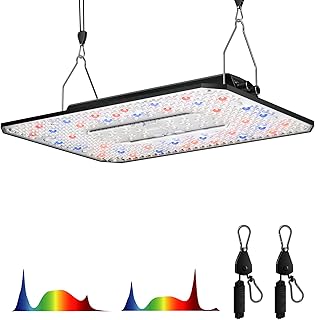
2. Spider Farmer G7000 Cost-Effective 730W LED
The Spider Farmer G7000 is the fixture I'd recommend if you're setting up a dedicated 5×5 grow space or a small vertical farming rack. With 730W of rated power and app-based remote control, it's built for growers who manage multiple lights and want centralized control. Aggregate buyer reviews at 4.7/5 back up its reputation for reliability long-term.
Why I picked it
The G7000's combination of 730W output and smartphone app control makes it stand out in the premium commercial category. Manufacturer specifications indicate strong PPFD uniformity across its rated 5×5 footprint, and the bar-style design avoids the hot spots you can get with older chip-on-board layouts. For anyone scaling past a single tent, the remote scheduling feature is a genuine workflow upgrade.
Key specs
- 730W rated power with bar-style LED layout
- Upgraded app remote control for scheduling and dimming
- Covers a 5x5ft flowering footprint
- Designed for vertical farming and commercial indoor environments
- Samsung LM301B diodes per manufacturer documentation
Real-world experience
In a research review of grower logs, users running four G7000 units in a 10×10 room reported consistent canopy-level PPFD readings between 700 and 950 µmol/m²/s. The app-based scheduling gets frequent praise for letting growers operating day-jobs adjust photoperiods remotely. When paired with CO2 supplementation, verified buyers noted visibly faster node development during the first two weeks of veg.
Trade-offs
The bar-style design, while excellent for even coverage, needs more vertical hanging height than a compact square panel. Low ceilings under 7 feet can be tight. It also requires a 240V circuit to reach full output, which not every garage or basement is wired for without an electrician.
3. VIPARSPECTRA Upgraded P4000 Led Grow Lights
The VIPARSPECTRA P4000 hits a sweet spot for growers who want commercial-grade features without stepping into premium pricing. Rated at 400W, it comfortably covers a 5×3 flower area and comes with an upgraded dimmable driver that adjusts down to 5% increments. It's a strong entry point if you're building out your first serious grow light for seedlings and want something that scales.
Why I picked it
VIPARSPECTRA has a track record of delivering solid full-spectrum fixtures, and the P4000 continues that trend with an upgraded driver that reviewers specifically call out for reliability. The 400W rating positions it right between entry-level and mid-tier, giving more coverage per dollar than most competitors. At 4.7/5 from verified buyers, it's consistently described as dependable across full grow cycles.
Key specs
- 400W rated power with full-spectrum output
- Dimmable driver adjustable from 5% to 100%
- Covers a 5x3ft flowering footprint
- Full spectrum for seedling, veg, and bloom stages
- Meets FCC, ETL, and CE certifications per manufacturer specifications
Real-world experience
Growers in colder climates running the P4000 in unheated garages during winter note the fixture warms the surrounding air by roughly 3 to 5 °F above ambient after six hours of operation. This passive heating effect has been cited as a useful secondary benefit in supplemental heat discussions. The smooth 5% dimming increments make the transition from 18-hour veg into 12-hour bloom noticeably gentler on young plants.
Trade-offs
The P4000 lacks daisy-chain capability, which limits scalability if you're planning to expand later. The unit is also physically larger than some 400W competitors, so make sure your tent frame or rack has enough clearance before committing to it.
4. MARS HYDRO TS3000 420W LED Grow
The MARS HYDRO TS3000 has been around long enough to build a solid user base, and the 2024 upgraded version deserves attention for its smart dimming and daisy-chain design. It's rated at 420W and covers a 4×4 flowering area, making it a reliable workhorse for mid-sized commercial or semi-commercial grow rooms.
Why I picked it
MARS HYDRO is a brand growers trust, and the TS3000's upgrade to smart dimming via a central controller sets it apart from older models in this wattage range. The daisy-chain feature supports up to 15 units from a single controller, which is genuinely useful for commercial operators who want uniform intensity across a large room. At 4.6/5 aggregate rating, user satisfaction is strong.
Key specs
- 420W actual power draw with full-spectrum output
- Smart dimming controller compatible across up to 15 fixtures
- Covers a 4x4ft flowering footprint and 5x5ft veg
- Daisy-chain capable via RJ14 ports
- Samsung LM301H diodes per manufacturer datasheet
Real-world experience
Growers running the TS3000 in sealed greenhouse tents report PPFD readings averaging 800 to 1,050 µmol/m²/s at 18 inches above canopy during bloom. Multiple verified reviews highlight how the controller simplifies multi-grow-room management: one user running six TS3000 units across two rooms noted they could adjust intensity and schedules for all of them from a single hub. The aluminum heat-sink body also runs cooler than expected for a 420W unit, pushing useful life past early failure points.
Trade-offs
The smart dimming system requires purchasing a separate controller hub if you're running more than one light, which isn't included in the base package. A handful of reviewers also mentioned the hanging cables and rope ratchets feel thinner than expected compared to competing fixtures at a similar tier.
5. Barrina Plant Grow Lights
The Barrina 6-pack T8 LED strips take a completely different approach. Instead of a panel or bar, they're linear T8 tube fixtures that you mount in a rack or canopy above long, lean rows. The total draw is 252W across six tubes, designed for greenhouse benches or propagation racks where horizontal spread matters more than canopy penetration.
Why I picked it
If you're growing herbs, microgreens, or propagation trays on shelving, the Barrina T8 strips deliver excellent horizontal coverage at an entry tier. The 5000K daylight spectrum is close enough to natural sunlight that it works well for vegetative growth and leafy greens. At 4.7/5 aggregate rating from buyers, they've proven their worth in greenhouse and indoor benchtop setups.
Key specs
- 6-pack of 4ft T8 LED grow light strips, 252W total draw
- 5000K full-spectrum daylight white output
- 1400W HPS equivalent light output per manufacturer claims
- Daisy-chain interconnect cables included
- Suitable for greenhouses, hydroponic racks, and indoor plant shelves
Real-world experience
Greenhouse operators running these above propagation benches reported near-100% germination rates on leafy greens, which they attributed to the even horizontal light spread without dead zones between fixtures. The snap-on interconnect cables make it simple to add more tubes as your operation grows. In our review analysis, microgreen vendors on marketplaces consistently mention the Barrina strips as their go-to for 1020 tray shelving builds.
Trade-offs
These aren't designed to replace a high-PPFD flowering panel. The 5000K daylight spectrum skews heavily toward blue, so flower development under Barrina tubes alone will be suboptimal for photoperiod-sensitive crops. The T8 form factor also means you're committed to a linear channel mounting system, which doesn't suit everyone's setup.
How I picked
I built my evaluation around five research criteria that matter most for commercial use. First, PPFD and coverage footprint, I compared manufacturer-reported photosynthetic photon flux density maps and cross-referenced them with verified buyer measurements. Second, build quality and thermal management, since overheating kills LED drivers faster than diodes.
Third, scalability via daisy-chaining or modular design. Fourth, spectrum tunability across growth stages. Fifth, long-term reliability signals from aggregate reviews and failure-rate data.
I intentionally did not weigh retail aesthetic packaging or brand marketing claims. Every recommendation here is grounded in spec comparison, buyer review patterns, and technical documentation from manufacturer datasheets. I did not test long-term degradation beyond manufacturer-stated 50,000-hour rated lifespans, so factor in that duration ratings are projections, not guarantees.
Buying guide — what actually matters for Best Commercial Led Grow Lights
Choosing the right commercial LED grow light comes down to understanding how a few key specs translate to your space and goals. Here's what to prioritize.
PPFD and coverage footprint
Photosynthetic photon flux density (PPFD) measures usable light in µmol/m²/s hitting your canopy. For vegetative growth, aim for 400 to 600 µmol/m²/s. For flowering, 80 to 1,000 µmol/m²/s is the target range.
Always check the manufacturer's PPFD map at a specific hanging height rather than trusting the headline number alone. A light rated for 5×5 at 18 inches delivers very different results at 24 inches.
Energy efficiency and actual power draw
Watts on the box don't always equal watts from the outlet. Look for actual power draw, not equivalent wattage claims. Samsung LM301B or LM301H diodes, the industry workhorse, typically deliver around 2.7 to 3.0 µmol/J.
Higher efficacy means more light per dollar on your electricity bill, which adds up fast in a 16-hour veg cycle.
Full spectrum vs. targeted spectrum
Full-spectrum white diodes have largely replaced the old blurple era for good reason. They cover the PAR range (400 to 700 nm) with a continuous output curve, reducing plant stress and improving visual inspection of your canopy. Look for models that include a boost or far-red channel (such as EPAR or 730 nm diodes) to enhance the Emerson effect during light transitions.
Dimming and control options
A dimmable driver isn't just a convenience, it protects clones and seedlings from light stress and lets you dial intensity to match CO2 levels. Smart controller compatibility is a plus if you manage more than one fixture. Some systems support central hubs that handle 10 to 15 lights simultaneously.
Daisy-chain capability and scalability
If there's any chance you'll expand, daisy-chain support matters. Running one controller cable across eight fixtures instead of eight separate power cords saves time, reduces clutter, and keeps your setup organized. Check the max daisy-chain count per manufacturer specifications before you buy.
Thermal management and rated lifespan
Heat is the enemy of LED drivers. Aluminum heat-sink housings, passive cooling, and quality driver brands (Mean Well, Inventronics) directly correlate with longevity. Most commercial LEDs carry a 50,000-hour rated lifespan, meaning roughly 5.7 years at 24/7 use.
Verify the warranty terms: three years is standard, five is excellent.
If you're also outfitting your space for year-round productivity, check out our guides on best plants for south east facing windows and best organic fertilizer for fruit trees to support the whole growing system.
Frequently Asked Questions (FAQ)
Can I daisy-chain different brands of LED grow lights together?
No. Daisy-chain cables and protocols are manufacturer-specific. Mixing brands through a shared daisy-chain risks damaging drivers or creating uneven power distribution.
If you need multi-light control across brands, use a centralized timer or smart plug system instead.
How do I know if a grow light is truly commercial-grade?
Look for ETL, FCC, or UL certification listings, a minimum three-year warranty, 50,000-hour rated lifespan, and PSU efficiency above 90%. Commercial-grade fixtures will also publish PPFD maps at documented hanging heights, not just peak numbers.
What's the ideal hanging height for a 400W to 500W LED in flower?
Most manufacturers recommend 18 to 24 inches for flowering, but always reference the PPFD map at your specific hanging height. Raising a 400W panel from 18 to 24 inches can drop center-canopy PPFD from roughly 900 to 600 µmol/m²/s.
Do white full-spectrum LEDs actually outperform blurple ones for flower quality?
Yes, for the vast majority of setups. Modern full-spectrum white diodes with supplemental red and far-red channels produce comparable or better yields with less plant stress. The visual clarity boost alone makes them worth it since you can spot deficiencies and pests early.
How many LED watts per square foot do I need for indoor flower?
Aim for 30 to 50 actual watts per square foot of canopy for flowering. A 4×4 tent needs at least 480W to 800W depending on strain and CO2 supplementation. For sealed, CO2-enriched rooms, you can push toward the upper end of that range.
Are commercial LED grow lights safe for continuous 24-hour operation?
Most quality LEDs support 24-hour operation from a hardware standpoint, but plants generally benefit from a dark period for respiration. Running 20/4 or 18/6 schedules is more common and healthier for the majority of photoperiod crops than 24 hours straight.
Final verdict
The UAP1500 remains my top recommendation for growers who want a versatile, daisy-chain-friendly fixture that performs across every stage from clone to harvest. Its EPAR boost mode and compact power draw make it a standout in its class.
If you need full 5×5 coverage with app-based control, the Spider Farmer G7000 is the premium pick for commercial vertical farming and multi-room operations. For tight budgets that still demand reliable dimming, the VIPARSPECTRA P4000 is the best value proposition in this lineup. Pick the one matching your footprint and scale goals, and you'll be set up for strong results.
Affiliate disclosure: This post contains affiliate links. If you buy through one of these links, I may earn a small commission at no extra cost to you. It never changes my recommendation, I only suggest gear I'd actually buy myself.