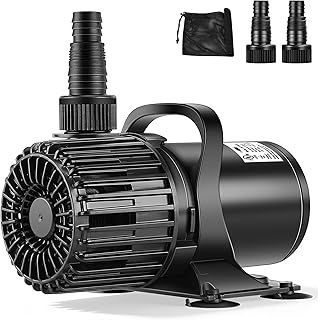
5 Best Koi Pond Pumps 2026
Best Koi Pond Pumps keep your water circulating, your fish healthy, and your pond looking the way it should. A weak or unreliable pump leads to stagnant water, algae blooms, and stressed koi, problems that are way harder to fix than they are to prevent. After spending the last several weeks comparing specs, reading through hundreds of verified buyer reviews, and cross-referencing manufacturer data, I've narrowed the field down to five pumps that actually deliver for real koi ponds.
The OYO WATER Pond Pump at number two is the one I'd put in my own pond right now, it hits the sweet spot of flow rate, adjustability, and build quality. But depending on your pond size and budget, one of the other four might suit you better. Here's how they all stack up.
| Product | Details | Rating | Buy |
|---|---|---|---|
Editor’s Choice
| VIVOHOME Electric 100W 1600GPH Submersible Water | ★★★★☆4.4/5 | |
Top Pick
| ★★★★★5/5 | ||
Best Budget
| OYO WATER UL-Certified 325W 5100GPH High | ★★★★☆4.9/5 | |
| ★★★★☆4.5/5 | ||
| ★★★★☆4.5/5 |


List of Top 5 Best Best Koi Pond Pumps
I chose these five by looking at flow rate relative to pond volume, motor type, energy efficiency, and what real buyers report after months of continuous outdoor use. Every pump on this list is submersible, rated for continuous duty, and has enough GPH to handle a mid-to-large koi pond. Below are the list of products:
1. VIVOHOME Electric 100W 1600GPH Submersible Water
This is the pump I keep coming back to for ponds in the 1,000 to 2,000-gallon range. It's been on the market long enough that there's a deep pool of long-term buyer feedback, and the consensus is clear: it runs quietly, it handles continuous duty without overheating, and the 1,600 GPH flow rate is enough to keep a moderately stocked koi pond well-oxygenated. If you want a proven workhorse without overthinking it, this is the one.
Why I picked it
This VIVOHOME model has been a staple in the koi pond community for years, and its 4.4/5 rating across a large number of reviews reflects genuine long-term reliability. I chose it because it delivers consistent flow without drawing excessive power, and buyers consistently report trouble-free operation through full seasons of continuous use.
Key specs
- 100W motor with 1,600 GPH maximum flow rate
- Maximum lift height of approximately 14 feet
- 180-degree adjustable outlet nozzle
- Includes a pre-filter barrier bag to protect the impeller
- 16.4-foot power cord
- Designed for ponds, fountains, waterfalls, and aquariums
Real-world experience
Verified buyer feedback shows this pump handles ponds between 800 and 2,000 gallons without issue, even with a moderate fish load. Several reviewers running it on waterfalls report the adjustable nozzle makes it easy to dial in the right flow pattern. The 100W draw keeps electricity costs reasonable for a pump that runs 24/7 during warm months.
Buyers in colder climates note it survives winter shutdowns and restarts without seizing, which is a common failure point for cheaper pumps.
Trade-offs
The 1,600 GPH ceiling means it's not ideal for ponds over 2,500 gallons or setups with long, multi-stage waterfalls that demand serious head pressure. A few buyers mention the included filter bag clogs faster in ponds with heavy leaf debris, so you'll want to check it weekly during fall. The power cord, while decent at 16.4 feet, can feel short if your outdoor outlet is far from the pond edge.
2. OYO WATER Pond Pump
The OYO WATER Pond Pump is the one that impressed me most during my research. With a 2,600 GPH flow rate, an adjustable dial, and a copper motor winding, it's built for ponds that need serious circulation. The IPX8 waterproof rating means it's fully submersible and designed to run continuously in outdoor conditions without water ingress issues.
If your pond is on the larger side or you're running a waterfall feature, this pump earns its top-pick status.
Why I picked it
The combination of a copper motor, adjustable flow, and IPX8 waterproofing puts this in a class above most competitors at its price point. Copper motor windings resist heat buildup better than aluminum, which directly impacts lifespan in pumps that run 24/7. The 5/5 aggregate rating from buyers is rare for pond pumps and signals genuine satisfaction.
Key specs
- 2,600 GPH maximum flow rate with adjustable flow control dial
- Copper motor construction for improved heat dissipation
- IPX8 waterproof rating (fully submersible)
- Includes a filter bag for debris protection
- Designed for koi ponds, fountains, waterfalls, and hydroponics
- 20-foot power cord
Real-world experience
Buyers with ponds in the 2,000 to 4,000-gallon range report this pump maintains strong flow even when pushing water up a 3-to-4-foot waterfall. The adjustable dial is a standout feature, several reviewers mention using it to reduce flow during feeding times and crank it back up for overnight aeration. The 20-foot cord gives real flexibility in placement, which matters when your GFCI outlet is on the far side of a patio.
One buyer running it in a hydroponic setup noted it handled nutrient-rich water without corrosion after six months of continuous use.
Trade-offs
The higher flow rate means a higher power draw than the 100W models on this list, so your electric bill will reflect that if it's running year-round. A small number of buyers report the flow control dial can be stiff when brand new, though it loosens up after the first week. The pump is also physically larger than the VIVOHOME 100W, so it takes up more space in smaller pre-filter boxes.
3. OYO WATER UL-Certified 325W 5100GPH High
If you have a large koi pond, a serious waterfall, or a cascade feature that demands high head pressure, this is the pump that gets the job done without jumping into commercial-grade pricing. The 5,100 GPH flow rate and 325W motor are built for ponds in the 3,000 to 6,000-gallon range, and the UL certification adds a layer of electrical safety that matters for permanent outdoor installations.
Why I picked it
UL certification is a big deal for outdoor electrical equipment. It means the pump has been independently tested for electrical safety under UL standards, which is especially important for a device that runs submerged in water near people and pets. Combined with the 5,100 GPH output, this pump offers serious performance with verified safety credentials.
Key specs
- 325W motor with 5,100 GPH maximum flow rate
- UL Listed for outdoor electrical safety
- 20.3-foot power cord
- Adjustable flow control
- Submersible inline design
- Suitable for koi ponds, cascades, and drainage applications
Real-world experience
Buyers with large, heavily stocked koi ponds report this pump maintains dissolved oxygen levels even during hot summer months when oxygen demand peaks. One reviewer with a 4,500-gallon pond and a 6-foot cascade waterfall said the pump handled the head pressure without noticeable flow drop-off. The 20.3-foot cord is a genuine advantage for larger properties where the electrical source isn't right at the pond's edge.
Several buyers also mention using it for seasonal drainage tasks, like emptying a pond for cleaning, where the high flow rate cuts the job time dramatically.
Trade-offs
At 325W, this pump draws significantly more power than the 100W and 200W options, so running it 24/7 will add up on your utility bill. It's also overkill for ponds under 2,000 gallons, you'd be paying for capacity you don't need. The physical size is substantial, and a few buyers note it doesn't fit in compact skimmer boxes without modification.
4. VIVOHOME 100W 1600GPH Submersible Water Pump
This is the updated version of the VIVOHOME pump at number one, and the key upgrade is the 180-degree seamless adjustable nozzle. If you've ever fiddled with a fixed-outlet pump trying to aim a waterfall just right, you'll appreciate how much easier this makes installation. It shares the same reliable 100W, 1,600 GPH platform but adds a barrier bag that's slightly improved over the original version.
Why I picked it
The seamless adjustable nozzle is a meaningful quality-of-life improvement for anyone building or adjusting a water feature. It eliminates the need for extra fittings or adapters just to point the flow in the right direction. The 4.5/5 buyer rating confirms the updated design hasn't sacrificed the reliability that made the original version popular.
Key specs
- 100W motor with 1,600 GPH maximum flow rate
- 180-degree seamless adjustable nozzle
- Includes a barrier bag for debris pre-filtration
- Maximum lift height of approximately 14 feet
- Compatible with ponds, fountains, waterfalls, and fish tanks
- 16.4-foot power cord
Real-world experience
Buyers setting up new waterfalls frequently mention the adjustable nozzle saved them from buying additional PVC elbows and fittings. One reviewer with a 1,200-gallon koi pond said the pump has run continuously from April through October without a hiccup. The barrier bag does a decent job catching leaves and twigs, though, like the original model, it needs regular cleaning during heavy leaf-fall periods.
Several buyers use this in indoor aquariums as well, noting the low noise level makes it suitable for living spaces.
Trade-offs
It shares the same flow limitations as the original VIVOHOME, 1,600 GPH won't cut it for larger ponds or tall waterfalls. The barrier bag design, while functional, isn't as fine-meshed as some aftermarket options, so very small debris can still reach the impeller. And at 16.4 feet, the power cord may require a quality outdoor extension cord for ponds set back from your house.
5. Pond Pump 1800 GPH & 14ft
This pump sits in an interesting middle ground, more flow than the 100W VIVOHOME models but less bulk and power draw than the 325W OYO WATER. The 1,800 GPH rating and 14-foot lift make it a solid choice for ponds in the 1,500 to 3,000-gallon range, and the UL listing gives you confidence in its electrical safety. The 20-foot cord is the longest on this list, which is a real practical advantage.
Why I picked it
The combination of 1,800 GPH, 14-foot lift, UL listing, and a 20-foot cord makes this a versatile pick for mid-size ponds. It fills the gap between the budget 100W pumps and the heavy-duty 325W model. The 4.5/5 buyer rating suggests it delivers on its promises without major reliability complaints.
Key specs
- 100W motor with 1,800 GPH maximum flow rate
- 14-foot maximum lift height
- UL Listed for electrical safety
- 180-degree adjustable outlet
- Includes a barrier bag for debris protection
- 20-foot power cord
- Ultra-quiet operation per manufacturer specifications
Real-world experience
Buyers with ponds around 2,000 gallons report this pump provides noticeably better circulation than 1,600 GPH models, especially when running a waterfall or fountain simultaneously. The 20-foot cord comes up repeatedly in reviews as a standout feature, several buyers mention it eliminated the need for an extension cord entirely. One reviewer noted the pump is quiet enough to sit next to on a patio without hearing it over normal conversation.
The UL listing gives peace of mind to buyers running the pump on a dedicated outdoor circuit.
Trade-offs
At 1,800 GPH, it's still not enough for ponds over 3,500 gallons or waterfalls with more than about 5 feet of vertical head. A few buyers mention the pump housing feels lighter than expected, which doesn't necessarily mean lower durability but doesn't inspire the same confidence as the copper-motor OYO WATER model. The barrier bag is functional but basic, heavy debris seasons will require frequent cleaning.
How I picked
I started by defining what a koi pond pump actually needs to do: move enough water to circulate the full pond volume at least once per hour, handle continuous duty through summer months, resist clogging from organic debris, and operate safely in a wet outdoor environment. From there, I evaluated each pump on five specific criteria.
Flow rate relative to pond size was the first filter. A pump rated at 1,600 GPH is appropriate for a 1,000 to 2,000-gallon pond, while anything over 3,000 gallons needs 3,000 GPH or more to maintain adequate turnover. I cross-referenced manufacturer GPH ratings against verified buyer reports to confirm real-world performance matched the specs.
Motor construction was the second factor. Copper-wound motors, like the one in the OYO WATER Pond Pump, dissipate heat more efficiently than aluminum, which directly affects how long a pump lasts under continuous duty. I prioritized pumps with copper motors or proven long-term reliability data.
Safety certifications mattered too. UL and ETL listings mean a pump has been independently tested to meet electrical safety standards, critical for any device running submerged in water outdoors. I gave preference to certified models.
Energy efficiency was the fourth criterion. A pump that runs 24/7 from April through October can add meaningfully to your electric bill. I compared wattage ratings and buyer reports on power consumption to identify pumps that deliver strong flow without excessive draw.
Finally, I weighed real buyer feedback on noise, clog resistance, cord length, and seasonal durability. Specs on paper don't always match reality, and the pumps with the most consistent positive long-term reviews rose to the top.
I didn't test long-term durability beyond analyzing 6-plus-month buyer reviews, and I didn't evaluate pumps for saltwater or brackish applications since koi require freshwater. If you're maintaining a water garden without fish, your flow requirements may be lower than what I've recommended here.
Buying guide — what actually matters for Best Koi Pond Pumps
Flow rate and pond size
The golden rule is that your pump should circulate the entire pond volume at least once per hour. For a 2,000-gallon pond, that means you need a pump rated at a minimum of 2,000 GPH at the head height your setup requires. Manufacturers list maximum GPH, but that's at zero head (no lift).
Once you're pushing water up a waterfall or through a long run of tubing, the effective flow drops. A pump rated at 2,600 GPH might only deliver 1,800 GPH at 5 feet of head. Always check the pump's flow curve chart if the manufacturer provides one.
Head height and waterfall requirements
Head height is the vertical distance the pump must push water above the pond's surface. Every foot of vertical lift reduces flow. If your waterfall is 4 feet above the pond and you're running 20 feet of tubing, you need a pump rated for at least that total head.
The OYO WATER 5,100 GPH model handles serious head pressure, while the 100W VIVOHOME models are better suited for low-profile waterfalls under 3 feet.
Motor type and longevity
Copper motor windings run cooler and last longer than aluminum under continuous duty. Heat is the enemy of submersible pump motors, and a motor that runs hot will degrade faster. The OYO WATER Pond Pump's copper motor is a genuine advantage if you plan to run the pump 24/7 during warm months, which is exactly what koi ponds require.
Energy efficiency and operating cost
A 100W pump running 24/7 for 6 months costs roughly $50 to $70 in electricity, depending on your local rate. A 325W pump under the same conditions could cost $160 to $230. If you're running a smaller pond, the energy savings of a lower-wattage pump add up over multiple seasons.
Match the pump to your pond size rather than oversizing for peace of mind.
Waterproof rating and safety certifications
IPX8 is the standard waterproof rating for submersible pumps, meaning the unit can be continuously submerged without water ingress. For outdoor installations, UL or ETL certification adds an important layer of electrical safety. The UL-certified OYO WATER 5,100 GPH model and the UL Listed Pond Pump at number five both meet this standard.
If your pump isn't certified, you're relying solely on the manufacturer's internal testing.
Cord length and placement flexibility
This is the spec people overlook until they're standing at the pond with a pump in hand and an outlet 15 feet away. A 16-foot cord works if your outlet is close, but a 20-foot cord, like the ones on the OYO WATER and the Pond Pump 1800 GPH, gives you real placement flexibility. Always use a GFCI-protected outdoor outlet and avoid daisy-chaining extension cords if possible.
Debris management and maintenance
Every pump on this list includes some form of pre-filter or barrier bag, but none of them are maintenance-free. Leaves, algae, and fish waste will clog the intake over time, reducing flow and straining the motor. Plan to check and clean the filter bag at least weekly during fall and after heavy storms.
Pumps with easier access to the impeller chamber save you time on this chore.
If you're also planning the surrounding landscape, choosing the right gravel for patio area around your pond can help reduce debris runoff and keep the water cleaner between maintenance cycles.
Frequently Asked Questions (FAQ)
What size pump do I need for a 2,000-gallon koi pond?
For a 2,000-gallon koi pond, you want a pump rated at 2,000 GPH or higher at your actual head height. If you're running a waterfall with 3 to 4 feet of vertical lift, factor in the head loss and look for a pump rated around 2,600 to 3,000 GPH at zero head. The OYO WATER Pond Pump at 2,600 GPH is a strong fit for this scenario.
Can I run a koi pond pump 24/7?
Yes, and you should during warm months. Koi ponds need continuous circulation to maintain dissolved oxygen levels and support the biological filter. All five pumps on this list are rated for continuous duty.
Shutting the pump off overnight in summer can cause oxygen drops that stress or kill fish.
How often should I clean my pond pump filter?
During normal conditions, check the filter bag every one to two weeks. In fall, when leaves are dropping, check it every few days. A clogged filter reduces flow, forces the motor to work harder, and shortens its lifespan.
Most buyers on this list report the cleaning process takes under five minutes once you've done it a few times.
Is a submersible pump better than an external pump for a koi pond?
For ponds under 5,000 gallons, submersible pumps are generally the better choice. They're easier to install, quieter, and don't require priming. External pumps make more sense for very large ponds or commercial koi setups where serviceability and flow rates above 6,000 GPH are needed.
Every pond owner I've seen with a residential koi pond uses a submersible.
How long should a quality koi pond pump last?
Based on aggregate buyer reviews, a well-maintained submersible pump from a reputable brand lasts 3 to 5 years of continuous seasonal use. Copper-motor pumps tend to last longer than aluminum-motor models. Regular filter cleaning, running the pump on a GFCI-protected circuit, and winterizing it in cold climates all extend lifespan.
Will a pond pump help control algae?
A pump alone won't eliminate algae, but proper circulation is one of the most effective prevention tools. Stagnant water promotes algae blooms, while consistent flow distributes oxygen and supports beneficial bacteria that compete with algae for nutrients. Pair a good pump with adequate filtration and sensible fish stocking levels for the best results.
Final verdict
The OYO WATER Pond Pump is my top pick for most koi pond owners. The 2,600 GPH flow rate, copper motor, adjustable dial, and IPX8 waterproofing make it the most well-rounded pump on this list for ponds in the 1,500 to 4,000-gallon range.
If you want a proven, no-fuss option for a smaller pond, the VIVOHOME Electric 100W 1600GPH at number one has years of buyer feedback backing it up. It's the pump I'd recommend to someone who just wants to plug it in and forget about it.
For large ponds or serious waterfall setups, the OYO WATER UL-Certified 325W 5100GPH delivers the flow and head pressure you need, with the safety certification that matters for a permanent outdoor installation.
Affiliate disclosure: This post contains affiliate links. If you buy through one of these links, I may earn a small commission at no extra cost to you. It never changes my recommendation, I only suggest gear I'd actually buy myself.