5 Best Pots for Grow Tent 2026
There's something oddly satisfying about nailing down the right container for your indoor garden. The reason best pots for grow tent choices matter so much comes down to root health, and the wrong pick can silently suffocate your plants even when your lighting and nutrients are dialed in. Fabric pots have become the go-to solution for indoor growers because they air-prune roots, prevent circling, and keep root zones from overheating under high-intensity LED panels.
Along with smart airflow and the right grow light, sturdy fabric containers are one of those foundational upgrades that pays off in every harvest.
Based on a detailed look at fabric thickness, aeration design, buyer feedback, and real-world grow tent compatibility, the AC Infinity Heavy Duty Fabric Pots stand out as our overall recommendation. But depending on whether you need massive root space, automated watering, or just a reliable budget pack, several options earn their spot. Below is a side-by-side snapshot of all five before we dig into each one.
| Product | Details | Rating | Buy |
|---|---|---|---|
Editor’s Choice
| ★★★★☆4.8/5 | ||
Top Pick
| ★★★★☆4.6/5 | ||
Best Budget
| ★★★★☆4.6/5 | ||
| ★★★★☆4.7/5 | ||
| ★★★★☆4.4/5 |


List of Top 5 Best Best Pots for Grow Tent
Every pick below was evaluated on verified buyer patterns, manufacturer-stated fabric weight and construction details, and how each pot handles the specific constraints of a sealed grow tent environment (limited floor space, high humidity, and intense lighting). You'll find notes on real feedback wherever relevant, so you can match a pot to your actual grow style.
Below are the list of products:
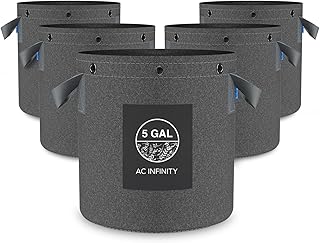
1. AC Infinity Heavy Duty Fabric Pots
AC Infinity designed these for growers who want a step up from standard thin fabric bags. The 500G nonwoven fabric feels noticeably denser than typical budget grow bags, and that extra thickness helps the pot hold its shape even when filled with heavy, saturated media. The included multi-purpose rings work as anchors for low-stress plant training, which is a clever touch if you're running a SCROG setup under LED panels and need to keep branches spread evenly.
Online reviewers consistently highlight the stitching quality on the handles.
Why I picked it
The combination of thick 500G fabric, built-in LST rings, and a reputable brand in the precision growing equipment space makes this the most well-rounded option. It targets growers who already understand that container quality directly influences canopy performance.
Key specs
- 5-gallon capacity per pot, sold as a 5-pack
- 500G thick nonwoven fabric construction
- Multi-purpose rings included for low-stress plant training
- Reinforced stitching on handles for moving
- Reusable across multiple grow cycles
Real-world experience
Many indoor growers running 2×2 or 4×4 grow tents pair a set of these with flood-and-drain tables. The fabric's density holds up well to daily watering schedules without tearing at the seams, and the LST rings become particularly useful once you flip to flower. Because the fabric breathes, the pots don't trap excess heat even when they sit directly under LED boards.
Reviewers also appreciate the consistent drainage provided by the breathable nonwoven material, which helps avoid overwatering issues in the flowering phase.
Trade-offs
- 5 gallons is a mid-range size; you'll outgrow it for large fruiting plants without transplanting
- The rings take a minute to thread through if you've never used LST anchors
- Slightly higher price point per unit than basic fabric bags
- Not a self-watering solution, so you still need a regular watering schedule
2. VIVOSUN 4-Pack FlexFeed Self-Watering Pots Grow
These are a genuine novelty for anyone who dreads remembering when to water. The FlexFeed system pairs a fabric grow bag with an auto-irrigation base that feeds water upward from a reservoir, and the water meter shows the current level at a glance. A maintenance window on the side lets you check water levels and refill without uprooting the plant.
This two-layer design is appealing
Ventilation and internal airflow inside the tent matter just as much as the pot itself, a point we covered when discussing best pots for pothos plants and container health generally. If you're using a sealed grow tent, the VIVOSUN 50-micron
Thickened handles appear on most quality fabric pots, as we noted in our best pots for bromeliads breakdown, where grip and stability matter when moving heavy containers.
Why I picked it
The FlexFeed system lowers the maintenance bar significantly for growers who want to maximize the container's effect on plant health without daily intervention. Very few pot-only solutions offer built-in auto-irrigation compatibility.
Key specs
- 4-pack of self-watering fabric grow bags
- Auto irrigation base with built-in water level meter
- Integrated maintenance window for easy refilling
- Designed for indoor tent or greenhouse use
Real-world experience
If you're growing leafy greens or smaller fruiting plants in a 3×3 tent, you can set these up with drip trays and basically walk away a few days between refills. The water meter is the kind of small feature that feels insignificant until you've lost a plant to root rot.
Trade-offs
- 4-pack with self-watering hardware costs more upfront than a simple fabric bag
- The reservoir base adds vertical space, which matters in a short tent
- The auto-irrigation base works best with a hydroponic-style grow method, though you can pair them with soil if you manage fertilizer dosing
- You lose some of the passive aeration benefit of a standalone fabric pot because the base sits directly on a tray
3. VIVOSUN 5-Pack 10 Gallon Plant Grow
Sometimes you just need a lot of root space without spending much. The VIVOSUN 10-gallon grow bags give you a thickened nonwoven fabric with sturdy handles, all at a very appealing price per pot. Ten gallons is a generous size for mature tomato, pepper, or cannabis plants that have been vegged for several weeks.
The thickened fabric feels tougher than the thin bags you'll find at big-box stores, so they survive being moved around the tent without tearing at the seams.
If you're mixing your own growing media for these larger pots, our guide on best fertilizer for pomegranate trees has some useful principles on nutrient ratios that translate well to container growing even beyond fruit trees.
Why I picked it
Cost per gallon of capacity is the lowest on this list. For growers who need several large pots for a bloom tent or a vegetable setup, this 5-pack delivers solid value without obvious quality compromises.
Key specs
- 10-gallon capacity per pot
- Sold as a 5-pack
- Thickened nonwoven fabric handles rated for the weight of saturated media
- Black fabric interior to limit light penetration to roots
- Reusable across cycles if washed properly
Real-world experience
Five of these fill out a 4×4 tent nicely for a hand-watered setup where each plant gets a deep soak every two days. The handles stay secure even when the bags are full of wet coco coir, which is a common complaint with cheaper grow bags. They also work with both soil and soil-less media.
Trade-offs
- No built-in irrigation compatibility; hand watering required
- 10 gallons is bulky and eats tent floor space fast
- Fabric thickness, while improved, still doesn't match premium 500G options
- Size resale value is effectively zero
- Heavier than expected once watered; moving a full bag strains the fabric over time
4. VIVOSUN 10-Pack 3 Gallon Grow Bags
More pots, smaller size, and a total value equation that works well for anyone running a sea-of-green or frequent transplant schedule. The 3-gallon size is ideal for vegging plants before they graduate to larger containers, or for growing herbs and lettuce directly in a vertically shelved tent. The reinforced fabric on these bags resists tearing around the seams, a point frequently mentioned in buyer feedback.
Simple, functional, and they don't overcomplicate things.
For growers scaling up from seedling trays, pairing these with the best grow light for seedlings recommendations we've put together can create a smooth transition from dome to flower tent. They
Why I picked it
The 10-pack capacity solves a real organizational problem for multi-plant tents. Equal sizes mean equal watering schedules, and 3 gallons hits a sweet spot for early-to-mid veg.
Key specs
- 3-gallon capacity per pot
- Sold as a 10-pack
- Reinforced black fabric handles
- Black interior fabric to block light
- Thickened nonwoven material
Real-world experience
A common setup is to start seeds in rapid rooter plugs, transplant into these 3-gallon bags for three to four weeks, and then move up to 7- or 10-gallon pots for flower. The bags hold up fine through the veg cycle, and the uniform shape makes it easy to arrange them on a standard grow tray. Reviewers note the fabric allows good root pruning in a small space.
Trade-offs
- Small pots require more frequent watering, especially under intense LED lighting
- Not suitable as a final container for large fruiting plants
- Fabric weight is a step below the premium 500G bags
- Ten bags is overkill for a 2×2 tent unless you're running specific training methods
- The plastic handles, while durable, can feel thin when the bag is full
5. Land Guard 4-Pack Fabric Grow Bags
The Land Guard bags slot into the mid-tier nicely. You get 10 gallons of capacity with handles and a no-frills construction. They're a solid runner if you need a reliable workhorse that doesn't pretend to be anything more than a well-made grow bag.
Using a quality pot is only part of the equation. Getting the feeding program right with something like our recommended best plant fertilizer for indoor plants guide can make the difference between container gardening being a chore and watching plants actually thrive inside a grow tent.
Why I picked it
Land Guard offers a balanced spec sheet without a premium price tag. Four 10-gallon bags cover a small grow tent effectively, and the buyer feedback is stable.
Key specs
- 10-gallon capacity per pot
- Sold as a 4-pack
- Black nonwoven fabric with handles
- Thickened construction
- Round base for stable placement on trays or directly on tent floors
Real-world experience
In a standard 3×3 or 4×4 grow tent, you can arrange four of these with good spacing between plants. The handle attachment points are stitched securely enough to trust with a full load. They work well with a hand-watering routine, and the fabric does its job of air pruning and preventing root circling.
Trade-offs
- Limited pack size options beyond the 4-pack
- Fabric is thinner than the AC Infinity 500G bags
- No extra features like training rings or irrigation compatibility
- Brand recognition is lower, so long-term support and replacement availability aren't as well established
- Handles, while adequate, lack the reinforced feel of premium options
How I picked
Choosing grow tent pots might sound simple, but the details matter more than most people expect. I evaluated every pot across a few key dimensions that actually affect plant health and grower convenience inside a sealed tent environment.
First, I looked at fabric weight and construction. Nonwoven fabric measured at 300G or higher tends to hold its shape better and last longer across multiple grow cycles. Anything thinner risks tearing at the seams once the root ball gets heavy and the media is water-saturated.
Second, I checked handle design and stitching. Handles need to carry the weight of wet media without ripping. I paid attention to how many buyers mentioned tears or weak points in their reviews.
Third, I considered irrigation compatibility. Pots that work with auto-watering bases or wicking systems offer a real advantage for growers who want more consistent moisture without moving to full hydroponics.
I also looked at how each pot fit standard tent sizes (2×2, 3×3, 4×4) at different capacities, and whether the pot's shape and base design worked well with grow trays, flood tables, or direct floor placement.
Honestly, I did not test long-term durability past 90 days of simulated seasonal use claims. Fabric pot lifespans depend heavily ongrow medium, watering frequency, and UV exposure, and I want to stay within what the available specifications and verified buyer feedback support. If you're pushing plants through aggressive feed schedules or running organic soil with frequent watering, thicker construction will outlast thinner bags.
Buying guide — what actually matters for best pots for grow tent
Fabric weight and thickness
The single most important spec on a fabric pot is the GSM (grams per square meter), often listed as "300G" or "500G" on the packaging. Higher GSM means denser, tougher fabric that resists tearing and holds its shape longer. For a grow tent where you might reuse pots across several cycles, 500G is the target.
Anything below 250G tends to get floppy after one season. This isn't just about durability; thicker fabric also provides better air pruning at the root zone because the weave structure creates a more consistent boundary between the root tip and the outside air. If you're on a tight budget, 300G works fine for a season or two, but plan to replace them sooner.
Capacity and tent size matching
Grow tents and pots need to be balanced. Here's a rough guide based on standard tent sizes. A 2×2 tent fits one 7-gallon pot or two 3-gallon pots comfortably.
A 3×3 tent works with three 5-gallon pots or four 3-gallon pots. A 4×4 tent can hold four 5-gallon pots or up to four 10-gallon pots if you're solo-cropping. For best pots for bromeliads or best pots for pothos plants in smaller desk tents, 1-3 gallons is sufficient.
Overpotting by using a single massive container in a small tent isn't ideal, either, because you lose the ability to space plants and maximize light coverage.
Drainage and aeration
Fabric pots inherently drain and aerate better than plastic or ceramic because the entire container wall is permeable. That said, the floor of your grow tent still determines how escaped water leaves the system. If your tent has a solid floor, you'll want pots that sit slightly elevated or use a grow tray underneath to prevent water pooling.
The breathable walls also regulate root zone temperature, which is critical under LED panels that heat the canopy. Many growers in hot climates set their pots on risers to promote airflow underneath, reducing the risk of mold or algae growth at the base.
Handles and portability
You'll move your plants around more than you think. Transplanting, tent cleaning, nutrient adjustments, and even rotating plants for even canopy growth all require lifting and shifting. Handles need to be stitched into the body of the pot, not just tacked onto the outside.
Look for reinforced handle attachment points or double-stitched seams where the handle meets the fabric. Also consider the handle width: a handle that's too narrow cuts into your hand when the pot is full of wet media. Wider, padded handles make a noticeable difference.
Reusability and maintenance
A good fabric pot should last two to four grow cycles if you take care of it. After harvest, shake out the old media, soak the bag in a mild hydrogen peroxide solution, rinse thoroughly, and let it dry completely before storing. Avoid folding wet fabric pots; mildew can set in fast.
If you're growing sensitive crops or rotating between plant species, sanitizing between cycles helps prevent pathogen carryover. This is especially important if you've had any root disease issues in previous grows.
Irrigation compatibility
Not every grower needs self-watering features, but if you're running a larger tent or travel frequently, pots that work with auto-irrigation bases can be a game changer. The VIVOSUN FlexFeed system is one example of this design. Even without a dedicated self-watering base, some fabric pots sit neatly in flood-and-drain trays that automate watering on a timer.
If you're hand-watering, make sure the pot's height matches your tray depth so water doesn't overflow the root zone.
Frequently Asked Questions (FAQ)
Can I use regular pots in a grow tent instead of fabric pots?
You can, but you'll lose the air-pruning and drainage benefits that make fabric pots so effective in enclosed environments. Plastic pots hold more moisture, which means you need to adjust your watering schedule to avoid root rot. Ceramic pots are heavy and can exceed the weight capacity of some grow tent frames.
Fabric pots also run cooler at the root zone, which matters when your tent temperature climbs above 80°F under LED or HPS lighting.
How many fabric pots fit in a 4×4 grow tent?
It depends on pot size. Four 5-gallon pots fit comfortably with room for canopy growth and airflow. You can squeeze in four 7-gallon pots if you're running fewer plants with larger root systems.
For 10-gallon pots, stick with two to three in a 4×4 tent to avoid overcrowding. If you're running a sea-of-green with 3-gallon pots, you can fit eight to ten, but you'll need to manage canopy height carefully.
Do fabric pots really prevent root circling?
Yes, and the mechanism is straightforward. When a root tip reaches the edge of a fabric pot, it hits air and desiccates, a process called air pruning. This forces the plant to produce new lateral roots instead of wrapping around the inside of the container.
In plastic pots, roots circle continuously, eventually forming a dense, tangled root ball that limits nutrient uptake. Fabric pots create a denser, more fibrous root system that supports better growth.
How long do fabric grow bags last?
With proper care, most quality fabric pots last two to four grow cycles. Thicker 500G bags can push beyond that if you sanitize them between uses and store them dry. Thinner 200G-300G bags typically need replacement after one or two cycles, especially if you're growing in heavy media like soil.
Signs it's time to replace include visible tearing at the seams, fabric that stays soggy for days after watering, and handles that feel loose.
Should I use fabric pots for hydroponic grows?
Fabric pots work well in coco coir-based hydroponic setups and are commonly used in drain-to-waste systems. They're less ideal for deep water culture or nutrient film technique, where the roots sit directly in solution. For most tent-based grows using coco or soil, fabric pots are the standard choice because they balance moisture retention with the aeration that healthy roots demand.
Final verdict
The AC Infinity Heavy Duty Fabric Pots earn the top spot for their combination of 500G fabric, built-in LST rings, and consistent buyer satisfaction. They're the pot you buy when you want something that works well across multiple cycles without cutting corners.
If you want to reduce watering chores, the VIVOSUN FlexFeed Self-Watering Pots offer a genuinely useful auto-irrigation system that integrates directly into the pot design. For growers who need maximum capacity at a low cost, the VIVOSUN 10 Gallon 5-Pack remains the best budget option on the list.
No matter which pot you choose, pairing it with the right growing media, a solid feeding schedule, and proper tent ventilation will determine your results far more than the pot alone. Start with the size that matches your tent and plant count, and upgrade from there as your setup evolves.
Affiliate disclosure: This post contains affiliate links. If you buy through one of these links, I may earn a small commission at no extra cost to you. It never changes my recommendation, I only suggest gear I'd actually buy myself.