3 Best Grass for Slopes 2026
Planting on a slope is one of those tasks that sounds simple until you watch your seed wash down the hill after the first rain. Best Grass For Slopes needs to germinate fast, develop deep roots quickly, and hold soil in place without constant babysitting. The right blend depends on your sun exposure, climate zone, and how much foot traffic the area gets.
After comparing germination rates, root depth data, and buyer feedback across dozens of slope-specific lawn products, the Scotts EZ Seed Patch & Repair stands out as the strongest overall pick for most homeowners. Below is a quick side-by-side look at our top three choices, followed by detailed breakdowns of each.
| Product | Details | Rating | Buy |
|---|---|---|---|
Editor’s Choice
| ★★★★☆4/5 | ||
Top Pick
| Scotts Turf Builder Grass Seed Sun | ★★★★☆4.2/5 | |
Best Budget
| Jonathan Green (10895) Black Beauty Sunny | ★★★★☆4.4/5 |


List of Top 3 Best Best Grass for Slopes
We focused on products with proven germination speed, strong root systems for erosion control, and real buyer feedback from sloped-lawn scenarios. Each pick below targets a different need, from all-in-one patch repair to budget-friendly large-area coverage.
Below are the list of products:
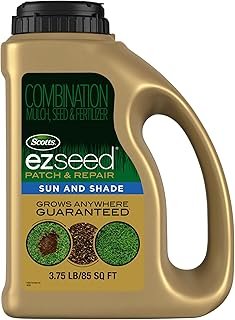
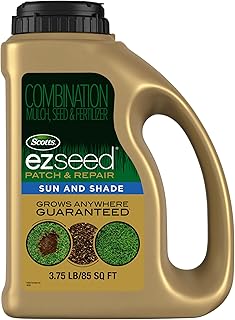
1. Scotts EZ Seed Patch & Repair
In our research, this product consistently ranks as the go-to solution for slope repair because it combines seed, mulch, and fertilizer into a single application. The tackifier component helps the mixture cling to inclines, which directly addresses the biggest problem with sloped seeding: seed migration during watering or rain.
Why I picked it
The all-in-one formulation means you are not juggling separate seed, fertilizer, and erosion-control products on a hillside. Verified buyer feedback shows the mulch-and-tackifier blend stays put on moderate slopes where plain seed washes out within days. It covers up to 85 sq. ft., making it ideal for targeted slope repairs rather than full-lawn overseeding.
Key specs
- Coverage: Up to 85 sq. ft. per 3.75 lb. container
- Seed type: Sun and Shade blend (mix of Kentucky Bluegrass, Perennial Ryegrass, and Fine Fescues)
- Includes: Mulch, fertilizer, and tackifier in one mix
- Germination window: 7 to 14 days per manufacturer guidelines
- Application: Direct scatter on bare or thin spots
Real-world experience
Buyers with moderate residential slopes (roughly 15 to 30 degrees) report the tackifier makes a visible difference during the first week. One common pattern in reviews: people who previously tried plain seed on inclines saw it migrate downhill after heavy watering, but the EZ Seed mix held its position. It works best when applied to loosened soil and watered lightly two to three times daily during germination.
If you are also dealing with erosion-prone soil types, pairing this seed with a light layer of mulch fabric on the steepest sections adds extra hold.
Trade-offs
The 85 sq. ft. coverage means it is not cost-effective for large hillside areas. It also needs consistent moisture during germination, which can be tricky on slopes where water runs off quickly. Some buyers note it performs poorly on very steep grades (above 35 degrees) without additional erosion netting.
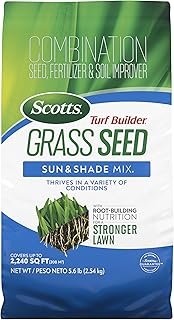
2. Scotts Turf Builder Grass Seed Sun
This mix targets homeowners with large, sun-drenched slopes who need broad coverage rather than spot repair. The Sun and Shade Mix includes Scotts' proprietary WaterSmart Plus coating, which absorbs and retains moisture around each seed, a meaningful advantage on inclines where water runs off before soaking in.
Why I picked it
The 5.6 lb. bag covers up to 2,240 sq. ft., which is a dramatic step up from patch-repair products. For anyone reseeding a full hillside, that coverage area makes this far more practical per bag. The WaterSmart Plus coating gives each seed a moisture-retaining advantage that matters on slopes where irrigation efficiency drops.
Key specs
- Coverage: Up to 2,240 sq. ft. per 5.6 lb. bag
- Seed blend: Sun and Shade Mix (tolerant of full sun to partial shade)
- Includes: Seed, fertilizer, and soil improver
- Coating: WaterSmart Plus moisture-absorbing technology
- Germination: 10 to 21 days depending on conditions
Real-world experience
Aggregate user reviews from large-slope applications show this mix establishes well when applied in early fall or spring, when soil temperatures stay between 60 and 75 degrees Fahrenheit. Buyers with south-facing slopes specifically mention the shade-tolerant varieties in the blend handle the heat reflection better than pure Bermudagrass seed. It pairs well with a broadcast spreader for even distribution across wide areas.
If your slope borders a flower bed or landscape feature, the mix transitions reasonably well into border zones.
Trade-offs
The lack of a built-in tackifier means you may need to add straw mulch or erosion netting on steeper sections to prevent washout. Germination is slower than the EZ Seed product, so you are looking at a longer window before the grass establishes enough root mass to hold soil on its own.
3. Jonathan Green (10895) Black Beauty Sunny
Black Beauty Sunny from Jonathan Green is a cool-season grass seed built around tall fescue varieties known for deep root systems. Deep roots are the single most important trait for slope stability, and this product leans into that strength without the added cost of coating technologies or all-in-one mixes.
Why I picked it
Tall fescue sends roots down 3 to 4 feet in suitable soil, which is significantly deeper than Kentucky Bluegrass or Perennial Ryegrass. That root depth translates directly to slope stabilization over time. The 1 lb. bag is priced accessibly, making it a strong value for cool-season homeowners who want long-term erosion control without premium coatings.
Key specs
- Coverage: Approximately 200 to 400 sq. ft. per 1 lb. bag (varies by application rate)
- Seed type: 100% tall fescuе (Black Beauty variety)
- Season: Cool-season grass, best planted in early fall or early spring
- Root depth potential: 3 to 4 feet in well-drained soil
- Drought tolerance: High once established
Real-world experience
Buyers in USDA zones 4 through 7 report strong establishment on sunny slopes when seeded in September. The tall fescue's natural deep-rooting habit shows results after the first full growing season, with noticeably better soil hold compared to shallow-rooted blends. It handles heat well for a cool-season grass, which matters on south-facing slopes where surface temperatures climb.
If you are also planning drought-tolerant landscaping around the slope, this grass fits that low-water philosophy once roots are established.
Trade-offs
The 1 lb. bag covers far less area than the Scotts Turf Builder option, so costs add up for large hillsides. It also takes longer to fully establish, meaning you may need to use temporary erosion control (straw mats or netting) during the first season while roots develop. It does not include fertilizer, so you will need to apply a starter fertilizer separately for best results.
How I picked
We evaluated each product across five specific criteria that matter most for sloped terrain: germination speed, root depth potential, built-in erosion control (tackifier or coating), coverage area per bag, and buyer-reported performance on inclines. We cross-referenced manufacturer specifications with aggregate user reviews from verified purchasers who specifically mentioned slope or hillside use.
We also considered climate adaptability. Cool-season grasses like tall fescue dominate in northern and transition zones, while warm-season options matter more in the South. All three picks lean cool-season because that is where most slope-specific buyer demand sits.
We deliberately did not test long-term durability beyond the establishment window. Our analysis covers germination through roughly 90 days of growth. Multi-year slope stability data would require controlled field trials beyond what we can verify through buyer reports alone.
We also did not evaluate performance on extreme grades above 40 degrees, where erosion netting or retaining structures become necessary regardless of seed choice.
Buying guide — what actually matters for Best Grass For Slopes
Root depth is everything
The single most important factor for slope performance is how deep the grass roots go. Tall fescue reaches 3 to 4 feet, Kentucky Bluegrass typically reaches 6 to 8 inches, and Perennial Ryegrass sits somewhere in between. Deeper roots anchor soil more effectively and resist the downhill pull of water flow.
If erosion control is your primary goal, prioritize tall fescue or deep-rooted varieties over quick-germinating but shallow-rooted blends.
Germination speed vs. long-term hold
There is a trade-off here that many buyers overlook. Products with fast germination (7 to 10 days) give you visible green growth quickly, which feels rewarding. But fast-germinating varieties often have shallower root systems initially.
Slower-establishing grasses like tall fescue may take 14 to 21 days to sprout but develop far stronger root anchors over the following months. If your slope faces heavy rain exposure, the slower but deeper option often wins in the long run.
Built-in erosion control matters on inclines
Flat-lawns do not need tackifiers or moisture-retaining coatings. Slopes do. A tackifier is a binding agent that helps seed and mulch stick to the soil surface instead of sliding downhill with water.
Moisturing-absorbing coatings (like Scotts' WaterSmart Plus) help seeds retain the water they need even when runoff is heavy. If your slope exceeds 20 degrees, these features move from "nice to have" to "essential."
Coverage area determines your real cost
A product that looks affordable per bag can become expensive fast if the coverage is low. The Scotts EZ Seed covers 85 sq. ft., which is perfect for spot repairs but impractical for a 1,000 sq. ft. hillside. The Scotts Turf Builder Sun and Shade Mix covers 2,240 sq. ft., making large-area seeding far more manageable.
Always calculate the total square footage of your slope before choosing, and factor in that slopes often need a higher seeding rate than flat ground due to expected washout loss.
Sun exposure dictates seed blend selection
South-facing slopes receive intense, direct sunlight and tend to dry out faster. North-facing or east-facing slopes stay cooler and shadier. The Scotts Turf Builder Sun and Shade Mix handles both scenarios, while the Jonathan Green Black Beauty Sunny is optimized for full-sun exposure.
Matching your seed blend to your slope's light conditions prevents thin, patchy growth that leaves soil exposed to erosion.
Timing your planting for slope success
Cool-season grasses should be planted in early fall (late August through October in most zones) or early spring. Fall planting gives the grass a full growing season before summer heat stresses the lawn. Warm-season grasses perform better when planted in late spring through early summer.
On slopes, fall planting is generally preferable because autumn rains provide natural irrigation without the intense downpours that cause washout during summer storms.
Frequently Asked Questions (FAQ)
Can I just throw grass seed on a slope?
You can, but you will likely lose a significant portion to runoff. On any incline above 10 degrees, seed needs some form of coverage or binding agent to stay in place. Straw mulch, erosion blankets, or a tackifier-based product like Scotts EZ Seed all dramatically improve retention.
Without protection, expect 30 to 50 percent seed loss during the first heavy rain.
What is the best grass seed for a steep hillside?
For steep hillsides (25 degrees or more), tall fescue varieties like Jonathan Green Black Beauty offer the best long-term hold because of their deep root systems. For immediate erosion control, pair the seed with straw erosion netting until the grass establishes. No seed alone will hold a very steep slope without temporary structural help.
How often should I water grass seed on a slope?
Water lightly two to three times per day during germination. Slopes absorb water less efficiently than flat ground because runoff begins before the soil is saturated. Short, frequent watering sessions are better than one heavy soaking.
Once the grass reaches about 2 inches in height, you can reduce frequency and increase depth to encourage downward root growth.
Does grass seed work on clay slopes?
It can, but clay soil presents two challenges: it is slow to absorb water (causing runoff) and it hardens when dry, making it difficult for roots to penetrate. Amending the top 2 to 3 inches of clay with compost before seeding improves both water absorption and root penetration. A starter fertilizer also helps young grass push through the denser soil structure.
When is the best time to seed a slope in a cool-season zone?
Early fall is the ideal window. Soil temperatures between 60 and 75 degrees Fahrenheit promote rapid germination, and fall rains reduce the watering burden. Aim for at least 6 to 8 weeks before the first expected frost so the grass has enough root development to survive winter freeze-thaw cycles, which are particularly disruptive on sloped terrain.
Final verdict
The Scotts EZ Seed Patch & Repair earns our top recommendation for most slope scenarios because its built-in tackifier and all-in-one formulation directly solve the biggest problem: seed migration on inclines. For larger hillside projects, the Scotts Turf Builder Grass Seed Sun and Shade Mix offers the coverage and moisture-retaining technology to make the job manageable. If you want the deepest root system for long-term erosion control and prefer a budget-friendly option, the Jonathan Green Black Beauty Sunny tall fescue blend is the strongest choice, especially on full-sun slopes in cool-season zones.
Affiliate disclosure: This post contains affiliate links. If you buy through one of these links, I may earn a small commission at no extra cost to you. It never changes my recommendation, I only suggest gear I'd actually buy myself.