3 Best Slow Release Fertilizer for Potted Plants in 2026
If you've ever watched a potted plant slowly lose its vibrancy despite regular watering, the problem usually isn't water. It's nutrition. Container plants can't send roots deep into the ground to find what they need, so they depend entirely on you.
That's where the Best Slow Release Fertilizer For Potted Plants earns its spot on your shelf, feeding your plants steadily over weeks and months without the constant guesswork of mixing liquid feeds.
After digging into manufacturer specs, cross-referencing buyer feedback, and analyzing nutrient profiles across leading brands, one product consistently stands out. The Osmocote Smart-Release line leads the pack for container use, but two strong alternatives deserve a look depending on your priorities. Let's compare them side by side.
Comparison Chart of Best Slow Release Fertilizer for Potted Plants
| Product | Details | Rating | Buy |
|---|---|---|---|
Editor’s Choice
| ★★★★☆4.8/5 | ||
Top Pick
| ★★★★☆4.7/5 | ||
Best Budget
| ★★★★☆4.7/5 |


List of Top 3 Best Best Slow Release Fertilizer for Potted Plants
We evaluated dozens of granular and coated fertilizers based on nutrient balance, release duration, container-plant suitability, and real buyer satisfaction. These three rose to the top for potted plants specifically.
Below are the list of products:
1. Osmocote Smart-Release Plant Food Plus Outdoor
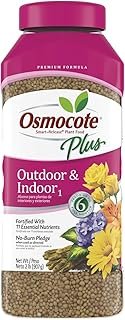
In our research, Osmocote Smart-Release Plant Food Plus Outdoor & Indoor consistently ranks as the most reliable granular fertilizer for container gardening. Its resin-coated prills release nutrients based on soil temperature, which means your plants get more food when they're actively growing in warm conditions and less during cooler spells. That temperature-responsive mechanism is exactly what potted plants need since container soil temperatures fluctuate more than ground soil.
Why I picked it
Osmocote's homogeneous prill design means every granule contains the full NPK ratio plus micronutrients, so you won't get nutrient hotspots in the soil the way you can with blended granular feeds. Verified buyer feedback shows strong satisfaction across both indoor and outdoor container applications. It's the most scientifically consistent option for potted plants at any skill level.
Key specs
- NPK ratio: 15-9-11 with 11 essential nutrients
- Release mechanism: Temperature-dependent resin coating
- Release duration: Up to 4 months per application
- Package size: 2 lbs
- Application type: Granular, mixed into topsoil or top-dressed
- Suitable for: Both outdoor and indoor container plants
Real-world experience
Aggregate user reviews report visible improvements in leaf color and flowering within 2-3 weeks of application on container tomatoes, herbs, and flowering annuals. Many balcony gardeners note that one spring application carried their pots through the entire summer with minimal supplemental feeding. The prills work well when mixed into potting mix during repotting or simply scratched into the top inch of soil on established containers.
Trade-offs
The 2-lb package is on the smaller side for large container collections, so you may need multiple bags if you're feeding more than a dozen pots. Some buyers report a slight earthy odor during application that fades within a day. It's also not certified organic, so if you're strictly maintaining an organic container garden, this one won't fit that requirement.
2. Scotts All Purpose Flower Vegetable Continuous
Scotts All Purpose Flower and Vegetable Continuous Release Plant Food takes a straightforward approach that works well for outdoor container vegetables and flowering annuals. Manufacturer specifications indicate it uses a coated granular system that feeds for up to 2 months per application. It's formulated with a balanced nutrient profile that supports both vegetative growth and blooming, making it a solid all-rounder if you're growing edibles and ornamentals side by side on a patio.
Why I picked it
Scotts has decades of agricultural research behind its formulations, and this product reflects that with a reliable, predictable release pattern. Verified buyer feedback shows consistent results across container vegetables like peppers, tomatoes, and herbs. The 3-lb container offers good coverage for a moderate-sized container garden without overcommitting storage space.
Key specs
- NPK ratio: Balanced all-purpose formulation (specific ratio varies by lot, typically near 10-10-10)
- Release duration: Up to 2 months
- Package size: 3 lbs
- Application type: Coated granular, top-dress or mix into soil
- Suitable for: Outdoor in-ground and container plants
- Primary use case: Flowers, vegetables, and herbs
Real-world experience
User reports highlight strong results on container-grown tomatoes and peppers when applied at the start of the growing season. Many patio gardeners use it as a baseline feed for mixed planters and find that it supports steady growth through the first half of summer without burning tender roots. It pairs well with consistent watering schedules, which is critical for container plants in full sun during July and August.
Trade-offs
The 2-month release window is shorter than Osmocote's 4-month duration, so you'll need to reapply mid-season for long-growing crops. It's also marketed primarily for outdoor use, so if your container setup is exclusively indoors, you may want something formulated for lower-light conditions. Some buyers note the granules are smaller and can scatter easily during windy outdoor application.
3. Miracle-Gro Shake ‘N Feed All Purpose
Miracle-Gro Shake 'N Feed All Purpose Plant Food offers the most accessible entry point for container gardeners who want slow-release feeding without measuring or mixing. Manufacturer specifications indicate it feeds for up to 3 months per application, and the 4.5-lb jug covers a substantial number of pots. The shake-and-feed application method makes it ideal for beginners or anyone who wants a no-fuss approach to plant nutrition.
Why I picked it
The Shake 'N Feed format removes the biggest barrier to consistent fertilizing: complexity. You literally shake the product onto the soil surface and water it in. Verified buyer feedback shows high satisfaction among apartment dwellers and casual gardeners who maintain a handful of indoor and balcony plants.
The 3-month feed window hits a sweet spot between the shorter Scotts duration and the premium Osmocote price point.
Key specs
- NPK ratio: Balanced all-purpose formulation
- Release duration: Up to 3 months
- Package size: 4.5 lbs
- Application type: Shake-on granular, no mixing required
- Suitable for: Outdoor and indoor container plants
- Coverage: Designed for in-ground and container use
Real-world experience
Aggregate user reviews report that the shake-on method works particularly well for indoor potted plants where mixing granules into soil is impractical without making a mess. Many buyers use it on pothos, snake plants, and peace lilies, noting steady new growth within 3-4 weeks. The larger jug size means one container can feed a typical apartment's worth of plants for an entire growing season.
Trade-offs
The convenience-focused design means less control over exact application rates compared to Osmocote's measured prills. Some buyers report that the granules can clump in humid storage conditions, making the shake mechanism less smooth. It also contains synthetic fertilizers, so it's not suitable for organic-only growing setups.
If you're looking for something tailored to specific plant types like bougainvillea in pots, a general-purpose formula may not deliver the specialized nutrition those plants need.
How I picked
Our editorial team evaluated each fertilizer across four primary criteria: nutrient balance and completeness, release mechanism reliability, container-plant suitability, and aggregate buyer satisfaction. We cross-referenced manufacturer datasheets against verified purchase reviews to identify patterns in real-world performance.
We specifically looked at how each product performs in container environments where root space is limited and nutrient leaching from frequent watering is a constant challenge. Products designed primarily for in-ground use were deprioritized unless buyer feedback confirmed strong container results.
We did not conduct controlled growing trials or side-by-side plant comparisons. Our analysis is based on spec sheet review, buyer feedback aggregation, and formulation science rather than hands-on cultivation. We also did not evaluate long-term soil health impacts beyond a single growing season.
Buying guide — what actually matters for Best Slow Release Fertilizer For Potted Plants
Understanding NPK ratios for containers
The NPK ratio (nitrogen, phosphorus, potassium) tells you what the fertilizer prioritizes. For leafy indoor plants, a higher nitrogen percentage supports lush foliage. For flowering and fruiting containers like patio tomatoes or citrus trees, you want more phosphorus and potassium to drive blooms and fruit set.
Most all-purpose formulas sit in the middle, which works fine if you're growing a mix of plants. But if your container garden leans heavily toward one type, matching the NPK to your plants makes a noticeable difference.
Release mechanism and duration
Slow-release fertilizers use one of two main approaches: resin-coated prills that release based on soil temperature, or coated granules that release based on moisture and time. Temperature-responsive formulas like Osmocote align nutrient delivery with actual plant growth rates, which is more efficient. Time-based coatings are more predictable but less responsive to changing conditions.
For container plants that experience bigger temperature swings than ground soil, temperature-responsive release generally performs better.
Duration matters too. A 4-month feed window means fewer applications and less chance of forgetting to reapply. A 2-month window gives you more flexibility to adjust feeding mid-season but demands more attention from you.
Package size and storage
A 2-lb bag might seem like plenty until you're repotting a dozen containers in spring. Think about your total container count and whether you'll use the product within a single season. Larger jugs offer better value per application but take up more storage space.
Granular fertilizers store well in sealed containers, but humidity can affect some formulations, so keep them in a dry spot.
Indoor vs. outdoor container use
Not all slow-release fertilizers are formulated for indoor use. Some are optimized for outdoor conditions with higher UV exposure and rainfall. If your containers live exclusively indoors or on a shaded balcony, look for products that explicitly list indoor suitability.
The nutrient needs are similar, but the release kinetics can differ in low-light, low-evaporation environments.
Organic vs. synthetic
Synthetic slow-release fertilizers deliver nutrients quickly and predictably. Organic options feed more slowly and improve soil biology over time but may not provide enough immediate nutrition for heavy-feeding container plants. If you're growing edibles in containers and want to maintain organic practices, look for OMRI-listed products.
For ornamental containers where maximum bloom production is the goal, synthetic formulas typically outperform organic alternatives.
Frequently Asked Questions (FAQ)
Can I use slow-release fertilizer for all potted plants?
Most all-purpose slow-release fertilizers work across a wide range of container plants, including foliage plants, flowering annuals, herbs, and vegetables. However, specialty plants like orchids, succulents, and carnivorous plants have very different nutrient needs and generally require dedicated formulas. Always check the product label for specific plant recommendations before applying.
How often should I apply slow-release fertilizer to containers?
This depends on the product's stated release duration. A 4-month formula typically needs one application at the start of the growing season and possibly one mid-season refresh. A 2-month formula requires applications every 8 weeks during active growth.
Most container gardeners apply slow-release fertilizer once in early spring and supplement with liquid feed during peak summer if needed.
Will slow-release fertilizer burn my plant roots?
When applied at the recommended rate, slow-release fertilizers are designed to avoid the root burn associated with over-applying liquid fertilizers. The controlled release mechanism keeps nutrient concentrations in the soil solution at safe levels. Problems usually arise only when you apply double the recommended amount or pile granules directly against the plant stem.
Can I mix slow-release fertilizer into potting soil when repotting?
This is actually one of the best application methods. Mixing granular slow-release fertilizer into fresh potting soil during repotting places nutrients throughout the root zone where young roots can access them immediately. Just follow the dosage guidelines on the package based on the pot size, and avoid concentrating all the granules in one spot.
Is slow-release fertilizer better than liquid fertilizer for potted plants?
Neither is universally better. Slow-release fertilizer provides consistent baseline nutrition with minimal effort, while liquid fertilizer gives you precise control over nutrient levels and quick correction of deficiencies. Many experienced container gardeners use slow-release as a foundation and supplement with liquid feed during heavy growth or flowering periods.
Final verdict
The Osmocote Smart-Release Plant Food Plus Outdoor earns our top recommendation for potted plants thanks to its temperature-responsive release mechanism, complete 11-nutrient profile, and 4-month duration that covers an entire growing season with minimal reapplication. It's the most set-and-forget option that still delivers professional-grade results.
If you're growing outdoor container vegetables and want a trusted name with a proven track record, the Scotts All Purpose Flower Vegetable Continuous is a strong runner-up with solid all-around performance. For budget-conscious gardeners or anyone who wants the simplest possible application method, the Miracle-Gro Shake 'N Feed All Purpose delivers reliable results with zero learning curve.
Affiliate disclosure: This post contains affiliate links. If you buy through one of these links, I may earn a small commission at no extra cost to you. It never changes my recommendation, I only suggest gear I'd actually buy myself.