Guide to Annual Lawn Maintenance Calendar: Explained Simply
Every spring, someone buys a bag of fertilizer, throws it down on a random Saturday, and wonders why their lawn still looks patchy by July. Timing is everything with grass. It's not about working harder.
It's about working in the right season. An Annual Lawn Maintenance Calendar isn't a luxury for obsessive gardeners. It's the single most effective tool for turning a so-so lawn into the one neighbors slow down to look at.
Per soil science standards from university turfgrass programs, cool-season grasses and warm-season grasses operate on completely different biological clocks. Applying spring fertilizer in March works beautifully for fescue in Ohio. Do that same thing to Bermuda grass in Texas, and you're feeding weeds instead of your lawn.
The calendar changes based on where you live and what you're growing. Let's break it down by your actual situation.
Quick Answer
An annual lawn maintenance calendar schedules every task by season and grass type. Cool-season lawns get heavy work in spring and fall. Warm-season lawns peak in late spring and summer.
The calendar shifts by climate zone. Soil temperature drives timing for fertilizer, pre-emergent, and seeding. Follow your grass type and region, not a generic date.
Why a One-Size-Fits-All Calendar Will Wreck Your Lawn
The biggest mistake homeowners make is following a national lawn care schedule they found online. A calendar written for Kentucky won't work in Arizona. It doesn't even work for Kentucky if you're dealing with a shady backyard or clay soil.
Here's the core problem. Grass is a living plant with two completely different growth cycles. Cool-season grasses (fescue, bluegrass, ryegrass) grow actively in spring and fall, go dormant or stressed in summer heat, and green up again when temperatures drop.
Warm-season grasses (Bermuda, Zoysia, St. Augustine) do the opposite. They love heat, grow like crazy from late spring through summer, and go brown when soil temps fall below 50°F.
A generic calendar tells you to aerate in spring. That's great for cool-season grass. For warm-season grass, spring aeration disrupts root growth right when it needs to strengthen for summer.
You've just set yourself back weeks.
The fix is simple: build your calendar around your grass type first, your climate zone second, and your specific lawn conditions third. Everything else flows from those three decisions.
First, Know Your Grass Type – Cool-Season vs. Warm-Season vs. Transition Zone
This is the fork in the road. Pick the wrong path, and your whole year goes sideways.
Cool-season grasses thrive when soil temperatures sit between 50°F and 65°F. That means their peak growth happens in April, May and again in September, October. These grasses need heavy fertilization in early spring and again in fall.
They go semi-dormant in July and August. If you water them through a heat wave, they'll survive. If you don't, they'll go brown and wait for cooler weather.
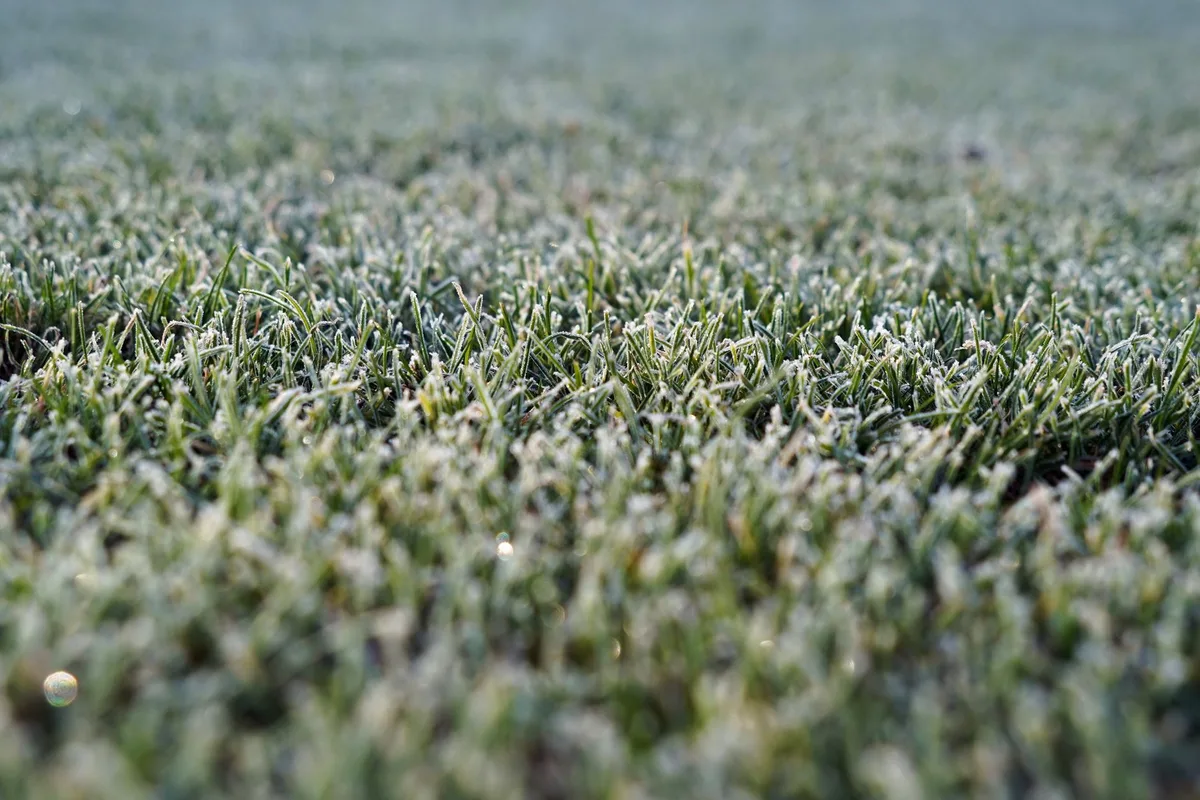
Warm-season grasses need soil temperatures above 65°F to wake up. Their big growth window runs from May through August. They take full sun.
They shrug off drought better than cool-season types. But they go brown as soon as nighttime temps drop into the 40s. If you overseed warm-season grass in fall the way you would fescue, you're wasting seed and money.
The transition zone is the tricky middle. It roughly runs from the Mid-Atlantic down through the Ohio Valley and across to the Pacific Northwest. In this zone, you can grow either type, but neither is perfectly happy.
Many homeowners here plant tall fescue (a durable cool-season grass that handles heat better than bluegrass) or a warm-season grass like Zoysia that tolerates some cold. Your calendar depends on which one you chose.
If you're not sure what you have, dig up a small clump and look at the leaf blade. Cool-season grasses have a distinct boat-shaped tip. Warm-season grasses come to a sharper point.
Or just ask your local cooperative extension office. They'll tell you in 30 seconds.
Your Climate Zone Changes Everything – Quick Guide to Timing
Once you know your grass type, you need to calibrate your calendar to your region. The same grass behaves differently in the Pacific Northwest versus the Deep South.
Here's a simplified breakdown by region. Use it as a starting point, then adjust based on your actual soil temperature readings.
| Region | Grass Type | Active Growth | Dormancy Period | Best Aeration Window |
|---|---|---|---|---|
| Northeast / Midwest | Cool-season | April–May, Sept–Oct | Late June–August | Late August to mid-September |
| Southeast / Gulf Coast | Warm-season | May–August | November–March | Late April to early June |
| Pacific Northwest | Cool-season | March–May, Sept–Nov | July–August | Late August to early October |
| Southwest / Desert | Warm-season | May–September | November–March | Late May to early July |
| Transition Zone | Mixed | Varies by grass | Varies by grass | Check your specific grass type |
The key metric to watch is soil temperature. You can buy a cheap soil thermometer at any garden center. Stick it two inches deep in a bare patch of soil first thing in the morning.
That number tells you far more than a calendar date.
For pre-emergent herbicides, apply when soil temps hit 50°F to 55°F for cool-season lawns. For warm-season lawns, wait until temps reach 65°F. Do this too early, and the chemical breaks down before weeds germinate.
Do it too late, and the weeds have already popped.
Spring Wake-Up – Pre-Emergent, First Mow, and Soil Prep
Spring is the most overhyped season in lawn care. Everyone wants to do everything at once. Slow down.
For cool-season lawns, spring is a maintenance window, not a renovation window. The grass is waking up from winter dormancy. It needs a light feeding, not a heavy one.
Apply a slow-release fertilizer with a ratio around 20-0-5 or something similar. Skip the high-nitrogen blast. That pushes fast, weak growth that burns out in summer heat.
Mow for the first time when the grass reaches about three and a half inches tall. Never cut off more than one-third of the blade length in a single mow. Scalping in spring, cutting it down to an inch, stresses the roots and opens the door for weeds.
If you skipped fall clean-up, rake out any dead matted grass now so air can reach the soil.
For warm-season lawns, spring is when things actually happen. Wait until the grass is at least 50% green before you do anything. That usually means soil temperatures above 65°F for several days.
Then scalp it down to about one inch, bag the clippings, and apply a pre-emergent. Follow up with a fertilizer high in nitrogen, something like 30-0-0 or a comparable ratio. Warm-season grass needs that nitrogen to fuel its summer growth spurt.
Apply pre-emergent before crabgrass germinates. Crabgrass starts sprouting when soil temps hit 55°F for three consecutive days. If you miss that window, you're fighting weeds all summer.
Check the right oil level on your mower before the first cut, replace the filter if it's clogged, and make sure the blade is sharp. Dull blades tear grass instead of cutting it, leaving ragged edges that turn brown.
If you had fungus issues last year, consider applying a preventative fungicide around the same time. University extension research shows that preventative applications in early spring are far more effective than trying to cure an active infection in July. The best fungicide for lawns depends on your specific disease pressure, but a general broad-spectrum product applied at the right time can save you a lot of headache.
Late Spring to Summer – Watering Deep, Raising the Blade, and Feeding Smart
By late May, the season splits hard depending on your grass type.
Cool-season lawns are heading into their stress window. The air is warming up, but the grass wants to slow down. Your job now is to keep it alive, not make it look perfect.
Raise your mowing height to three and a half or even four inches. Taller grass shades the soil, holds moisture longer, and develops deeper roots. Mow less frequently.
If the grass isn't growing much, you don't need to cut it. Every mow in summer is a stress event. Minimize them.
Water deeply and infrequently. One inch of water per week, applied in a single session early in the morning, is better than a light sprinkle every evening. Deep watering pushes roots downward.
Shallow watering keeps roots at the surface, where they dry out faster. If you have an irrigation system, set it to run between 4 AM and 8 AM. Evening watering leaves the lawn wet overnight, which invites fungus.
For warm-season lawns, this is prime time. They're in full growth mode. Mow frequently, every five to seven days, at the correct height for your variety.
Bermuda grass can be cut as low as one inch. St. Augustine needs two and a half to three inches.
Know your grass and stick to its height range.
Fertilize warm-season lawns again in early summer. Use a balanced fertilizer with a ratio like 15-5-10 or something similar. Slow-release nitrogen is better here because it feeds the lawn steadily through the heat.
A single fast-release application can cause a growth surge that outpaces your mowing schedule.
Watch for signs of drought stress. Grass that folds over or shows footprints long after you walk on it needs water. But don't water just because the calendar says to.
Let the lawn tell you. If you've been watering once a week and the grass looks fine, stick with it. Overwatering in summer causes more problems than underwatering.
Avoid applying any weed killer during heat waves. Temperatures above 85°F can cause post-emergent herbicides to damage the grass itself. If you have broadleaf weeds spot them out when temps are below 80°F.
If you're dealing with a serious infestation, wait until fall when the grass can handle treatment better.
The Golden Window: Fall – Aeration, Overseeding, and Winterizer
Fall is when you actually build next year's lawn. Everything you do in spring and summer buys you time. Fall makes progress.
For cool-season lawns, September and October are the most important weeks of the year. The air is cool. The soil is still warm.
Grass is in active growth mode. Weeds are slowing down. It's the perfect storm for renovation.
Core aeration is the single highest-impact thing you can do for a cool-season lawn. Rent a core aerator from a local hardware store. Run it over the lawn in two directions.
The machine pulls out plugs of soil about two to three inches long. Those plugs break down naturally over a few weeks.
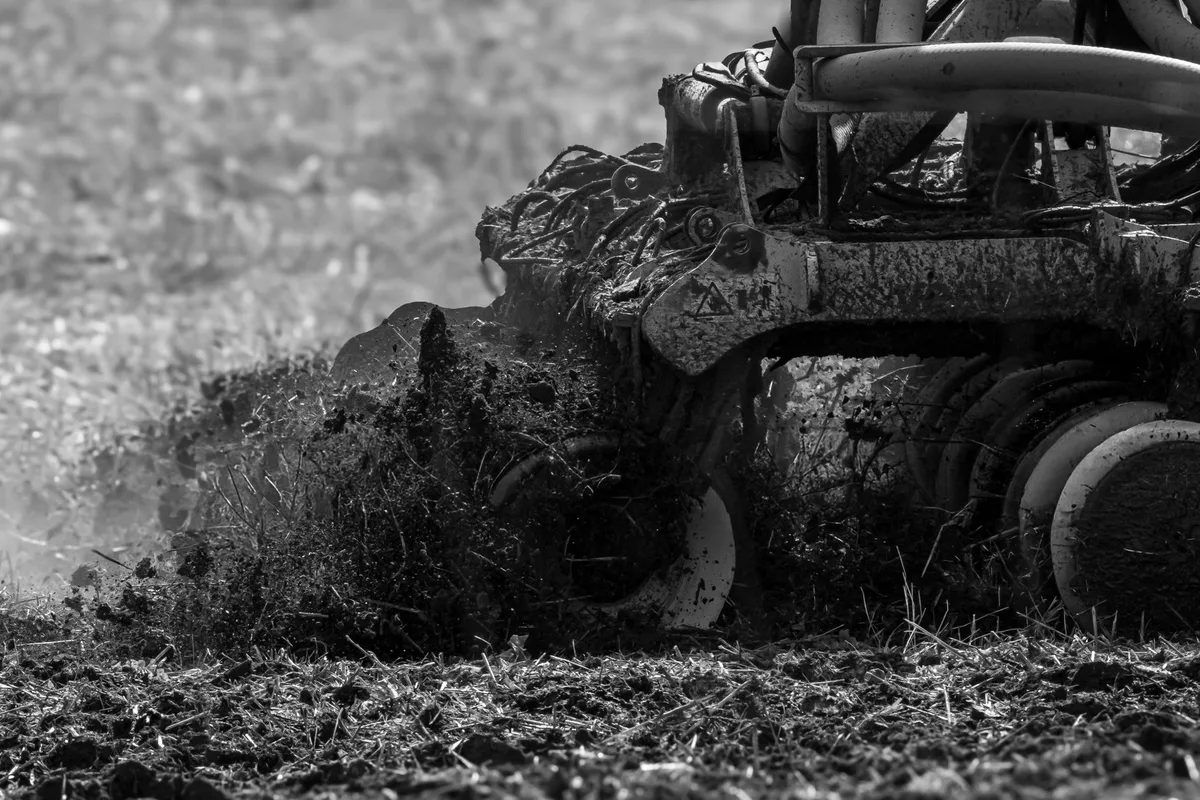
Aeration relieves soil compaction, improves water penetration, and creates perfect seed-to-soil contact for overseeding. If your lawn is thin or patchy, overseed immediately after aeration. Spread seed at the rate recommended on the bag for your grass type.
Keep the seed moist for the first two to three weeks. Don't let it dry out.
Apply a fall fertilizer with a higher potassium content. Potassium helps the grass store energy for winter and improves cold tolerance. A ratio like 18-5-12 works well.
This is called a winterizer application. Do it after the last mow but before the ground freezes.
For warm-season lawns, fall is a wind-down period. Stop fertilizing six to eight weeks before the first expected frost. Let the grass go dormant naturally.
Do not overseed warm-season grass in fall unless you plan to over-seed with a temporary cool-season rye. That gives you green color through winter but adds work in spring when you have to kill off the rye.
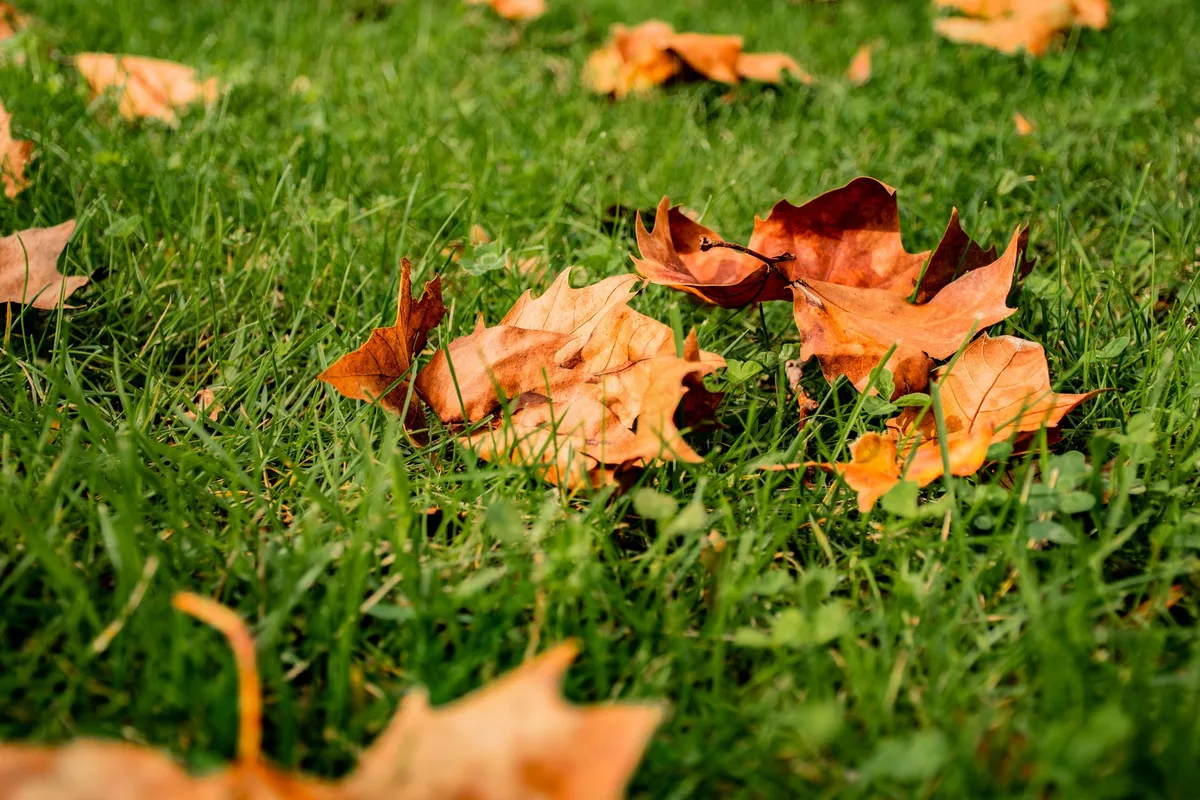
Don't skip fall clean-up. Leaves left on the lawn block sunlight and trap moisture, which leads to snow mold or fungal patches. Rake or mulch them.
If you have a lot of trees, a leaf rake or a mulching mower works fine. The right rake for pine needles is different from a standard leaf rake, so choose based on what's in your yard.
Winter Dormancy – What to Do (and Not Do) When Grass Goes Brown
Winter looks empty, but it's not a time to ignore the lawn entirely.
For cool-season lawns, the grass is green but mostly stopped growing. You don't need to mow. Stay off the lawn when it's frozen or wet.
Foot traffic on frozen grass can break the leaf blades and damage the crowns. If you must walk on it, wait until the ground thaws.
Keep the lawn clear of debris. Branches, fallen leaves, and toys left out over winter can smother the grass underneath. Once spring comes, those spots will be yellow or dead.
Limit salt use on driveways and walkways near the lawn. Rock salt runoff kills grass at the edges. If you need ice melt, look for products labeled as pet-safe or lawn-safe.
Calcium chloride is gentler than sodium chloride.
For warm-season lawns, the grass is fully brown and dormant. Leave it alone. Do not fertilize.
Do not water. Do not aerate. The grass is sleeping.
Disturbing it now does nothing useful.
If you live in a transition zone with tall fescue, your lawn may stay green all winter. That's fine. Just keep it mowed at a lower height, around two inches.
If snow covers the lawn for more than a couple of weeks, check for snow mold once it melts. Snow mold looks like circular patches of matted, crusty grass. Rake it out gently in spring to help recovery.
Mowing Heights and Frequencies – The Cheat Sheet for Every Season
Mowing height is not a one-size-fits-all number. It changes by grass type and by season.
| Grass Type | Spring Height | Summer Height | Fall Height |
|---|---|---|---|
| Kentucky Bluegrass | 2.5–3 inches | 3–4 inches | 2.5–3 inches |
| Tall Fescue | 3–3.5 inches | 3.5–4 inches | 3–3.5 inches |
| Perennial Ryegrass | 2–2.5 inches | 2.5–3 inches | 2–2.5 inches |
| Bermuda | 0.5–1.5 inches | 1–2 inches | 0.5–1.5 inches |
| Zoysia | 1–2 inches | 1.5–2.5 inches | 1–2 inches |
| St. Augustine | 2.5–3 inches | 3–4 inches | 2.5–3 inches |
The one-third rule applies every single mow. Never cut more than one-third of the leaf blade at once. If the grass got too tall between cuts, mow twice.
Lower the blade, cut a little, raise it back up a day later, and cut again to your target height.
Mowing frequency follows growth rate. In spring, you might mow every five days. In summer, maybe every seven to ten for cool-season grass.
In fall, back to every five or six days. Let the grass tell you, not the calendar.
Keep the blade sharp. A sharp blade makes a clean cut. A dull blade tears the grass.
Torn grass loses more water and turns brown at the tips. Sharpen your blade at least twice per season, or every 25 hours of mowing. It's a simple DIY repair that most homeowners can do with a file and a clamp.
Get a quick start on the season by handling mower maintenance before the first cut.
Fertilizer Timing by Season – N-P-K Ratios That Actually Match Growth
Fertilizer is not food. Grass makes its own food through photosynthesis. Fertilizer provides the nutrients the grass needs to build cells, roots, and blades.
Different seasons call for different nutrient mixes.
Early spring (cool-season): Apply a balanced or low-nitrogen fertilizer. The goal is to wake the grass up without pushing runaway growth. A ratio like 10-10-10 or 20-5-10 works.
Use slow-release nitrogen so the grass gets a steady supply over six to eight weeks.
Late spring (warm-season): Apply a high-nitrogen fertilizer. The grass is coming out of dormancy and needs a strong push. Use 30-0-0 or a comparable high-nitrogen blend.
Fast-release can work here, but slow-release is safer if you're not monitoring closely.
Summer (cool-season): No fertilizer. The grass is stressed. Feeding it now forces growth it can't support in the heat.
Wait until September.
Summer (warm-season): One more application in early to mid-summer. Use a balanced ratio like 15-5-10. Avoid fertilizing during drought or extreme heat.
If the lawn is stressed, skip it.
Fall (cool-season): This is the most important feeding of the year. Use a winterizer formula high in potassium. A ratio like 18-5-12 helps the grass store energy for winter and green up faster in spring.
Apply four to six weeks before the first hard frost.
Fall (warm-season): No fertilizer. The grass is preparing for dormancy. Feeding now pushes tender growth that won't survive winter.
If you're using an organic slow-release fertilizer like a granular blend, the N-P-K ratio is usually lower than synthetic options. Organic fertilizers release nutrients based on soil temperature and microbial activity. They need warmer soil to work, so apply them earlier in the season than you would a synthetic product.
Our research shows that organic fertilizers produce slower but more consistent results over the long term.
Common Mistakes That Ruin a Year of Work
The difference between a great lawn and a frustrating one often comes down to a few avoidable errors.
Mowing too short. Scalping the lawn in spring or summer exposes soil to sunlight, which germinates weed seeds. Keep the mower deck at the recommended height for your grass type.
Watering every day. Frequent shallow watering creates weak roots and encourages fungus. Water twice a week at most, and only when the grass needs it. One inch per week total is the rule.
Fertilizing at the wrong time. Feeding cool-season grass in July wastes money and can burn the lawn. Feeding warm-season grass in October pushes growth that gets killed by frost. Match the season to the grass type.
Skipping soil tests. You might be applying fertilizer your soil doesn't need. A simple soil test tells you your pH and nutrient levels. Most state cooperative extension services offer tests for under 20 dollars.
Aerating at the wrong time. Aeration is stressful for grass. Doing it during peak growth helps recovery. Doing it during dormancy or heat stress delays recovery and encourages weeds.
Ignoring the pre-emergent window. If you miss the crabgrass window, you're fighting weeds all summer. Mark it on your calendar based on soil temperature, not a fixed date.
Quick Reference Table – Monthly Tasks by Grass Type and Region
This table condenses the full calendar into a quick scan.
| Month | Cool-Season Lawn | Warm-Season Lawn |
|---|---|---|
| March | Soil test, pre-emergent, light fertilizer | Wait for green-up, do nothing |
| April | First mow, spot weeds, water if dry | Pre-emergent, first fertilizer, scalping |
| May | Raise mowing height, deep watering | Mow frequently, fertilize again |
| June | Minimal mowing, water deeply, no fertilizer | Peak growth, mow every 5–7 days |
| July | Survival mode, water only, raise blade | Fertilize early month, watch for drought |
| August | Start planning fall tasks | Mow regularly, start reducing fertilizer |
| September | Core aeration, overseed, fertilize | Stop fertilizing, let grass slow down |
| October | Winterizer, final mow, clean leaves | Do nothing, prepare for dormancy |
| November | Last mow, winterize equipment | Dormant, stay off frozen grass |
| December–February | Keep clear of debris, avoid traffic | Leave completely alone |
Adjust by two to three weeks for your specific climate. Gulf Coast warm-season lawns start earlier than the same grass in North Carolina. Northern cool-season lawns start later than the same grass in Virginia.
What to Do This Weekend – A Decision Workflow Based on Your Current Lawn
Not sure what to do right now? Run through this quick decision tree. It picks the highest-priority task based on where you are right now.
Step 1: Is the grass green?
- Yes: Go to step 2.
- No: Is it warm-season grass? It's dormant. Leave it alone. Is it cool-season grass? It's stressed or dormant. Water deeply once.
Step 2: Is the grass actively growing?
- Yes: Go to step 3.
- No: Check soil temperature. If below 50°F for cool-season or below 65°F for warm-season, it's not time yet. Wait.
Step 3: Have you mowed this week?
- Yes: Go to step 4.
- No: Mow at the correct height for your grass type. Remember the one-third rule.
Step 4: Are weeds present?
- Yes: Are they broadleaf weeds? Spot treat with a selective post-emergent when temps are between 60°F and 85°F. Are they grassy weeds? Check if you missed your pre-emergent window.
- No: Go to step 5.
Step 5: Is it time for a feeding?
- Check the seasonal fertilizer table above. If you're in the window, apply the correct N-P-K ratio. If not, wait.
This process takes five minutes. It saves you from doing the wrong thing at the wrong time.
Frequently Asked Questions
How do I know my grass type without a test?
Look at the leaf tip. Cool-season grass has a boat-shaped tip. Warm-season grass has a pointed tip.
If you're still unsure, take a sample to your local cooperative extension office. They can ID it for free.
When should I apply pre-emergent in spring?
Apply when soil temperatures reach 50°F to 55°F for three consecutive days. That's the trigger point for crabgrass germination. Use a soil thermometer placed two inches deep.
Can I aerate in spring instead of fall?
You can, but it's usually better in fall for cool-season grass. Spring aeration can disrupt root growth and increase weed pressure. For warm-season grass, spring aeration right after green-up is fine.
Should I bag grass clippings or leave them?
Leave them unless they're clumping heavily. Grass clippings return nitrogen to the soil. Mulching clippings with a mulching mower is ideal.
Bag them if you're removing weeds or if the clippings are thick enough to smother the grass.
How do I fix brown patches in summer?
First, figure out the cause. Brown patches can be from drought, fungus, grubs, or dog urine. Water deeply for drought stress.
Apply a fungicide for fungal disease patterns. Check for grubs by lifting a patch of dead turf. If you see C-shaped white larvae, treat with an appropriate insecticide.
When is the last time I should fertilize?
For cool-season grass, apply winterizer about four to six weeks before the first hard frost. For warm-season grass, stop fertilizing at least six to eight weeks before the first expected frost. Late feeding pushes tender growth that winter kills.
Your Personal Lawn Calendar – The Decision Guide to Build It Right
Here's the final framework. Take these four steps, and you'll have a custom calendar for your lawn.
Identify your grass type. Cool-season or warm-season? If you're in the transition zone, pick one and commit. Tall fescue is the most forgiving choice for mixed climates.
Note your first and last frost dates. These are your bookends. Everything else fits between them. Your local weather service or cooperative extension posts these dates by town.
Mark the key windows on a physical calendar. Pre-emergent at soil temp triggers. Aeration in the correct season. Last fertilizer date. Use sticky notes or set phone reminders. Don't trust memory.
Adjust based on actual conditions. The calendar is a guide, not a law. If it's been a wet spring, your pre-emergent window might shift. If a heat wave hits early, hold off on fertilizer. Your lawn will tell you what it needs.
Building your own annual lawn maintenance calendar takes about an hour. That one hour saves you months of wasted effort. You'll spend less money on products you don't need.
You'll spend less time fighting problems you could have prevented. And you'll spend more time actually enjoying your lawn instead of worrying about it.