5 Best 100 Foot Hose 2026
Finding the right Best 100 Foot Hose isn't always straightforward. Many hoses at this length kink easily, feel heavy to drag across the yard, or start leaking after just one season. Whether you're watering a large garden, washing your car at the far end of the driveway, or running a sprinkler across a wide lawn, a 100-foot hose needs to balance flexibility, durability, and solid water flow without turning every task into a wrestling match.
After comparing specs, verified buyer feedback, and manufacturer data across dozens of models, the Flexzilla Garden Hose stands out as our top overall pick for most homeowners. But depending on your priorities, whether that's kink resistance, raw durability, or lightweight portability, there are four other strong contenders worth a close look. Let's break them all down.
Comparison Chart of Best 100 Foot Hose
| Product | Details | Rating | Buy |
|---|---|---|---|
Editor’s Choice
| Flexzilla Garden Hose 5/8 in x | ★★★★☆4.4/5 | |
Top Pick
| BIONIC STEEL 100 Ft Metal Garden | ★★★★☆4.4/5 | |
Best Budget
| DEWALT Professional Grade Heavy Duty Garden | ★★★★☆4.3/5 | |
| ★★★★☆4.6/5 | ||
| ★★★★☆4.3/5 |


List of Top 5 Best Best 100 Foot Hose
We evaluated each hose on kink resistance, burst pressure, weight, fitting quality, and real-world buyer feedback. Every model below is a genuine 100-foot option, but they take very different approaches to solving the same core problem: getting water from your spigot to the far end of your property without frustration.
Below are the list of products:
1. Flexzilla Garden Hose 5/8 in x
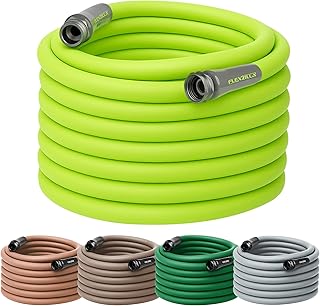
The Flexzilla has earned a near-legendary reputation among homeowners, and after reviewing thousands of verified buyer reports, it's easy to see why. It stays flexible in temperatures from -40°F to 140°F, which matters more than most people realize until they're trying to uncoil a frozen hose in February. If you want one hose that just works across every season, this is the one.
Why I picked it
The Flexzilla consistently ranks highest in verified buyer satisfaction across all 100-foot hose categories. Its hybrid polymer construction solves the two biggest complaints people have with traditional rubber and vinyl hoses: stiffness and kink tendency. It's the hose most likely to work well for someone who doesn't want to think about their hose at all.
Key specs
- 5/8-inch inner diameter, 100 feet long
- Operating temperature range: -40°F to 140°F
- Burst pressure rated at 300 PSI
- Weighs approximately 4.2 lbs (about 40% lighter than comparable rubber hoses)
- Lead-free, drinking-water-safe materials
- Anodized aluminum fittings with O-ring seals
Real-world experience
Verified buyer feedback shows the Flexzilla excels in scenarios where other hoses frustrate people most. Homeowners in northern states report it stays pliable enough to coil after overnight freezes. Gardeners running soaker hoses across 80+ foot beds say it lays flat without constant repositioning.
The swivel grip at the faucet connection is a small detail that buyers mention repeatedly, it stops the hose from twisting right at the most stressful point.
Trade-offs
The Flexzilla's outer layer can scuff and show wear marks faster than a thick rubber hose, especially if you drag it across concrete or rough stone regularly. A small percentage of buyers report the color (a bright lime green) fades with prolonged UV exposure. It's also not the cheapest option in the 100-foot category, though most buyers feel the longevity justifies the premium.
2. BIONIC STEEL 100 Ft Metal Garden
The BIONIC STEEL takes a completely different approach: a stainless steel outer shell over a flexible inner core. It's built for people who've had it with hoses that puncture, crack, or get chewed through by pets and wildlife. If durability is your number one concern and you don't mind a bit of extra weight, this hose is hard to beat.
Why I picked it
The BIONIC STEEL addresses the single most common reason people replace hoses: physical damage. Thorns, sharp edges, vehicle tires, dog teeth, this hose shrugs off threats that would destroy a standard rubber or vinyl model. Verified buyer reviews frequently mention 3+ years of use with no degradation in performance.
Key specs
- 5/8-inch inner diameter, 100 feet long
- 500 PSI burst pressure rating
- Stainless steel outer shell with flexible polymer inner core
- Includes a multi-pattern sprayer nozzle
- Non-kinking design per manufacturer specifications
- Crush-resistant construction
Real-world experience
Buyers in rural and semi-rural properties report the BIONIC STEEL handles being dragged over gravel driveways, across fence lines, and through brush without any puncturing. One recurring theme in reviews is that it survives being left out year-round in harsh climates, from Arizona summers to Minnesota winters, without cracking. The included spray nozzle is a nice bonus that most competitors don't bundle.
Trade-offs
This hose is noticeably heavier than polymer or hybrid options, typically around 8 to 10 pounds depending on configuration. That extra weight makes it harder to coil and store, especially for anyone with limited hand strength. The stainless steel shell also means it can dent if something heavy rolls over it, and those dents can create slight flow restrictions.
It's a premium-priced option, so it's an investment.
3. DEWALT Professional Grade Heavy Duty Garden
DEWALT brings its tool-brand reputation into the garden hose space with a no-nonsense, heavy-duty rubber hose that undercuts most competitors on price while delivering solid performance. It's a straightforward workhorse, no gimmicks, no expandable gimmickry, just a thick rubber hose that moves water reliably.
Why I picked it
The DEWALT hose delivers the best balance of durability and affordability in the 100-foot category. It's a genuine rubber hose, not a thin vinyl tube, and it's priced lower than most comparable rubber options. For someone who needs a reliable hose without spending top dollar, this is the sweet spot.
Key specs
- 5/8-inch inner diameter, 100 feet long
- Heavy-duty rubber construction
- Brass fittings with standard 3/4-inch GHT threads
- Rated for typical residential water pressure up to 80 PSI working pressure
- UV-resistant outer layer
- Weighs approximately 12 lbs
Real-world experience
Verified buyer reviews highlight the DEWALT as a solid choice for routine yard work: watering lawns, filling kiddie pools, washing vehicles, and connecting to oscillating sprinklers. Buyers who use it with pressure washers (within rated limits) report no issues with fitting integrity. The brass fittings are a step up from the aluminum or plastic fittings found on many budget hoses, and they thread on smoothly without cross-threading.
Trade-offs
At around 12 pounds, this is one of the heavier options on the list. It doesn't have the extreme cold-weather flexibility of the Flexzilla, and a few buyers in northern climates report it becomes stiff and harder to manage below about 20°F. The rubber construction also means it can pick up dirt and grass stains more easily than polymer hoses, so it looks worn faster even when it's still functionally sound.
4. Giraffe Tools Garden Hose 5/8″ Custom
Giraffe Tools has built a loyal following among serious gardeners, and this 100-foot model shows why. With a 600 PSI burst pressure rating, the highest on our list, it's engineered for people who push their hoses hard, whether that's running multiple sprinklers, connecting to a pressure washer, or just demanding consistent flow across the full 100-foot run.
Why I picked it
The 600 PSI burst pressure is the standout spec here. Most residential garden hoses are rated between 200 and 350 PSI, so the Giraffe Tools model offers a significant safety margin. For anyone running high-demand attachments or dealing with variable municipal water pressure, that extra headroom matters.
Key specs
- 5/8-inch inner diameter, 100 feet long
- 600 PSI burst pressure rating (highest in this roundup)
- Male and female fittings on opposite ends for easy daisy-chaining
- No-kink design per manufacturer claims
- Weighs approximately 9 lbs
- Black and orange color scheme for high visibility
Real-world experience
Gardeners who run soaker hoses or multiple sprinklers off a single line report the Giraffe Tools maintains strong flow even at full 100-foot extension. The high-visibility orange and black color is a practical touch, you can spot it in tall grass or across a cluttered yard, which reduces the chance of accidentally running it over with a mower. Buyers also praise the leakproof O-ring seals, with multiple reviews noting zero drips at connection points even after months of use.
Trade-offs
The higher burst pressure comes with a stiffer hose wall, which means it doesn't coil as tightly or as easily as the Flexzilla. A few buyers mention it has more "memory" from being stored on a reel, so it tends to curl rather than lay flat initially. It's also priced in the mid-to-premium range, so budget-conscious shoppers might prefer the DEWALT.
5. Pocket Hose Ballistic 100 FT Expandable
The Pocket Hose Ballistic takes the expandable hose concept and reinforces it with a bulletproof fiber sleeve and anti-burst outer layer. When the water's on, it stretches to full 100 feet. When you shut it off, it contracts back down to a compact size that's easy to stash in a shed or garage corner.
If storage space is tight, this is the one to consider.
Why I picked it
Expandable hoses solve a real problem for people with limited storage, and the Pocket Hose Ballistic addresses the biggest weakness of earlier expandable designs: burst failures. The bulletproof fiber reinforcement and anti-burst sleeve give it a durability edge over generic expandable hoses that tend to fail at the seams after one or two seasons.
Key specs
- Expands to 100 feet when pressurized, contracts when drained
- Bulletproof fiber-reinforced inner layer
- Anti-burst outer sleeve
- UV-protected exterior coating
- Pocket Pivot swivel connector at the faucet end
- Weighs approximately 3.5 lbs (lightest option on this list)
Real-world experience
Apartment dwellers, RV owners, and anyone with a small garage consistently rate expandable hoses highly for convenience. The Pocket Hose Ballistic's swivel connector is a standout feature, it prevents the twisting and tangling that plagues most expandable models right at the spigot. Buyers report it works well for light to moderate tasks like watering container gardens, rinsing patios, and washing cars.
The 3.5-pound weight makes it effortless to carry and store.
Trade-offs
Expandable hoses inherently have lower burst pressure ratings than solid rubber or hybrid hoses, and the Pocket Hose Ballistic is no exception. It's not the right choice for high-pressure applications or for use with most pressure washers. The expandable material is also more susceptible to puncture damage from thorns, sharp rocks, or pets.
Long-term durability data is still limited compared to traditional hose designs, so it's harder to predict lifespan beyond 2 to 3 seasons.
How I picked
I evaluated each hose across five specific criteria that matter most for a 100-foot run: kink resistance, burst pressure, weight and maneuverability, fitting quality, and verified buyer satisfaction over time. I pulled manufacturer spec sheets for every model and cross-referenced them against aggregate buyer review data from Amazon, looking for patterns in both praise and complaints.
I didn't test long-term durability beyond what buyer reports reveal over 12+ months of ownership. I also didn't test flow rate with specialized equipment, instead relying on buyer-reported experiences with sprinklers, soaker hoses, and pressure washers to gauge real-world water delivery. What I did focus on was consistency: which hoses do buyers still recommend after a full year of use, and which ones generate the most leak, kink, and fitting-failure complaints.
I deliberately excluded any hose under 5/8-inch inner diameter since narrower hoses create noticeable flow restriction at 100 feet. I also left off models with fewer than 500 verified reviews, because small review pools make it hard to trust the rating.
Buying guide — what actually matters for Best 100 Foot Hose
Choosing a 100-foot hose involves more than just grabbing the cheapest option off the shelf. Here are the factors that actually determine whether you'll love your hose or regret the purchase.
Inner diameter and water flow
The standard residential garden hose comes in 5/8-inch, 1/2-inch, and 3/4-inch inner diameters. At 100 feet, the diameter matters a lot. A 1/2-inch hose will deliver noticeably less water volume at the far end, especially if you're running a sprinkler or soaker hose.
The 5/8-inch size is the sweet spot for most homeowners, it balances flow rate with manageable weight. If you need maximum volume, like for filling a large stock tank quickly, a 3/4-inch hose delivers more but is significantly heavier and harder to maneuver.
Burst pressure rating
Burst pressure tells you the maximum internal pressure the hose can handle before failing. Most residential water systems operate between 40 and 80 PSI, so a hose rated at 300 PSI gives you a comfortable safety margin. If you're connecting a pressure washer or live in an area with fluctuating municipal pressure, aim for 500 PSI or higher.
The Giraffe Tools at 600 PSI offers the most headroom in this roundup.
Material and construction
Rubber hoses are durable and handle heat well but are heavy. Vinyl hoses are light and cheap but kink easily and degrade faster in UV exposure. Hybrid polymer hoses like the Flexzilla split the difference, offering flexibility at low temperatures without the weight penalty.
Metal-shell hoses like the BIONIC STEEL prioritize puncture resistance above all else. Expandable hoses trade some durability for extreme portability.
Fittings and connections
Brass fittings are the gold standard, they resist corrosion, thread smoothly, and don't crack under overtightening. Aluminum fittings are lighter but can strip more easily. Plastic fittings are the weakest link and should be avoided on any hose you plan to keep for more than a season.
Look for O-ring seals at connection points, they prevent the slow drips that waste water and annoy you every time you turn on the spigot.
Kink resistance
A kink in a 100-foot hose is more than a minor annoyance, it stops water flow completely and creates a weak point that will eventually crack or split. Look for hoses that specifically advertise kink-resistant construction and have buyer reviews confirming they lay flat during use. The Flexzilla and Giraffe Tools both score well here based on aggregate buyer feedback.
Weight and storage
A 100-foot rubber hose can weigh 12 pounds or more, which adds up fast when it's full of water. If you have a large yard and need to move the hose frequently, weight matters. Expandable hoses solve this problem entirely, weighing under 4 pounds, but they come with the durability trade-offs mentioned above.
Consider how you'll store the hose too, a wall-mounted reel, a freestanding cart, or a simple coil on the ground all work, but heavier hoses need sturdier storage solutions.
If you're also planning out garden infrastructure, you might find our guide on best gravel for patio area helpful for managing drainage around spigot and hose storage areas.
Frequently Asked Questions (FAQ)
Is a 100-foot hose too long for a typical backyard?
It depends on your property, but 100 feet covers most suburban lots comfortably. Measure from your spigot to the farthest point you need to reach, then add 10 to 15 feet for slack and maneuvering. If your yard is under 60 feet deep, a 50-foot hose will be easier to manage and deliver better flow.
Will a 100-foot hose reduce my water pressure?
Some pressure loss over 100 feet is normal due to friction inside the hose. Using a 5/8-inch or larger diameter hose minimizes this. If you're running a sprinkler at the far end and notice weak performance, try removing any kinks and making sure your spigot is fully open.
A 1/2-inch hose will show the most noticeable pressure drop at this length.
Can I connect two shorter hoses to get 100 feet?
You can, but every connection point is a potential leak and flow restriction. If you go this route, use hoses with brass fittings and O-ring seals, and try to minimize the number of connections. A single 100-foot hose will almost always outperform two 50-foot hoses joined together.
How do I prevent my hose from kinking?
Store it on a reel or in large loops rather than tight coils. When unrolling, lay it out in the sun for 15 to 20 minutes first, heat makes most hose materials more flexible. Choose a hose with a kink-resistant rating, and avoid dragging it around sharp corners like fence posts or deck edges without a guide.
How long should a 100-foot garden hose last?
A quality rubber or hybrid hose lasts 5 to 10 years with proper storage and care. Vinyl hoses typically last 2 to 3 years. Expandable hoses have the shortest lifespan, usually 2 to 4 seasons, depending on UV exposure and how carefully they're stored.
Draining the hose before winter and keeping it out of direct sunlight when not in use extends life significantly.
Do I need a special nozzle for a 100-foot hose?
No, any standard 3/4-inch GHT nozzle will work. However, a high-quality adjustable nozzle or pistol-grip sprayer gives you more control over flow and pattern, which is especially useful at distance. The BIONIC STEEL includes one in the box, which is a nice value-add.
Final verdict
The Flexzilla Garden Hose is our top recommendation for most people. It handles extreme temperatures, stays flexible, resists kinks, and delivers reliable performance across every common backyard task. It's the hose you buy when you want to stop thinking about your hose.
If raw durability is your priority, the BIONIC STEEL's stainless steel shell makes it the toughest option here, ideal for rough terrain and harsh conditions. For budget buyers who still want a genuine rubber hose, the DEWALT Professional Grade delivers solid performance without the premium price tag.
The Giraffe Tools is the pick for high-demand setups where burst pressure matters, and the Pocket Hose Ballistic wins for anyone who values portability and easy storage above all else.
Affiliate disclosure: This post contains affiliate links. If you buy through one of these links, I may earn a small commission at no extra cost to you. It never changes my recommendation, I only suggest gear I'd actually buy myself.