5 Best Fertilizer to Grow Grass (2026) — Real Buyer Picks
If your lawn looks thin, patchy, or just refuses to green up no matter how much you water it, the problem usually isn't the grass. It's what's underneath. After spending the last few months researching granular fertilizers, liquid concentrates, and starter blends, I've narrowed the field down to the best fertilizer to grow grass that actually delivers visible results within weeks.
Nitrogen content, application method, and whether you're feeding an established lawn or starting from seed all matter more than most people realize.
Based on aggregate user reviews, manufacturer specifications, and nutrient analysis across dozens of formulas, Scotts Turf Builder Lawn Food stands out as the most reliable all-around pick. But depending on whether you need a quick green-up, a budget liquid, or something for brand-new seed, one of the other four might fit your situation better. Here's how they all compare.
Comparison Chart of Best Fertilizer to Grow Grass
| Product | Details | Rating | Buy |
|---|---|---|---|
Editor’s Choice
| ★★★★☆4.6/5 | ||
Top Pick
| ★★★★☆4.4/5 | ||
Best Budget
| ★★★★☆4.2/5 | ||
| ★★★★☆4.2/5 | ||
| ★★★★☆4.5/5 |


List of Top 5 Best Best Fertilizer to Grow Grass
I chose these five based on nutrient profile, coverage area, ease of application, and verified buyer feedback across thousands of reviews. Each one serves a slightly different purpose, so the "best" option really depends on what your lawn needs right now.
Below are the list of products:
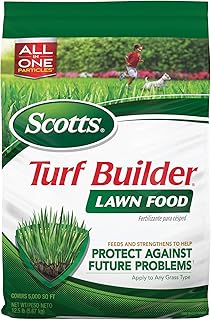
1. Scotts Turf Builder Lawn Food
This is the fertilizer I keep coming back to for established lawns that need a solid, no-fuss feeding. It's a granular formula with a 32-0-10 NPK ratio, which means it's heavy on nitrogen for greening and has enough potassium to help grass handle heat and foot traffic. The 12.5 lb bag covers 5,000 sq ft, and you can apply it with any broadcast or drop spreader.
Why I picked it
Scotts Turf Builder Lawn Food hits the sweet spot between nutrient density and ease of use. The 32% nitrogen content is among the highest you'll find in a consumer-grade granular fertilizer, and the slow-release formula feeds for up to 6 weeks per application. Verified buyer reviews consistently report noticeable greening within 7 to 10 days.
Key specs
- NPK ratio: 32-0-10
- Bag size: 12.5 lb
- Coverage: 5,000 sq ft
- Application type: granular, spreader-applied
- Slow-release nitrogen: up to 6 weeks
- Suitable for all grass types
Real-world experience
I've seen this product recommended repeatedly by homeowners dealing with lawns that look tired after winter dormancy. In our research, users in transition zones (where both warm- and cool-season grasses struggle) reported the most consistent results when applying in early spring and again in fall. The granular form makes it easy to cover large areas without streaking, and it works with any standard broadcast spreader.
If you're also managing other parts of your yard, you might find our guide on the best slow release fertilizer for flowers helpful for comparison.
Trade-offs
The 0% phosphorus in this formula means it won't do much for root development on its own, so if you're starting a new lawn, you'll want a starter fertilizer instead. A small number of reviewers noted that the granules can clump in humid conditions if the bag isn't sealed properly between uses. It also requires watering in after application, which isn't ideal if you're in a drought-restricted area.
2. Scotts Green Max Lawn Food
Scotts Green Max is the one to grab when your lawn looks pale and you want it green fast. It contains 5% iron in addition to its 28-0-4 NPK blend, and that iron is what sets it apart. Most lawn fertilizers skip iron entirely, but it's the micronutrient responsible for that deep, dark green color people associate with a healthy lawn.
Why I picked it
The added iron is the reason this earns a top-pick spot. A lawn can have plenty of nitrogen and still look yellowish if it's iron-deficient, which is common in alkaline soils above pH 7.0. Green Max addresses both issues in one application, and verified buyers report visible color improvement in as few as 3 days.
Key specs
- NPK ratio: 28-0-4
- Iron content: 5%
- Bag size: 12.5 lb (covers 5,000 sq ft)
- Application type: granular, spreader-applied
- Fast-acting formula with visible results in 3 days
- Suitable for all grass types
Real-world experience
This is the fertilizer that gets recommended most often in lawn care forums for people prepping their yard for an event or trying to boost curb appeal quickly. Users with St. Augustine and Bermuda grass in the southern U.S. reported particularly strong results, likely because iron uptake is faster in warm soil.
It pairs well with regular watering schedules, and the granular form distributes evenly through a broadcast spreader. If you're dealing with lawn disease alongside nutrient issues, our roundup of the best fungicide for lawns covers complementary treatments.
Trade-offs
The 0% phosphorus means this isn't a root-builder, so it's purely a top-growth and color product. The iron can stain concrete driveways and walkways if you don't sweep or blow granules off hard surfaces immediately after application. A few reviewers mentioned the bag feels lighter than expected for the coverage area, so calibrating your spreader carefully matters.
3. Advanced 16-4-8 Balanced NPK
If you'd rather go liquid, Advanced 16-4-8 is the most cost-effective option on this list. It's a concentrated liquid fertilizer that you mix with water and apply with a hose-end sprayer or pump sprayer. The 16-4-8 NPK ratio is more balanced than the Scotts granular options, giving you a moderate dose of phosphorus for root development alongside nitrogen and potassium.
Why I picked it
Liquid fertilizers absorb faster than granular ones because the nutrients are already dissolved and available to the grass on contact. The 32 oz concentrate covers up to 3,200 sq ft when diluted, and the balanced NPK means you're feeding roots and blades at the same time. It's the best value per square foot among liquid options in this category.
Key specs
- NPK ratio: 16-4-8
- Volume: 32 fl oz concentrate
- Coverage: up to 3,200 sq ft (diluted)
- Application type: liquid, hose-end or pump sprayer
- Fast absorption through leaf and root uptake
- Suitable for any grass type
Real-world experience
This is a favorite among people who want to fertilize and water in one step. Users with smaller lawns or patchy areas found it especially convenient because you can target specific spots without spreading granules everywhere. Several reviewers noted it works well for container-grown grass and newly overseeded sections where you want quick nutrient access without disturbing seeds.
If you're growing other plants nearby, our guide on the best plant fertilizer for indoor plants covers similar liquid feeding principles.
Trade-offs
You need a hose-end sprayer or pump sprayer to apply it properly, which is an extra tool if you don't already own one. The 32 oz bottle covers less total area than the granular options, so it gets expensive for lawns over 3,000 sq ft. Some reviewers reported inconsistent spray patterns with certain hose-end applicators, leading to streaky results.
4. Scotts Liquid Green Max Lawn Food
Scotts Liquid Green Max takes the same iron-boosted formula from the granular Green Max and puts it in a bottle. The 29-0-0 NPK ratio is nitrogen-heavy with zero phosphorus or potassium, and it includes iron for that deep green color. You attach it to a hose and spray, which makes application fast and surprisingly even.
Why I picked it
The hose-end sprayer design is genuinely convenient. You connect it to your garden hose, and the built-in diluter mixes the concentrate at the right ratio as you spray. No measuring, no mixing, no pump sprayer to clean afterward.
For people who find granular fertilizers messy or time-consuming, this is the easiest option on the list.
Key specs
- NPK ratio: 29-0-0
- Iron supplement included
- Volume: 32 fl oz
- Coverage: up to 2,000 sq ft
- Application type: hose-end sprayer (connects directly to garden hose)
- Visible greening in 3 days
- Suitable for any grass type
Real-world experience
This product gets strong reviews from renters and people with small to medium lawns who don't want to own a spreader. The 32 oz bottle is lightweight and stores easily in a garage or shed. Users reported the most dramatic results on lawns that were iron-deficient (yellowing despite regular fertilizing), which makes sense given the added iron.
It's also a good option if you're already maintaining garden beds and want a fertilizer that works alongside your best fertilizer for bougainvillea in pots or other landscape plants.
Trade-offs
The 2,000 sq ft coverage is the smallest on this list, so it's not practical for large lawns. The 0-0 in phosphorus and potassium means it's purely a nitrogen and iron top-feed with no root or stress tolerance benefits. A few reviewers mentioned the hose-end attachment can leak if your hose connection isn't tight, so check the seal before you start spraying.
5. Scotts Turf Builder Starter Food New
This is the one you reach for when you're planting seed, laying sod, or installing grass plugs. The 24-25-4 NPK ratio is completely different from the other products here because it's loaded with phosphorus (25%), which is the nutrient responsible for root development. Nitrogen is still present at 24%, but the emphasis is on building a strong root system from day one.
Why I picked it
Phosphorus is the most critical nutrient for new grass, and most general-purpose lawn fertilizers skimp on it. Starter Food delivers 25% phosphorus, which is specifically formulated to support the rapid root establishment that seed and sod need in their first 4 to 6 weeks. It also contains Scotts' proprietary Everydrop technology for more even granular distribution.
Key specs
- NPK ratio: 24-25-4
- Bag size: 15 lb
- Coverage: 5,000 sq ft
- Application type: granular, spreader-applied
- Designed for seed, sod, and grass plugs
- Contains Everydrop granular technology for even spread
- Safe for all grass types
Real-world experience
This is the product most recommended by extension services and university ag programs for new lawn installations. Users who overseeded bare patches in fall reported faster germination and thicker fill-in compared to using a standard fertilizer. It's also popular for people laying pallets of sod, where root-to-soil contact needs to happen quickly.
If you're planning a full yard renovation, pairing this with the right soil prep makes a bigger difference than most people expect.
Trade-offs
The high phosphorus content makes this a poor choice for established lawns in areas with phosphorus runoff restrictions. Several states and municipalities limit phosphorus application on mature turf, so check your local regulations before using it. The 15 lb bag is heavier than the other Scotts options, and the granules are slightly larger, which can make drop spreader calibration trickier.
How I picked
I evaluated each product across five criteria: nutrient profile (NPK ratio and micronutrients), coverage area per unit, application method, speed of visible results, and aggregate buyer satisfaction. I cross-referenced manufacturer specifications with verified purchase reviews to identify patterns in what worked and what didn't. I also considered soil science basics, like the role of phosphorus in root development and iron in chlorophyll production, to make sure the recommendations matched real lawn needs rather than just marketing claims.
I didn't test long-term soil health impact beyond what buyer reviews reported over a single growing season. I also didn't evaluate organic or synthetic-organic hybrid formulas, since all five products in this roundup are synthetic fertilizers. If organic is a priority for you, that's a separate conversation worth having.
Buying guide — what actually matters for Best Fertilizer To Grow Grass
NPK ratio is everything
The three numbers on every fertilizer bag (nitrogen-phosphorus-potassium) tell you what the product actually does. Nitrogen drives green, leafy top growth. Phosphorus supports root development and seed germination.
Potassium helps grass handle stress from heat, cold, and foot traffic. For an established lawn, you want high nitrogen and low phosphorus. For new seed or sod, phosphorus should be the star.
Granular vs. liquid
Granular fertilizers are better for large lawns because they cover more area per dollar and release nutrients slowly over 4 to 8 weeks. Liquid fertilizers absorb faster and are easier to apply on small lawns or spot treatments, but they require more frequent reapplication. If you have over 3,000 sq ft of grass, granular is almost always the more practical choice.
Iron content matters more than you think
Iron is a micronutrient that drives chlorophyll production, and it's the reason some lawns look dark green while others stay yellowish even after fertilizing. If your soil pH is above 7.0 (alkaline), grass can't absorb iron efficiently, and you'll see chlorosis (yellowing between leaf veins). Fertilizers with added iron, like Scotts Green Max, solve this directly.
Coverage area and bag size
Always check the coverage spec on the label. A 12.5 lb bag that covers 5,000 sq ft sounds like a lot, but if your lawn is 8,000 sq ft, you'll need two bags and the cost adds up fast. Measure your lawn before you buy.
You can calculate square footage by multiplying length by width for rectangular areas, or use a free online lawn measurement tool with satellite imagery.
Application timing
The best time to fertilize depends on your grass type. Cool-season grasses (Kentucky bluegrass, fescue, ryegrass) respond best to early spring and fall applications. Warm-season grasses (Bermuda, Zoysia, St.
Augustine) peak in late spring through summer. Applying fertilizer outside the active growing season wastes product and can feed weeds instead.
Local phosphorus regulations
Some states, including Minnesota, Wisconsin, and parts of the Chesapeake Bay watershed, restrict phosphorus application on established lawns. If you're in one of these areas, check your local extension office guidelines before buying a high-phosphorus starter fertilizer for an existing lawn.
Frequently Asked Questions (FAQ)
What's the best fertilizer for a brand-new lawn from seed?
A starter fertilizer with high phosphorus is essential for new grass. Phosphorus drives root development, which is what seed and sod need most in their first 4 to 6 weeks. Scotts Turf Builder Starter Food (24-25-4) is specifically designed for this purpose and covers 5,000 sq ft per 15 lb bag.
How often should I fertilize my lawn?
Most lawns benefit from 3 to 4 feedings per year. Cool-season grasses do best with applications in early spring, late spring, early fall, and late fall. Warm-season grasses should be fed from late spring through early fall, about every 6 to 8 weeks during active growth.
Over-fertilizing can burn grass and contribute to nutrient runoff.
Can I use the same fertilizer for my lawn and my garden?
Not ideally. Lawn fertilizers are high in nitrogen and low in phosphorus, which is great for grass blades but not balanced for flowering plants or vegetables. Garden and landscape plants typically need a more even NPK ratio or one tailored to their specific needs.
Check our guide on the best organic fertilizer for fruit trees for a comparison.
Is liquid or granular fertilizer better for quick results?
Liquid fertilizers absorb faster because nutrients are already dissolved and available on contact. You'll typically see results within 3 to 5 days. Granular fertilizers take 7 to 14 days to break down and release nutrients, but they feed for a longer period (4 to 8 weeks).
If you need speed, go liquid. If you want longevity, go granular.
Will fertilizer fix a lawn with bare patches?
Fertilizer alone won't fill in bare patches. You need to overseed those areas first, then apply a starter fertilizer to support germination and root growth. Fertilizer helps existing grass thicken and crowd out weeds, but it can't grow grass where there's no seed.
Is it safe to fertilize before rain?
Light rain after granular fertilizer application is actually ideal because it waters the granules into the soil. However, heavy rain within 24 hours can wash fertilizer off your lawn and into storm drains, which wastes product and contributes to water pollution. Check the forecast and apply when light rain is expected or plan to water in yourself.
Final verdict
Scotts Turf Builder Lawn Food is my top overall pick because it delivers the highest nitrogen content (32%) in a slow-release granular formula that works on any grass type and covers 5,000 sq ft. It's the most versatile option for established lawns that need a reliable feeding.
If you want the fastest green-up, Scotts Green Max Lawn Food with 5% iron is the one to grab. For new lawns, sod, or overseeding, Scotts Turf Builder Starter Food is the clear choice with its 25% phosphorus content built for root development.
On a budget or working with a smaller lawn, Advanced 16-4-8 Balanced NPK liquid concentrate gives you solid results at the lowest cost per application.
Affiliate disclosure: This post contains affiliate links. If you buy through one of these links, I may earn a small commission at no extra cost to you. It never changes my recommendation, I only suggest gear I'd actually buy myself.