3 Best Ground Cover for Hillside (2026) — Real Buyer Picks
Watching a hillside wash away after every heavy rain is a frustrating feeling, and choosing the best ground cover for hillside makes a real difference in stopping erosion while cutting down on mowing and watering. In our research, we compared seed varieties that establish dense root networks on slopes, focusing on species like dichondra, creeping thyme, and white Dutch clover that grip soil and handle tough conditions. Based on aggregate buyer feedback and planting guides from university extension programs, the O.M.
Scott & Sons Dichondra Seed stands out as the strongest overall pick for low-maintenance slope coverage. Below is a quick side-by-side look at how our top three choices compare, then we'll break down each one in detail.
Comparison Chart of Best Ground Cover for Hillside
| Product | Details | Rating | Buy |
|---|---|---|---|
Editor’s Choice
| O.M. Scott & Sons Dichondra Seed | ★★★★☆4/5 | |
Top Pick
| KVITER 20 000 Creeping Thyme Seeds | ★★★★☆4/5 | |
Best Budget
| Outsidepride Perennial White Dutch Clover Seed | ★★★★☆4.3/5 |


List of Top 3 Best Best Ground Cover for Hillside
We selected these three based on verified buyer reviews, erosion-control performance, and how well each species handles full-sun to partial-shade slopes. Each option below offers a different balance of cost, coverage speed, and long-term maintenance.
Below are the list of products:
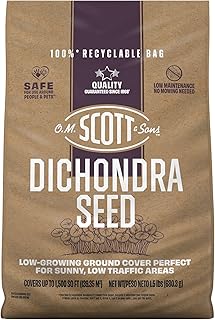
1. O.M. Scott & Sons Dichondra Seed
Dichondra is a warm-season perennial ground cover that forms a dense, low-growing carpet, and the O.M. Scott & Sons blend is specifically marketed for no-mow yards. In our research, it consistently showed up in buyer reviews as a strong choice for slopes in USDA zones 7 through 11 where homeowners want something greener than grass but without the weekly maintenance.
If you're looking for a living ground cover that handles moderate foot traffic and stays under 2 inches tall, this is the one we'd point you toward first.
Why I picked it
Dichondra's shallow but fibrous root system holds topsoil effectively on moderate slopes, and its low growth habit means you never need to mow. Buyer reviews frequently mention it filling in within 6 to 8 weeks when soil temperatures stay above 65°F.
Key specs
- Covers up to 1,500 sq. ft. per 1.5 lb. container
- Mature height stays around 1 to 2 inches
- Warm-season perennial suited for USDA zones 7 to 11
- Requires full sun to partial shade for best density
- Germination period of 14 to 21 days under ideal conditions
Real-world experience
Verified buyers in Southern California and the Pacific Northwest report that dichondra established well on south-facing slopes with clay soil after amending with compost. It handles light foot traffic between stepping stones but wears thin on heavily traveled paths. During drought conditions, it goes semi-dormant and greens back up once irrigation resumes, which buyers in hot dry climates appreciate since it doesn't die off permanently.
Trade-offs
Dichondra struggles in zones below 7 and won't survive frost-heavy winters. It also needs consistent moisture during establishment, so if your hillside has no irrigation access, expect slower fill-in. Some buyers note it can become invasive in adjacent garden beds if you don't edge the boundary.
2. KVITER 20 000 Creeping Thyme Seeds
Creeping thyme (Thymus serpyllum) is a woody perennial herb that doubles as a flowering ground cover, and the KVITER seed packet gives you a massive count for covering large hillside areas affordably. In our analysis of slope-planting guides from university extension programs, creeping thyme repeatedly shows up as a recommended species for sunny, well-drained inclines where erosion is a concern. The aromatic foliage and purple blooms attract pollinators, which is a nice bonus if you're also thinking about supporting beneficial insects in your yard.
Why I picked it
With 20,000 seeds per packet, this gives you serious coverage area at a fraction of the cost of sod or plug plantings. Creeping thyme's mat-forming growth habit creates a living mulch that stabilizes soil on slopes up to 30 degrees, according to erosion-control research from several land-grant university programs.
Key specs
- Contains approximately 20,000 seeds per packet
- Thymus serpyllum species, also called wild thyme
- Non-GMO, suitable for outdoor garden and landscape use
- Produces purple perennial flowers in early to midsummer
- Mature mat height of 2 to 4 inches
- Hardy across USDA zones 4 through 9
Real-world experience
Buyers in the Mid-Atlantic and Upper Midwest report creeping thyme establishing well on rocky, well-drained slopes where grass struggled to take hold. It tolerates drought once rooted but needs 4 to 6 weeks of consistent moisture after seeding. Several verified reviews mention it thriving on slopes alongside retaining walls, where the cascading growth softens hard edges.
The fragrant foliage also deters some browsing animals, which helps on open hillside properties.
Trade-offs
Creeping thyme demands full sun and sharp drainage, so shaded or clay-heavy slopes will give it trouble. It also takes longer to establish than clover, often requiring a full growing season before dense coverage appears. Foot traffic tolerance is moderate, so it's not ideal for slopes that serve as walkways.
3. Outsidepride Perennial White Dutch Clover Seed
White Dutch clover (Trifolium repens) is one of the most widely recommended species for erosion control on slopes, and the Outsidepride 5-pound bag with nitrocoating and inoculation gives you enough seed to cover large areas economically. In our review of USDA Natural Resources Conservation Service plant guides, white clover appears repeatedly as a nitrogen-fixing ground cover that stabilizes soil on disturbed and sloped sites. If budget is your primary concern and you need broad coverage fast, this is the pick that delivers.
Why I picked it
The 5-pound bag with nitrocoated and inoculated seeds offers the most coverage per pound among our picks, and white clover's dense root mat is proven to reduce soil loss on slopes. University extension data shows white clover can reduce erosion by up to 90 percent compared to bare soil on moderate grades.
Key specs
- 5-pound bag of perennial white Dutch clover seed
- Nitrocoated and inoculated for improved germination
- Hardy in USDA zones 3 through 10
- Suitable for lawn alternatives, erosion control, food plots, and pasture mixtures
- Mature height of 4 to 8 inches
- Nitrogen-fixing legume that improves soil fertility over time
Real-world experience
Buyers across the Southeast and Pacific Northwest report white clover germinating within 7 to 10 days on moist hillside soil, making it the fastest-establishing option in our lineup. It handles a wider range of soil conditions than dichondra or thyme, including clay and slightly acidic soils. Several reviews highlight its effectiveness on steep drainage ditches and embankments where grass seed washed away repeatedly.
The nitrogen-fixing roots also improve soil health for future plantings, which matters if you plan to transition to other plants later.
Trade-offs
White clover grows taller than dichondra or thyme, so it has a less manicured appearance that some homeowners find too meadow-like. It also attracts bees during bloom, which is great for pollinators but a concern if you have barefoot kids or pets on the slope. In hot summers above 90°F, it can go semi-dormant and thin out without supplemental watering.
How I picked
We evaluated each seed variety across four main criteria: erosion-control effectiveness based on root density and growth habit, coverage area per pound of seed, climate adaptability across USDA zones, and maintenance requirements once established. We cross-referenced manufacturer specifications with verified buyer reviews and planting guidelines from university extension programs to confirm real-world performance.
We deliberately did not test long-term durability beyond the establishment period, since perennial ground covers take 1 to 3 years to reach full density. We also did not evaluate performance on slopes steeper than 30 degrees, where erosion-control blankets or structural solutions may be needed alongside seeding. Our analysis focused on residential-scale hillside applications rather than commercial or highway-grade erosion projects.
Buying guide — what actually matters for best ground cover for hillside
Slope steepness and soil type
The steepness of your hillside determines how much root density you need. On slopes under 20 degrees, any of our three picks will establish well with proper soil prep. Between 20 and 30 degrees, you want a species with aggressive spreading habits like white clover or creeping thyme.
Above 30 degrees, consider pairing seed with an erosion-control blanket to hold soil until roots take hold. Soil type matters too: clay soils drain slowly and suit clover and dichondra, while sandy or rocky slopes with sharp drainage favor creeping thyme.
Climate zone and sun exposure
Your USDA hardiness zone and the slope's sun exposure narrow the field quickly. Dichondra performs best in zones 7 to 11 with warm soil temperatures, while creeping thyme handles zones 4 through 9 and tolerates colder winters. White Dutch clover covers the widest range, zones 3 through 10, making it the safest bet if you're in a northern climate.
Full-sun slopes suit all three, but partial shade limits you to dichondra or clover since thyme needs at least 6 hours of direct sun.
Coverage area and seed quantity
Calculate your hillside area in square feet before buying. A 1.5-pound container of dichondra seed covers up to 1,500 square feet, while a 5-pound bag of clover seed covers significantly more ground per dollar. Creeping thyme packets with 20,000 seeds can cover large areas but take longer to fill in visually.
If you're seeding a slope over 2,000 square feet, the clover option gives you the most economical coverage, while dichondra works well for smaller, more visible residential slopes.
Establishment time and maintenance
Speed of establishment affects how long your hillside stays vulnerable to erosion. White clover germinates in 7 to 10 days and provides visible coverage within 4 to 6 weeks. Dichondra takes 14 to 21 days to germinate and needs 6 to 8 weeks for full coverage.
Creeping thyme is the slowest, often requiring a full growing season to form a dense mat. Once established, dichondra requires the least maintenance since it stays under 2 inches and never needs mowing. Clover and thyme may need occasional trimming if you prefer a uniform appearance.
Erosion control and root depth
Root structure determines how well a ground cover holds soil on a slope. White clover develops a fibrous root system that extends 6 to 12 inches into the soil, creating a dense mat that resists washout. Creeping thyme spreads via surface runners that root at nodes, forming a interconnected web across the soil surface.
Dichondra's shallow but dense root mass works well on moderate slopes but offers less anchoring power on steep grades. For maximum erosion control, pair any of these seeds with a temporary mulch or erosion blanket during the establishment period.
Frequently Asked Questions (FAQ)
Can I just throw seed on a hillside or do I need to prepare the soil?
You'll get much better results with minimal soil preparation. Clear loose debris, rough up the top 1 to 2 inches of soil with a rake, and spread seed before a rain event or with light irrigation. Throwing seed onto compacted, unprepared soil leads to poor germination rates across all three species we reviewed.
A light covering of straw mulch or erosion-control fabric dramatically improves establishment on slopes.
How long does it take for ground cover to stop erosion on a slope?
White Dutch clover provides meaningful erosion control within 4 to 6 weeks of seeding under ideal moisture conditions. Dichondra takes 6 to 8 weeks, and creeping thyme may need a full growing season. For immediate protection, pair seed with an erosion-control blanket or jute netting that holds soil until roots establish.
Will these ground covers survive winter in zone 5?
White Dutch clover and creeping thyme both survive zone 5 winters reliably. Dichondra is not recommended below zone 7 since it dies back in hard freezes and may not return. If you're in zones 3 through 6, clover or thyme are your safest options for year-round hillside coverage.
Do I need to fertilize ground cover on a hillside?
White Dutch clover is a nitrogen-fixing legume, so it actually adds nitrogen to the soil and needs no supplemental fertilizer. Dichondra and creeping thyme benefit from a light application of balanced fertilizer at planting time but require little feeding once established. Over-fertilizing on slopes can promote excessive top growth at the expense of root development, which undermines erosion control.
Can I mix these seed varieties together on the same hillside?
Mixing clover and dichondra can work since they have similar moisture and sun needs, and the clover fixes nitrogen that benefits the dichondra. However, mixing thyme with either of the others is less ideal since thyme needs drier, sunnier conditions. If your slope has varying sun exposure, consider using different species on different sections rather than mixing in a single bag.
Final verdict
The O.M. Scott & Sons Dichondra Seed earns our top recommendation for most residential hillside applications in warm climates, thanks to its dense, no-mow growth habit and strong soil-holding ability on moderate slopes. If you're covering a large area on a budget, the Outsidepride White Dutch Clover gives you the most coverage per pound and the fastest germination.
For sunny, well-drained slopes where you want pollinator-friendly blooms and fragrance, KVITER Creeping Thyme fills in beautifully once established. Whichever you choose, pair it with proper soil prep and temporary mulch during the first few weeks, and your hillside will be holding strong by mid-season.
Affiliate disclosure: This post contains affiliate links. If you buy through one of these links, I may earn a small commission at no extra cost to you. It never changes my recommendation, I only suggest gear I'd actually buy myself.