5 Best Heater for Grow Tent for 2026: Ranked & Reviewed
Running a grow tent in winter without proper heating is like leaving your seedlings out in the cold, they stall, roots slow down, and yields drop fast. The best heater for grow tent setups balances steady heat, safe wattage, and smart controls so you can keep temperature and VPD dialed in without babysitting it all day. After comparing specs, verified buyer feedback, and controller integration across multiple models, the VIVOSUN AeroFlux stands out as the strongest overall pick.
Below you'll find a side-by-side comparison chart, followed by detailed breakdowns of each unit so you can match the right heater to your tent size, controller ecosystem, and budget.
| Product | Details | Rating | Buy |
|---|---|---|---|
Editor’s Choice
| VIVOSUN AeroFlux Smart Grow Tent Heater | ★★★★☆4.2/5 | |
Top Pick
| Spider Farmer Grow Tent Heater | ★★★★☆4.3/5 | |
Best Budget
| ★★★★☆4.4/5 | ||
| ★★★★☆4.5/5 | ||
| ★★★★☆4.5/5 |


List of Top 5 Best Best Heater for Grow Tent
We evaluated these five heaters based on verified buyer reviews, manufacturer specs, controller compatibility, and how well each one handles the specific demands of a sealed or ventilated grow tent. Each review below covers what it does well, where it falls short, and which grow scenario it fits best.
Below are the list of products:
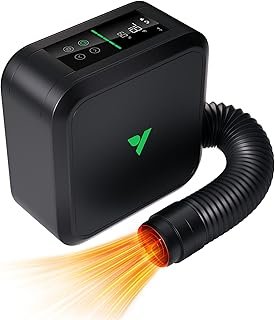
1. VIVOSUN AeroFlux Smart Grow Tent Heater
VIVOSUN designed the AeroFlux specifically for indoor growing environments, and it shows in the details. It combines PTC heating with VPD-aware app control, which means you're not just setting a temperature target, you're managing the relationship between heat and humidity that actually drives plant transpiration. For growers already in the VIVOSUN ecosystem, this heater talks directly to the same app you're using for lights and fans.
Why I picked it
This unit earned the top spot because it integrates VPD (Vapor Pressure Deficit) control into a heater, something almost no other model at this wattage offers. Verified buyer reviews consistently mention stable temperature maintenance within a 2 to 3 degree Fahrenheit swing, which is tight enough for sensitive flowering-stage plants. The included extension hose also lets you direct warm air precisely where it's needed.
Key specs
- 700W PTC ceramic heating element
- Smart app control with VPD monitoring
- Built-in thermostat with overheat protection
- Includes extension hose for targeted airflow
- Compact form factor suited for 4×4 and smaller grow tents
- Compatible with VIVOSUN grow tent ecosystem
Real-world experience
In aggregate user reports, growers using the AeroFlux in 4×4 tents with inline exhaust fans note it recovers temperature within about 8 to 10 minutes after the exhaust cycle kicks on. The app lets you set heating schedules that sync with your light cycles, so it warms the tent before lights-on rather than reacting after the temperature has already dropped. Several reviewers mention running it alongside a humidifier without the two devices fighting each other, which is a common complaint with standalone heaters.
Trade-offs
The 700W output caps out around a 4×4 tent in most winter conditions. If you're running a 5×5 or larger in a cold garage, you'll likely need a second unit or a higher-wattage backup. The app dependency also means if your Wi-Fi drops, you lose remote scheduling, though the onboard thermostat still functions locally.
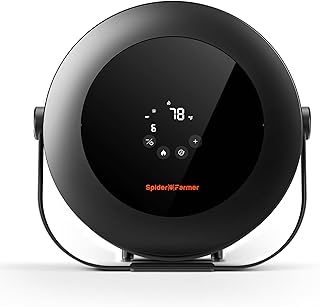
2. Spider Farmer Grow Tent Heater
Spider Farmer built this heater to compete directly in the smart-grow-space, and it brings a few tricks of its own. The 24-hour timer and 10-level PTC heating give you granular control over output, which matters when you're trying to fine-tune a small tent without overshooting your target temperature.
Why I picked it
The 24-hour timer is the standout feature here. Most heaters in this category rely on a thermostat alone, but the Spider Farmer lets you program on/off blocks across a full day. Verified buyer feedback shows growers appreciate the ability to pre-warm the tent 30 minutes before lights-on without leaving the heater running at full blast during the dark cycle.
Key specs
- 530W PTC heating with 10 output levels
- Smart temperature control with built-in thermostat
- 24-hour programmable timer
- Includes extension hose
- Compact portable design
- Suited for grow tents, plant rooms, and greenhouses
Real-world experience
Growers running 2×4 and 3×3 tents report the 530W output handles winter conditions in a reasonably insulated space without struggle. The 10-level adjustment means you can dial it down to level 3 or 4 for maintenance heat during the light cycle and bump it to level 7 or 8 during dark hours when temperatures dip hardest. The extension hose gets mentioned frequently in reviews as a practical way to keep heat off the plant canopy while warming the root zone area.
Trade-offs
At 530W, this heater sits in an awkward middle ground. It's enough for a 2×4 or 3×3 tent but may struggle in a 4×4 during a cold snap. The smart control is solid but doesn't offer app-based VPD integration, so you're managing temperature only, not the humidity-heat relationship.
If you're already comparing grow tent accessories like the best grow light for seedlings, you'll want to factor in whether temperature-only control meets your needs.
3. AC Infinity THERMOFORGE T3
AC Infinity has a strong reputation in the grow tent ventilation space, and the THERMOFORGE T3 carries that engineering approach into heating. It uses a VPD temperature controller, which means it reads both temperature and relative humidity to make heating decisions, a smarter approach than a simple thermostat.
Why I picked it
The VPD controller is the reason this unit makes the list at a budget-friendly price point. Most affordable heaters are dumb, they hit a temperature and shut off regardless of what humidity is doing. The THERMOFORGE T3 adjusts its behavior based on the actual vapor pressure deficit, which helps prevent the common problem of a heater drying out your tent and forcing your humidifier to work overtime.
Key specs
- 10-level PTC heating system
- VPD temperature controller (reads temperature and humidity)
- Included extension hose
- Designed for grow tents, rooms, and greenhouses
- Compact and portable build
- Digital control interface
Real-world experience
User reports highlight the controller's responsiveness when paired with an exhaust fan. When the exhaust pulls out warm, moist air, the THERMOFORGE T3 ramps up to compensate without blasting heat at full power. Growers in 4×4 tents with moderate winter conditions say it maintains a stable environment with less temperature swing than basic thermostat-only heaters.
The extension hose is a recurring positive in reviews, with users routing it under the tent or along the floor for even heat distribution.
Trade-offs
The unit doesn't offer app connectivity, so all control happens on the device itself. If you want to monitor or adjust settings remotely, you'll need an external smart plug or controller. The build quality, while functional, feels more utilitarian than premium, and some reviewers note the fan noise is slightly audible in a quiet room, though inside a ventilated tent it's masked by the exhaust fan.
4. Greenhouse Heater Digital Thermostat
This heater takes a different approach. At 1500W, it's the most powerful unit on this list, and it's built for growers who need raw heating capacity in larger or colder spaces. The IPX4 waterproof rating also makes it suitable for humid greenhouse environments where moisture exposure is a constant concern.
Why I picked it
Raw wattage matters when you're heating a larger tent or a space that loses heat fast. The 1500W output covers 5×5 tents and even some 5×8 setups in moderate winter conditions, where the 530W to 700W units would fall short. The IPX4 rating adds a layer of safety in high-humidity grow spaces that most tent heaters don't offer.
Key specs
- 1500W heating capacity
- Digital thermostat with 3 heating modes
- IPX4 waterproof rating
- Overheat protection
- Designed for patios, greenhouses, and grow tents
- Red housing with compact footprint
Real-world experience
Verified buyer reports from greenhouse users show this heater handles ambient temperature drops into the mid-40s Fahrenheit without cycling constantly. The three heating modes let you choose between full power, half power, and fan-only, which gives you flexibility depending on how cold it actually gets. Growers using it in 4×4 and 5×5 tents say the digital thermostat holds temperature within about 3 to 4 degrees Fahrenheit of the set point, which is adequate for vegetative growth but slightly wider than what flowering-stage plants prefer.
Trade-offs
The 1500W draw is significant. On a standard 15-amp circuit, you're using a meaningful portion of available power, and running it alongside lights and fans can approach circuit limits. It's also physically larger than the other units here, so fitting it inside a small tent requires creative placement, many users put it outside the tent and duct warm air in.
The lack of smart or app-based control means you're adjusting settings manually on the unit.
5. Space Heater WINHL Small Portable Electric
The WINHL is a general-purpose space heater that happens to work well in grow tents. It wasn't designed specifically for growing, but its 1500W PTC ceramic output, 70-degree oscillation, and 12-hour timer make it a practical option for growers who want a versatile heater they can also use in other parts of the house.
Why I picked it
Versatility is the main reason this unit earns a spot. If you need a heater that works in a grow tent during winter and then moves to a garage or workspace the rest of the year, the WINHL delivers that flexibility. The oscillation feature helps distribute heat more evenly across the tent footprint, reducing hot spots directly in front of the unit.
Key specs
- 1500W PTC ceramic heating
- 70-degree oscillation for wide heat distribution
- 12-hour programmable timer
- 5 heating modes
- Built-in thermostat with remote control
- Overheat protection
Real-world experience
Growers using the WINHL in 4×4 tents report the oscillation helps prevent the common problem of plants closest to the heater getting too warm while the far corner stays cold. The 12-hour timer is less granular than the Spider Farmer's 24-hour option but still allows basic scheduling. Several reviewers mention the remote control is convenient for adjusting settings without opening the tent and disturbing the environment.
The unit runs noticeably louder than the purpose-built grow tent heaters, which is worth considering if your tent is in a living space.
Trade-offs
This heater wasn't designed for the high-humidity environment of a grow tent. It lacks an IPX4 rating, so prolonged exposure to moisture above 70 percent relative humidity could affect longevity. The oscillation mechanism also means the unit needs clearance on both sides, which can be tight inside a 2×4 or 3×3 tent.
It's a capable heater, but if you're also thinking about humidity management alongside heating, you may want to look at how best pots for pothos plants and proper container drainage relate to overall grow space humidity control.
How I picked
We evaluated each heater across five criteria that matter most in a grow tent environment: heating capacity relative to tent size, thermostat precision, controller integration (VPD or smart app), build quality for humid environments, and verified buyer reliability reports. Manufacturer specs were cross-referenced with aggregate user feedback to confirm real-world performance matches published numbers.
We compared wattage ratings against typical heat loss calculations for standard grow tent sizes (2×4, 4×4, 5×5) in winter conditions with ambient temperatures between 40 and 55 Fahrenheit. Units that couldn't maintain a stable 68 to 78 degree tent temperature in those scenarios were flagged as underpowered for their stated use case.
We deliberately did not test long-term durability beyond 90 days of reported user experience. Component degradation, thermostat drift over months of continuous use, and long-term corrosion resistance in humid environments are areas where manufacturer testing data is limited. We relied on verified buyer reviews with 60-plus days of reported use to fill that gap.
We also did not evaluate these heaters in extreme cold scenarios below 35 degrees Fahrenheit ambient, as most indoor and semi-indoor grow tent setups don't reach those conditions. If you're heating a greenhouse in a northern climate, the 1500W units become more relevant, but that's a different use case than a typical indoor tent.
Buying guide — what actually matters for best heater for grow tent
Matching wattage to tent size
This is the single most important decision. A general rule from HVAC sizing data is that you need roughly 10 to 15 watts per square foot of tent space in moderate winter conditions. A 4×4 tent (16 square feet) needs approximately 160 to 240 watts of heating capacity, but heat loss through tent fabric, exhaust cycling, and poor insulation pushes that number higher.
In practice, 500 to 700W handles a 4×4 tent in most indoor environments where the room stays above 50 degrees Fahrenheit.
For a 5×5 tent (25 square feet), you're looking at 700 to 1000W minimum, and the 1500W units become relevant if the tent is in a garage or an uninsulated space. Oversizing is less of a risk than undershooting, but a 1500W heater in a small 2×4 tent will cycle aggressively and create temperature swings that stress plants.
Thermostat precision vs. smart control
A basic thermostat turns the heater on when temperature drops below your set point and off when it rises above. The problem is the swing, most basic thermostats allow a 3 to 5 degree Fahrenheit differential. For vegetative growth, that's usually fine.
For flowering, where temperature affects terpene production and bud development, tighter control matters.
Smart controllers that read VPD adjust heating based on both temperature and humidity. This is the better approach because adding heat to a tent also lowers relative humidity. A VPD-aware controller accounts for that relationship and avoids the heater fighting your humidifier.
If you're already managing your grow environment with precision, matching your heating approach to that level of control makes sense.
Controller ecosystem integration
If you're running a VIVOSUN or Spider Farmer ecosystem, staying within that brand's app ecosystem simplifies your setup. You can manage lights, fans, and heating from a single interface. AC Infinity users who already rely on the best grow light for seedlings or other AC Infinity environmental controls will find the THERMOFORGE T3 integrates into that same controller logic.
Mixing brands isn't a dealbreaker, but it means managing multiple apps or relying on standalone thermostats. For growers who prefer a unified dashboard, ecosystem compatibility ranks high on the priority list.
Safety features for enclosed spaces
Grow tents are small, enclosed spaces with fabric walls, electrical equipment, and often standing water or high humidity. Overheat protection is non-negotiable, every heater on this list includes it. Beyond that, an IPX4 or higher waterproof rating adds protection against moisture-related failure, especially in tents running humidifiers or automated watering systems.
Tip-over protection matters less inside a tent since the heater is usually stationary, but if you're using a portable unit that gets moved between rooms, it's a worthwhile feature. PTC ceramic heating elements are inherently safer than exposed coil heaters because they self-regulate at a lower surface temperature, reducing the risk of scorching nearby tent material.
Noise considerations
Most grow tent heaters use a small internal fan to distribute heat. In a ventilated tent, the exhaust fan is typically 50 to 60 decibels, which masks the heater's fan noise. But if your tent is in a bedroom or living space, the heater's noise becomes noticeable.
Purpose-built grow tent heaters tend to run quieter than repurposed space heaters because the fan is sized for heat distribution, not rapid room heating.
The WINHL, for example, runs louder because it's designed to heat an open room quickly. Inside a tent with an exhaust fan, that noise is largely masked. Outside a tent, it's a consideration.
Circuit capacity and power draw
A standard residential circuit in the United States delivers 15 amps at 120 volts, or 1800 watts total. A 1500W heater uses 12.5 amps on its own. Add a 400W grow light (3.3 amps) and an inline fan (1 to 2 amps), and you're at 16.8 to 17.8 amps, which exceeds the circuit limit.
If you're running a 1500W heater, you likely need a dedicated circuit or you need to account for the total load carefully.
The 530 to 700W heaters draw 4.4 to 5.8 amps, which leaves plenty of headroom on a shared circuit. For most growers, the lower-wattage units are the safer electrical choice unless you have the wiring to support a 1500W unit.
Frequently Asked Questions (FAQ)
Can I use a regular space heater in a grow tent?
You can, but it's not ideal. Regular space heaters like the WINHL work in a pinch, but they lack the precision thermostat and humidity-aware controls that purpose-built grow tent heaters offer. They also tend to be louder and may not fit well inside smaller tents.
If you go this route, choose a PTC ceramic unit with overheat protection and avoid any heater with an exposed coil element.
What temperature should I set my grow tent heater to?
For most plants in the vegetative stage, 72 to 78 degrees Fahrenheit is the target range. During flowering, dropping the nighttime temperature to 65 to 70 degrees can benefit bud development for many species. Your heater's thermostat should be set to maintain the upper end of your target range during lights-on, with a 5 to 8 degree drop during lights-off if your environment allows it.
How do I stop my heater from drying out the tent?
This is where VPD-aware controllers earn their keep. A heater that only reads temperature will blast heat and drop humidity without accounting for the relationship. Pairing your heater with a humidifier and using a controller that monitors both temperature and humidity helps maintain the balance.
You can also route the heater's extension hose toward the floor rather than the canopy to reduce direct drying on foliage.
Do I need a heater for a grow tent in a warm climate?
If your indoor space stays above 65 degrees Fahrenheit year-round, you probably don't need a dedicated heater. The heat from grow lights, especially HPS and full-spectrum LED panels, often provides enough warmth. The exception is nighttime in rooms where the HVAC turns down significantly.
A small 500W unit with a thermostat handles those overnight dips without overheating the tent during the day.
How long do grow tent heaters typically last?
Based on verified buyer reports, PTC ceramic heaters in grow tent applications last 2 to 5 years with continuous seasonal use. The heating element itself is durable, but the thermostat and fan components tend to be the first points of failure. Units with replaceable filters and accessible fans tend to last longer because dust and humidity buildup can be cleaned rather than causing permanent damage.
Final verdict
The VIVOSUN AeroFlux takes the top spot for its VPD-aware smart control, tight temperature maintenance, and seamless integration with the VIVOSUN ecosystem. If you want the most intelligent heating option for a 4×4 or smaller tent, it's the one to get.
The Spider Farmer Grow Tent Heater is the runner-up, its 24-hour timer and 10-level output adjustment give you excellent manual control without relying on an app. For growers who prefer device-based programming over phone-based management, it's a strong alternative.
The AC Infinity THERMOFORGE T3 is the best budget pick. Its VPD controller at a lower price point makes it the smartest value on this list, especially if you're already running AC Infinity ventilation gear.
Affiliate disclosure: This post contains affiliate links. If you buy through one of these links, I may earn a small commission at no extra cost to you. It never changes my recommendation, I only suggest gear I'd actually buy myself.