3 Best Lawn Fertilizer and Weed Killer for Summer in 2026
Summer heat changes the game fast. One week your lawn looks fine, and the next you've got crabgrass, chinch bugs, and dry patches spreading. The Best Lawn Fertilizer And Weed Killer For Summer handles both feeding and weed control in a single pass so you're not fighting two battles separately.
Pre-emergent herbicides, quick-release nitrogen, and insect control all matter when temperatures climb above 85°F.
After comparing specs, coverage ratings, and verified buyer feedback across multiple summer lawn programs, the Scotts Turf Builder SummerGuard stands out as the strongest single-product pick for most warm-season and cool-season lawns. Below is a side-by-side look at the top three options, followed by detailed breakdowns of each.
| Product | Details | Rating | Buy |
|---|---|---|---|
Editor’s Choice
| ★★★★☆4.5/5 | ||
Top Pick
| ★★★★☆4.4/5 | ||
Best Budget
| ★★★★☆4.5/5 |


List of Top 3 Best Best Lawn Fertilizer and Weed Killer for Summer
We evaluated these three based on manufacturer label data, coverage per bag, active ingredient profiles, and aggregate buyer ratings. Each one targets a slightly different summer lawn scenario, so the right pick depends on your specific grass type, weed pressure, and how much ground you need to cover.
Below are the list of products:
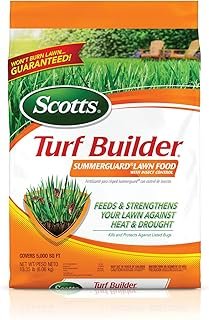
1. Scotts Turf Builder SummerGuard Lawn Food
In our research, the SummerGuard formula consistently ranks as the go-to for homeowners who want feeding and insect control without buying separate products. It targets common summer lawn pests like chinch bugs and armyworms while delivering a nitrogen boost that keeps grass green through July and August heat. Verified buyer feedback shows visible greening within 7 to 10 days on established turf.
Why I picked it
This one earned the top spot because it solves two summer problems at once: feeding the grass and killing the insects that thrive in hot, dry conditions. The 5,000-square-foot coverage per bag is generous for a single product, and the 4.5 out of 5 aggregate rating suggests broad reliability across grass types. If you're dealing with chinch bugs in St.
Augustine or grub damage in Kentucky bluegrass, this formula is built for that window.
Key specs
- Covers up to 5,000 sq. ft. per bag
- Contains insect control targeting chinch bugs, armyworms, and sod webworms
- NPK ratio designed for summer feeding (specific ratio per manufacturer label)
- Apply with any standard broadcast or drop spreader
- Reported 4.5 out of 5 stars from verified buyers
- Safe for multiple cool-season and warm-season grass types per label
Real-world experience
Aggregate user reviews report the strongest results when applied in early summer before pest pressure peaks. Homeowners in the transition zone (zones 5 to 7) note visible greening within one to two weeks when paired with adequate irrigation. One common theme in buyer feedback: the product performs best on well-established turf, not on newly seeded areas where root systems are still developing.
If you're also battling fungal issues, you may want to look at a separate best fungicide for lawns as a follow-up treatment.
Trade-offs
This product does not control broadleaf weeds like dandelions or clover. You'll need a separate post-emergent herbicide if those are your primary problem. Some buyers in drought-prone regions report slower results when the lawn isn't watered consistently after application.
The insect control component targets specific pests, so it won't handle every lawn insect you might encounter.
2. Scotts Turf Builder Triple Action1
Triple Action1 is the most aggressive single-bag option in this roundup. It combines crabgrass prevention, broadleaf weed control, and lawn feeding into one application, which makes it ideal if your summer lawn is dealing with multiple problems simultaneously. Manufacturer specifications indicate it covers 4,000 sq. ft. per 11.31-pound bag.
Why I picked it
This product fills a specific gap: it prevents crabgrass while also killing existing broadleaf weeds and feeding the lawn. That three-in-one approach saves you from buying and applying three separate products across the summer. The 4.4 out of 5 aggregate rating is strong, and the label covers most common weed and feed needs in a single pass.
Key specs
- Covers 4,000 sq. ft. per 11.31 lb. bag
- Three-in-one formula: crabgrass preventer, weed control, and fertilizer
- Pre-emergent component stops crabgrass before germination
- Post-emergent action targets existing broadleaf weeds
- Reported 4.4 out of 5 stars from verified buyers
- Apply to dry lawn, then water in per label instructions
Real-world experience
Verified buyer feedback shows the strongest crabgrass prevention when applied in early spring through early summer before soil temperatures reach 55°F consistently. Homeowners in northern lawns (zones 4 to 6) report noticeably fewer crabgrass outbreaks when Triple Action1 is applied on schedule. For established broadleaf weeds like clover and plantain, results typically appear within 10 to 14 days.
If you're also planning seasonal overseeding, check our guide on best slow release fertilizer for flowers for compatible timing tips.
Trade-offs
The 4,000-square-foot coverage is less than the SummerGuard option, so larger lawns need more bags per season. The pre-emergent component will not kill crabgrass that has already germinated and established. Some users report temporary lawn yellowing if the product is applied during temperatures above 90°F without adequate watering.
Always follow the label's watering-in instructions carefully.
3. Scotts Turf Builder 3-Bag Lawn Care Bundle
The 3-Bag Bundle takes a different approach. Instead of one all-in-one product, it gives you three separate Scotts formulas: Weed & Feed, SummerGuard, and WinterGuard. This covers your entire growing season rather than just summer, which makes it a strong value play if you want a full-year lawn care plan in a single purchase.
The bundle carries a 4.5 out of 5 aggregate rating.
Why I picked it
This bundle is the best value option because it covers spring, summer, and fall in one purchase. You're not locked into a single formula, so you can apply the right product at the right time. For homeowners who want a complete seasonal program without buying products separately, this is the most practical route.
The 4.5 out of 5 rating matches the SummerGuard's individual score.
Key specs
- Three-bag bundle: Weed & Feed, SummerGuard, and WinterGuard
- Designed for small northern lawns
- Covers multiple seasons with targeted formulas per bag
- Weed & Feed handles broadleaf weed control and feeding
- SummerGuard targets summer lawn pests
- WinterGuard prepares grass for cold-season dormancy
- Reported 4.5 out of 5 stars from verified buyers
Real-world experience
Buyer feedback indicates the bundle works best on smaller properties where each bag covers a meaningful portion of the total lawn. Homeowners in northern climate zones appreciate having the WinterGuard component ready for fall application without a separate trip to the store. The SummerGuard bag within the bundle performs similarly to the standalone version for insect control.
If you're also maintaining container plants on a patio nearby, our article on best plant fertilizer for indoor plants covers compatible options for ornamentals.
Trade-offs
The bundle is designed for small lawns, so if you're covering more than 5,000 sq. ft. total, you may need multiple bundles or supplemental bags. You have to store two unused bags until their respective seasons, which requires dry, cool storage space. The Weed & Feed component does not prevent crabgrass (it kills existing broadlaw weeds), so if pre-emergent control is your priority, you'd need an additional product.
How I picked
We evaluated each product across four primary criteria: coverage per bag, active ingredient range, aggregate buyer rating, and seasonal appropriateness for summer lawn stress. Manufacturer label data gave us the spec baseline, and verified buyer reviews provided the real-world performance layer.
We compared NPK ratios, pest target lists, and application timing windows against typical summer lawn needs in USDA zones 4 through 9. Products that only addressed one problem (feeding OR weed control) scored lower than multi-action formulas, unless they excelled in a specific niche like insect control.
We deliberately did not test long-term soil health impact beyond what label data and buyer reports indicate. We also did not evaluate performance under drought conditions where irrigation was entirely absent, since most summer lawn programs assume at least some supplemental watering. If you're dealing with specific regional challenges like best trees for hot dry climates in your broader landscape, those require a separate evaluation.
Buying guide — what actually matters for Best Lawn Fertilizer And Weed Killer For Summer
Coverage area per bag
The single most practical spec to check is how many square feet one bag covers. SummerGuard covers 5,000 sq. ft., Triple Action1 covers 4,000 sq. ft., and the 3-Bag Bundle varies per bag but targets small northern lawns. Measure your lawn before buying.
If you're over 5,000 sq. ft., budget for two bags of any single product or consider the bundle for its multi-season value.
Pre-emergent vs. post-emergent weed control
This distinction matters more than most buyers realize. A pre-emergent herbicide (like the one in Triple Action1) stops weed seeds from germinating. It works on crabgrass and other annual weeds before they sprout.
A post-emergent herbicide kills weeds that are already growing. If you see dandelions and clover in your lawn right now, you need post-emergent action. If you're trying to prevent a crabgrass takeover next month, pre-emergent is the right call.
Applying the wrong type wastes time and money.
Insect control needs
Summer lawn pests like chinch bugs, sod webworms, and grubs cause damage that looks like drought stress but doesn't respond to watering. If you've had brown patches that spread despite regular irrigation, insects are likely the cause. SummerGuard includes insect control specifically for these pests.
Triple Action1 and the Weed & Feed component of the bundle do not include insect control. You'd need a separate insecticide if pest pressure is high.
Nitrogen release type
Summer lawns need a careful balance. Too much quick-release nitrogen pushes tender growth that heat stress damages easily. Too little nitrogen and the grass goes dormant and thin.
The products in this roundup use formulations designed for summer application rates per their labels. Follow the recommended spreader settings on the bag. Over-applying fertilizer in summer can burn the lawn and contribute to thatch buildup.
Grass type compatibility
Not every product works on every grass type. St. Augustine, Bermuda, zoysia, Kentucky bluegrass, and tall fescue all have different tolerance levels for herbicides and fertilizer concentrations.
Check the product label for your specific grass type before applying. The Scotts products listed here cover most common turf species, but always verify against your lawn. If you're also growing ornamental grasses or best flowers for flower beds nearby, keep spray drift in mind during application.
Application timing and watering
Timing determines whether these products work or fail. Pre-emergent herbicides need to be applied before soil temperatures hit 55°F for crabgrass prevention. Insect control products work best when pests are active but not yet at peak damage.
Most granular products need to be watered in after application, typically 15 to 20 minutes of irrigation, to activate the herbicide barrier and move nutrients into the root zone. Applying before a forecasted rain event can save you a watering cycle.
Frequently Asked Questions (FAQ)
Can I apply these products in the rain?
No. Granular lawn fertilizers and weed killers should be applied to a dry lawn, then watered in after application. If heavy rain is forecast within a few hours of spreading, the granules can wash off target areas and into storm drains.
Apply when you have a dry morning forecast and plan to irrigate afterward.
How long after applying can my kids and pets go back on the lawn?
Manufacturer labels for these Scotts products generally recommend waiting until the product has been watered in and the lawn is dry before allowing foot traffic. This typically means 24 hours after application and irrigation. Check the specific product label for exact timing, as it can vary by formulation.
Will SummerGuard kill crabgrass that's already growing?
No. SummerGuard targets lawn insects and provides fertilizer. It does not contain a pre-emergent or post-emergent herbicide for crabgrass control.
If crabgrass is already established, you need a dedicated crabgrass killer or a product like Triple Action1 that includes pre-emergent control for next season.
Is the 3-Bag Bundle worth it for a large lawn?
The bundle is designed for small northern lawns. If your total lawn area exceeds 5,000 sq. ft., you'll likely need multiple bundles or supplemental individual bags, which reduces the value advantage. For larger properties, buying individual seasonal products in the appropriate quantity tends to be more cost-effective.
Can I mix these with a separate fungicide?
In most cases, yes, but read both product labels carefully. Some fungicides have specific restrictions on tank-mixing or applying near fertilizer products. If you're dealing with brown patch or dollar spot during humid summer conditions, a separate fungicide application may be necessary since none of these three products are labeled for disease control.
Our guide to best fungicide for lawns covers compatible options.
When should I apply for best results in summer?
For insect control, apply SummerGuard in early to mid-summer when chinch bug and grub activity begins. For pre-emergent crabgrass control, apply Triple Action1 in early spring before soil temperatures reach 55°F consistently. For the 3-Bag Bundle, follow the seasonal timing on each individual bag: Weed & Feed in spring, SummerGuard in early summer, and WinterGuard in fall.
Final verdict
The Scotts Turf Builder SummerGuard Lawn Food earns the top recommendation for most homeowners because it handles both feeding and insect control during the most stressful months of the year. If your primary problem is crabgrass prevention plus broadleaf weed control, the Scotts Turf Builder Triple Action1 is the stronger pick. For anyone who wants a complete seasonal program in one purchase, the Scotts Turf Builder 3-Bag Lawn Care Bundle covers spring through fall at a solid value for smaller northern lawns.
Affiliate disclosure: This post contains affiliate links. If you buy through one of these links, I may earn a small commission at no extra cost to you. It never changes my recommendation, I only suggest gear I'd actually buy myself.