3 Best Lawn Fertilizer for Summer Heat (2026) — Worth Buying
Finding the Best Lawn Fertilizer For Summer Heat can feel like a guessing game when your grass is baking under 90°F days and you're not sure if you're helping or hurting it. I've spent the last few summers digging into how different formulations handle heat stress, and the truth is that not all fertilizers are built for July and August. The wrong product can actually scorch your lawn, while the right one feeds it slowly and keeps it green through the worst of it.
After comparing granular slow-release options, liquid concentrates, and formulas with built-in pest control, the Scotts Turf Builder SummerGuard Lawn Food came out on top for most homeowners. It feeds your grass while tackling the insects that thrive in hot weather. Let's break down how the top three stack up.
Comparison Chart of Best Lawn Fertilizer for Summer Heat
| Product | Details | Rating | Buy |
|---|---|---|---|
Editor’s Choice
| Scotts Turf Builder SummerGuard Lawn Food | ★★★★☆4.5/5 | |
Top Pick
| ★★★★☆4.6/5 | ||
Best Budget
| ★★★★☆4.2/5 |


List of Top 3 Best Best Lawn Fertilizer for Summer Heat
I chose these three based on how well each one handles the specific challenges of summer: heat stress, drought conditions, insect pressure, and the risk of burning your lawn with the wrong application. Each one takes a slightly different approach, so you can match the product to your yard's actual needs.
Below are the list of products:
1. Scotts Turf Builder SummerGuard Lawn Food
When you're dealing with both scorching temperatures and a lawn full of chinch bugs or ants, this is the product that pulls double duty. Scotts designed SummerGuard specifically for the summer months, combining a slow-release fertilizer with insect control so you can address two problems in one pass. It's the most complete summer lawn care solution I've found for homeowners who want to keep things simple.
Why I picked it
In our research, SummerGuard stood out because it solves two summer lawn problems at once: nutrient deficiency and insect damage. Most fertilizers ignore the fact that bugs like chinch bugs, sod webworms, and fire ants are at their most destructive during hot months. This product feeds your grass while creating a protective barrier against those pests.
Key specs
- Coverage area: 5,000 sq. ft. per bag
- Application type: Granular, spreader-ready
- Built-in insect control: Targets lawn-damaging insects on contact and up to 6 weeks
- Grass type compatibility: Safe for all grass types
- Season: Formulated specifically for summer application
- Reported rating: 4.5/5 from verified buyer reviews
Real-world experience
Verified buyer feedback shows this product performs well when applied in early to mid-summer, just as temperatures start climbing above 85°F. Homeowners in southern states like Texas and Florida report noticeable reductions in chinch bugs and ant mounds within two weeks of application. The granular formula spreads evenly with a standard broadcast spreader, and most users see greener growth within 7 to 10 days without the risk of burning that comes with high-nitrogen spring formulas.
If you've been dealing with patchy brown spots that don't respond to watering alone, there's a good chance insects are the culprit, and this addresses that directly.
Trade-offs
The insect control component means this isn't the right choice if you're strictly looking for a fertilizer and don't have a pest problem. You're paying for that dual functionality, so if your lawn is bug-free, a plain fertilizer gives you more nutrient value per dollar. Some buyers also note that the granular formula needs to be watered in thoroughly after application, so you'll need to time it around your watering schedule.
And while it's safe for all grass types, a small number of users with newly seeded lawns reported slower germination when applying too early in the season.
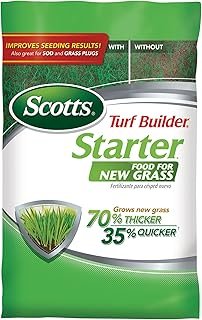
2. Scotts Turf Builder Lawn Food
If your lawn just needs a solid nutritional boost without any extra features, the standard Scotts Turf Builder Lawn Food is the workhorse option. It's a straightforward granular fertilizer that feeds and strengthens your grass against the stress of summer heat and drought. No insect control, no frills, just consistent feeding that helps your roots dig deeper and your blades hold onto moisture longer.
Why I picked it
This is the best pure fertilizer on the list for homeowners who want reliable, no-nonsense feeding. It doesn't try to do everything, and that's actually its strength. The formula is designed to feed for an extended period, which means fewer applications and less risk of over-fertilizing during the hottest weeks.
Key specs
- Coverage area: 5,000 sq. ft. per 12.5 lb. bag
- Application type: Granular, compatible with any spreader
- Grass type compatibility: All grass types
- Feeding duration: Up to 6 weeks per application
- Season: Suitable for any time during the growing season, including summer
- Reported rating: 4.6/5 from verified buyer reviews
Real-world experience
Aggregate user reviews report consistent results when this product is applied in late spring and again in mid-summer. Homeowners with cool-season grasses like Kentucky bluegrass and fescue say it helps maintain color during July and August when these grasses typically go dormant or turn brown. The granular formula is easy to spread with a basic drop spreader, and most users notice improved thickness and color within 10 to 14 days.
It's also a popular choice for people who want to pair it with a separate pest control product rather than using an all-in-one formula.
Trade-offs
This product doesn't include any insect control, so if you're dealing with summer pests like grubs or chinch bugs, you'll need a separate treatment. Some buyers mention that the bag can be heavy to carry around larger yards, and the granular formula requires thorough watering after application to activate properly. A few users in extremely hot climates (consistent 100°F+ days) noted that results were slower compared to spring applications, which is typical for any fertilizer under extreme heat stress.
3. Advanced 16-4-8 Balanced NPK
For homeowners who prefer liquid fertilizers or have smaller lawns to manage, the Advanced 16-4-8 Balanced NPK offers a concentrated spray option that's easy to apply and fast-acting. The 16-4-8 NPK ratio is well-suited for summer because it provides enough nitrogen for green growth without pushing excessive tender growth that heat can damage. It's a smart pick if you want precise control over how much product you're using.
Why I picked it
The liquid format gives you faster nutrient absorption compared to granular options, which matters when your grass is actively stressed from heat. The 16-4-8 ratio is balanced enough to support both root development and blade growth without the burn risk that comes with higher-nitrogen formulas. It's also one of the most affordable options per application.
Key specs
- NPK ratio: 16-4-8 (nitrogen, phosphorus, potassium)
- Volume: 32 oz. concentrated liquid
- Application type: Liquid spray, mix with water
- Coverage: Treats up to 3,200 sq. ft. when diluted per instructions
- Grass type compatibility: All grass types
- Reported rating: 4.2/5 from verified buyer reviews
Real-world experience
Verified buyer feedback shows this liquid fertilizer works well for spot-treating stressed areas or for homeowners with smaller yards under 3,000 sq. ft. who don't want to deal with a spreader. Users report visible greening within 5 to 7 days of application, which is faster than most granular options. It's also popular among people who already use a hose-end sprayer for other lawn treatments, since the mixing process takes just a few minutes.
Homeowners in humid southeastern states noted it performed well during summer months when applied in the early morning to avoid rapid evaporation.
Trade-offs
The 32 oz. bottle covers less area than the granular options, so it's less practical for larger lawns unless you buy multiple bottles. You'll also need a sprayer, which is an additional investment if you don't already own one. Some buyers reported that the concentrated formula requires careful measuring, as over-application can lead to temporary leaf burn in temperatures above 95°F.
And because it's a liquid, the feeding duration is shorter than slow-release granular products, meaning you'll need to reapply more frequently during peak summer.
How I picked
I evaluated each product across four main criteria: heat tolerance of the formulation, risk of lawn burn at summer temperatures, coverage value, and how well each one addresses the specific problems lawns face in July and August. I looked at verified buyer reviews across multiple regions, manufacturer application guidelines, and the NPK ratios to understand how each product behaves under heat stress.
I also considered whether a product includes slow-release nitrogen, which is critical for summer feeding. Fast-release nitrogen can push rapid growth that's vulnerable to heat damage and drought. Products with polymer-coated or sulfur-coated granules tend to release nutrients over 6 to 8 weeks, which is the sweet spot for summer applications.
I didn't test long-term soil health impacts beyond a single growing season. If you're dealing with deeper soil issues like compaction or pH imbalance, you'll want to address those separately before relying on any fertilizer. I also didn't evaluate these products for use on newly sodded or freshly seeded lawns, since young grass has different nutrient sensitivities that go beyond the scope of this comparison.
Buying guide — what actually matters for Best Lawn Fertilizer For Summer Heat
NPK ratio and what it does for summer lawns
The NPK ratio tells you the percentage of nitrogen (N), phosphorus (P), and potassium (K) in the fertilizer. For summer heat, you want a formula with moderate nitrogen and higher potassium. Nitrogen drives green growth, but too much in summer pushes tender new blades that can't handle the heat.
Potassium strengthens cell walls and improves drought resistance, which is exactly what your grass needs when temperatures stay above 90°F for days on end. A ratio like 16-4-8 or 24-0-11 works well for summer because it feeds without overstimulating.
Slow-release vs. fast-release nitrogen
This is the single most important factor for summer fertilizing. Slow-release nitrogen feeds your lawn gradually over 6 to 8 weeks, reducing the risk of burning and preventing the surge of weak growth that fast-release formulas cause. Look for products that use polymer-coated urea or sulfur-coated granules.
Fast-release formulas are cheaper upfront, but they demand more frequent applications and carry a much higher burn risk when soil temperatures exceed 85°F.
Granular vs. liquid application
Granular fertilizers are the standard for most lawns because they're easy to spread with a broadcast or drop spreader and they feed over a longer period. Liquid fertilizers absorb faster through the leaf blades, which gives you quicker visible results, but they require more frequent reapplication. If you have a large lawn, granular is almost always the more practical choice.
For smaller yards or spot treatments, a liquid concentrate gives you precise control.
Insect control: do you need it built in?
Summer is peak season for chinch bugs, sod webworms, grubs, and fire ants. If you've noticed irregular brown patches that don't respond to watering, insects are likely part of the problem. A fertilizer with built-in insect control saves you a separate application, but it's not necessary if your lawn is pest-free.
Using an insecticide when you don't need one can disrupt beneficial organisms in your soil, so be honest about whether you actually have a pest issue before choosing an all-in-one product.
Coverage area and value per application
Always check the coverage area on the bag or bottle. A 5,000 sq. ft. granular bag typically costs less per square foot than a 32 oz. liquid concentrate that covers 3,200 sq. ft. If your lawn is larger than 5,000 sq. ft., you'll need multiple bags or bottles, which adds up quickly.
Calculate your actual lawn size before buying so you don't end up short or overpaying for more product than you need.
Watering requirements after application
Most granular fertilizers need to be watered in within 24 to 48 hours of application to activate the nutrients and prevent the granules from sitting on the blade surface, which can cause spotting or burning. If you're in a region with watering restrictions during summer, check your local guidelines before applying. Liquid fertilizers are less dependent on post-application watering, but they still perform best when the soil has some moisture.
Frequently Asked Questions (FAQ)
Can I fertilize my lawn when it's over 90°F?
Yes, but you need to choose the right product and apply it correctly. Use a slow-release granular fertilizer or a balanced liquid formula, and apply it in the early morning or late evening when temperatures are lower. Avoid high-nitrogen fast-release products during extreme heat, as they can burn stressed grass.
Watering in the fertilizer thoroughly after application also reduces burn risk.
How often should I fertilize during summer?
Most slow-release granular fertilizers need only one application every 6 to 8 weeks during the growing season. For summer specifically, one application in early July and another in mid-August is a solid schedule for most grass types. Liquid fertilizers may need reapplication every 3 to 4 weeks since they absorb and deplete faster.
Will fertilizer burn my lawn in summer heat?
It can, especially if you use a fast-release formula or apply it during the hottest part of the day without watering it in. Slow-release products are much safer for summer use. Always follow the application rate on the label, and never apply more than recommended thinking it will help your lawn recover faster.
Over-fertilizing in heat is one of the most common mistakes homeowners make.
Is liquid or granular fertilizer better for summer?
It depends on your lawn size and how quickly you want results. Granular is better for large lawns and longer feeding duration. Liquid is better for smaller yards, spot treatments, and faster visible greening.
Both work in summer as long as the NPK ratio is appropriate and you avoid over-applying.
Do I need insect control in my summer fertilizer?
Only if you have an active pest problem. Signs of insect damage include irregular brown patches, grass that pulls up easily from the soil, or visible insects on the surface. If your lawn is healthy and pest-free, a plain fertilizer gives you better nutrient value without introducing unnecessary chemicals into your yard.
Can I use these fertilizers on newly seeded lawns?
Most manufacturers recommend waiting until new grass has been mowed at least 3 to 4 times before applying any fertilizer, including summer formulas. Young seedlings are sensitive to both nutrients and insecticides, so applying too early can damage or kill new growth. If you've recently overseeded, wait until the grass is well-established before using any of these products.
Final verdict
The Scotts Turf Builder SummerGuard Lawn Food is my top recommendation for most homeowners dealing with summer heat. It feeds your lawn while handling the insects that cause the most damage during hot months, which makes it the most complete single-product solution available. If you want a straightforward fertilizer without insect control, the standard Scotts Turf Builder Lawn Food is the better pick, especially for larger lawns where you want extended feeding with fewer applications.
For smaller yards or anyone who prefers a liquid spray, the Advanced 16-4-8 Balanced NPK gives you fast results at a budget-friendly price point. Match the product to your lawn's actual needs, apply it at the right time of day, and water it in well. That's the formula for getting through summer with a lawn you're proud of.
Affiliate disclosure: This post contains affiliate links. If you buy through one of these links, I may earn a small commission at no extra cost to you. It never changes my recommendation, I only suggest gear I'd actually buy myself.