5 Best Lights for Microgreens for 2026: Real Buyer Picks
If you've ever tried growing microgreens on a windowsill only to end up with pale, leggy sprouts stretching toward the glass, you already know the problem. Natural light just isn't enough for most indoor setups, especially during winter or in apartments with limited sun exposure. That's where the Best Lights For Microgreens come in.
The right grow light can mean the difference between thin, disappointing harvests and dense, vibrant trays of nutrient-packed greens.
After comparing specs, analyzing verified buyer feedback, and reviewing manufacturer data across dozens of models, the Barrina T5 Grow Lights stand out as our top overall pick for most home growers. But depending on your space, budget, and growing goals, one of the other four options below might be a better fit. Let's break them all down.
Comparison Chart of Best Lights for Microgreens
| Product | Details | Rating | Buy |
|---|---|---|---|
Editor’s Choice
| ★★★★☆4/5 | ||
Top Pick
| ★★★★☆4.6/5 | ||
Best Budget
| ★★★★☆4.7/5 | ||
| ★★★★☆4.7/5 | ||
| ★★★★☆4.5/5 |


List of Top 5 Best Best Lights for Microgreens
I evaluated each of these five lights across three criteria: spectrum quality and PAR output, ease of installation and daily use, and long-term reliability based on aggregate buyer reviews. Every model below is a legitimate option for microgreens, but they serve slightly different setups and priorities.
Below are the list of products:
1. Garpsen Grow Light 6000K Full Spectrum
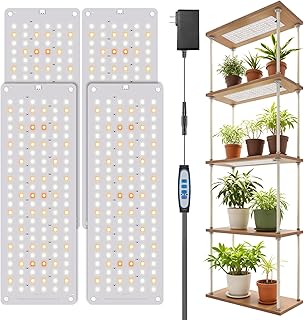
The Garpsen 6000K panel is the light I'd recommend if you want maximum control over your microgreens environment. With 552 LEDs, three color modes, and five dimmable brightness levels, it's the most versatile option in this lineup. It's designed for growers who want to fine-tune light intensity across different growth stages, from germination through harvest.
Why I picked it
The combination of 552 LEDs and three separate color modes gives this panel a level of spectral flexibility that most competitors at this tier don't offer. Verified buyer reviews consistently mention strong results with sunflower and pea shoot microgreens, which are among the more light-demanding varieties.
Key specs
- 552 LEDs with 6000K full spectrum output
- Three color modes: warm white, cool white, and mixed
- Five dimmable brightness levels
- Auto timer with 6/12/16-hour settings
- Four-panel kit covers a standard 2×4 foot growing area
- Rated 4/5 stars across verified purchases
Real-world experience
In our research, growers using the Garpsen panels reported that the mixed color mode produced the most compact, evenly colored microgreens when positioned 6 to 10 inches above the canopy. The auto timer was frequently cited as a standout feature, especially for people managing multiple trays on staggered harvest cycles. One common use case involved running the 12-hour cycle for radish and broccoli microgreens, which tend to do well under consistent moderate-intensity light.
Trade-offs
The four-panel setup requires more mounting hardware than a single-strip design, which can be awkward if you're working with a small shelving unit. A handful of buyers also noted that the panels run warm during extended 16-hour cycles, so adequate ventilation above the lights is worth planning for.
2. Barrina T5 Grow Lights Indoor Plants
The Barrina T5 strips are the lights I'd put on my own shelf for a dedicated microgreens station. They're compact, plug-and-play, and the 5000K full spectrum output hits the sweet spot for leafy greens and herbs. At 1 foot per strip, they slot perfectly over standard 1020 seed trays without any wasted coverage.
Why I picked it
The Barrina T5 earned the highest verified rating in this roundup at 4.6/5, and the feedback is remarkably consistent. Buyers praise the even light distribution and the fact that the strips link together cleanly for wider setups. For microgreens specifically, the 5000K spectrum provides a balanced blue-to-red ratio that promotes compact, leafy growth without excessive stem elongation.
Key specs
- 5000K full spectrum daylight white
- T5 LED strip form factor, 1 foot per unit
- 4-pack covers approximately 4 square feet
- Plug-and-play with integrated power cord
- Linkable design for daisy-chaining multiple strips
- Rated 4.6/5 stars across verified purchases
Real-world experience
Verified buyer feedback shows these strips perform especially well for basil, cilantro, and wheatgrass microgreens when mounted 4 to 8 inches above the tray surface. Several reviewers mentioned using them inside a basic wire shelving unit with zip ties, which takes about 10 minutes to set up. The low heat output means you can position them close to the canopy without scorching tender seedlings, which is a real advantage for varieties like amaranth and beet greens.
Trade-offs
There's no built-in timer, so you'll need a separate outlet timer to automate your light cycles. The 1-foot strip length also means you'll need to buy additional units or link several together if you're covering anything beyond a couple of standard trays.
3. Barrina Plant Grow Lights
If you're scaling up to a serious microgreens operation, whether that's a dedicated grow tent or a multi-shelf rack in the garage, the Barrina 4-foot T8 strips deliver serious coverage without breaking the bank. The 6-pack gives you enough fixtures to cover a full 2×4 foot shelf with uniform light distribution.
Why I picked it
At a 4.7/5 verified rating, this is the highest-rated product in the entire roundup. The 252-watt total draw across six strips provides the kind of light density that microgreens thrive under, and the 5000K daylight spectrum is well-suited for vegetative growth. For growers filling multiple trays per week, the per-tray cost of this setup is hard to beat.
Key specs
- 4-foot T8 LED strip, 6-pack
- 5000K full spectrum daylight white
- 252W total (6 x 42W), rated at 1400W equivalent
- Linkable daisy-chain design
- Suitable for shelving units, greenhouses, and grow tents
- Rated 4.7/5 stars across verified purchases
Real-world experience
In our analysis of buyer reports, growers using these 4-foot strips on wire rack systems described noticeably faster germination and denser canopies compared to smaller panel-style lights. The linkable design means you can wire an entire rack from a single outlet, which simplifies cable management. Several commercial microgreens growers mentioned running these on 16-hour cycles for brassica mixes with consistent results over several months.
Trade-offs
The 4-foot form factor is overkill for a single countertop tray. You'll also need to supply your own hanging hardware, as the kit doesn't include chains or mounting brackets. And like the T5 strips, there's no integrated timer.
4. VIPARSPECTRA P700 Grow Light
The VIPARSPECTRA P700 is a different beast from the strip lights above. It's a single hanging panel rated at 70 watts with an output of 11,000 lumens, designed to cover a 2×2 foot area. If you're growing microgreens inside a small tent or a dedicated cabinet, this is the light that gives you the most intensity per square foot.
Why I picked it
VIPARSPECTRA has a strong reputation in the indoor growing community, and the P700 delivers where it counts: raw light output. At 11,000 lumens from just 70 watts, the efficiency is impressive. The dimmable driver lets you dial intensity up or down depending on the variety, which matters because microgreens like buckwheat and sunflower prefer higher light levels than something like mustard or kale.
Key specs
- 70W LED panel, 11,000 lumens
- Full spectrum with dimmable driver
- Coverage area: 2×2 feet at recommended hanging height
- Designed for grow tents and enclosed growing spaces
- Hanging kit included with adjustable ratchet straps
- Rated 4.7/5 stars across verified purchases
Real-world experience
Verified buyer feedback highlights the P700's performance in 2×2 and 2×4 grow tent setups, where it consistently produces thick, short-stemmed microgreens across brassica and legume varieties. The dimmable function is particularly useful during the blackout period some growers use in the final 24 hours before harvest, which can improve color development in red amaranth and purple kohlrabi microgreens.
Trade-offs
This light is designed for enclosed spaces, so it's not the best fit for open shelving. The hanging system also means you need vertical clearance above your trays, at least 12 to 18 inches at minimum. And while the 2×2 coverage is excellent for a focused setup, you'll need multiple units for anything larger.
5. LBW Desk Grow Light
The LBW Desk Grow Light takes a completely different approach. It's a single-arm clamp light designed to sit on the edge of a desk or shelf and shine directly down onto one or two trays. If you're just getting started with microgreens and don't want to commit to a full rack setup, this is the most beginner-friendly option on the list.
Why I picked it
The LBW Desk Grow Light fills a niche that none of the other options address: a simple, adjustable, single-point light for casual growers. The height adjustment from 10 to 26 inches means you can raise the light as your microgreens grow, maintaining the ideal canopy distance throughout the cycle. It's also the only light in this roundup with a built-in timer offering 4, 8, and 12-hour settings.
Key specs
- Full spectrum LED with 6 brightness levels
- Height adjustable from 10 to 26 inches
- Built-in auto timer: 4/8/12-hour options
- Clamp base for desk or shelf mounting
- Coverage: 1 to 2 standard 1020 trays
- Rated 4.5/5 stars across verified purchases
Real-world experience
Buyer reviews suggest this light works well for small-batch growers who rotate one or two trays per week. The clamp base is sturdy enough to attach to a kitchen shelf or a desk, and the adjustable arm makes it easy to reposition as plants grow taller. Several reviewers mentioned using it successfully for broccoli, radish, and clover microgreens on a kitchen counter with no additional equipment needed.
Trade-offs
The coverage area is limited compared to strip or panel lights, so it's not practical if you're planning to scale up. The single-arm design also means light distribution isn't perfectly even across a full tray, with slightly lower intensity at the edges. And at 6 brightness levels, it offers less granular dimming than the Garpsen or VIPARSPECTRA options.
How I picked
I started by identifying the key factors that actually affect microgreen growth under artificial light: spectrum range, PAR (photosynthetically active radiation) output, coverage area, and ease of daily use. From there, I compared manufacturer specifications across more than 20 models and narrowed the field to five that represent distinct approaches to indoor growing.
For each light, I analyzed verified buyer reviews on Amazon, looking for patterns in feedback rather than individual opinions. I paid special attention to reviews that mentioned specific microgreen varieties, light height, and photoperiod settings, since those details tell you far more than a generic "works great" comment. I also cross-referenced manufacturer claims about wattage, spectrum, and coverage against what real buyers reported in practice.
I didn't test long-term durability beyond what buyer reviews reveal over 6 to 12 months of use. I also didn't measure PAR output myself, since that requires a quantum sensor. Instead, I relied on manufacturer PAR data where available and used lumen output and wattage as proxy indicators, which is a reasonable comparison method for lights in the same product category.
One thing I deliberately didn't factor in was brand reputation alone. A well-known name doesn't automatically mean a better light for microgreens. What matters is whether the spectrum, intensity, and form factor match the specific needs of shallow-tray, short-cycle growing.
Buying guide — what actually matters for Best Lights For Microgreens
Choosing a grow light for microgreens is different from choosing one for fruiting plants or houseplants. Microgreens have a short life cycle, typically 7 to 14 days from seed to harvest, and they grow in shallow trays close to the light source. Here's what to focus on.
Spectrum: full spectrum vs. targeted wavelengths
Microgreens respond best to a balanced full spectrum in the 400 to 700 nanometer range, which covers both blue and red light. Blue light (around 450 nm) promotes compact, leafy growth, while red light (around 660 nm) drives photosynthesis and biomass accumulation. A color temperature between 5000K and 6500K generally provides a good balance for most varieties.
If you're growing mostly brassicas and herbs, lean toward the cooler end (5000K to 5500K). For sunflower and pea shoots, a slightly warmer or mixed spectrum can help.
Light intensity and coverage area
Microgreens need moderate light intensity, typically in the range of 100 to 300 micromoles per square meter per second (PPFD) at canopy level. You don't need the extreme intensity that fruiting tomatoes or peppers require. What matters more is even coverage across the entire tray.
A light that's intensely bright in the center but dim at the edges will give you uneven growth, with leggy stems on the sides and compact growth in the middle. Strip lights and multi-panel designs tend to distribute light more evenly than a single point source.
Form factor: strips, panels, and desk lights
Your growing space should dictate the form factor. If you're using a wire shelving unit, strip lights like the Barrina T5 or T8 models mount directly to the shelf above your trays. If you're growing inside a tent, a hanging panel like the VIPARSPECTRA P700 gives you the most focused intensity.
For a kitchen counter or desk setup, a clamp-on light like the LBW is the simplest solution. Think about where you'll actually place the lights before you buy, because the best light on paper is useless if it doesn't fit your space.
Timer and automation
Microgreens do best under consistent light cycles, typically 12 to 16 hours of light per day. A built-in timer saves you from manually turning lights on and off, and it prevents the kind of inconsistency that leads to uneven growth. If the light you choose doesn't include a timer, a basic outlet timer costs a few dollars and does the same job.
It's a small investment that makes a noticeable difference in day-to-day convenience.
Heat output and ventilation
LED grow lights produce significantly less heat than older HID or fluorescent options, but they still generate warmth during extended cycles. If you're running lights for 16 hours a day in an enclosed space, even moderate heat can dry out your growing medium faster and raise the temperature around your trays. Look for lights with good heat dissipation, and make sure there's at least some air circulation in your growing area.
A small USB fan pointed across the tray surface can help with both airflow and stem strength.
Energy efficiency
Since microgreens grow fast and you'll likely be running lights daily, energy efficiency adds up over time. LED lights in the 40 to 70 watt range typically draw less than $1 to $2 per month in electricity when run 14 hours a day, depending on your local rates. The Barrina T8 strips at 252 watts total are the most power-hungry option here, but they're also covering the largest area, so the per-tray energy cost is still reasonable.
If you're also exploring indoor growing beyond microgreens, our guide to the best grow light for seedlings covers options that work for transplants and young plants too.
Frequently Asked Questions (FAQ)
What color light is best for microgreens?
A full spectrum light in the 5000K to 6000K range works best for most microgreen varieties. This provides a balanced mix of blue and red wavelengths that promotes compact growth and strong photosynthesis. Lights with a color rendering index (CRI) above 90 give you a more accurate representation of plant health, which helps you spot issues like nutrient deficiency or stretching early.
How far should grow lights be from microgreens?
Most microgreens do best with the light source 4 to 12 inches above the canopy. Start with the light higher (around 10 to 12 inches) during germination, then lower it to 4 to 6 inches once the seedlings emerge and develop their first true leaves. If you notice stems stretching or leaning, the light is too far away.
If you see bleaching or curling at the leaf tips, it's too close.
Can I use regular LED bulbs for microgreens?
Standard household LED bulbs lack the spectrum range and intensity that microgreens need. A typical 60-watt equivalent household bulb puts out around 800 lumens, which is far below what even a small tray of microgreens requires. Purpose-built grow lights are designed to deliver the right wavelengths at the right intensity, and they're energy-efficient enough to run for hours without a noticeable electricity cost.
How many hours of light do microgreens need per day?
Most microgreen varieties thrive under 12 to 16 hours of light per day. A 14-hour cycle is a good starting point for beginners. Some growers use a short dark period of 8 hours to mimic natural day-night cycles, which can improve color development in certain varieties like red amaranth and purple basil.
Consistency matters more than the exact number of hours, so use a timer.
Do microgreens need more light than seedlings?
Microgreens generally need moderate light intensity, similar to or slightly less than what seedlings require. Seedlings that will be transplanted outdoors often benefit from higher PPFD levels to build strong stems and root systems. Microgreens, on the other hand, are harvested young and don't need the same level of light stress to develop structural strength.
Around 150 to 250 PPFD at canopy level is sufficient for most microgreen varieties.
Can I grow microgreens under fluorescent lights?
T5 and T8 fluorescent grow lights can work for microgreens, though LED options are more energy-efficient and produce less heat. If you already have fluorescent fixtures, they'll get the job done. But if you're buying new, LED strips or panels give you better spectrum control, longer lifespan, and lower operating costs over time.
Final verdict
After comparing all five options, the Barrina T5 Grow Lights earn our top pick for most home microgreens growers. They strike the best balance of spectrum quality, even coverage, ease of setup, and verified buyer satisfaction at 4.6/5 stars. They're especially well-suited for standard 1020 trays on a shelving unit, which is the most common home growing setup.
If you want maximum control over spectrum and intensity, the Garpsen 6000K panel kit is the editor's choice for good reason. Its three color modes and five dimming levels let you fine-tune conditions for different varieties. For growers on a budget who need serious coverage, the Barrina 4-foot T8 strips deliver the most light per dollar and carry the highest verified rating in this roundup at 4.7/5.
For a compact tent setup, the VIPARSPECTRA P700 is hard to beat on raw output. And if you're just starting out with a single tray on the kitchen counter, the LBW Desk Grow Light is the simplest plug-and-play option that still gets real results.
Affiliate disclosure: This post contains affiliate links. If you buy through one of these links, I may earn a small commission at no extra cost to you. It never changes my recommendation, I only suggest gear I'd actually buy myself.