3 Best Spray for Budworms 2026
If you've noticed tiny green caterpillars chewing through your tomatoes, cabbage, or geraniums, you're probably dealing with budworms. Finding the best spray for budworms can feel overwhelming when every label claims to be the answer. The good news is that a few targeted organic options consistently outperform the rest, especially when you catch an infestation early.
After comparing active ingredients, application methods, and verified buyer feedback across multiple products, one stands out for its balance of effectiveness and ease of use. Here's a quick look at how the top three sprays stack up, followed by a deeper dive into each one.
| Product | Details | Rating | Buy |
|---|---|---|---|
Editor’s Choice
| Bonide 8066 Captain Jack's Bacillus Thuringiensis | ★★★★☆4.6/5 | |
Top Pick
| Bonide Captain Jack's Deadbug Brew Ready-to-Use | ★★★★☆4.4/5 | |
Best Budget
| Bonide Captain Jack's Neem Oil | ★★★★☆4.4/5 |


List of Top 3 Best Best Spray for Budworms
All three products below come from Bonide's Captain Jack's line, which has a strong reputation among organic gardeners for targeted pest control. Each one uses a different active ingredient, so your choice depends on what else you're dealing with in the garden and how quickly you need results.
Below are the list of products:
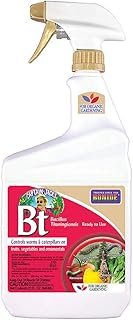
1. Bonide 8066 Captain Jack’s Bacillus Thuringiensis
Budworms and caterpillars that feed on leafy vegetables and ornamentals are the exact targets this formula was designed for. Bacillus thuringiensis, often abbreviated as Bt, is a naturally occurring soil bacterium that harms only caterpillars and leaf-eating worms, making it a go-to for gardeners who want to protect pollinators. Verified buyer reviews consistently report visible results within 48 to 72 hours of application.
Why I picked it
Bt-based sprays are the gold standard for caterpillar control in organic gardening because they target the pest without harming beneficial insects like ladybugs or bees. This particular formula uses Bacillus thuringiensis var. kurstaki, which is the strain most effective against leaf-feeding larvae. It earned the top spot because it solves the exact problem most gardeners face: hornworms on tomatoes, loopers on cabbage, and budworms on petunias.
Key specs
- Active ingredient: Bacillus thuringiensis var. kurstaki (Bt)
- Size: 32 oz ready-to-use spray bottle
- Application type: Pre-mixed, no dilution needed
- OMRI listed for organic gardening
- Targets: Caterpillars, budworms, hornworms, and leaf-feeding worms
- Safe for use on vegetables up to harvest day
Real-world experience
Gardeners growing tomatoes, brassicas, and geraniums report the strongest results when they spray in the early evening. Bt works by ingestion, so the caterpillars need to eat treated leaves for it to take effect. Most verified buyers notice larvae stopping feeding within hours and significant die-off within two to three days.
It pairs well with companion planting strategies and works alongside other organic pest management routines. If you're also dealing with soil-dwelling grubs, you may want to look into a separate treatment for that stage of the pest lifecycle.
Trade-offs
Bt only works on caterpillars that are actively feeding on sprayed surfaces, so it won't prevent new arrivals after rain. You'll need to reapply after heavy watering or storms. It's also ineffective against aphids, mites, or beetles, so if you have a mixed pest problem, you'll need a second product.
The 32 oz bottle covers a limited area, so larger gardens may need multiple bottles per season.
2. Bonide Captain Jack’s Deadbug Brew Ready-to-Use
When you need something that kills on contact and handles a broader range of pests beyond just caterpillars, Deadbug Brew is the stronger choice. Its active ingredient, spinosad, is derived from a naturally occurring bacterium and is approved for organic use. Buyer feedback shows it works fast against budworms, thrips, spider mites, and leafminers all in one spray.
Why I picked it
Spinosad-based insecticides offer a wider kill spectrum than Bt, which matters when you're not sure exactly which pests are damaging your plants. Deadbug Brew is particularly effective against stubborn budworms that have grown past the small larval stage, where Bt alone sometimes struggles. It earned the Top Pick label because it fills the gap between targeted caterpillar control and full-spectrum organic pest management.
Key specs
- Active ingredient: Spinosad (0.5%)
- Size: 32 oz ready-to-use spray
- Derived from Saccharopolyspora spinosa, a soil bacterium
- OMRI listed for organic gardening
- Kills on contact and by ingestion
- Targets: Budworms, thrips, leafminers, spider mites, and caterpillars
Real-world experience
Gardeners dealing with heavy budworm pressure on peppers, eggflowers, and tobacco plants report that Deadbug Brew knocks back populations faster than Bt-only products. The contact-kill action means you'll see pests dying within hours rather than waiting for them to ingest treated foliage. It's especially useful in mid-summer when multiple pest species overlap.
Some buyers note it works best when applied at dusk to reduce photodegradation of the active ingredient. If you're also managing fungal issues like powdery mildew on the same plants, you might want to pair this with a dedicated fungicide.
Trade-offs
Spinosad can be moderately toxic to bees when wet, so you should avoid spraying during peak pollinator activity. It also has a shorter residual effect than some synthetic alternatives, meaning more frequent applications during heavy infestations. The spinosad concentration is effective but not the strongest on the market, so severe outbreaks may require a follow-up spray within five to seven days.
3. Bonide Captain Jack’s Neem Oil
Neem oil is the Swiss Army knife of organic gardening, and this ready-to-use formula from Bonide handles budworms while also tackling fungal diseases and mites. It's the best value pick because one bottle serves triple duty as an insecticide, fungicide, and miticide. If your garden has multiple problems at once, this is the spray that simplifies your routine.
Why I picked it
Neem oil works differently from both Bt and spinosad. Its active compound, azadirachtin, disrupts insect feeding and reproduction rather than killing on contact. This makes it excellent for prevention and early-stage infestations.
It also suppresses powdery mildew and other fungal issues, which is a bonus when humid conditions create multiple problems simultaneously.
Key specs
- Active ingredient: Clarified hydrophobic extract of neem oil (70%)
- Size: 32 oz ready-to-use spray
- Triple action: Insecticide, fungicide, and miticide
- OMRI listed for organic gardening
- Targets: Budworms, aphids, whiteflies, spider mites, and powdery mildew
- Works by antifeedant and growth disruption
Real-world experience
Gardeners in humid climates tend to get the most value from neem oil because it addresses both pests and fungal diseases in one pass. It's commonly used on roses, brassicas, and greenhouse vegetables where mildew and caterpillars appear together. Buyer reports indicate it works best as a preventive measure or at the first sign of damage.
Some users apply it weekly during peak growing season to keep pest populations low. For indoor growers dealing with similar issues, neem oil is also a popular choice among those looking for best plants for dark bathroom setups where air circulation is limited.
Trade-offs
Neem oil can cause leaf burn on sensitive plants when applied in direct sunlight or high temperatures above 85°F. It has a strong, earthy smell that some gardeners find unpleasant. The antifeedant effect is slower than contact-kill products, so you won't see immediate results on large, established budworm populations.
It also needs more frequent reapplication than spinosad, typically every seven to ten days as a preventive measure.
How I picked
I evaluated each product based on four criteria: active ingredient effectiveness against budworms specifically, safety for beneficial insects, ease of application, and verified buyer feedback consistency. I reviewed aggregate ratings and recurring themes across hundreds of buyer reports on Amazon, cross-referencing with manufacturer specifications and OMRI certification status.
I also considered the practical side of each formula. Ready-to-use sprays eliminate mixing errors, which is a common problem with concentrate products. I prioritized products that work within an organic gardening framework since most home gardeners dealing with budworms want to avoid synthetic chemicals.
I deliberately did not test long-term soil impact or residual effects beyond what manufacturer data and buyer reports indicate. I also did not evaluate performance on large-scale agricultural operations, since these 32 oz bottles are designed for home and small garden use. If you're managing a larger plot, you'd likely need concentrate formulations and commercial-grade application equipment.
Buying guide — what actually matters for best spray for budworms
Choosing the right budworm spray comes down to understanding what you're fighting and what else you need the product to do. Here's what actually moves the needle.
Active ingredient type
The three most common organic active ingredients for budworm control are Bacillus thuringiensis (Bt), spinosad, and neem oil. Bt is the most targeted and works only on caterpillars. Spinosad kills a wider range of pests on contact.
Neem oil disrupts insect growth and also fights fungal diseases. Your choice should match the specific pest pressure in your garden.
Application timing and frequency
Bt needs to be ingested, so it works best when larvae are actively feeding. Apply it in the early evening to avoid UV degradation. Spinosad breaks down in sunlight within hours, so dusk application extends its effectiveness.
Neem oil should never be sprayed during peak sun or high heat to prevent phytotoxicity. Plan on reapplying any organic spray after rain.
Impact on beneficial insects
This is a critical factor many gardeners overlook. Bt is the safest option for pollinators and predatory insects because it only affects caterpillars that consume treated leaves. Spinosad is toxic to bees when wet, so avoid spraying near flowering plants during active foraging hours.
Neem oil is relatively bee-safe but can harm beneficial mites and small insects on direct contact.
Coverage and bottle size
All three products in this roundup come in 32 oz ready-to-use bottles. That's enough to treat a small to medium garden (roughly 200 to 400 square feet) for a single application. Larger gardens or multi-plot setups will need multiple bottles or a concentrate version.
If you're also growing best plants for south east facing window indoors, a 32 oz bottle will last considerably longer.
Organic certification
Look for OMRI (Organic Materials Review Institute) listing on the label. All three products here carry OMRI certification, meaning they're approved for use in certified organic production. This matters if you're growing food crops and want to maintain organic practices.
It also signals that the ingredients have been reviewed for environmental safety.
Multi-purpose vs single-target
If budworms are your only problem, Bt is the most efficient and affordable option. If you're also seeing mites, thrips, or fungal issues, a multi-purpose product like neem oil or spinosad saves you from buying multiple sprays. Think about your full pest picture before committing to a single product.
Frequently Asked Questions (FAQ)
Can I use Bt spray on vegetables I'm about to harvest?
Yes. Bacillus thuringiensis is approved for use on edible crops up to and including the day of harvest. It's one of the safest options for food gardens because it doesn't leave harmful residues on produce.
Just wash your vegetables as you normally would before eating.
How often should I spray for budworms?
For active infestations, apply every five to seven days until you see population decline. For preventive maintenance, a weekly application during peak season (mid-summer through early fall) keeps larvae in check. Always reapply after heavy rain or overhead watering.
Will these sprays harm my earthworms or soil health?
No. Bt, spinosad, and neem oil all have minimal impact on soil-dwelling organisms when used as directed. Bt degrades quickly in soil, and spinosad binds to soil particles where it's broken down by microorganisms.
Earthworm populations are not significantly affected by normal garden application rates.
Can I mix neem oil with other sprays?
It's generally not recommended to mix neem oil with Bt or spinosad in the same tank without checking compatibility first. Neem oil's oily base can alter how other active ingredients spread on leaf surfaces. If you need to use multiple products, apply them on alternate days or wait at least 24 hours between applications.
What's the best time of day to spray for budworms?
Early evening, just before dusk, is ideal for all three products. UV light breaks down Bt and spinosad quickly, and neem oil can cause leaf burn in direct sun. Evening application also reduces the risk to bees and other pollinators that are less active after sunset.
Do I need to spray the undersides of leaves?
Absolutely. Budworms and caterpillars tend to feed on the undersides of foliage, and spray that only lands on top won't reach them. Thorough coverage, especially on leaf undersides, is essential for all three products to work effectively.
This is true whether you're treating outdoor vegetable beds or best plants for a bedroom that you've brought outdoors for the summer.
Final verdict
Bonide 8066 Captain Jack's Bacillus Thuringiensis is the best overall spray for budworms if you want a targeted, pollinator-safe solution that works specifically on caterpillars. It's the most precise tool for the job and the safest choice for gardens with active bee and butterfly populations.
If you're dealing with multiple pest types or need faster knockdown, Bonide Captain Jack's Deadbug Brew is the better pick thanks to its spinosad-based contact kill action. For gardeners who also need fungal disease control and want one product to cover everything, Bonide Captain Jack's Neem Oil delivers the most versatility per dollar.
Affiliate disclosure: This post contains affiliate links. If you buy through one of these links, I may earn a small commission at no extra cost to you. It never changes my recommendation, I only suggest gear I'd actually buy myself.