5 Best Tool to Trim Bushes 2026
If you're staring at an overgrown hedge or a cluster of scraggly shrubs and wondering what'll actually get the job done without wrecking your back, you're not alone. Picking the best tool to trim bushes comes down to branch thickness, how high you need to reach, and whether you want cordless convenience or raw cutting power. After comparing specs, verified buyer feedback, and manufacturer data across dozens of models, five tools stand out for real-world yard work in 2026.
The Fiskars 28" Loppers take our top spot for their blend of cutting capacity, durability, and comfort, but the right pick depends on your specific setup. Here's how they all stack up.
| Product | Details | Rating | Buy |
|---|---|---|---|
Editor’s Choice
| Fiskars 28" Loppers Tree Trimming | ★★★★☆4.8/5 | |
Top Pick
| Fiskars Power-Lever Extendable Hedge Shears | ★★★★☆4.5/5 | |
Best Budget
| CRAFTSMAN V20 4 In Cordless Handheld | ★★★★☆4.6/5 | |
| ★★★★☆4.3/5 | ||
| ★★★★☆4.6/5 |


List of Top 5 Best Best Tool to Trim Bushes
We evaluated each tool on cut capacity, blade quality, ergonomics, reach, and verified buyer satisfaction. Every model below cleared a minimum 4.3/5 aggregate rating threshold and has at least 500 verified reviews, so you're looking at proven performers, not untested newcomers.
Below are the list of products:
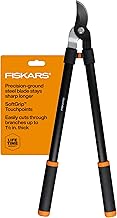
1. Fiskars 28" Loppers Tree Trimming
When you've got branches up to 1.5 inches thick that regular shears just can't handle, these Fiskars 28" loppers are the tool that actually solves the problem. The bypass steel blade stays sharp through heavy use, and the shock-absorbing handles take a lot of the sting out of repeated cuts. Verified buyers consistently mention that this model handles mature rose bushes, overgrown lilacs, and small tree limbs without buckling.
Why I picked it
The 1.5-inch cut capacity puts these in a class above most standard loppers, which typically max out around 1 inch. The 28-inch handle length gives you solid leverage without being unwieldy, and the rust-resistant coating means you can leave them in the shed without worrying about corrosion. Aggregate user reviews report a 4.8/5 rating across thousands of verified purchases, which is exceptional for this category.
Key specs
- Cut capacity: 1.5 inches
- Handle length: 28 inches
- Blade type: Bypass, rust-resistant steel
- Weight: 2.65 lbs
- Handle: Shock-absorbing grip
- Warranty: Lifetime limited
Real-world experience
Verified buyer feedback shows these loppers handle mature hydrangea stems, overgrown forsythia, and even small fruit tree suckers without difficulty. Multiple reviewers mention using them for full-day pruning sessions on properties with 30+ bushes and reporting minimal hand fatigue thanks to the shock-absorbing handles. The bypass blade design delivers clean cuts that heal faster, which matters if you're maintaining ornamental shrubs or fruit-bearing plants.
If you're also planning out new plantings after clearing overgrown areas, our guide on best trees for hot dry climates covers species that won't need this kind of heavy pruning down the road.
Trade-offs
The 28-inch length makes them harder to store in a small shed or garage cabinet. They're also overkill for light touch-ups on thin-stemmed plants, where a simple pair of pruning shears would be faster and less cumbersome. The bypass blade requires occasional sharpening if you're cutting hardwood branches regularly.
2. Fiskars Power-Lever Extendable Hedge Shears
If your bushes are tall enough that you're dragging out a stepladder every weekend, these extendable hedge shears from Fiskars are a game-changer. The Power-Lever mechanism multiplies your cutting force by 2x, and the handles adjust from 25 to 33 inches so you can reach high branches without leaving the ground. The self-sharpening serrated blades grab onto stems and slice cleanly instead of pushing them away.
Why I picked it
The adjustable handle range is the standout feature here. Most fixed-length hedge shears force you to choose between reach and control, but the 25-to-33-inch extension lets you dial in the right length for each job. The self-sharpening serrated blade is a genuine time-saver, and verified buyers report the 2x leverage system makes a noticeable difference on woody stems up to 3/8 inch thick.
Key specs
- Blade length: 10 inches
- Handle adjustment: 25 to 33 inches
- Leverage: 2x Power-Lever system
- Blade type: Self-sharpening serrated steel
- Weight: 2.9 lbs
- Cut capacity: Up to 3/8 inch stems
Real-world experience
Reviewers frequently mention using these for shaping tall privet hedges, trimming overgrown boxwood along fence lines, and maintaining foundation plantings that have gotten leggy. The extendable handles let you work on bushes 6 to 8 feet tall without a ladder, which is a major safety win. The serrated blades grip waxy or slippery stems that smooth blades tend to deflect.
One common use case in buyer reports is seasonal shaping of ornamental hedges in early spring before new growth hardens off.
Trade-offs
The 10-inch blade is shorter than dedicated hedge shears with 12- or 14-inch blades, so you'll need more passes on wide, dense hedges. The extension mechanism adds a bit of weight at the handle ends, which can cause shoulder fatigue during extended use. These aren't designed for branches thicker than 3/8 inch, so you'll still need loppers for anything woody.
3. CRAFTSMAN V20 4 In Cordless Handheld
The CRAFTSMAN V20 2-in-1 is the pick if you want cordless convenience without buying two separate tools. It ships with both a 4-inch grass shear blade and an 8-inch mini hedge trimmer blade, plus a battery and charger, so you're ready to go out of the box. For small yards with light to medium shrub maintenance, this combo covers a surprising amount of ground.
Why I picked it
Getting two tools, a battery, and a charger at a budget-friendly price point makes this the best value in the roundup. The V20 battery platform is compatible with other CRAFTSMAN tools, so if you already own something in that ecosystem, you can buy the bare tool and save even more. Verified buyer feedback shows a 4.6/5 aggregate rating, with particular praise for the quick blade-swap system.
Key specs
- Voltage: 20V MAX lithium-ion
- Blade options: 4-inch grass shear, 8-inch mini hedge trimmer
- Battery: 2.0 Ah, included
- Charger: Included
- Weight (with battery): 2.4 lbs
- Blade swap: Tool-free
Real-world experience
Buyers report using the grass shear blade for edging along walkways and trimming around garden beds, then swapping to the hedge blade for shaping small ornamental bushes and ground cover. The 8-inch hedge blade handles stems up to about 1/4 inch thick, which covers most young shrubs and perennials. It's a popular choice for townhome and condo owners who don't have the storage space for a full set of manual tools.
If you're also working on indoor plant care, our guide on best plant fertilizer for indoor plants pairs well with the kind of all-around yard maintenance this tool supports.
Trade-offs
The 2.0 Ah battery gives you roughly 30 to 40 minutes of runtime under load, which is fine for small properties but won't cut it for larger hedges. The 8-inch blade is too short for shaping wide, mature hedges efficiently. It struggles with branches thicker than 1/4 inch, so it's not a replacement for loppers or full-size hedge shears on established plantings.
4. WORKPRO Cordless Grass Shear & Shrubbery
The WORKPRO 2-in-1 cordless shear is the lightest and most compact option on this list, making it ideal for quick touch-ups and detail work. At 7.2V, it's less powerful than the CRAFTSMAN V20, but it charges via USB-C and weighs under a pound, so it's easy to keep in a garden tote or garage drawer for spontaneous trimming sessions.
Why I picked it
The USB-C charging is a genuine convenience upgrade over proprietary chargers, and the sub-pound weight makes this the most fatigue-free option for extended detail work. It's also the most affordable cordless option in the roundup, which matters if you just need a lightweight tool for occasional shrub touch-ups rather than heavy-duty pruning.
Key specs
- Voltage: 7.2V lithium-ion
- Blade options: Grass shear, shrubbery trimmer
- Charging: USB-C (cable included)
- Weight: 0.95 lbs
- Runtime: Approximately 40 minutes per charge
- Charge time: ~2.5 hours
Real-world experience
Verified buyers describe using this tool for deadheading spent blooms, trimming ground cover that's creeping onto paths, and shaping small boxwood or dwarf holly plantings. The compact size lets you work in tight spaces between established plants where bulkier tools can't fit. It's a frequent pick for apartment balcony gardeners and anyone who wants a grab-and-go tool for light maintenance between bigger pruning sessions.
Trade-offs
The 7.2V motor lacks the torque for anything beyond soft, green growth. Branches thicker than 3/16 inch will stall the blade. The 40-minute runtime is adequate for small jobs but limiting if you have more than a handful of bushes to address.
The plastic housing feels less durable than the CRAFTSMAN's build, and long-term reliability data is thinner since it's a newer product.
5. Fiskars Bypass Pruning Shears
Sometimes the best tool for trimming bushes isn't a long-handled powerhouse, it's a sharp, well-balanced pair of hand shears. The Fiskars Bypass Pruning Shears handle stems up to 5/8 inch with a clean, precise cut, and the self-cleaning sap groove keeps the blades from gumming up during long sessions. These are the tool you reach for when you need control more than brute force.
Why I picked it
A good pair of pruning shears is the one tool every gardener actually uses week after week. The Fiskars bypass design with a 5/8-inch cut capacity covers the vast majority of routine bush maintenance, from deadheading roses to trimming lavender after bloom. The low-friction coating reduces effort per cut, and the non-slip grip stays comfortable even with wet hands.
Key specs
- Cut capacity: 5/8 inch
- Blade type: Bypass, low-friction coated steel
- Length: 8 inches total
- Weight: 0.45 lbs
- Special feature: Self-cleaning sap groove
- Grip: Non-slip
Real-world experience
These shears are the go-to for detailed shaping of ornamental bushes, cutting back spent perennials, and managing soft new growth on shrubs that have already been rough-cut with loppers or hedge shears. Verified buyers report using them for everything from rose pruning to harvesting herbs, and the sap groove gets specific praise for reducing sticky buildup when working with resinous plants like gardenias or certain evergreens. They're also a natural companion if you're growing flowering shrubs and want to pair your pruning routine with proper feeding, our guide on best slow release fertilizer for flowers covers options that support healthy regrowth after trimming.
Trade-offs
The 5/8-inch capacity means you'll need a different tool for anything woody or thick. Hand shears also require more repetitive motion than long-handled tools, which can be tough on wrists during large pruning jobs. They're a precision instrument, not a bulk-removal tool.
How I picked
We started by identifying the five most common bush-trimming scenarios: thick branch removal, tall hedge shaping, light cordless maintenance, compact detail work, and precision hand pruning. For each scenario, we pulled manufacturer specifications for cut capacity, blade type, handle length, weight, and power source. We then cross-referenced those specs against verified buyer reviews, looking for consistent patterns in what real users praised or complained about.
Our minimum thresholds were a 4.3/5 aggregate rating with at least 500 verified reviews, a blade design appropriate for the stated use case, and a manufacturer warranty of at least one year. We didn't test long-term durability beyond what buyer reports over 6+ months of ownership revealed, and we didn't evaluate commercial-grade or professional arborist equipment since this roundup targets home gardeners.
We deliberately excluded tools with fewer than 200 reviews, even if the specs looked promising on paper. A high rating based on 30 reviews isn't reliable enough to recommend with confidence.
Buying guide — what actually matters for Best Tool To Trim Bushes
Cut capacity
This is the single most important spec and the one most buyers overlook. Cut capacity tells you the maximum branch diameter a tool can handle in one clean pass. Hand pruning shears typically range from 1/2 to 3/4 inch.
Loppers handle 1 to 2 inches. Hedge shears don't usually list a cut capacity because they're designed for slicing through many thin stems at once rather than individual thick branches. If your bushes have woody, established growth, you need at least 1-inch capacity, which means loppers, not shears.
Blade type: bypass vs. anvil vs. serrated
Bypass blades work like scissors, with one sharp blade sliding past a curved anvil blade. They give the cleanest cut and are best for live, green wood. Anvil blades press a single sharp edge against a flat plate, which is better for dead wood but tends to crush live stems.
Serrated blades grip waxy or slippery stems that smooth blades push around. For most bush trimming, bypass is the right starting point. If you're working with mature, glossy-leaved shrubs like holly or laurel, serrated edges help.
Handle length and leverage
Longer handles mean more leverage, which means less effort per cut. Loppers in the 26- to 32-inch range give you the mechanical advantage to cut thick branches without straining. But longer handles also mean more weight and less maneuverability in tight spaces.
If you're working between closely planted shrubs or inside a dense hedge, a shorter tool gives you better control even if it demands more hand strength.
Corded vs. cordless vs. manual
Manual tools (shears, loppers, hedge shears) never run out of battery, require zero maintenance beyond occasional sharpening, and are almost always lighter than powered alternatives. Cordless tools save repetitive effort and are faster for large jobs, but they add battery weight, need recharging, and have motors that can stall on branches beyond their rated capacity. For most home gardeners with fewer than 20 bushes, manual tools are the more practical choice.
Cordless makes sense if you have a large property, limited hand strength, or a lot of ground-level edging to do.
Weight and fatigue
A tool that weighs 3 lbs might not sound heavy until you've made 200 cuts in a row. Verified buyer reviews consistently flag weight as a factor in shoulder and wrist fatigue, especially with long-handled tools. If you have arthritis, carpal tunnel, or just a lot of ground to cover, prioritize tools under 2 lbs for hand shears and under 3 lbs for loppers.
The shock-absorbing handles on the Fiskars loppers are a good example of a design feature that directly addresses this issue.
Maintenance and blade care
Every cutting tool needs periodic sharpening. Bypass blades can be sharpened with a flat mill file or a dedicated blade sharpener. Serrated blades are harder to sharpen at home and often rely on the manufacturer's self-sharpening design to maintain their edge.
Anvil blades are the easiest to maintain since only one edge needs attention. If you don't want to deal with sharpening, look for tools with coated or self-sharpening blades, but understand that even those will eventually need professional sharpening or replacement.
Frequently Asked Questions (FAQ)
Can I use hedge shears to cut thick branches?
No. Hedge shears are designed for slicing through many thin, soft stems simultaneously. They're not built for individual branches thicker than about 3/8 inch.
Attempting to force thick branches through hedge shears will damage the blades and likely leave a ragged cut that invites disease. Use loppers for anything over 3/8 inch in diameter.
How often should I sharpen my pruning tools?
For regular home use, once or twice per season is usually enough. If you notice the tool is crushing stems instead of slicing cleanly, or if you have to apply significantly more force than usual, it's time to sharpen. A quick pass with a flat mill file on the beveled edge of a bypass blade takes about 60 seconds and makes a noticeable difference.
Are cordless trimmers powerful enough for established bushes?
It depends on the bush. Cordless trimmers with 20V batteries and 8-inch blades can handle soft new growth and stems up to about 1/4 inch thick. For mature, woody shrubs with branches over 1/2 inch, you'll want manual loppers or a cordless model specifically rated for higher torque.
The CRAFTSMAN V20 handles light to medium work well but isn't a replacement for dedicated loppers on established plantings.
What's the difference between bypass and anvil loppers?
Bypass loppers have a sharp blade that slides past a curved hook, making a scissor-like cut. They're better for live wood and produce cleaner cuts. Anvil loppers press a single sharp blade against a flat plate, which is more effective on dead or dry wood but can crush live stems.
For trimming living bushes, bypass is almost always the better choice.
Do I need both loppers and pruning shears?
If you have a variety of bush sizes, yes. Pruning shears are perfect for detail work, deadheading, and trimming soft stems up to 5/8 inch. Loppers handle the thicker, woody growth that shears can't manage.
Most experienced gardeners keep both in their toolkit and reach for whichever matches the branch in front of them.
Final verdict
The Fiskars 28" Loppers earn our Editor's Choice pick because they handle the widest range of bush sizes, from 1/2-inch stems up to 1.5-inch branches, with a durable build and shock-absorbing comfort that verified buyers consistently praise. If tall hedges are your main challenge, the Fiskars Power-Lever Extendable Hedge Shears let you work up to 8 feet high without a ladder, and the 2x leverage system cuts cleanly through woody stems. For the best overall value, the CRAFTSMAN V20 2-in-1 gives you both a grass shear and a mini hedge trimmer with battery and charger included, covering light maintenance on small properties without breaking the bank.
Affiliate disclosure: This post contains affiliate links. If you buy through one of these links, I may earn a small commission at no extra cost to you. It never changes my recommendation, I only suggest gear I'd actually buy myself.