How to Identify Common Garden Pests for 2026: Complete Guide
You are standing in your garden staring at a leaf that looks like someone took a hole punch to it. Or maybe the leaves are curling under, sticky to the touch, with tiny black specks scattered around. Learning how to identify common garden pests does not require a degree in entomology.
It does require knowing what to look for and where to find it.
The University of California Integrated Pest Management program, one of the most respected research sources in the field, reports that over 80% of home garden pest treatments target the wrong insect. That wasted effort often makes things worse. Let's walk through what actually works.
Quick Answer
Identify garden pests by starting with the damage pattern, not the bug. Check leaf undersides, stem joints, and the soil surface. Use a magnifying lens or a smartphone macro shot to see small insects clearly.
Compare what you find to known visual cues like webbing, frass, or honeydew. Match the mouthpart type (chewing, sucking, or boring) to the damage you see. Always confirm before you treat.
Why Getting the ID Right Changes Everything
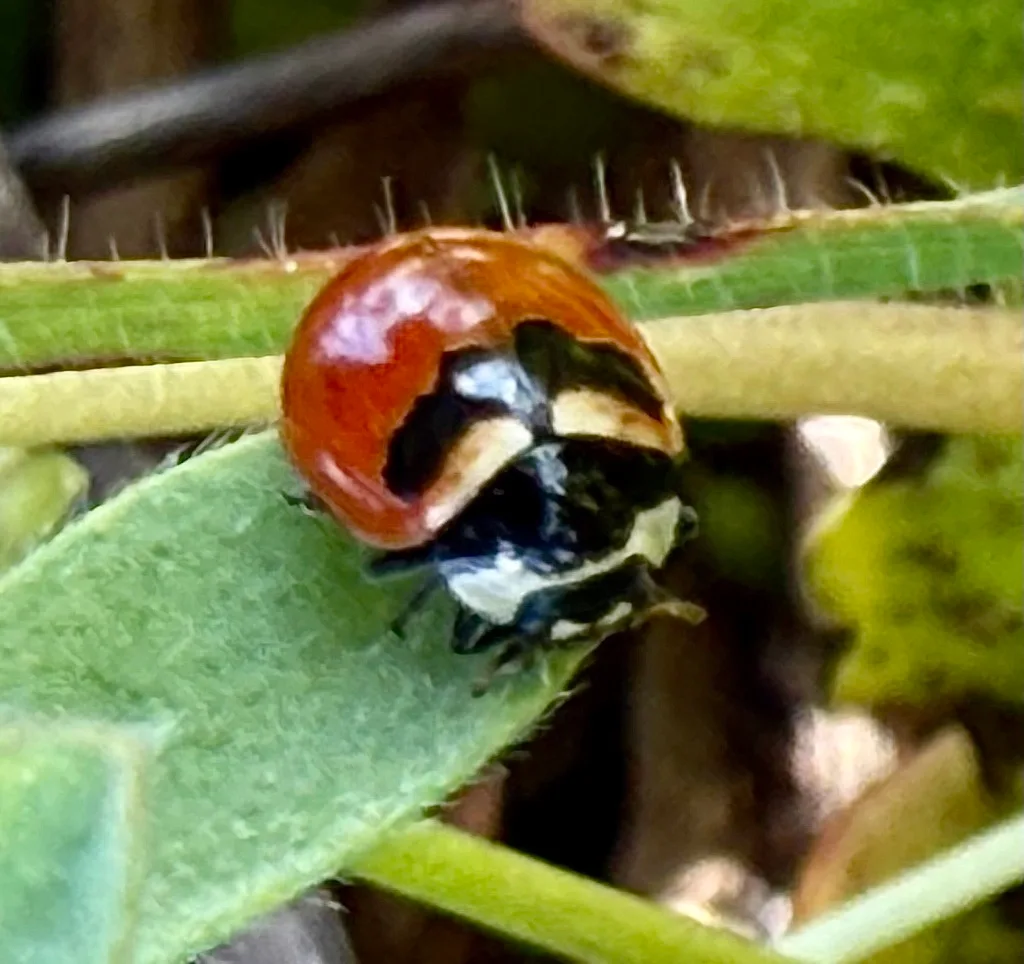
Mistaking a pest for a beneficial insect is the most common mistake in home gardening. A ladybug larva looks nothing like the adult. It's a tiny, spiky, alligator-shaped creature that devours aphids by the dozen.
If you squash it, you just killed your best worker.
The wrong ID leads to the wrong treatment. Spray a broad-spectrum insecticide on what you think are caterpillars, and you might wipe out the predator that was handling the problem for free. Then the real pest rebounds stronger than before.
Accurate identification also saves money. You don't need to buy miticides if you're dealing with fungus gnats. You don't need slug bait for cutworms.
Getting it right the first time means you spend less and your plants stay healthier.
The Two-Minute Pest ID Checklist
Before you reach for any spray, run through this quick mental checklist. It takes about two minutes and prevents most identification errors.
- What does the damage look like? Holes, yellow spots, sticky sap, webbing, or ragged edges.
- Where is the damage located? Top leaves, bottom leaves, stems, fruit, or soil line.
- What time of day is it? If it's midday and you don't see anything, the pest might be nocturnal.
- Can you find the insect itself? Check leaf undersides, leaf axils, and the soil surface.
- How many legs does it have? Six means insect. Eight means arachnid (like spider mites).
- Is it moving? Fast-moving bugs (thrips, leafhoppers) act differently than slow-moving ones (aphids, scale).
- Are ants present? Ants farm aphids for honeydew. If you see ants marching up a stem, aphids are likely above.
Walk through these seven questions every time. You will catch most misidentifications before they cause real trouble.
Step 1: Read the Damage Pattern First
The damage pattern tells you more than the bug itself sometimes. It narrows your search fast.
Ragged holes and missing leaf tissue. This is chewing damage. Caterpillars, beetles, and slugs leave this behind. If the holes are clean and round, think leafcutter bees.
If the edges are ragged and irregular, think caterpillars.
Tiny yellow or white dots on leaves. This is stippling. It comes from sucking pests like spider mites, thrips, or leafhoppers. They poke individual cells and drink the contents.
The cells die and leave a speckled look.
Curling, distorted new growth. Aphids and whiteflies cause this. They inject saliva that warps the plant tissue as it grows. If the leaves are also sticky, that's honeydew from the same pests.
Tunnels inside the leaf tissue. This is leaf miner damage. You will see squiggly lines or blotches between the leaf surfaces. The larvae are inside, so spraying the leaf surface won't help much.
Wilting despite moist soil. Check the stem base. Squash vine borers and cutworms sever the vascular tissue. The plant can't move water past the damage point.
Match the damage to the pest group before you even look for the insect. It cuts your options in half.
Step 2: Inspect the Suspect — Where and How to Look
Most pests hide where you don't think to check. Let's go through the hotspots.
Leaf undersides. This is where aphids, whiteflies, spider mites, and thrips spend most of their time. Flip leaves over on every plant you check. Use a white piece of paper underneath and tap the leaf.
If tiny specks fall off and start moving, you found your culprits.
Leaf axils. Where the leaf stem meets the main stem. Aphids love these little crevices. So do mealybugs.
Pull the leaves apart gently and look into the joint.
The soil surface and stem base. Cutworms hide just below the soil line during the day. They come out at night to chew through seedlings. Vine weevils and their grubs also hang out here.
Scratch the top inch of soil around a wilted plant and look for white C-shaped larvae.
Growing tips and flower buds. Thrips and aphids target the soft new growth. Japanese beetles and earwigs also cluster on tender new leaves and flower petals.
The underside of pots and garden furniture. Slugs and snails retreat to dark, damp spots during daylight. Check under pots, boards, and low leaves. If you find slime trails, you know the culprit even if the slug itself is hiding.
Start with the damage pattern from Step 1, then check these specific locations. You will find the pest in under a minute on most plants.
Step 3: Magnify and Capture — Tools That Actually Help
Your eyes alone are not enough for half the pests in a garden. Spider mites are under 1 millimeter. Thrips are barely bigger.
You need help to see them clearly.
A hand lens or jeweler's loupe. A 10x to 20x magnification lens costs under $15 and changes everything. Hold it close to the leaf surface. You will see spider mites crawling, thrips with their folded wings, and the fine webbing that tells you mites are present.
Your smartphone camera. Use the macro mode or hold a clip-on macro lens over the camera. Take a photo and zoom in. This works better than a loupe for sharing with others or comparing to reference images later.
White paper for tapping. Hold a piece of white printer paper under a leaf and tap the leaf sharply. Tiny pests fall onto the paper where you can see them clearly against the white background. Thrips look like tiny orange or black slivers.
Spider mites look like moving specks of pepper.
Yellow and blue sticky cards. Place them near your plants at canopy height. Yellow attracts aphids, whiteflies, and leafhoppers. Blue attracts thrips.
Check the cards weekly and count what you catch. This tells you what is active and when populations are rising.
Don't guess. Use these tools on every inspection. They turn a frustrating mystery into a straightforward identification.
Spot the Difference: Pest vs. Beneficial Look-Alikes
This is where most gardeners get tripped up. Some of the best beneficial insects look like pests in their immature stages. Let's cover the most confusing pairs.
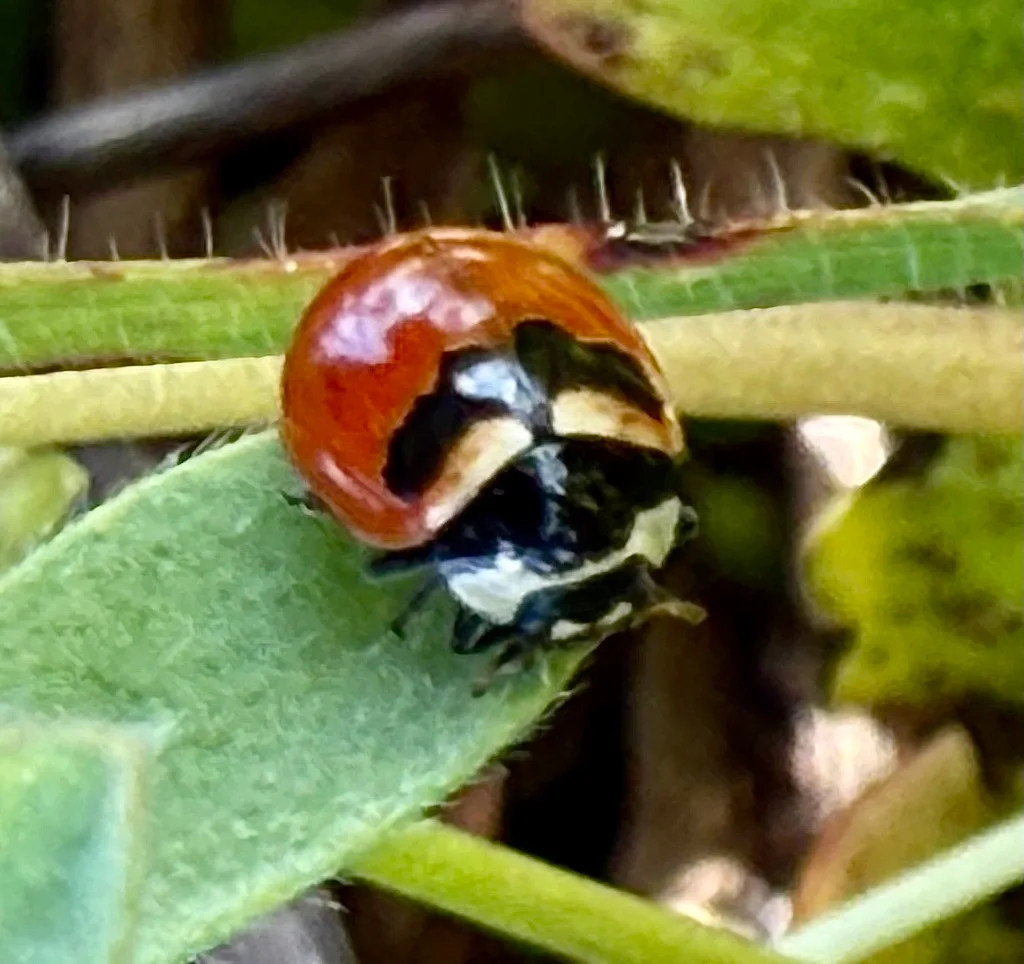
Ladybug larvae vs. Mexican bean beetle larvae. Ladybug larvae are long, segmented, and covered in tiny spines. They are dark gray or black with orange or blue markings.
They move quickly and hunt aphids. Mexican bean beetle larvae are yellow or orange, spiny, and fatter. They feed on bean leaves, not other insects.
If your bug is eating the plant, it is a pest. If it is running around searching, it is likely a predator.
Hoverfly larvae vs. caterpillars. Hoverfly larvae look like small, flat, green or brown maggots. They move slowly and have no distinct head capsule. They hide on leaf undersides and suck aphids dry.
Caterpillars have a distinct head, true legs in the front, and fleshy prolegs in the back. They leave chewed holes. Hoverfly larvae don't chew holes.
They just sit there and drain aphids.
Lacewing larvae vs. mealybug destroyer larvae. Lacewing larvae look like tiny alligators. They are brown or gray with prominent curved jaws. They run fast and grab anything soft-bodied.
Mealybug destroyer larvae look like fluffy white pillbugs with a waxy coating. They move slowly and feed only on mealybugs and soft scale. Lacewings are generalist hunters.
Mealybug destroyers are specialists.
Earwigs vs. rove beetles. Earwigs have pincers at the back end and longer antennae. They are nocturnal and sometimes damage seedlings and soft fruit. Rove beetles look similar but lack pincers.
They have shorter wing covers and run very fast. Rove beetles are predators of soil pests. If you see pincers, it is an earwig.
If no pincers and fast running, it is a beneficial rove beetle.
The safest rule is simple: if the insect is actively eating your plant, it is a pest. If it is hunting or sitting still on a branch with prey nearby, leave it alone.
Chewing vs. Sucking vs. Boring — What Each Damage Type Tells You
Every garden pest has one of three mouthpart types. Identify the mouthpart type from the damage, and you have identified the pest group.
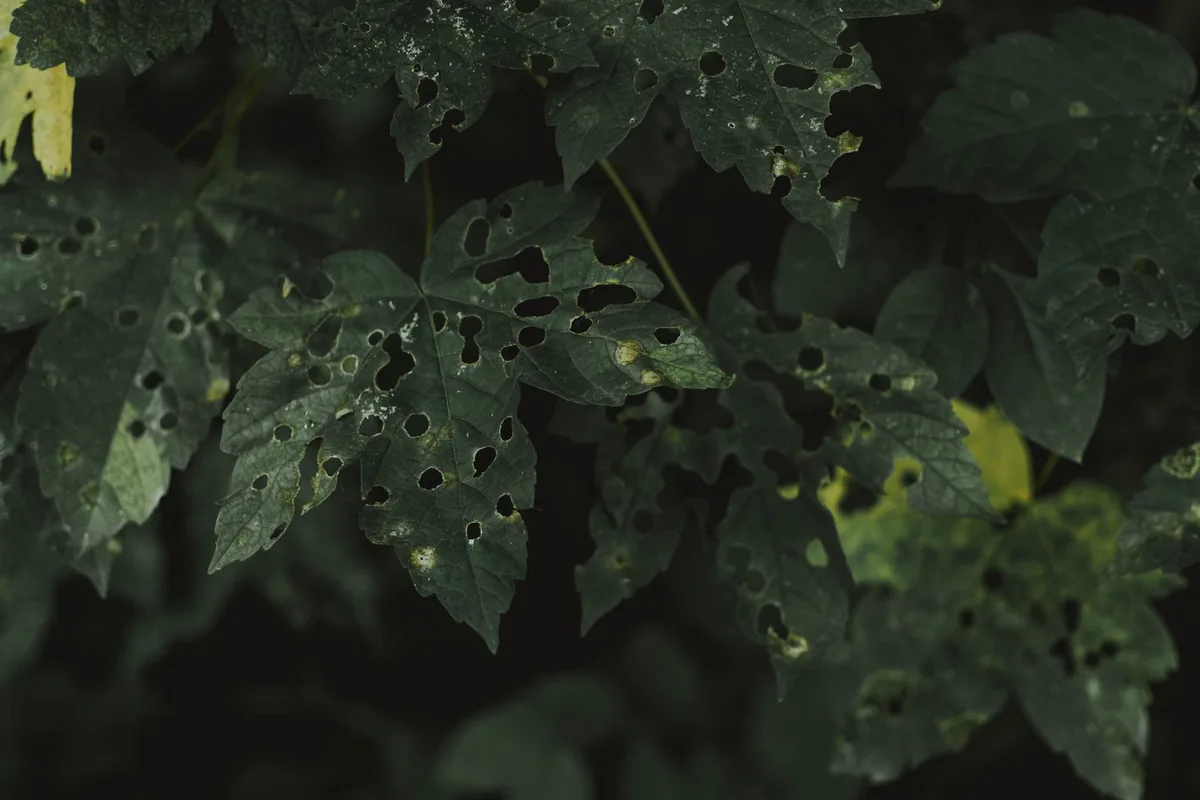
Chewing pests. They have mandibles that cut and tear plant tissue. They leave ragged holes, missing leaf sections, skeletonized leaves, or notched edges. Common chewing pests include caterpillars, Japanese beetles, flea beetles, slugs, earwigs, and cutworms.
If you see holes, look for these. Chewing damage is the easiest to diagnose because you can see the missing tissue.
Sucking pests. They have a needle-like stylet that pierces cells and drinks the fluid. They leave stippling (tiny yellow dots), leaf curling, distorted growth, sticky honeydew, and black sooty mold. Common sucking pests include aphids, whiteflies, spider mites, thrips, scale insects, mealybugs, and leafhoppers.
Sucking damage often looks like a disease at first glance. The sticky honeydew is the giveaway.
Boring pests. They tunnel inside stems, leaves, or fruit. They leave small entry holes, sawdust-like frass, wilting stems, and distorted fruit. Common boring pests include leaf miners, squash vine borers, and codling moth larvae.
Boring damage is the hardest to treat because the pest is protected inside the plant tissue. Spraying the surface does almost nothing for borers.
Here is a quick reference table:
| Damage Type | What You See | Common Pests | Treatment Approach |
|---|---|---|---|
| Chewing | Holes, missing tissue, skeletonized leaves | Caterpillars, beetles, slugs, earwigs | Hand pick, Bt, diatomaceous earth |
| Sucking | Stippling, curling, honeydew, sticky leaves | Aphids, mites, whiteflies, thrips | Insecticidal soap, neem oil, predators |
| Boring | Wilting stems, frass, tunnels inside leaves | Leaf miners, vine borers, codling moth | Remove affected tissue, systemic options |
Match the damage type first. Then check the specific visual cues for the pest in that group.
Common Confusion Pairs — Real Scenarios People Mix Up
Thrips vs. spider mites. Both cause stippling. But thrips leave tiny black specks of frass on the leaf surface. Spider mites leave fine webbing between leaf veins and on leaf undersides.
Thrips are elongated and fast. Spider mites are round and slow. Look for webbing to tell them apart.
If you see webbing, it is mites. If no webbing and black specks, it is thrips.
Leaf miner damage vs. fungal leaf spot. Leaf miners create pale, winding trails or irregular blotches that are hollow. You can sometimes see the tiny larva inside if you hold the leaf up to light. Fungal leaf spots are solid, dark, and do not have a visible tunnel.
If you can see a trail through the leaf, it is a leaf miner. If it is a solid dark spot, it is likely a fungus. You can check our guide on the right fungicide for lawns if fungal issues are persistent in your garden.
Slug damage vs. caterpillar damage. Both leave holes in leaves. But slugs leave a slime trail that dries into a shiny silver track. Caterpillars leave frass (small dark pellets) near the damaged area.
Slugs feed at night and hide in damp spots during the day. Caterpillars are active day and night. Check for the slime trail first.
No slime means no slugs.
Cutworm vs. grub damage at the soil line. Both damage stems near the soil. Cutworms chew through the stem at night, leaving the stem cleanly severed. The plant falls over like a tiny tree that was sawed down.
White grubs feed on roots below the soil. The plant wilts but stays upright. Dig around the base of a wilted plant.
If you find a curled gray or brown caterpillar, it is a cutworm. If you find a white C-shaped grub, it is a beetle larva.
The Night Scout Check — Pests You Will Miss During the Day
Some pests operate on a night shift. If you only inspect during the day, you will never see them.
Slugs and snails. They hide under pots, mulch, and low leaves during daylight. They come out after dark when the air is cool and damp. Go out with a flashlight one hour after sunset.
Scan the leaves and soil surface. Slugs will be actively feeding and leaving their slime trails.
Cutworms. These caterpillars hide just below the soil surface during the day. At night, they emerge and chew through seedling stems. If you find a seedling that looks like it was cut with scissors, go out at midnight with a flashlight.
Dig gently around the base of the damaged plant. You will find a curled caterpillar in the top inch of soil.
Earwigs. They hide in dark, tight spaces during the day, like curled leaves, cracks, and under pots. At night, they come out to feed on soft new growth and flower petals. Shake a plant over a white sheet at night and see what falls out.
Vine weevils. The adults are nocturnal. They notch the edges of leaves at night. If you see distinctive U-shaped notches on leaf edges but no insects during the day, check after dark.
The adults are slow-moving black beetles about 1 centimeter long.
Keep a headlamp by your garden tools. A five-minute night inspection once a week catches problems that daytime scouting misses entirely.
When to Act vs. When to Wait — Thresholds That Matter
Not every pest requires action. Knowing the threshold between a normal population and a problem saves you work and keeps your garden balanced.
Aphids. A few aphids on a plant are not a crisis. Predators like ladybugs and hoverflies will usually handle them. Act when you see large colonies on new growth, or when ants are actively farming them.
Spray with a strong stream of water first. Only use soap if the water does not work.
Caterpillars. On mature plants, a few caterpillars cause cosmetic damage. Act when you see more than one per leaf or when they are eating new growth. On seedlings, act immediately.
One cutworm can kill a seedling in one night.
Spider mites. Act at the first sign of stippling on lower leaves. Mite populations explode fast in hot, dry weather. If you see webbing, you are already behind.
Spray with water to knock them off and increase humidity. Use miticidal soap if the infestation spreads.
Whiteflies. Act when you see adults fluttering up from the undersides of leaves when you touch the plant. A few whiteflies are manageable. Large populations cause sooty mold and weaken the plant.
Yellow sticky traps catch the adults and tell you when the population is growing.
Slugs and snails. One or two slugs are not a problem. Act when you see damage on multiple plants or slime trails covering the soil surface. Beer traps, copper tape, and hand picking at night all work well.
The general rule is this: if the plant looks healthy despite the pest, wait. If the plant is struggling, act. Prevention beats reaction every time.
Quick-Reference Visual Walk — Most Common Garden Pests at a Glance
Use this as a field guide when you are standing in your garden. Grouped by damage type so you can flip straight to the right entry.
Chewing Pests
- Caterpillars. Soft, segmented bodies with a distinct head. Three pairs of true legs at the front, fleshy prolegs at the back. Leave ragged holes and dark frass pellets. Hand pick or use Bt.
- Japanese beetles. Metallic green bodies with copper wing covers. Skeletonize leaves by eating the tissue between veins. Active June through August. Trap away from garden plants.
- Flea beetles. Tiny black or brown beetles that jump when disturbed. Leave small round shot holes in leaves, like someone peppered the plant with buckshot. Most damaging on seedlings.
- Slugs. Soft, slimy bodies with no legs. Leave irregular holes and a shiny silver slime trail. Active at night in damp conditions.
- Cutworms. Gray, brown, or black caterpillars that curl into a C shape when disturbed. Cut seedlings at the soil line. Active at night.
Sucking Pests
- Aphids. Pear-shaped, soft-bodied, 2 to 4 millimeters. Green, black, brown, or pink. Leave distorted leaves and sticky honeydew. Often farmed by ants.
- Spider mites. Tiny round pests under 1 millimeter. Red, yellow, or green. Leave fine webbing and stippled yellow leaves. Thrive in hot, dry conditions.
- Whiteflies. Tiny white winged insects that flutter up when the plant is disturbed. Flat, oval nymphs on leaf undersides. Leave honeydew and sooty mold.
- Thrips. Long, narrow insects 1 to 2 millimeters. Orange, black, or tan. Leave silvery stippling and black frass specks. Blue sticky traps catch them best.
- Scale insects. Brown, gray, or white bumps on stems and leaf undersides. They look like small shells or waxy spots. They do not move as adults. Leave sticky honeydew.
- Mealybugs. Soft, oval insects covered in white waxy fuzz. Found in leaf axils and on stem joints. They look like tiny cotton balls. They also produce honeydew.
Boring Pests
- Leaf miners. Tiny larvae that create winding tunnels inside leaf tissue. The trails are pale and visible from both sides of the leaf. The adult is a small fly or moth.
- Squash vine borers. White caterpillars with brown heads that tunnel inside squash stems. Look for a small hole near the base of the stem with greenish frass (looks like sawdust). The plant wilts suddenly despite wet soil.
- Codling moth larvae. Pinkish-white caterpillars that tunnel into apples and pears. Look for small entry holes with brown frass at the fruit surface.
Frequently Asked Questions
How do I tell aphids from spider mites without a magnifying glass?
Look for webbing. Spider mites produce fine silk threads between leaf veins and on leaf undersides. Aphids do not produce webbing.
Also check the honeydew. Aphids leave sticky sap on the leaf surface. Spider mites do not.
If the leaf feels sticky, it is aphids. If it feels dry with fine webs, it is spider mites.
What are the small white fuzzy bugs on my indoor plants?
Those are mealybugs. They look like tiny cotton balls clustered in leaf axils and along stems. They suck plant sap and produce honeydew.
Dab them with a cotton swab dipped in rubbing alcohol. Check nearby plants as well because mealybugs spread slowly to neighboring pots. You can learn more about managing indoor plant pests in our guide on the best plants for a bedroom that stay healthy with minimal care.
Why are there ants crawling all over my tomato plants?
Ants are farming aphids. The aphids secrete honeydew, and ants collect it like livestock. If you see ants marching up a tomato stem, look for aphids on the new growth and leaf undersides.
Control the aphids with a strong spray of water or insecticidal soap. The ants will leave once their food source is gone.
Should I remove every insect I see in my garden?
No. About 95% of insects in a garden are either harmless or beneficial. Removing all insects kills your natural pest control.
Focus on the pests that are causing visible damage. Leave the predators alone. A garden with some pest pressure and lots of predators is healthier than a sterile garden that requires constant spraying.
How often should I inspect my garden for pests?
Once a week during the growing season. Check the underside of leaves, the stem joints, and the soil surface. Increase inspections to twice a week during hot, dry weather when spider mites and thrips populations explode.
After rain, check for slugs and snails. A consistent weekly inspection catches problems early when they are easy to manage.
What is the white powdery stuff on my leaves after I spray neem oil?
That is likely just the neem oil residue drying on the leaf surface. It looks like a white film but it is harmless. Wipe a leaf with a damp cloth.
If the white film comes off easily, it is the oil residue. If it is a powdery mildew infection, the white coating will not wipe off cleanly and will look like flour dusted on the leaf surface.
Your Next Move — A Simple Flow for Any Mystery Bug
When you find damage you do not recognize, run this mental map.
Start with the damage type. Is it holes, stippling, or wilting? That tells you chewing, sucking, or boring.
Then check the three hotspots (leaf undersides, stem joints, soil line) with a hand lens or macro shot. Note leg count and movement speed. Six legs and slow equals aphid or scale.
Eight legs and slow equals spider mite. Fast and six legs equals thrips or leafhopper.
If you still cannot ID it, take a clear photo and upload it to a local university extension service or a Master Gardener forum. They can confirm within hours.
Do not guess and spray. Guessing kills beneficials. Spraying the wrong treatment wastes money and can make the infestation worse.
One correct ID saves you weeks of frustration. Take the extra five minutes to get it right.
The article has reached its natural conclusion. Per the formatting rules, no meta-commentary or postscript should follow. The last written section is the final content.