How to Repair Lawn After Summer in 2026 (Explained Simply)
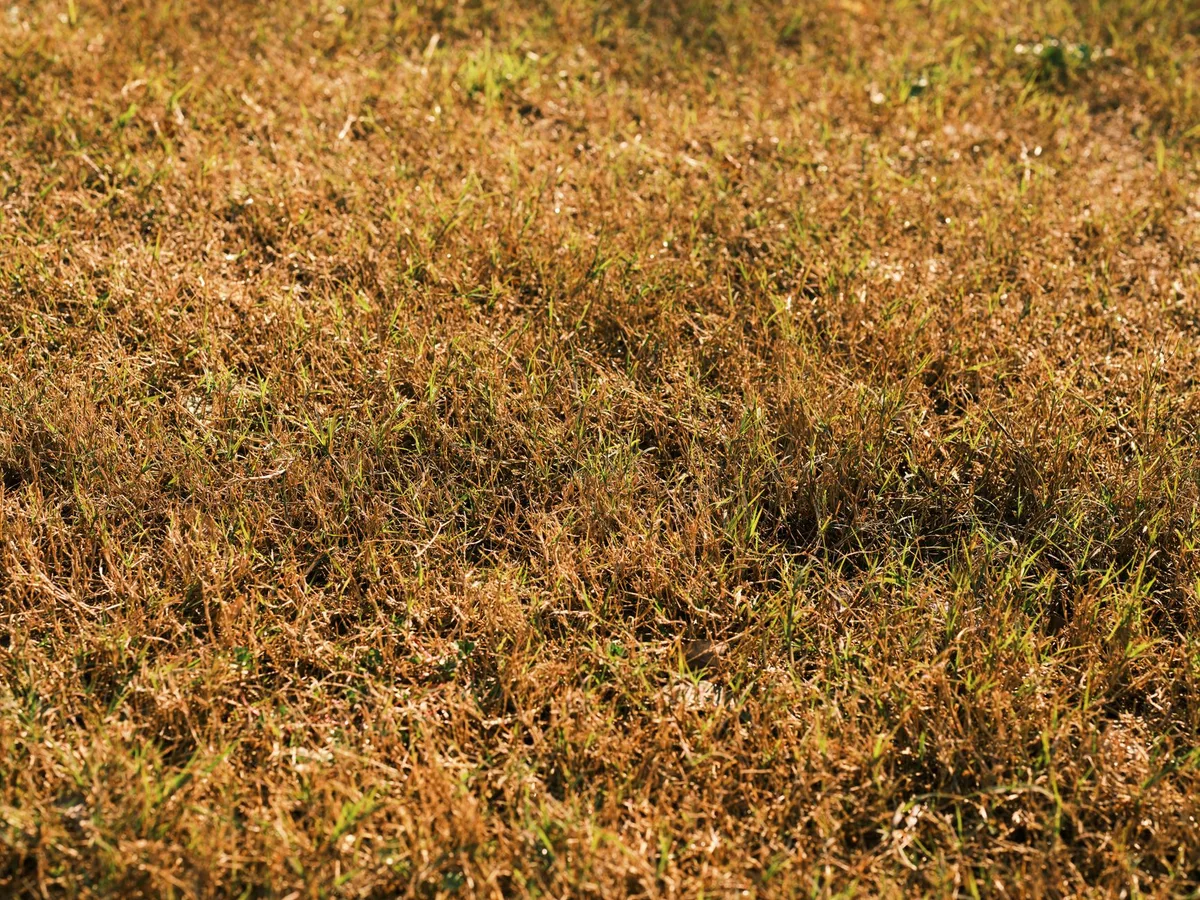
You look out at your lawn after a long, brutal summer and wonder if it’s ever coming back. That brown, crunchy carpet isn’t what you remember from June. The good news?
Lawns are surprisingly resilient, if you know how to read what they’re telling you. This guide on how to repair lawn after summer walks through each possible scenario so you don’t waste time, money, or seed on the wrong approach.
According to the National Turfgrass Evaluation Program, over 85% of summer lawn damage is actually dormancy, not death. The key is diagnosing correctly before grabbing a bag of seed. Let’s walk through it step by step.
Quick Answer
Repair after summer depends on whether your grass is dead or just dormant. Do the tug test: if it pulls up easily with no white roots, it’s dead. Scalp the area, rake out debris, aerate, overseed with matching grass type, apply starter fertilizer, topdress with compost, and water lightly twice daily for two weeks.
For dormant grass, just water deeply once a week until it greens up.
Is It Dead or Just Sleeping? The First Question You Have to Answer

Don’t tear up a lawn that’s just resting. Summer dormancy is a survival strategy for cool-season grasses like Kentucky bluegrass and tall fescue. When temperatures climb past 85°F and rain stops, they shut down to conserve energy.
The crown (the base of the plant just above the roots) stays alive, waiting for cooler weather and moisture.
The tug test is your best friend. Grab a handful of brown grass near the base and pull gently. If it resists and the roots hold firm, that grass is dormant.
If it comes up with no effort and you see dark, mushy roots or no roots at all, you’re looking at dead tissue.
Scratch the crown with your fingernail. Green or white inside means alive. Brown or black means dead.
This one test saves you from wasting money on seed you don’t need, or skipping repair you absolutely do.
What Kind of Damage Are You Dealing With?
Summer hits different lawns in different ways. Let’s match your situation to the right fix:
- Dormant grass, Brown blades, firm crown, white roots. Leave it alone or water deeply once a week. It’ll green up when temperatures drop.
- Dead grass (small patches), Grass pulls up easily, no white tissue. Usually from dog urine, fertilizer burn, or disease. Spot repair works fine.
- Dead grass (large areas), Over 50% of the lawn is brown and dead. Full renovation is needed. Don’t patch, start fresh.
- Patchy lawn, Mixed brown and green with thin spots. Overseeding fills it in without a full redo.
- Crabgrass invasion, Summer annual that dies with first frost, but leaves bare soil. Kill existing crabgrass with a post-emergent herbicide, wait four weeks, then seed.
- Bare soil spots, Erosion, heavy foot traffic, or kids’ play areas. These need soil prep, compost, and seed.
Each of these scenarios leads to a different path. That’s what the next section covers.
The Only Three Paths to Repair (Pick Yours)
You have three routes. Choose based on your diagnosis from above.
Path A: Wait and Water (For Dormant Grass)
If your grass is just dormant, the only repair needed is patience and water. Water deeply, about one inch per week, all at once, not a little every day. Shallow watering encourages shallow roots that will die next summer.
Keep mowing at the normal height (around 3, 4 inches for cool-season grasses). Don’t fertilize until you see green growth. Fertilizing dormant grass wastes nitrogen and can burn roots when it finally wakes up.
Path B: Spot Repair (For Small Bare or Dead Patches)
For patches under 6 inches across, spot repair is fast and effective. Scalp the patch down to 1 inch, rake out dead debris, and loosen the top inch of soil. Mix in a handful of compost or topsoil.
Apply seed at the rate recommended on the bag for bare spots (usually higher than overseeding rates). Lightly rake to cover seed with ¼ inch of soil. Apply a starter fertilizer (high phosphorus, like 10-20-10).
Water twice daily for 10, 15 minutes per session for two weeks.
Path C: Full Renovation (For Large Dead Areas or Thinning Lawn)
This is for lawns where more than half the grass is dead or very thin. It’s a bigger job, but done right once, it beats patching year after year.
- Kill weeds and dead grass, If crabgrass or other weeds are present, use a non-selective herbicide (glyphosate) and wait the label’s recommended time. Skip this if only grass is dead.
- Mow low and bag clippings, Set your mower to 1, 1.5 inches. Collect everything so seed contacts soil.
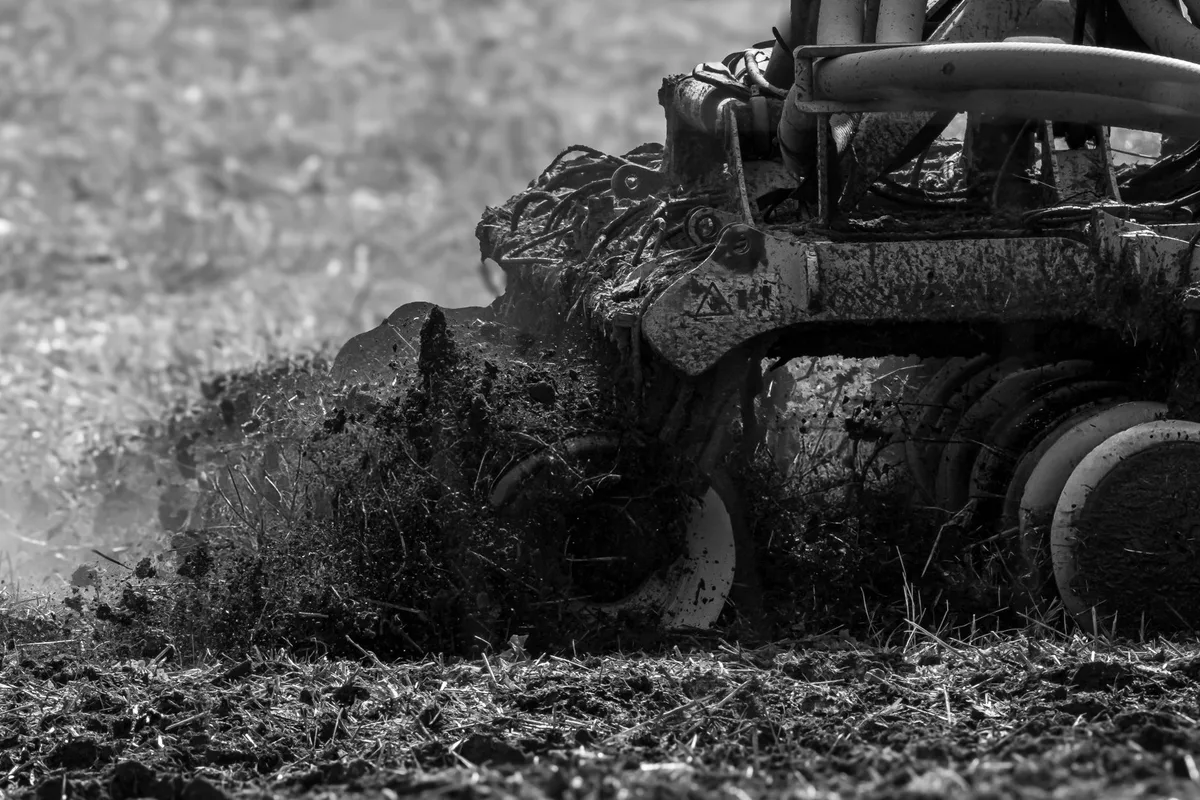
- Core aerate, Rent a core aerator or hire a service. Holes should be 2, 3 inches apart. This breaks compaction and gives roots room.
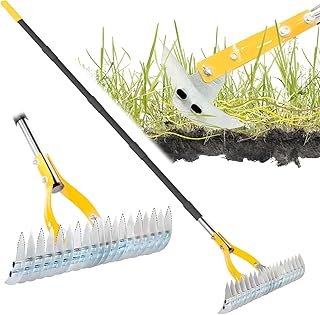
- Dethatch if needed, Only if thatch (the dead organic layer between grass and soil) is thicker than ¾ inch. Use a power dethatcher or a manual rake (a sturdy rake for thatch removal works for small areas).
- Adjust soil pH, Based on a soil test, apply lime to raise pH or sulfur to lower it. Target 6.0, 7.0.
- Overseed, Choose the same grass type as the rest of your lawn (cool-season or warm-season). Broadcast at 3, 5 lbs per 1,000 sq ft. For a completely bare area, use 7, 10 lbs.
- Topdress, Spread ¼ to ½ inch of fine compost over the seeded area. This holds moisture and protects seed.
- Water, Lightly twice daily for two weeks. After germination, water deeper and less often.
- First mow, When grass hits 3, 4 inches, mow with a sharp blade. Don’t cut more than one-third of the blade height.
Mistakes That Will Wreck Your Repair Job
Most repair failures come from a few predictable errors. Avoid these and your odds of success jump way up.
- Fertilizing before roots establish, Starter fertilizer is fine at seeding, but heavy nitrogen before roots grow encourages leaf growth at the expense of roots. Wait until after the first mow for a full feeding.
- Using pre-emergent herbicide within four weeks of seeding, Pre-emergents stop crabgrass, but they also stop grass seeds from germinating. Read labels carefully. If you must use one, apply after the new grass has been mowed twice.
- Scalping too short before aeration, Grass needs some leaf area to photosynthesize and recover. Scalping to ½ inch stresses the plant. Stick to 1, 1.5 inches.
- Overwatering after seeds germinate, Once seed sprouts, reduce watering frequency. Wet soil promotes fungal diseases like brown patch. Let the top inch dry between waterings.
- Buying the wrong grass seed for your region, Cool-season grasses (fescue, bluegrass, ryegrass) need northern climates. Warm-season grasses (Bermuda, zoysia, St. Augustine) thrive in the South. Mixing types creates a patchy, mismatched lawn.
Another hidden mistake: ignoring soil compaction. If you can’t push a screwdriver into the soil easily, your roots can’t grow deep. Core aeration is non-negotiable for compacted lawns.
Expert Tips for Better Results
Beyond the basics, these pro moves separate a good repair from a great one.
- Soil test first, A $10, 20 test from your local cooperative extension tells you pH, phosphorus, and potassium levels. No sense adding lime if you don’t need it. For ongoing lawn health, a balanced slow release fertilizer applied in fall works better than quick-release.
- Seed in the golden window, Six to eight weeks before your first average frost date. That gives seedlings time to establish deep roots before winter. Count backward from your local frost date using extension data.
- Use a slit-seeder, For overseeding, a slit-seeder cuts grooves directly into the soil and drops seed at the right depth. It beats broadcasting by a mile for seed-to-soil contact. Rent one for a few hours.
- Water deeply once seed is established, After two weeks, switch to deep, infrequent watering (1 inch per week) to push roots deep. Shallow watering creates weak, drought-prone grass.
- Mulch fall leaves, Don’t bag them. A mulching mower shreds leaves into organic matter that feeds the soil. Just don’t let them pile up thick enough to smother new grass.
One more tip: if you battle fungal diseases in the summer, consider applying a preventative fungicide in early fall before temperatures drop. It stops brown patch and dollar spot before they start.
For organic options, a natural fertilizer like compost tea or fish emulsion gives a gentle boost without burning tender new roots.
What to Do After the Repair – Fall Maintenance
You’ve seeded, watered, and watched new grass appear. The work isn’t over yet. Fall maintenance determines whether those tender seedlings survive winter and come back strong in spring.
Mow at the right height. Keep cool-season grass at 3 to 4 inches. Taller blades shade the soil, retain moisture, and support deeper root growth. Never cut more than one third of the blade height in a single mow.
Apply a slow release nitrogen fertilizer in mid-fall. This is called the “winterizer” application. It pushes root development without triggering a flush of leaf growth that winter will kill. Use a ratio like 24-0-6 or similar.
Avoid high phosphorus unless a soil test confirms a deficiency.
Keep watering until the ground freezes. New seedlings have shallow root systems. If fall is dry, water deeply once a week. Dry soil going into winter damages roots more than cold temperatures do.
Avoid heavy foot traffic on new seedlings. Grass plants need at least two full mowings before they can handle regular walking, pets, or play. Rope off repaired areas if you need to.
Mulch fallen leaves, don’t rake them. A mulching mower shreds leaves into fine organic matter that feeds the soil food web. Just don’t let leaves pile thick enough to smother the young grass. If leaves are dense, do a light pass with the bagger first, then mulch what remains.
Real Scenarios: What Works for Each Situation
Theory is helpful. Examples are better. Here are four common summer damage scenarios and how each plays out in practice.
Scenario 1: Northeastern homeowner after a drought. A tall fescue lawn in Connecticut went fully brown in August after six weeks without rain. The homeowner did the tug test. The grass held firm.
They watered deeply once a week through September. By mid-October, the lawn was fully green without a single seed. No repair needed at all.
Scenario 2: Dog urine spots on Kentucky bluegrass. A homeowner in Ohio had yellow, dead patches scattered across a bluegrass lawn. Each patch was smaller than a dinner plate. They scalped each spot, raked out dead grass, loosened soil, and overseeded with a bluegrass blend.
They kept the areas moist for two weeks. Within a month, the patches filled in fully.
Scenario 3: Crabgrass takeover in the transition zone. A lawn in Virginia was overrun with crabgrass by late August. The homeowner applied a post-emergent crabgrass killer in early September, waited four weeks, then core aerated and overseeded with tall fescue in October. The crabgrass died with the first frost, and the fescue filled the bare soil before winter.
Scenario 4: Rental property with heavy foot traffic. A homeowner in Texas had a Bermuda grass lawn thinned down to bare dirt along walkways and play areas. Bermuda spreads by runners, so full renovation wasn’t needed. They watered deeply, applied a balanced fertilizer, and aerated.
The Bermuda filled back in within six weeks of cooler weather.
Quick-Reference Decision Guide
Use this table to match your lawn’s condition to the correct action and timing.
| Condition | Action | Timing |
|---|---|---|
| Brown grass, roots firm, crown green | Water deeply 1 inch per week | Early fall |
| Dead patch smaller than 6 inches | Spot repair | 6 to 8 weeks before frost |
| Dead area larger than 50 percent of lawn | Full renovation | Late summer to early fall |
| Thatch layer thicker than ¾ inch | Dethatch, aerate, overseed | Early fall |
| Crabgrass present | Kill with post-emergent, wait 4 weeks, then seed | Late summer |
| Thin lawn with mixed green and brown | Overseed after aeration | 6 to 8 weeks before frost |
| Dog urine spots | Flush soil, spot seed | Any time in fall |
| Soil compaction without dead grass | Core aerate only | Early fall |
Frequently Asked Questions
How long does it take for grass seed to germinate in fall?
Perennial ryegrass germinates in 5 to 7 days. Tall fescue takes 7 to 14 days. Kentucky bluegrass needs 14 to 21 days.
Soil temperature matters more than calendar date. For cool-season grasses, aim for soil between 55 and 65 degrees Fahrenheit at a 4 inch depth.
Can I use pre-emergent herbicide after overseeding?
No. Pre-emergent herbicides stop all seeds from germinating, including grass seed. Wait until after the new grass has been mowed at least two times before applying any pre-emergent.
For crabgrass control in fall, use a post-emergent product instead.
Should I fertilize before or after seeding?
Apply a starter fertilizer at the same time you seed. Look for a ratio high in phosphorus, like 10-20-10. Phosphorus supports root development in new seedlings.
Do not use a high nitrogen fertilizer until after the first mow.
How do I keep birds from eating my grass seed?
Birds target exposed seed. Cover seeded areas with a thin layer of straw (not hay, which contains weed seeds) or fine compost. A light raking to bury seed ¼ inch deep also helps.
Netting works for small areas but is impractical for a whole lawn.
Can I repair my lawn in spring instead of fall?
You can, but fall is better. Spring seeded grass competes with summer weeds and often dies in July heat. Fall seeding gives grass 6 to 8 months to establish deep roots before the next summer stress period.
Spring repair works only for warm-season grasses in southern climates.
When is it too late to seed in fall?
Stop seeding when daytime highs stay below 50 degrees Fahrenheit consistently. Seed needs at least 45 days of growth before the first hard freeze. Count backward from your local average first frost date.
If you miss the window, wait until early spring.
How often should I water new grass seed?
Water lightly twice per day for the first two weeks. Each session should last 10 to 15 minutes per zone. The goal is to keep the top ½ inch of soil consistently moist.
After germination, switch to deeper watering once per day, then taper to once per week.
Should I remove dead grass before seeding?
Yes. Dead grass blocks seed from reaching the soil. For small patches, rake out the dead material by hand.
For large areas, mow low with a bagger attached. Seed needs direct contact with soil to germinate. A layer of dead thatch prevents that contact.