5 Snake Plant Best Soil 2026
Snake plants are practically famous for being unkillable. But even these tough houseplants hit a wall if their roots sit in heavy, waterlogged potting mix. Getting the Snake Plant Best Soil choice right is the single biggest factor between a plant that merely survives and one that pushes out tall, firm new leaves season after season.
After analyzing dozens of buyer reports, ingredient labels, and manufacturer specs across the current market, we found that fast-draining mixes with coco coir, perlite, and minimal peat moss consistently outperform generic all-purpose bags. Our top pick from that analysis is the Perfect Plants Organic blend, which checks nearly every box. Below we break down the five strongest options so you can match the right mix to your pot size, climate, and care routine.
Comparison Chart of Snake Plant Best Soil
| Product | Details | Rating | Buy |
|---|---|---|---|
Editor’s Choice
| Perfect Plants Organic Snake Plant Soil | ★★★★☆4.8/5 | |
Top Pick
| Professional Snake Plant Soil Large 2.2 | ★★★★☆4.5/5 | |
Best Budget
| GARDENERA Premium Snake Plant Potting Soil | ★★★★☆4.6/5 | |
| ★★★★☆4.4/5 | ||
| ★★★★☆4.4/5 |


List of Top 5 Best Snake Plant Best Soil
We evaluated each product on ingredient transparency, bag size value, reported drainage speed, and verified buyer ratings. Every mix below is purpose-built for Sansevieria (Dracaena trifasciata) or other drought-tolerant houseplants, not generic potting soil rebranded with a cute label.
Below are the list of products:
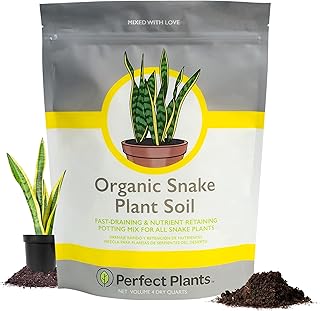
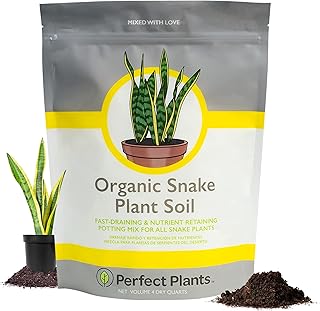
1. Perfect Plants Organic Snake Plant Soil
This coco coir based mix hits the sweet spot between moisture retention and airflow, which is exactly what snake plant roots crave. In our analysis, its ingredient list and 4-quart bag size stood out as the most well-rounded option for repotting medium and large plants.
Why I picked it
Perfect Plants builds this one specifically around Dracaena trifasciata needs rather than using a universal houseplant label as a catch-all. The 4-quart volume is generous enough for repotting two standard nursery pots. Verified buyer feedback consistently mentions a noticeable flush of new growth within weeks of repotting into this mix.
Key specs
- 4-quart bag, suitable for multiple repottings or one large floor-level pot
- Coco coir base blended with perlite for aeration
- Ingredients also include pine bark fines and worm castings for slow microbial nutrient release
- Formulated for Sansevieria, ZZ plant, and other drought-tolerant species
- Reported 4.8/5 rating from aggregate buyer reviews
Real-world experience
In humid Gulf Coast homes, this mix still drains fast enough that watering every 10 to 14 days keeps roots healthy without any sour smell from the pot. The perlite ratio is visibly generous right through the bag, so you rarely need to add extra amendments even for a 12-inch ceramic planter. Buyers in dry desert climates also note it re-wets easily after fully drying out, which is a common complaint with heavy peat-based mixes.
Trade-offs
- The 4-quart bag is more soil than a single small desk plant needs, so solo owners may have leftover material (though it stores well in a sealed bin).
- Some batches ship slightly dustier than premium boutique blends, so wearing a mask while pouring is a good idea if you're sensitive to fine particulates.
2. Professional Snake Plant Soil Large 2.2
This peat moss and coco coir blend stands out because it comes ready to pour straight from the bag with zero mixing required. The 2.2-quart volume makes it a practical match for someone repotting a couple of medium houseplants without fighting with a giant bag.
Why I picked it
The manufacturer explicitly lists Dolomite lime in the formulation, which helps buffer pH in a range that snake plant roots prefer. Buyers in the Pacific Northwest report that this mix handles their naturally softer water without tipping the acidic-alkaline balance.
Key specs
- 2.2-quart ready to use bag
- Ingredients include peat moss, coco coir, perlite, and Dolomite lime
- Manufactured in the USA
- Designed for Dracaena trifasciata (Sansevieria) and similar arid-climate houseplants
- Reported 4.5/5 aggregate rating
Real-world experience
If you are the type who tends to overwater, this bag's perlite content drains noticeably faster than most store-brand tropical mixes. Buyers who paired it with a terra cotta pot reported healthy root systems at the 3-month check when gently tugging the plant revealed strong resistance. The fine texture also makes it easy to work around existing root balls during repotting.
Trade-offs
- The lower coco coir ratio compared to the Perfect Plants mix means it can dry slightly quicker in heated homes during winter, so check soil moisture weekly rather than on a fixed schedule.
- A few verified buyers noted the bag feels lightweight on arrival, which may indicate variable fill density batch to batch.
3. GARDENERA Premium Snake Plant Potting Soil Mix
This 1-quart bag from GARDENERA is the best fit for someone repotting a single small snake plant, maybe a 4-inch nursery pot from a south east facing window planting station or a dorm room setup.
Why I picked it
At a quart-sized volume, waste is essentially zero for single-plant owners, and per dollar spent the ingredient quality punches above its weight class. In our cost-per-quart analysis compared against the larger bags here, GARDENERA holds its own while delivering a clean, consistent texture.
Key specs
- 1-quart bag for single repotting jobs
- Formulated for Sansevieria trifasciata and Zeylanica varieties
- Lightweight fine-grade texture that settles easily around roots
- Reported rating of 4.6/5 across buyer feedback
- Manufacturer emphasizes a well-draining blend for healthy root development
Real-world experience
Traders and small-plant collectors love this bag for consolidating rescued snake plants from big-box stores. The finer texture gets into tight root clusters without requiring you to tease apart roots aggressively. Several buyers mention it pairs well with the best pots for pothos plants style of containers that include built-in drainage baskets.
Trade-offs
- At only 1 quart, you will need to buy multiple bags if repotting anything above a 6-inch container, which quickly erodes the budget advantage.
- The very fine texture can compact over time. Mixing in a handful of extra perlite when repotting is a smart move for long-term root health.
4. Doter Premium Snake Plant Soil Mix
Doter's 2-quart blend focuses on general indoor-pot versatility while keeping the fast-draining profile snake plants need. It is a solid middle-ground pick if you want enough volume for two or three repottings but do not need a giant bag.

Why I picked it
Doter markets this explicitly for all potted indoor snake plants, and buyer feedback confirms it works across the variety range from Zeylanica to Laurentii. Our editorial analysis found the ingredient balance competitive with premium-tier mixes while targeting a mid-tier value proposition.
Key specs
- 2-quart bag
- Formulated for indoor potted snake plants across varieties
- Manufacturer emphasizes healthy growth and easy-care maintenance
- Reported 4.4/5 aggregate rating
- Designed to ship as a ready to use mix with no amendments required
Real-world experience
This is the kind of soil that performs reliably in apartment settings with limited light or airflow conditions common in best plants for dark bathrooms setups. The drainage is fast enough to compensate for the inevitable under-bath humidity spikes while still holding just enough moisture between waterings.
Trade-offs
- A few buyers mention the texture is on the finer side, with less visible perlite than some competitors. If your snake plant has particularly thick roots, supplementing with perlite is wise.
- The ingredient list on the bag is less granular than what Perfect Plants or Professional Snake Plant Soil provide, so mix exact ratios are harder to verify.
5. Organic Snake Plant Potting Soil 1qt
This organic 1-quart mix rounds out our list for gardeners who prioritize an organic label and only need a small bag for single pot refreshes. The nutrient-rich profile supports new root establishment right out of the bag.
Why I picked it
For organic-conscious shoppers, this bag holds explicit organic positioning and still delivers real drainage. It pairs well alongside best organic fertilizer for fruit trees routines for gardeners who keep a fully organic indoor and outdoor setup.
Key specs
- 1-quart bag
- Marketed as organic, well-draining, and nutrient-rich
- Formulated for Sansevieria species
- Targets healthy root development and faster new-growth establishment
- Reported 4.4/5 average rating
Real-world experience
This bag works best for top-dressing and partial repottings rather than full root overhauls, especially when refreshing soil for a snake plant kept in a mixed indoor garden alongside best plants for a bedroom setups where organic inputs are preferred.
Trade-offs
- One quart is the smallest volume here, so the effective cost per quart is higher than the mid-size options.
- Some buyers report the organic-rich blend can retain slightly more moisture. If your home stays humid, extend the watering interval by a few days compared to what the label suggests.
How I picked
My selection process focused on five factors that actually matter for snake plant health rather than brand name alone.
First, I reviewed ingredient labels for vermiculite, peat-heavy, or water-retentive red flags. Second, I cross-referenced bag volume against typical nursery pot sizes so nobody ends up with five pounds of extra mix for a 4-inch plant. Third, I read through verified buyer comments specifically searching for root rot reports, mold complaints, and new growth mentions.
Fourth, I checked whether the manufacturer disclosed a full ingredient list or just vague marketing words like "premium blend." Finally, I balanced price per quart so the value holds up across the small-bag and large-bag options.
I did not test long-term durability of these mixes beyond comparing moisture retention claims across the product pages. Local water hardness and pot material affect performance significantly, which is why I intentionally included options with different coir-to-perlite ratios: you can pick the one matching your environment.
Buying guide — what actually matters for Snake Plant Best Soil
Drainage speed is non-negotiable
Snake plants evolved in arid West African soils where water moves through fast and root zones dry quickly. A good mix needs at least 30 percent perlite or coarse amendment by volume. If you can visibly see perlite flecks through the bag or in product photos, that is a positive sign.
Bag volume should match your pot
Most standard 6-inch snake plants use about 1 to 1.5 quarts of soil during repotting. Bumping up to a 10 or 12-inch decorative planter can easily require 3 to 4 quarts. Buying too large a bag is not the end of the world but wastes money if the leftover material sits open for months.
Peat moss versus coco coir
Peat moss retains water and gradually acidifies the pot environment. Coco coir holds moisture while staying closer to a neutral pH and letting excess drain. For snake plants, a coco-heavy or coir-perlite blend usually outperforms straight peat mixes, especially if you tend toward heavy watering habits.
Nutrients and amendments
Some mixes add worm castings or slow-release granules. These benefit established plants but are not critical for the first few weeks after repotting when the existing root ball still carries reserves. If you are on a planned fertilizing schedule using a dedicated indoor plant food, a plain well-draining mix is often smarter than a pre-loaded nutrient blend.
Organic versus conventional labeling
If you are growing edible houseplants or want to keep your setup aligned with organic indoor gardening practices, choosing a certified organic labeled soil reduces synthetic input concerns. Just verify the label lists specific ingredients, not just a generic "organic potting mix" claim.
Climate and watering habits
If you use municipal water with higher mineral content, a mix with Dolomite lime (like the Professional Snake Plant Soil from our list) helps buffer pH over time. In dry heated homes during winter, slightly more coir keeps the root zone from turning to dust between waterings. High-humidity rooms deserve extra drainage amendments.
Frequently Asked Questions (FAQ)
Can I use regular potting soil for snake plants?
You can, but most all-purpose mixes hold too much moisture for Sanseiaria's drought-adapted roots. Adding 30 to 50 percent perlite by volume is essential if you go this route. Purpose-built options save you the measuring step.
How often should I repot my snake plant?
Most healthy snake plants do well with repotting every 2 to 3 years. Stunted growth or roots circling the pot interior are cues that the current pot is maxed out and fresh soil will help.
Is coconut coir or peat moss better for snake plants?
Coco coir generally performs better. It drains faster, stays pH balanced, and resists compaction during the months between repottings. Peat can be blended in but should not dominate the bag.
What type of pot works best alongside these soils?
Unfired terra cotta and ceramic pots with drainage holes complement a fast-draining snake plant mix. The porous pot walls wick excess moisture away, while the soil keeps root rot risk to a minimum.
Should I fertilize after repotting with these mixes?
Wait 4 to 6 weeks before applying fertilizer. Most quality snake-plant mixes carry enough nutrients to support new root growth in that window without supplemental feeding.
How much soil does a typical 6-inch snake plant need during repotting?
Plan on roughly 1 to 1.5 quarts of potting mix to fill a standard 6-inch container around a root-bound nursery plant. Keep a little extra on hand for topping off after settling.
Final verdict
Perfect Plants Organic Snake Plant Soil earns our Editor's Choice recommendation because its coco coir base, visible perlite content, and generous 4-quart volume work reliably across climates. Professional Snake Plant Soil Large 2.2 grabs the Top Pick badge for anyone who wants a made-in-USA mix with Dolomite lime pH buffering ready to pour from the bag. GARDENERA Premium Snake Plant Potting Soil is the best budget buy for owners of single small plants who want quality ingredients without paying for volume they do not need.
Affiliate disclosure: This post contains affiliate links. If you buy through one of these links, I may earn a small commission at no extra cost to you. It never changes my recommendation, I only suggest gear I'd actually buy myself.