Best Potting Mix for Philodendrons: Top Soil Recipe 2026
If you've ever watched a philodendron go from lush to limp, you already know the feeling. You're not overwatering. You're not underwatering.
You're just using the wrong dirt.
So, what is the best potting mix for philodendrons? The short answer is a chunky, well-aerated blend that mimics the rainforest floor where these plants naturally grow. It needs to hold some moisture, but it also needs to drain fast enough that roots never sit in standing water.
Most commercial houseplant soils are too dense, too water-retentive, and too compacted to keep a philodendron happy long-term.
In our research, the sweet spot is a mix that dries out within 5 to 7 days indoors, depending on your environment. That timing keeps roots moist enough to thrive without inviting root rot, which is the number one killer of philodendrons in home settings. A soil pH between 5.5 and 6.5 is also ideal, which is slightly acidic, just like the leaf litter they grow in naturally.
Let's break down exactly what that looks like in practice.
Quick Answer
The best potting mix for philodendrons is a chunky, well-aerated blend. Use one part coco coir or peat moss, one part perlite or pumice, and one part orchid bark. Add a handful of worm castings for nutrients.
This mimics their natural epiphytic growing environment. It drains quickly while still holding enough moisture.
Why Philodendrons Hate Regular Potting Soil
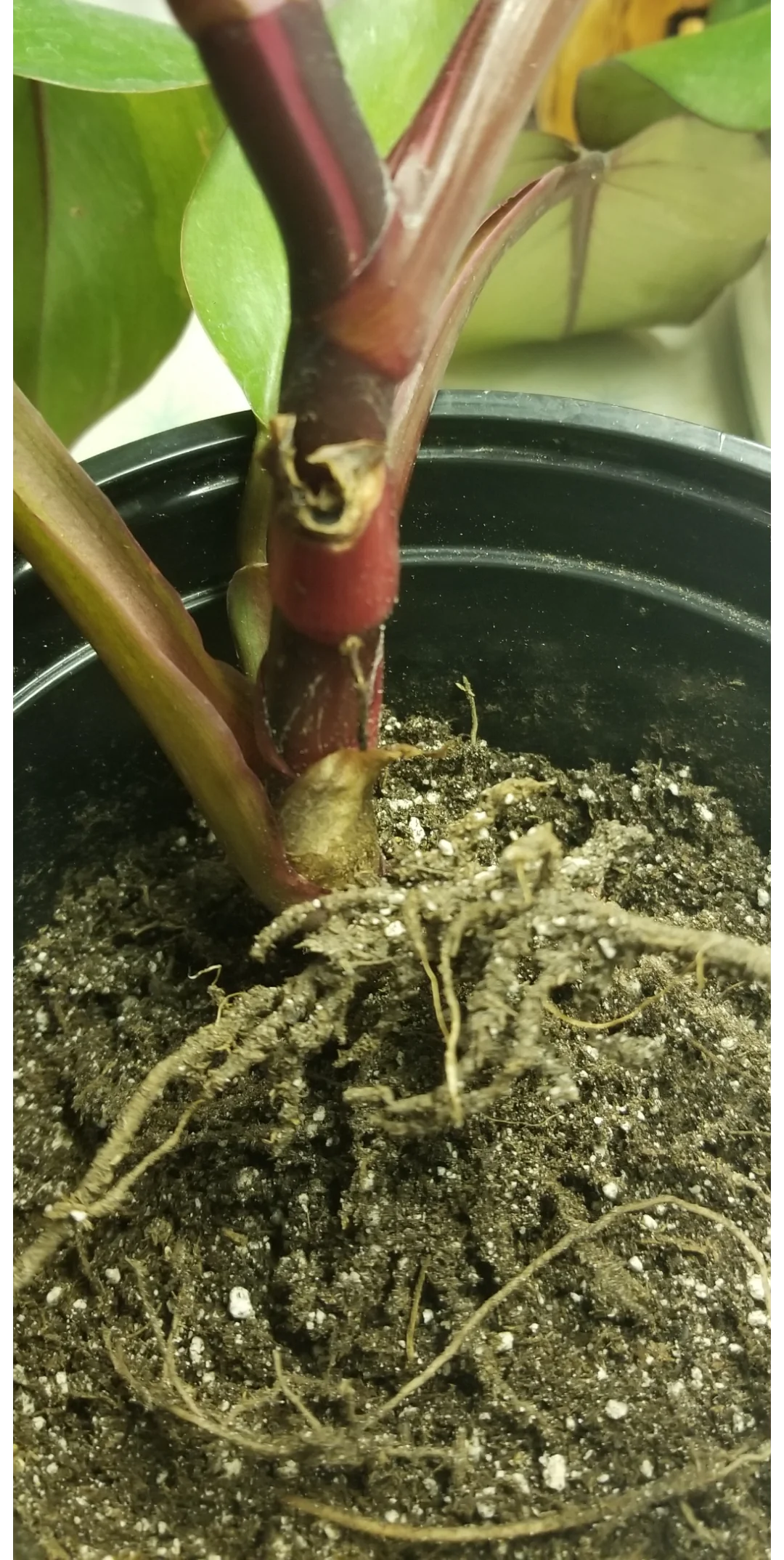
Image source: Bing (Web (fair-use with source credit))
Here's the thing about philodendrons. They're not heavy-rooted plants like a rose bush or a tomato. In the wild, many species grow as hemiepiphytes.
That means they start life on the forest floor, then climb up trees, sending aerial roots into the bark and leaf litter around them. They never sit in dense, soggy soil. Their roots are used to air, organic debris, and quick drainage.
Regular potting soil is the opposite. It's made from finely ground peat or compost that holds water like a sponge. When you water it, the particles swell and pack together.
That leaves almost no air pockets, and philodendron roots suffocate.
And when roots can't breathe, they rot. It's that simple. The signs show up fast too.
Yellowing leaves, mushy stems, a sour smell from the pot, and soil that stays wet for two weeks straight.
Aggregate reviews from plant communities consistently report the same outcome. People repot a struggling philodendron into a cheaper, denser mix, and the plant declines within a month. The irony is that a bag of regular potting soil costs about the same as the right ingredients, but the results are completely different.
If it says "garden soil" or "moisture control" on the bag, skip it.
Your philodendron isn't asking for luxury. It's asking for structure. Air gaps around the roots, physical support from bark pieces, and moisture that doesn't linger.
That's the entire game.
The 3 Non-Negotiables: Drainage, Aeration, Moisture Retention
Every good philodendron mix comes down to three things. If you nail these, the exact ingredients matter less.
Drainage: Let the Water Escape
Drainage is about what happens in the first 30 seconds after you water. Water should flow freely out the bottom of the pot. If it pools on the surface or takes more than a few seconds to penetrate, your mix is too dense.
Chunky particles create gaps that let gravity do its job. Pumice, perlite, and bark all create these pathways.
Aeration: Roots Need to Breathe
This is the one people overlook the most. Roots need oxygen just like leaves do. A compacted mix forces roots into anaerobic conditions, which kills them slowly.
Aerated mixes have large irregular particles that keep physical space between each other. Even after watering, air remains trapped in the pore spaces around the roots. That's why orchid bark matters so much.
Moisture Retention: Not Too Wet, Not Too Dry
Your mix needs to hold some water, just not all of it. Coco coir and peat moss handle this job. They absorb moisture and release it gradually.
The goal is a mix that feels like a wrung-out sponge. Moist, but not dripping. That texture tells you you're in the right zone for root health.
If it feels like a soaked towel, you need more drainage material.
The Core Ingredients: What Goes In and Why
Let's get into the actual components. Each one plays a specific role, and they work together as a system.
Orchid Bark / Pine Bark Fines
Orchid bark is the backbone of any aroid mix. It provides large, chunky particles that create air pockets and give roots something to grip.
- Particle size: 0.5 to 1.5 cm is ideal for most philodendrons
- Lifespan: breaks down slowly over 1 to 2 years
- Role: structural support and aeration
Smaller bark fines work better for juvenile plants or semi-terrestrial species. Larger chunks suit mature climbing species. Either way, it's non-negotiable for most setups.
Perlite or Pumice
These are your drainage and aeration candidates. They're both volcanic or heat-expanded minerals that stay rigid in the mix.
| Ingredient | Pros | Cons |
|---|---|---|
| Perlite | Cheap, lightweight, easy to find | Floats to the surface, can look dusty |
| Pumice | Heavier, doesn't float, lasts longer | More expensive, harder to find locally |
Both work well. Pumice is better long-term since it doesn't degrade or move around. Perlite is fine if budget is your priority.
Coco Coir vs. Peat Moss
This is the moisture-retention layer. They do the same job, but they have different quirks.
- Coco coir: sustainable, doesn't degrade as fast, naturally resists fungus gnats, rehydrates easily
- Peat moss: cheaper, holds slightly more water, but is non-renewable and can become hydrophobic when dried out
As of 2026, coco coir is the more responsible choice environmentally. It's a byproduct of coconut farming, so no peat bogs are destroyed to get it. It also has a neutral pH, whereas peat is naturally acidic.
Worm Castings and Charcoal: The Add-Ons Worth Using
Worm castings are a gentle, slow-release fertilizer that won't burn roots. They're packed with microbes and nutrients. One handful per pot is plenty.
Horticultural charcoal does two things. It absorbs excess moisture, and it helps prevent odors from anaerobic bacteria. It's not essential, but it's a nice addition if you have it on hand.
What to Skip (and Why)
- Garden soil: contains pathogens, compacts badly indoors
- Sand: too heavy, suffocates roots
- Standard miracle-gro potting mix alone: too dense without amendments
- Vermiculite: holds too much water for philodendron preferences
Keep those out, and you're already ahead of most plant parents.
The Best DIY Mix Ratios for Different Philodendron Types
No single ratio works for every philodendron. The species matters, and so does your environment.
Vining Philodendrons (Heartleaf, Brasil, Micans)
These are the classic trailers. They're adaptable and forgiving, but they still prefer a chunky mix.
Recommended ratio:
- 1 part coco coir
- 1 part perlite
- 1 part orchid bark
This mix dries moderately fast and gives aerial roots plenty to grab onto. It's the closest to their natural habitat.
Self-Heading Philodendrons (Birkin, Rojo Congo, Prince of Orange)
These upright growers have thicker stems and larger root systems. They can handle slightly more moisture retention since they're more terrestrial in the wild.
Recommended ratio:
- 1 part coco coir
- 1 part perlite
- 1 part pine bark, slightly finer
- 0.5 part worm castings
The extra organic matter supports heavier foliage without risking waterlogging.
Rare and Variegated Varieties (Pink Princess, White Knight)
Variegated philodendrons have less chlorophyll, which means slower growth and more sensitive roots. They benefit from a mix with even more aeration.
Recommended ratio:
- 1 part coco coir
- 1.5 parts perlite or pumice
- 1 part orchid bark
The extra drainage reduces the risk of root rot, which is the biggest killer of expensive variegated specimens.
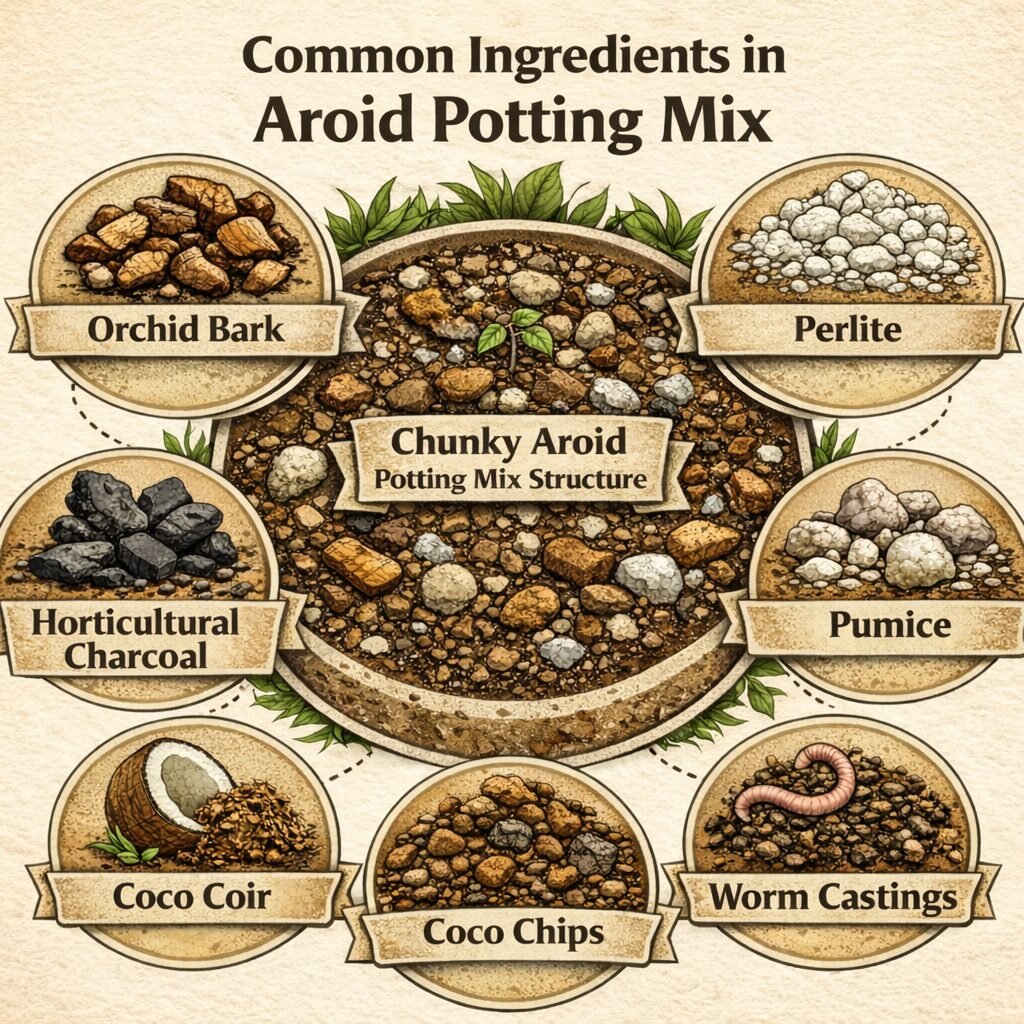
Image source: Bing (Web (fair-use with source credit))
Semi-Hydro LECA: The Soil-Free Alternative
LECA, or lightweight expanded clay aggregate, is a completely different approach. Instead of soil, you use clay balls in a container with a reservoir of water at the bottom. Wicking action keeps the top layers moist while roots never sit in water.
Some growers swear by it. It's clean, pest-free, and nearly impossible to overwater. The downside is that you need to switch your fertilizer routine entirely to a hydroponic formula, and some philodendrons struggle with the adjustment.
If you're willing to experiment, LECA can work beautifully. If you want the simplest path, stick with the chunky mix. Both are valid, but they're different systems that require different care.