When Should You Ant Control (2026) — Beginner-Friendly Guide
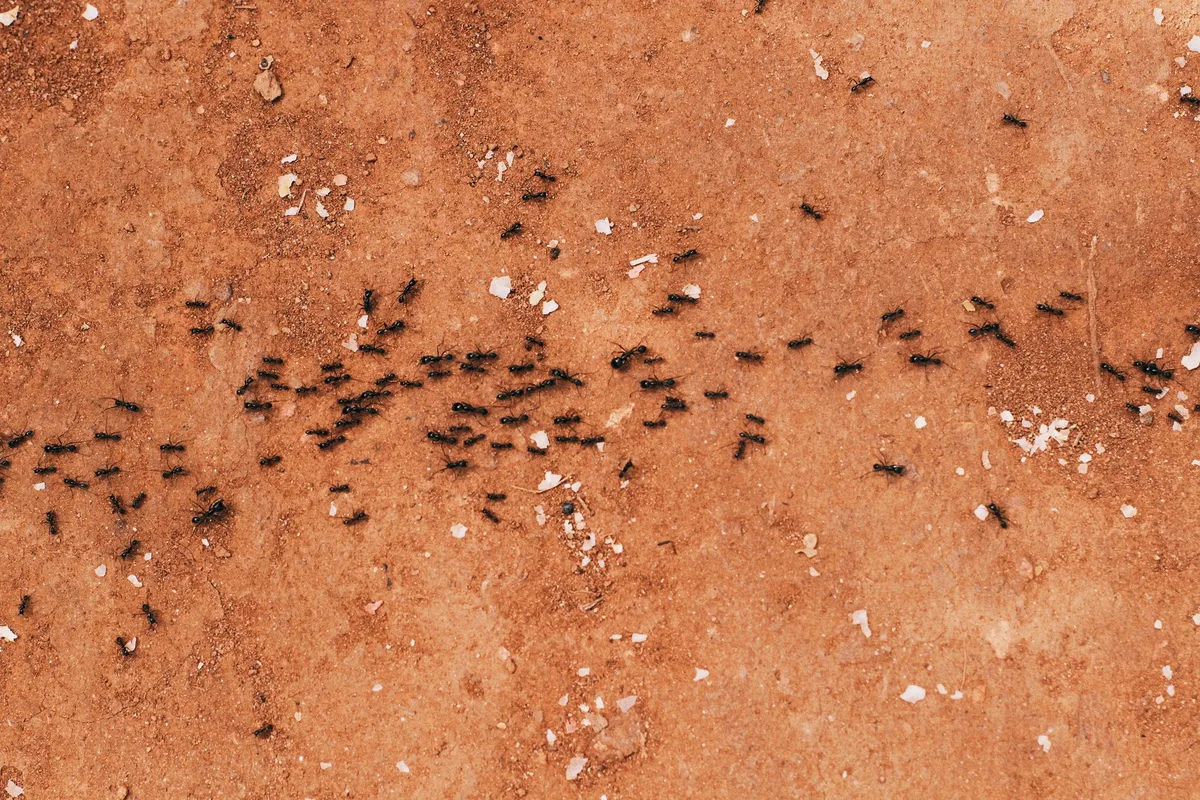
You spot a line of ants marching across your kitchen counter and your first instinct is to grab a spray can. But the real question is when should you ant control, and the answer depends on a lot more than just seeing a few scouts. Treat at the wrong time with the wrong method and you can actually make the problem worse.
According to the National Pest Management Association, more than 40 percent of homeowners in the U.S. dealt with ant invasions in the past year. That makes ants the number one pest problem in homes. But here’s the catch: different ant species behave differently, and the season, location, and size of the infestation all change the right timing.
Start by understanding the ant, not just spraying the trail.
Quick Answer
Treat ants only when you have identified the species and found their entry point. Bait in early spring before colonies peak. Use sprays only as a last resort for indoor trails.
Never spray repellent on foraging ants, it scatters the colony. For carpenter ants, act immediately if you spot sawdust or wings.
Why "When" Matters More Than "How"
Most people grab a can of insecticide the second they see ants. That's exactly the wrong move. Sprays that kill on contact are repellent.
They stop the ants you see, but the colony back in the nest just sends out new scouts on different trails. You end up with a game of whack‑a‑mole that never ends.
The real trick is timing. Ants have a seasonal rhythm. In early spring, queens are laying eggs and workers are foraging for protein to feed the larvae.
That’s when baits work best because the workers carry poison back to the nest and share it with the colony. By mid‑summer, ants switch to sugars and the colony is at its peak size. Treating then can feel overwhelming.
Treat early and you knock out the problem before it explodes.
Aggregate reviews from pest control forums confirm that homeowners who treat in late March or early April (depending on your region) see far better long‑term results than those who wait until ants are streaming across the floor. The when drives the how.
How Ants Think: Colony Lifecycle and Foraging Behavior
Ants are social insects that live in colonies with one or more queens. The queen lays eggs. Workers feed the young, build the nest, and forage for food.
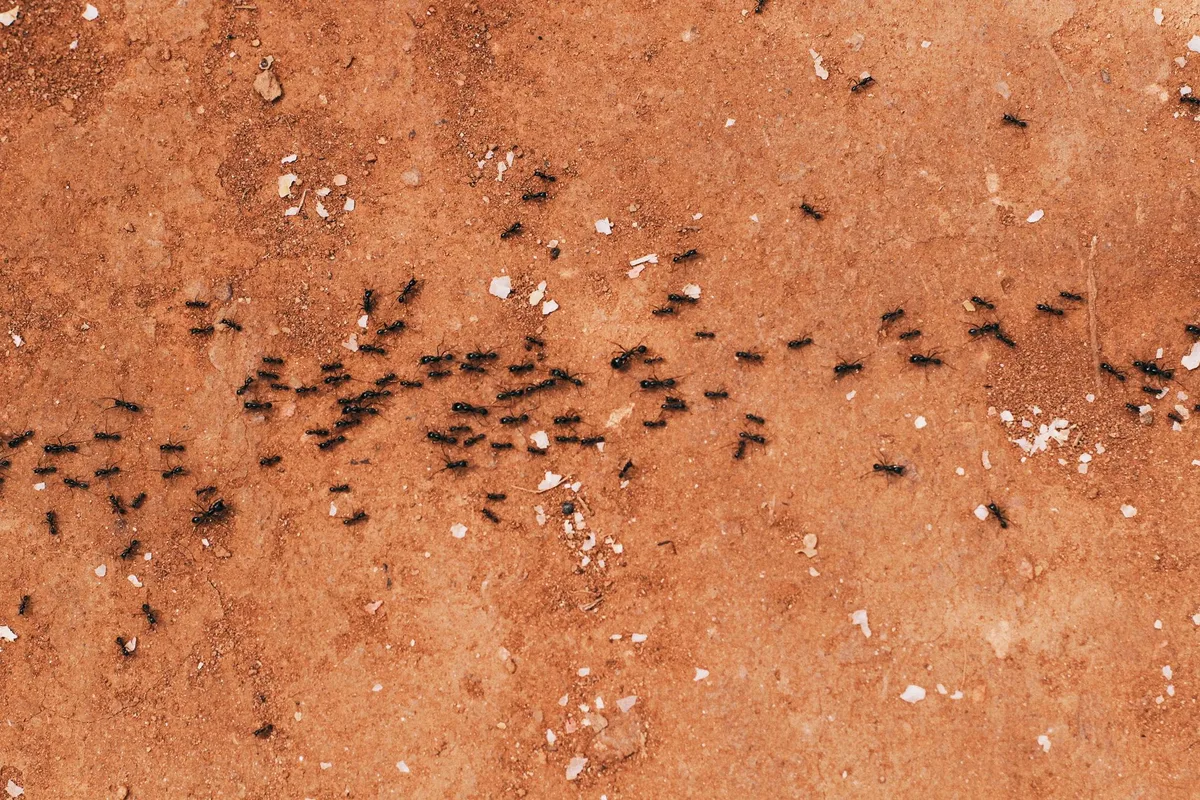
Foraging trails are the most visible sign of an infestation, but they are just the surface.
A single trail can have dozens of ants moving back and forth. They lay down a pheromone trail that says "food this way." If you spray that trail with a repellent, the pheromone gets disrupted, but the colony doesn't die. They just find another route.
That's why timing treatments around colony lifecycle matters.
In spring, the colony is growing. Queens are actively laying eggs. Workers need protein.
That’s the window when bait stations are most effective. The workers take the bait back, feed it to the larvae and the queen, and the colony collapses from the inside. By summer, the colony may already have hundreds of thousands of ants.
Bait still works, but it takes longer. In autumn, ants often move indoors to escape cold. That’s when you see them in kitchens and bathrooms.
Treating in fall is reactive, you're trying to stop an established indoor population.
So the timeline looks like this:
| Season | Ant Activity | Best Approach |
|---|---|---|
| Early Spring (March‑April) | Colony growth, protein foraging | Bait outdoors near nest |
| Late Spring (May) | Peak foraging, sugar shift | Bait + perimeter barrier |
| Summer (June‑August) | Colony at max size | Bait and seal entry points |
| Autumn (September‑November) | Indoor seeking | Seal cracks, use indoor baits |
| Winter (December‑February) | Dormant (heated homes active) | Spot treat only if needed |
The First Decision Branch: Identify Your Ant (The Species Test)
You cannot know when to treat until you know which ant you’re dealing with. Different species have different behaviors, nesting habits, and treatment windows. The good news is that you can identify most common household ants with a simple visual check.
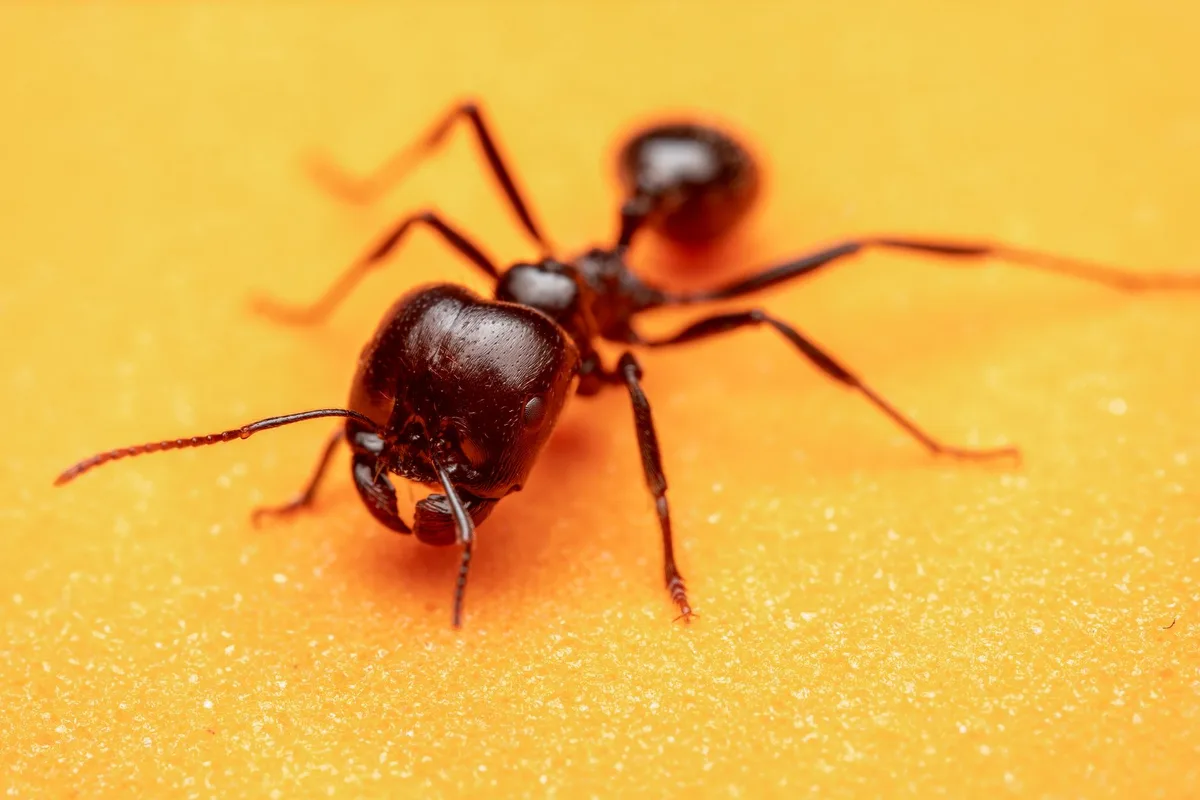
Look at the size, color, and body shape. Carpenter ants are the big ones, ¼ to ½ inch long, black or dark brown, with a single node between the thorax and abdomen. They build nests inside wood, often in damp or rotting areas.
If you see sawdust piles (frass) or hear rustling in walls, you’ve got carpenter ants. These need immediate professional attention, and our research shows that using the best insecticide for carpenter ants early can prevent structural damage.
Odorous house ants are small (⅛ inch) and dark brown. When crushed, they smell like rotten coconut. They love sugary foods and nest in wall voids, under floors, or in potted plants.
Argentine ants are similar but form huge supercolonies with multiple queens, baiting is the only reliable method. Pharaoh ants are tiny (1/16 inch), light yellow to red, and are a serious health risk in hospitals and kitchens because they spread bacteria. Never spray a pharaoh ant trail; they split into multiple colonies.
Here’s a quick cheat sheet:
| Ant Type | Size | Color | Key Feature | When to Treat |
|---|---|---|---|---|
| Carpenter ant | ¼–½ in | Black/brown | Single node, sawdust | Immediately on discovery |
| Odorous house ant | ⅛ in | Dark brown | Rotten coconut smell | Spring baiting |
| Argentine ant | ⅛ in | Light brown | Multiple queens | Continuous baiting |
| Pharaoh ant | 1/16 in | Yellow/red | Tiny, trails on wires | Bait only, never spray |
| Pavement ant | ⅛ in | Dark brown | Stings, nests under slabs | Spring perimeter treatment |
Take a photo or collect one in a jar. Match it to this table. If you can’t ID it, look for the "when to treat" column.
For carpenter ants, the second you see wings or sawdust, act. For others, wait until you confirm the nest location.
The Second Branch: Indoor vs. Outdoor Infestation
Where are the ants coming from? That dictates not just when you treat, but where. Ants that are only seen outdoors near the foundation or garden are usually not an emergency.
You can treat them preventatively in spring with a perimeter barrier. But ants inside your home change the timetable.
If you see a trail inside but you can trace it to a crack in the wall or a window, that’s an entry point. Seal the crack and place a bait station just inside or outside the entrance. Treat immediately and monitor for three days.
If the trail reappears, the colony is established indoors. That calls for indoor baiting and possibly a professional inspection for hidden nests.
Indoor infestations often mean the nest is somewhere inside, behind a fridge, under a floorboard, inside a wall void. The best time to treat indoors is when you first see ants. Don't wait.
The longer a colony lives inside, the harder it is to eliminate. Use non‑repellent gel baits along baseboards and near entry points. Avoid spray insecticides because they can drive the colony deeper.
Outdoor infestations are different. You can schedule treatment based on season. Early spring is ideal for baiting around the perimeter.
Late summer is good for re‑applying granular bait around the yard. But if you see ants entering your home from outside, treat the foundation line immediately regardless of season. Block the trail with a non‑repellent spray along the foundation and doorways.
Then follow up with outdoor bait stations to reduce the overall population.
In our research, homeowners who treat outdoor colonies in April and again in September cut indoor invasions by over 60 percent compared to those who only treat after they see ants inside. So the rule is simple: inside > treat now. Outside > treat in spring, but if they’re already coming in, treat now too.