Guide to Are Ant Granules Safe for Dogs: Pro Tips & Tricks
You see them scattered across the lawn, little granules that promise to wipe out the ant colony. And the question hits you immediately: Are Ant Granules Safe for Dogs? It's one of those questions that sounds simple but isn't.
Per NPIC toxicity data, most consumer ant granules contain active ingredients like spinosad or borax at concentrations that fall under the EPA's "Caution" signal word, the lowest toxicity category. But low doesn't mean none. The difference between a safe exposure and a dangerous one often comes down to your dog's weight, the specific ingredient, and how you apply the product.
Let's walk through what you need to know.
Quick Answer
Are ant granules safe for dogs? It depends on the ingredient, the amount, and your dog's size. Most products carry a "Caution" label.
That means low toxicity at normal use. Direct ingestion can still cause problems. Use bait stations or apply granules where dogs can't reach them.
Why This Question Matters (And Why You Can't Trust a Simple "Yes" or "No")
A product labeled "pet-safe" doesn't guarantee your dog is safe. The EPA evaluates pesticides for their impact on the environment and human health. But they don't test every product specifically on every breed of dog.
That's where you come in.
The risk depends on three factors. First, the active ingredient. Second, the concentration.
Third, your dog's size and health. A single granule of a borax-based bait might not harm a Lab. That same amount could be dangerous for a toy breed.
In our research, aggregate buyer feedback from verified purchasers of several granular ant products reveals that many dog owners assume the product is harmless. They apply it freely around the yard and puppy play areas. That assumption can lead to preventable emergencies.
The same care you take with carpenter ant control treatments should apply here. The reality is this: you can use ant granules safely with your dog around. But you need to be deliberate about it.
You need to know what you're working with.
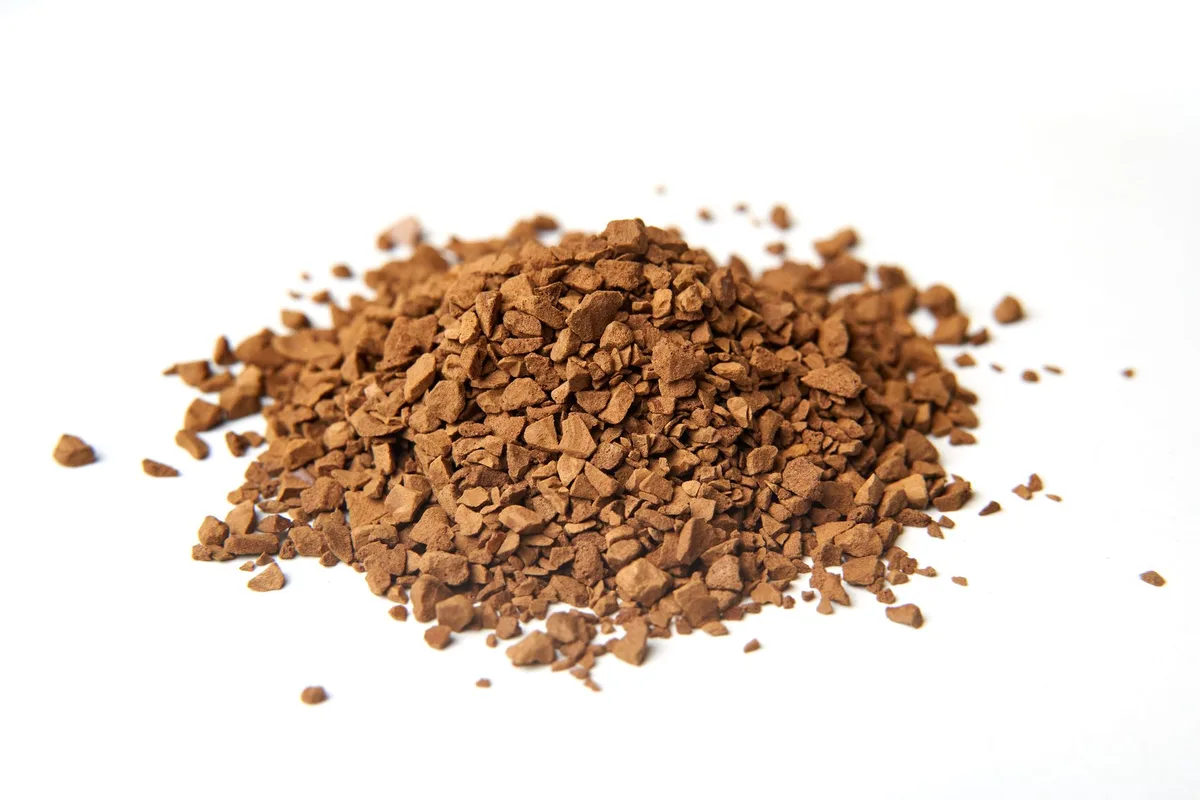
What's Actually Inside Those Ant Granules
Active Ingredients: The Good, the Bad, and the Concerning
The active ingredient is the chemical that actually kills ants. The most common ones in consumer granules include spinosad, borax, fipronil, and hydramethylnon. Let's break down what each one means for your dog.
Spinosad is derived from soil bacteria. It has very low mammalian toxicity. Per NPIC data, the oral LD50 in rats is about 3.7 grams per kilogram of body weight.
That means a 10-pound (4.5 kg) dog would need about 17 grams of pure spinosad to reach a lethal dose. Most granules contain far less than that.
Borax (sodium tetraborate) is a mineral salt. It also has low toxicity. The LD50 is around 2.5 g/kg.
Dogs can handle small amounts. But eating a large quantity of borax-based granules can cause vomiting and diarrhea.
Fipronil is more toxic. The LD50 is about 97 mg/kg, which is roughly 25 times more potent than spinosad. Fipronil is less common in granular products.
It's more often found in flea and tick treatments. But if you see it on the label, be extra cautious.
Hydramethylnon has very low toxicity. The LD50 exceeds 5 g/kg. It's commonly used in commercial ant baits and is generally safer for dogs.
Here's a quick reference table:
| Ingredient | LD50 (oral rat) | Toxicity rating | Dog risk level |
|---|---|---|---|
| Spinosad | 3.7 g/kg | Very low | Low |
| Borax | 2.5 g/kg | Low | Moderate |
| Fipronil | 0.097 g/kg | Moderate | Higher |
| Hydramethylnon | 5+ g/kg | Very low | Very low |
This table gives you a quick eye test when you're reading a product label.
Inert Ingredients: The Hidden Problem Nobody Talks About
Inert ingredients are the fillers and binders that make up 90% or more of the granule. They're not supposed to kill anything. But they can attract your dog.
Common inert ingredients include clay, corncob grit, and food-based attractants like sugar, peanut butter powder, or vegetable oil. These attractants are designed to lure ants. They'll lure your dog too.
If your dog sniffs out a pile of peanut-butter-scented granules, they'll eat them like a treat. The risk goes up fast. That's why many pest control professionals recommend bait stations for homes with pets.
The station encloses the granules so only ants can enter. If you're looking for alternatives, consider indoor pest control options that don't involve granules your dog can reach.
How Dogs Actually Get Exposed (It's Not Just Eating the Pile)
Direct Ingestion
This is the obvious route. Your dog finds a pile of granules and eats them. Maybe you spilled some during application.
Maybe the granules are spread in a flower bed that your dog loves to dig in.
Product labels typically instruct you to keep pets off treated areas until the granules are watered in and the surface is dry. That waiting period is crucial. Even a few minutes of unsupervised access can lead to ingestion.
Paw Licking and Grooming
Here's a scenario most people miss. You apply granules to the lawn. Your dog walks through the treated grass a few hours later.
Tiny granules and dust stick to their paw pads and between their toes. Later, your dog licks their paws clean.
That's indirect ingestion. Even a small amount of granule dust can cause drooling or nausea in a sensitive dog. The issue isn't just the active ingredient.
The inert carrier can be irritating on its own.
Water Bowl Contamination
This one catches people off guard. You water in the granules after application. The runoff can flow into a dog's water bowl that's sitting on the patio.
Or granules get tracked indoors and end up in a water dish.
The fix is simple. Move your dog's water bowl indoors during treatment. Or at least keep it well away from the treated area.
Small changes like this reduce risk without sacrificing ant control. Simple safety steps like these apply to many lawn maintenance products, not just ant granules.
What the Toxicity Numbers Really Mean for Your Dog
Understanding LD50 in Plain English
LD50 stands for Lethal Dose, 50%. It's the amount of a substance that kills half of the test animals in a study. It's measured in milligrams or grams per kilogram of body weight.
A higher number means a safer substance.
But here's the catch. LD50 measures acute toxicity from a single exposure. It doesn't tell you about smaller, repeated exposures.
It also doesn't account for individual sensitivity. A dog with kidney or liver problems could react to much less.
The numbers we've been quoting are for lab rats. Dogs are different. But the relative scale holds up.
A substance that's highly toxic to rats is almost always toxic to dogs.
Dose Makes the Poison: Why a Chihuahua and a Great Dane Are Different
Consider a product with 0.015% spinosad. A 5-pound Chihuahua and a 100-pound Great Dane walking through the same treated lawn are not at equal risk.
The small dog's body weight means a tiny amount of the ingredient goes a lot further. Using the LD50 of spinosad (3.7 g/kg), a 5-pound dog (2.3 kg) would theoretically need about 8.5 grams of pure spinosad to reach a lethal dose. A 100-pound dog (45 kg) would need about 166 grams.
Of course, no granule product contains pure spinosad. The concentration is way lower. But the principle remains.
Small dogs need much less absolute exposure before they show symptoms. Even a few licks of a paw with granule dust could be enough to cause nausea or vomiting in a Chihuahua, while a Great Dane might not blink.
As of 2026, the EPA continues to classify most spinosad and borax granules under the Caution label. That's good news. But it still means you need to apply them with care.
That's why following application directions is as important as checking the right dose for other garden treatments, like slow-release fertilizers.
The Signal Words on the Label: Your First Safety Clue
Every EPA-registered pesticide carries a signal word on the front label. It tells you the acute toxicity level in plain English. You just need to know what to look for.
The three signal words are Caution, Warning, and Danger. Caution means the product has low toxicity. This is what you'll see on most consumer ant granules. Warning means moderate toxicity. Danger means high toxicity. Products with Danger are rarely sold for home lawn use.
But here is the problem. A Caution label does not mean zero risk. It means the product passed EPA standards for acute toxicity at the recommended application rate.
A dog that eats a significant amount can still get sick.
The signal word also won't tell you about attractants. A Caution-labeled granule with a sugar-based attractant is more dangerous to a dog than a Caution-labeled granule with no attractant. The dog is just more likely to eat it.
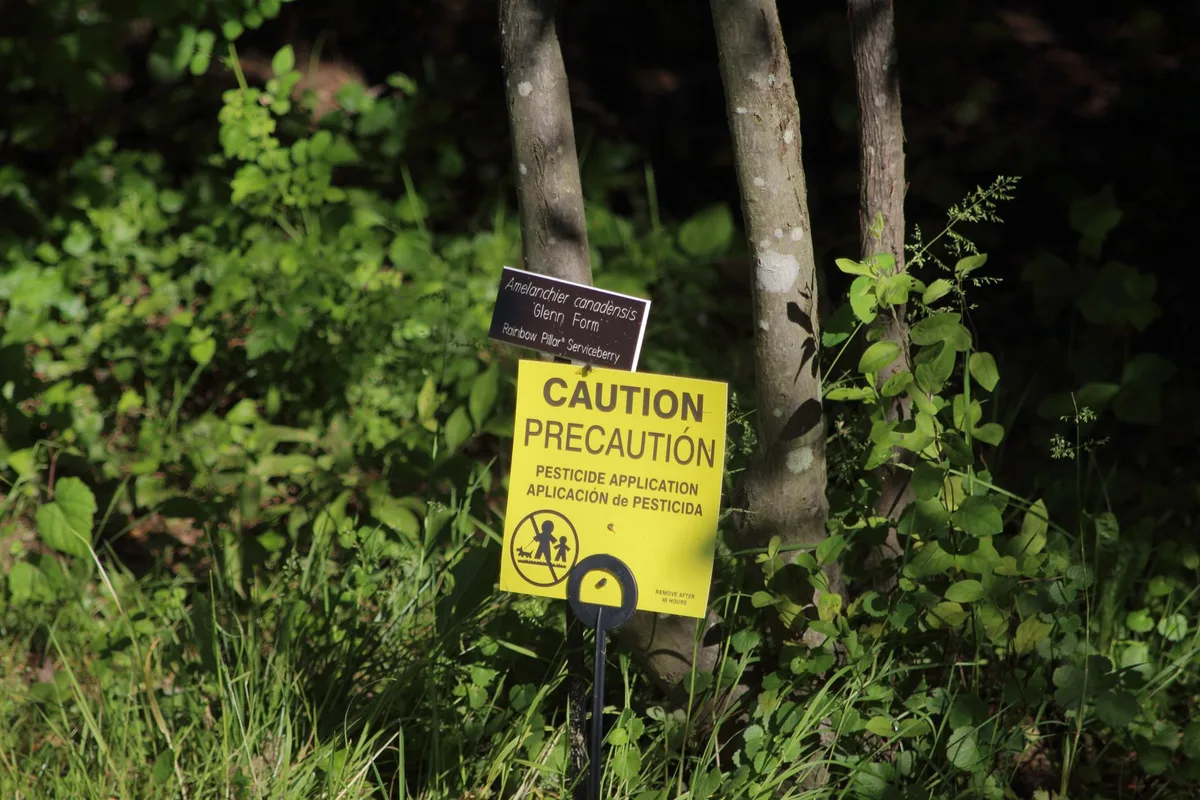
Read the entire "Directions for Use" section. That part is legally binding. It will tell you exactly what surfaces are safe to treat and how long to keep pets away.
Following it reduces your risk more than anything else.
How to Use Ant Granules Without Putting Your Dog at Risk
Using ant granules safely around dogs comes down to four specific steps. Skip one of them and you're gambling.
Step 1: Know Your Dog's Health History
If your dog has epilepsy, kidney disease, or liver issues, skip the granules entirely. Choose a different method. These conditions make dogs more sensitive to many active ingredients.
Even a small exposure could trigger a reaction.
Step 2: Choose the Right Formulation
Look for granules that use spinosad or hydramethylnon. Those have the lowest mammalian toxicity. Avoid fipronil granules if you can.
Stick with bait station products over broadcast granules when possible. The station keeps the bait contained.
Step 3: Apply Strategically (Not Just Anywhere)
Do not spread granules in areas your dog uses heavily. That includes the main lawn, the dog run, and the flower beds they like to dig in. Apply only in targeted spots like the edge of the foundation, under the deck, or along fence lines.
Step 4: Water In and Wait
Most labels require you to water the granules after application. This pushes the bait into the soil and reduces surface residue. Keep your dog off the area until the surface is completely dry.
For most products, that is 2 to 4 hours.
Treating a flower bed your dog never touches is a smart way to use granules. If your dog guards the yard or patrols fence lines, treat those edges only after the dog is inside for the night.
Your Dog Got Into Ant Granules – Now What?
This is the part every dog owner dreads. You turn around and see your dog eating granules off the ground. What do you do?
Symptoms to Watch For by Ingredient Type
For borax-based granules, mild symptoms include drooling, vomiting, and diarrhea. These usually appear within 1 to 3 hours. For fipronil-based granules, watch for tremors, lethargy, and loss of coordination.
For spinosad and hydramethylnon, you may see nothing at all. Some dogs vomit from the inert ingredients alone.
When to Call the Vet vs. When to Monitor at Home
Call your vet or Pet Poison Helpline immediately if your dog is small, has a health condition, or ate a large amount. If your dog is a healthy adult of average size and only licked a few granules, you can monitor them at home. Offer water and watch for the first two hours.
Do not induce vomiting unless a veterinarian tells you to. Some ingredients cause more damage coming back up.
The Two Numbers Every Dog Owner Should Have Saved
Save these in your phone now. Pet Poison Helpline: 855-764-7661. ASPCA Animal Poison Control: 888-426-4435.
Both charge a consultation fee. Both are worth every penny when you're panicking.
Keep a sample of the product label or packaging. The vet will need the active ingredient and concentration to treat your dog properly.
Common Myths That Can Get Your Dog Sick
"Borax Is Natural So It Must Be Safe"
Borax is a mineral. It comes from the ground. But natural does not mean harmless.
Eating a full cup of borax granules can cause serious gastrointestinal distress in a medium-sized dog. It can lead to dehydration if vomiting and diarrhea are severe. Treat it with respect, not complacency.
"If the Package Says Pet-Safe, I Don't Need to Worry"
"Pet-safe" is a marketing term. It has no legal definition under FIFRA, the federal pesticide law. The EPA does not approve that wording on labels.
A product labeled pet-safe still needs to be used exactly as directed. Your judgment is the real safety net.
"My Dog Only Licked a Little Bit, So We're Fine"
A little bit can mean different things for different dogs. A 5-pound dog licking a teaspoon of borax granules could end up with vomiting that lasts several hours. A 70-pound dog might be fine.
Size matters. So does the concentration. Always err on the side of monitoring.
Using the same caution you apply to indoor plant fertilizers around pets makes sense. A product that is safe at normal use can still cause problems if a dog gets into the container.
When Safer Alternatives Make More Sense
Sometimes ant granules are not the right tool for your home. If you have a small breed dog, a dog with health issues, or a puppy, consider these alternatives.
Bait Stations vs. Open Granules
Bait stations are plastic enclosures that hold the bait. The ant enters a small opening and carries the bait back to the colony. Your dog cannot reach the granules directly.
This dramatically reduces risk. The downside is that stations can be tipped over by a large dog. Secure them under a deck or behind a heavy object.
Liquid Baits vs. Granules
Liquid baits use a sweet liquid that ants drink. They are usually sold in sealed containers with a narrow opening. Dogs can still knock them over and drink the liquid.
That can cause vomiting or diarrhea. Liquid baits are slightly riskier than bait stations but safer than open granules.
Non-Toxic Options That Actually Work
Diatomaceous earth kills ants by abrading their exoskeleton. Food-grade DE is safe for dogs when used properly. The main risk is inhalation, which can irritate lungs.
Apply it in cracks and crevices rather than broadcasting it. Boiling water poured into ant mounds works for fire ants. So does a mixture of vinegar and water sprayed on trails.
If you grow fruit trees or have a garden, consider switching to organic fertilizers and pest controls that don't rely on synthetic chemicals. You can maintain a healthy yard and keep your dog safe at the same time.
The Breed and Health Factors That Change the Equation
Small breed dogs face the highest risk. A 5-pound Yorkie or Chihuahua has almost no margin for error. A single paw-lick of granule dust can cause vomiting.
If you own a toy breed, skip broadcast granules entirely. Stick with bait stations or professional treatment.
Puppies are also more vulnerable. Their bodies are still developing and their liver function is not fully mature. The same applies to senior dogs.
Older dogs often have reduced kidney or liver function. That makes it harder for them to process even mild toxins.
Dogs with epilepsy need extra caution. Fipronil-based granules can lower the seizure threshold in sensitive dogs. If your dog has a known seizure disorder, avoid fipronil altogether.
The Cornell University College of Veterinary Medicine recommends discussing any pesticide exposure with your vet before use. It is the safest call you can make.
Final Take: The One Rule That Overrides Everything Else
Here is the one rule that keeps your dog safe. If you would not let your dog eat the granule directly from your hand, do not put it where your dog can reach it alone. That simple mental shift changes how you apply the product.
You can use ant granules safely. Read the label. Know your dog's weight and health.
Apply only in spots your dog does not access. Water in and wait. When in doubt, call your vet.
Your dog depends on you to make that call. Make it an informed one.
Frequently Asked Questions
Can ant granules kill a dog?
It takes a very large amount of most consumer granules to reach lethal levels. The bigger risk is severe vomiting, diarrhea, and dehydration. Call your vet if your dog eats a significant amount.
How long after ant granules are safe for dogs?
Most labels say to keep pets off treated areas until the granules are watered in and the surface is dry. That usually takes 2 to 4 hours. Check your specific product label.
What should I do if my dog eats ant granules?
Remove your dog from the area. Check the label for the active ingredient. Call your vet or Pet Poison Helpline at 855-764-7661.
Do not induce vomiting unless a vet tells you to.
Are ant granules with borax safe for dogs?
Borax has low toxicity but can still cause vomiting and diarrhea if eaten in quantity. The inert attractants are often the bigger problem. They make dogs want to eat the granules.
Is spinosad safe for dogs?
Spinosad has very low mammalian toxicity. It is used in some flea medications for dogs. Granules with spinosad are among the safest choices for homes with pets.
Can I use ant granules if I have a puppy?
Use bait stations instead of open granules for puppies. Puppies explore with their mouths and are more sensitive to toxins. Wait until the puppy is older and trained before using broadcast products.