Guide to Fescue Vs Kentucky Bluegrass (2026) — Quick Guide
You're standing in the lawn seed aisle, and the options blur together. Tall Fescue vs Kentucky Bluegrass, which one actually works for your yard? Getting this wrong means wasted money, patchy grass, and a summer of frustration.
So let's cut through the noise.
Per Oregon State University's turfgrass trials, Kentucky Bluegrass needs roughly twice the annual nitrogen of tall fescue, 4 to 6 pounds per 1,000 square feet versus 2 to 3 pounds. That's a significant difference in both cost and effort. The right choice depends entirely on your specific conditions.
Here's how to figure it out.
Your Lawn's Struggle: Choosing the Right Grass Without Wasting Money
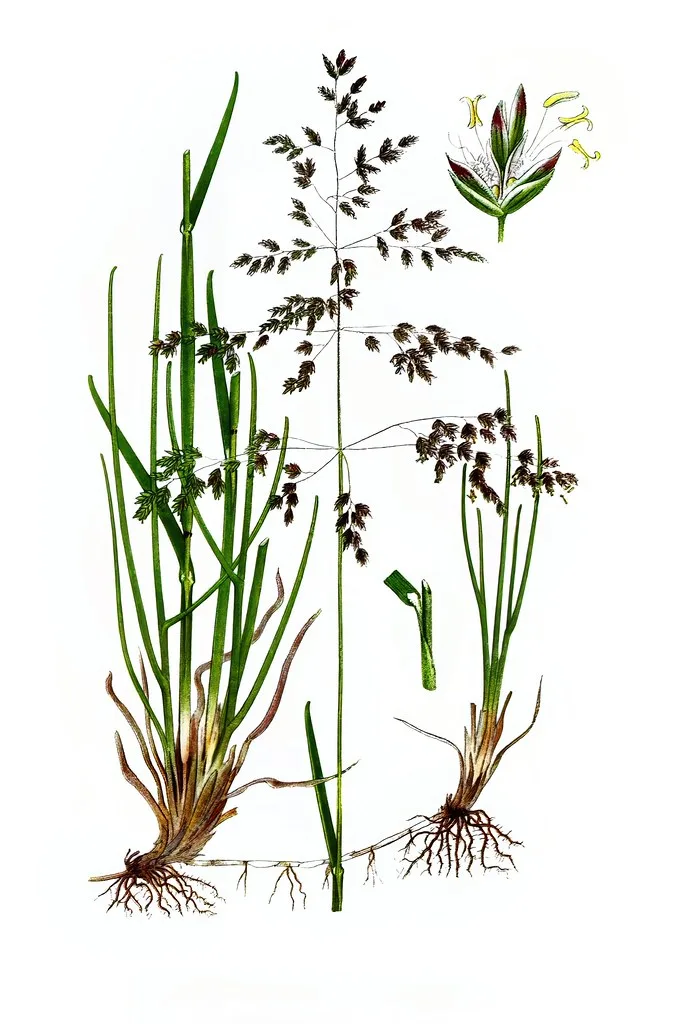
A beautiful lawn starts underground. The grass you pick determines how much water, fertilizer, and mowing you'll be doing for years. Most homeowners pick based on what looks pretty in the bag.
That's a mistake.
Think about your yard like this. You're not choosing between two types of grass. You're choosing between two different maintenance lifestyles.
One asks less of you. The other demands more but delivers a denser, finer-bladed carpet.
Your local climate, soil type, and how you actually use your yard should drive this decision. Not the picture on the seed label.
Here's the Short Answer
Pick tall fescue if your yard has shade. Pick tall fescue if you water sparingly. Pick Kentucky Bluegrass if you want a dense lawn.
Pick KBG if you have full sun. Pick KBG if you can water regularly. Both work in cool-season regions.
Neither thrives without the right care.
How to Decide Based on Your Yard's Conditions – The Decision Tree
This is where you get a clear answer. Run through these questions in order. Each one narrows the field.
Start Here: What's Your Sunlight Situation?
This is the single biggest factor. Most lawns have a mix of sun and shade, but the dominant condition wins.
If your lawn gets 4 hours of direct sun or less per day: Go with tall fescue. Kentucky Bluegrass struggles in shade. It thins out, gets leggy, and invites moss and weeds.
Tall fescue handles partial shade much better, especially the fine fescue varieties.
If your lawn gets 6+ hours of direct sun: Both grasses can work. Now you move to the next question.
If you have deep, dense shade under trees or a north-facing yard: Consider alternatives entirely. Even tall fescue needs some light. You might be better off with shade-tolerant ground covers or a designated area for shade-loving plants, similar to what you'd find in a selection of plants for a dark bathroom or the right options for a north-facing window.
How Much Water Are You Willing to Give It?
Be honest here. Nobody wants to run sprinklers every morning in August.
If you want to water minimally or rely on rain: Choose tall fescue. It has deeper roots, extending 3 to 4 feet into the soil. That depth lets it tap moisture Kentucky Bluegrass can't reach.
Tall fescue also goes dormant and brown during severe drought but bounces back when rain returns.
If you have irrigation and don't mind watering 1 to 1.5 inches per week: Kentucky Bluegrass is an option. It has shallower roots, around 1 to 2 feet. Without consistent water in summer, it goes dormant fast and stays brown until fall.
What About Foot Traffic?
If kids, dogs, or weekend games are part of your lawn life: Kentucky Bluegrass has the edge. Its rhizomes let it repair itself. A bare spot from a dog run will fill in over a season.
Tall fescue is a bunch grass. It doesn't spread. Damage stays damaged unless you overseed.
If traffic is light to moderate: Tall fescue holds up fine. It's tough enough for most family yards but won't self-repair.
Your Maintenance Tolerance: High or Low?
If you want to mow less and fertilize less: Tall fescue. Mow at 3 to 4 inches. Feed it twice a year.
That's it.
If you enjoy the process and want a showpiece lawn: Kentucky Bluegrass. Expect mowing every 4 to 5 days in spring. Fertilize 4 to 6 times per year.
Dethatch every couple of years.
Tall Fescue: The Low-Stress Workhorse
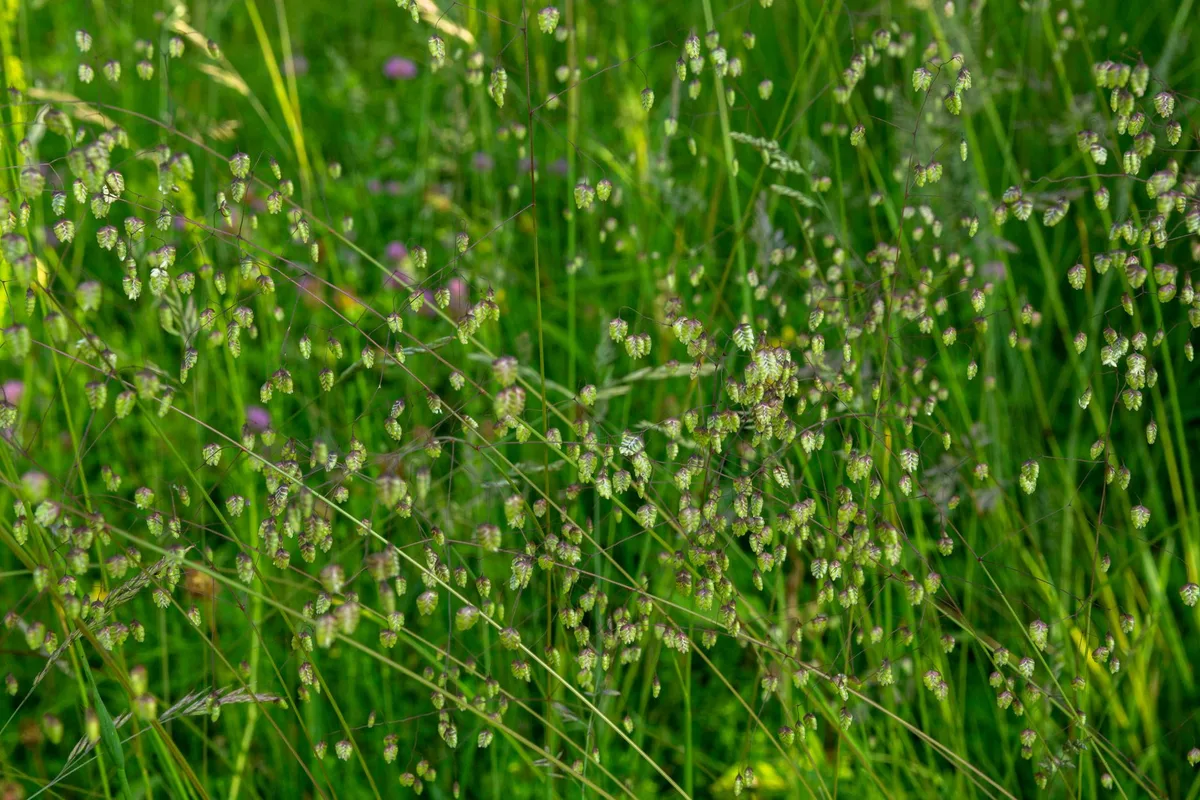
Tall fescue is the practical choice. It's the grass you set and forget, at least relative to the alternative.
How It Looks, Feels, and Behaves
The leaf blades are wider than KBG. Some people describe the texture as coarse, especially compared to a manicured KBG lawn. In our research, many homeowners actually prefer the stiffer feel underfoot.
It holds up to foot traffic without flattening.
Growth habit is bunch-type. It grows in clumps rather than spreading. That means it can look a bit lumpy if you don't overseed regularly, but it also means it doesn't invade your flower beds as aggressively.
Color is medium to dark green. It's not the deep emerald of a well-fed KBG lawn, but it's perfectly attractive when healthy.
Where It Shines and Where It Struggles
Strengths:
- Excellent drought tolerance once established
- Good shade tolerance (best among cool-season grasses)
- Low fertilizer needs
- Handles clay and compacted soils better
- Germinates in 7 to 14 days, much faster than KBG
Weaknesses:
- Won't self-repair bare spots
- Coarser texture
- Can look clumpy if not overseeded
- Prone to brown patch fungus in hot, humid weather (you might need to apply a treatment, which is why knowing about fungicides for lawns is useful)
Kentucky Bluegrass: The High-Maintenance Showstopper
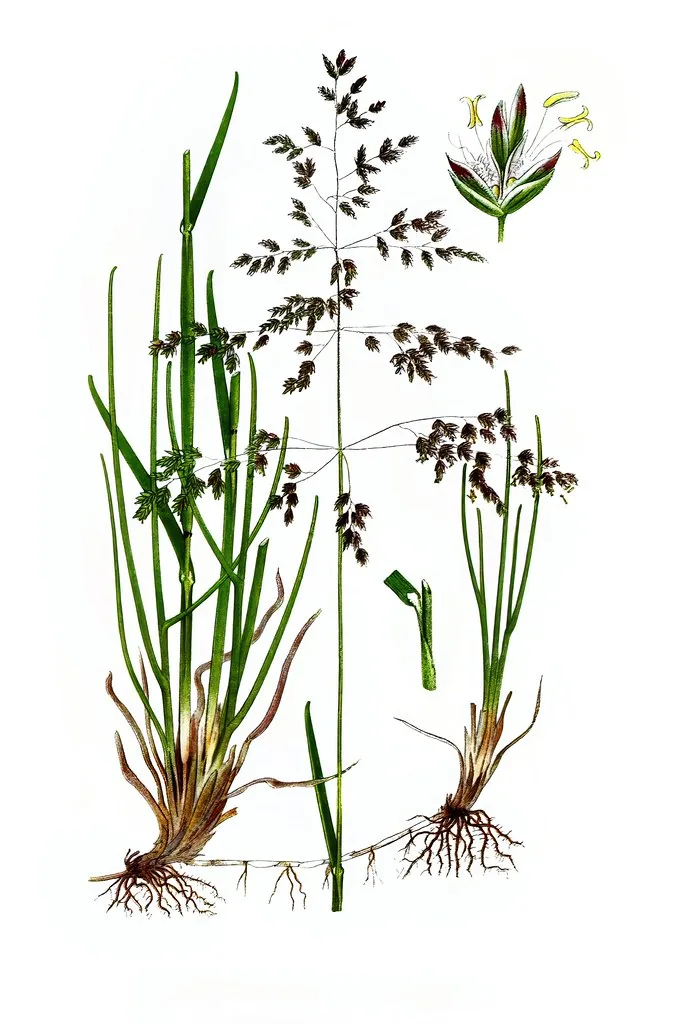
Kentucky Bluegrass is the classic American lawn. It's what you see in magazines and on golf courses. It earns that reputation through effort.
How It Looks, Feels, and Behaves
The leaf blades are fine and soft. The texture is what most people picture when they think "nice lawn." It creates a dense, carpet-like surface that feels plush under bare feet.
Growth habit is rhizomatous. Underground stems spread horizontally, sending up new shoots. This is the secret to its self-repair ability.
A thin patch in spring can be thick by fall without any help from you.
Color is deep blue-green when healthy and well-fed. In drought, it turns straw brown almost overnight.
Where It Shines and Where It Struggles
Strengths:
- Self-repairs damage from pets, kids, and foot traffic
- Fine texture feels luxurious
- Dense growth suppresses weeds naturally
- Cold hardy, survives harsh winters in zones 3 to 4
Weaknesses:
- Needs 4 to 6 pounds of nitrogen per 1,000 sq ft annually
- Requires 1 to 1.5 inches of water per week in summer
- Germination takes 14 to 30 days, weeds love that window
- Shade intolerant, thins out quickly
- Prone to dollar spot and necrotic ring spot
Tall Fescue vs Kentucky Bluegrass – Head-to-Head Comparison
Let's put the numbers side by side. This table covers the specs that matter most for your decision.
| Factor | Tall Fescue | Kentucky Bluegrass |
|---|---|---|
| Shade tolerance | Good (moderate shade) | Poor (needs full sun) |
| Drought tolerance | Excellent (deep roots) | Poor (shallow roots) |
| Foot traffic tolerance | Moderate | Good (self-repairs) |
| Mowing height | 3 to 4 inches | 1.5 to 2.5 inches |
| Nitrogen per year | 2 to 3 lbs per 1,000 sq ft | 4 to 6 lbs per 1,000 sq ft |
| Germination time | 7 to 14 days | 14 to 30 days |
| Seed per 1,000 sq ft | 6 to 8 lbs | 2 to 4 lbs |
| Mowing frequency | Every 7 to 10 days | Every 4 to 6 days (peak growth) |
| Self-repair ability | None (bunch grass) | Excellent (rhizomes) |
| Typical leaf texture | Medium to coarse | Fine and soft |
One stat stands out. That nitrogen requirement for KBG is roughly double what tall fescue needs. Over a 5,000 square foot lawn, you're looking at 10 to 15 additional pounds of fertilizer per year.
Best Use Cases: Who Should Pick Which
Pick tall fescue if:
- Your yard has significant shade from trees or buildings
- You want to minimize watering and fertilizing
- You have clay or compacted soil
- You're establishing a new lawn and want quick coverage
- You don't mind a slightly coarser texture
- Your budget for lawn care is limited
Pick Kentucky Bluegrass if:
- Your lawn gets full sun all day
- You have an irrigation system you're willing to run
- Kids or dogs create bare spots you want filled in naturally
- You want that dense, carpet-like look
- You enjoy regular lawn maintenance as a hobby
- You live in a colder climate (zones 3 to 4)
Consider a blend if:
- You have a mix of sun and shade across your yard
- You want some self-repair ability with lower maintenance
- You're willing to compromise on both texture and perfection
A common blend is 80 to 90 percent tall fescue with 10 to 20 percent KBG. This gives you the drought tolerance of fescue with some rhizome recovery from the bluegrass. It won't look as uniform as a pure stand of either, but it's a practical middle ground.
How to Seed and Establish Your Chosen Grass
Getting it in the ground right makes all the difference. Here's the process for both types.
Seeding Rates, Timing, and Method
Timing is everything. The ideal window for cool-season grasses is late summer to early fall. That's 6 to 8 weeks before your first expected frost. Soil temperatures should be between 50 and 65 degrees Fahrenheit.
Spring seeding works but comes with risks. Summer heat stresses young seedlings, and weeds compete aggressively.
Seeding rates matter more than you think.
- Tall fescue: 6 to 8 pounds per 1,000 square feet for new lawns. 3 to 4 pounds for overseeding.
- Kentucky Bluegrass: 2 to 4 pounds per 1,000 square feet for new lawns. 1 to 2 pounds for overseeding.
Use a slit seeder or broadcast spreader. Slit seeding puts seed directly into the soil. Broadcasting requires light raking to ensure seed-to-soil contact.
Watering and Fertilizer for the First Season
Water frequently and lightly at first. Keep the top inch of soil consistently moist. For tall fescue, that means watering once or twice daily for the first 10 to 14 days. For KBG, you need to maintain that moisture for 3 to 4 weeks.
Once germination is complete, shift to deep, infrequent watering. That encourages deep root growth.
Use a starter fertilizer. Look for one with higher phosphorus (the middle number on the bag). Apply at seeding time. This supports root development.
Avoid high-nitrogen fertilizers until the grass is established, typically after the second mowing.
For KBG, you'll need to top-dress with compost or a light layer of peat moss to keep the seed moist during that long germination window. This is critical. Many KBG seeding failures happen because the seed dries out before it sprouts.
Maintenance Differences You Need to Know
Once your grass is established, the real differences show up.
Mowing, Fertilizing, and Irrigation Long-Term
Mowing:
- Tall fescue: Keep it at 3 to 4 inches. Never cut more than one-third of the blade height at once. Taller grass shades the soil, reducing water loss.
- Kentucky Bluegrass: Mow at 1.5 to 2.5 inches. It needs more frequent mowing in spring. Letting it get too tall and then scalping it stresses the plant.
Fertilizing:
- Tall fescue: Apply 1 pound of nitrogen per 1,000 square feet in early fall. A second application in late fall. That's it for most yards.
- Kentucky Bluegrass: Split 4 to 6 pounds into 3 to 4 applications. Early spring, late spring, early fall, late fall. Each application is 1 to 1.5 pounds.
Irrigation:
- Tall fescue: Water deeply once a week during dry spells. About 1 inch per week. It can go dormant and survive 4 to 6 weeks without water.
- Kentucky Bluegrass: Needs 1 to 1.5 inches per week during active growth. It goes dormant after about 2 weeks without water. Recovery from summer dormancy takes 2 to 3 weeks of consistent moisture.
Overseeding and Repair Strategies
Tall fescue will need overseeding. Because it grows in clumps and doesn't spread, thin areas should be overseeded every 1 to 2 years. Fall is best. Use a slit seeder or broadcast seed and rake it in.
Kentucky Bluegrass fills in on its own. Bare spots from dog urine or foot traffic will typically recover within a growing season. You may not need to overseed at all. However, if you have large bare areas, KBG seed is expensive.
Overseeding in fall still helps maintain density.
One repair tip for both. If you have a patch that won't fill, check for underlying issues. Compacted soil, grubs, or poor drainage can prevent recovery.
Sometimes the problem isn't the grass at all.
Mistakes That'll Sabotage Your New Lawn
These errors come up constantly in aggregate reviews and lawn forums. Avoid them.
Planting KBG in shade. It will thin out. Moss and weeds will take over. You'll spend money on seed and water for a lawn that never looks right.
Overseeding tall fescue into KBG and expecting uniformity. The texture difference is obvious. You'll have a patchy look for years.
Mowing KBG too short. Scalping it stresses the plant and invites crabgrass. Keep it at that 2-inch minimum.
Overwatering tall fescue. It's drought tolerant for a reason. Too much water encourages brown patch fungus. Let it dry out between waterings.
Ignoring soil tests. This is the biggest mistake. You can't fix what you don't measure. Get a soil test from your local extension office before you seed.
It costs about $15 and tells you exactly what your lawn needs.
Seeding KBG in spring without irrigation. If you can't commit to watering daily for 3 to 4 weeks, don't spring-seed KBG. You'll waste the seed and your time.
Using too much nitrogen on tall fescue. It doesn't need as much as KBG. Heavy nitrogen feeding leads to lush growth that's more susceptible to disease. Stick to that 2 to 3 pounds per year.
Quick Reference: What to Buy for Your Situation
The seed aisle is confusing. Here's what to look for so you grab the right bag.
Seed Products and What to Look For on the Label
Check the label for two things. First, the species name. It should list "Tall Fescue" or "Kentucky Bluegrass." Avoid bags that just say "grass seed" with no specifics.
Second, look for the test date. Fresh seed matters. A test date within the last 9 to 12 months means higher germination rates.
Anything older than 18 months will have lower viability.
Cultivar names matter too. For tall fescue, look for varieties like Biltmore, Falcon, or Titan. For KBG, look for Midnight, Nuglade, or Blue Sapphire.
These have been bred for better disease resistance and turf quality. You can find cultivar performance data through the National Turfgrass Evaluation Program.
Blends vs Pure Stands – What You're Actually Getting
A pure stand is 100 percent of one species. A blend mixes two or more species.
Pure stands give you uniform texture and color. You know exactly what you're getting. The downside is that if a disease hits, it hits everything.
Blends offer insurance. The 80/20 tall fescue and KBG mix is popular. You get drought and shade tolerance from the fescue plus some self-repair from the bluegrass.
The trade-off is a less uniform look. Your lawn won't have that single, seamless texture.
For most homeowners, a blend is the smarter bet. It handles more conditions and recovers better from problems. A pure stand is for perfectionists who know exactly what their yard needs.
Final Decision Guide – Your Next Two Steps
Step one. Walk your yard at 9 AM and again at 3 PM. Note where the sun hits and where it doesn't.
Count the hours of direct sunlight in your main lawn area. Write it down.
Step two. Match that number to the chart below.
| Sunlight hours | Best choice |
|---|---|
| Less than 4 | Tall fescue (fine fescue blend for deep shade) |
| 4 to 6 | Tall fescue or a blend |
| 6 or more | Kentucky Bluegrass or a blend |
If you have irrigation and want the manicured look, go KBG in full sun. If you want lower maintenance and have partial shade, go tall fescue. If you're still unsure, buy a blend.
It won't win any lawn contests, but it will survive your mistakes.
Frequently Asked Questions
Can I mix tall fescue and Kentucky Bluegrass together?
Yes. A blend of 80 to 90 percent tall fescue with 10 to 20 percent KBG works well. You get drought tolerance from the fescue and some self-repair from the bluegrass.
The texture won't be perfectly uniform.
Which grass is better for pets?
Kentucky Bluegrass handles dog urine better because it self-repairs. Tall fescue won't fill in damaged spots on its own. You'll need to overseed bare patches.
How long does each grass take to establish?
Tall fescue germinates in 7 to 14 days. Kentucky Bluegrass takes 14 to 30 days. Full establishment for both takes one full growing season.
Which grass is cheaper to maintain?
Tall fescue costs less. It needs half the fertilizer of KBG and less water. Over a 5,000 square foot lawn, you'll save roughly $50 to $100 per year on fertilizer alone.
Can I grow tall fescue or KBG in the transition zone?
Both struggle in the transition zone. Tall fescue works better in the upper transition zone like Maryland and Kansas. KBG needs irrigation and careful management.
Warm-season grasses like Bermuda perform better in the lower transition zone.