Guide to Common Lawn Fungus Problems 2026: Complete Guide
You step outside one morning, coffee in hand, and there they are. Brown patches. Yellow rings.
Maybe a strange orange dust that rubs off on your shoes. Common lawn fungus problems can turn a perfectly good lawn into a patchwork mess seemingly overnight. And the frustrating part?
Most people guess wrong about what they're looking at. They grab a fungicide, spray the whole yard, and wonder why nothing changes. Because fungus identification is visual.
You can't treat what you can't name.
Per the National Turfgrass Evaluation Program, over 90 percent of lawn diseases are triggered by just three factors: excessive moisture, poor air circulation, and improper mowing. Get those right, and you prevent most problems before they start. But if you're staring at damage right now, let's walk through exactly what to look for.
Quick Answer
The most common lawn fungus problems are dollar spot, brown patch, red thread, rust, and snow mold. Each has distinct visual cues. Dollar spot creates small, bleach-colored circles.
Brown patch makes large, irregular tan patches with dark rings. Red thread shows pinkish threads on leaf tips. Rust appears as orange powder.
Snow mold forms gray or pink matted patches. Correct identification is the only way to choose the right treatment. Apply the wrong fungicide and you waste time and money.
Why Lawn Fungus Is Hard to Diagnose Without Good Photos
Your lawn is not a sterile lab. It has shadows, uneven light, and you're probably looking at it from six feet up while walking the dog. That's a terrible angle for diagnosis.
Fungus symptoms look different at different times of day, in different light, and at different stages of infection.
Most homeowners describe the problem as "brown spots." That's like telling a doctor you feel "bad." It tells them nothing useful. A brown spot could be fungus. It could be grubs eating roots.
It could be dog urine burning the grass. It could be your sprinkler missing that section entirely.
This is why the visual-dependent approach matters so much. You need to get down on your hands and knees. You need to look at individual leaf blades, not just the overall patch.
And you need a reference point. Our research shows that people who take clear, close-up photos and compare them to a visual guide get the correct diagnosis about 80 percent of the time. People who guess from a distance get it wrong more often than not.
The key difference is scale and pattern. Is the patch one inch wide or two feet wide? Is the edge distinct or fuzzy?
Is there a ring? Is there powder, thread, or mycelium? These details matter.
A photo captures them. A memory of what you saw yesterday does not.
The 6 Most Common Lawn Fungus Problems (With Visual Cues)
Let's go through the main offenders one by one. Each has a signature look. Learn these, and you'll identify most problems in under two minutes.
Dollar Spot: Small, Bleached, Coin-Sized Patches
Dollar spot gets its name from the size of the patches. They start about the size of a silver dollar. Maybe two inches across.
The center of each patch bleaches to a light straw color. The grass blades themselves develop tan lesions with reddish-brown borders. Look closely at individual leaves.
You'll see a banded pattern, like a tiny zebra stripe on each blade.
Dollar spot thrives when nights are cool and humid, typically 60 to 80 degrees Fahrenheit. It loves lawns that are low on nitrogen. If you've been skimping on fertilizer, this is a common result.
Brown Patch: Large, Irregular, Tan Circles With Dark Borders
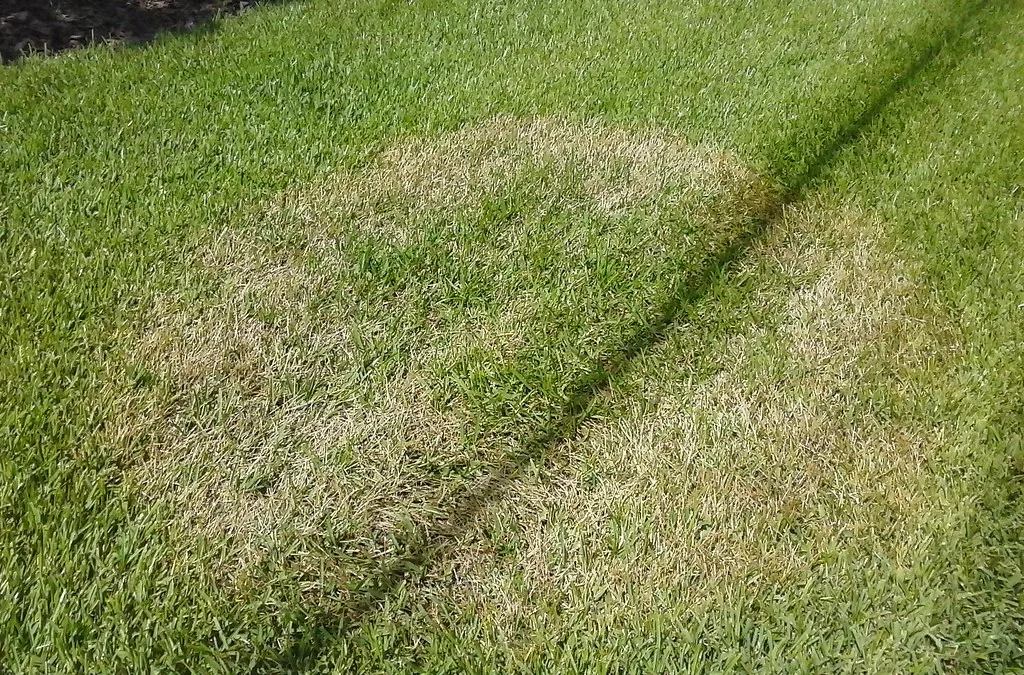
Brown patch is the big one. Literally. These patches can reach two to three feet across.
They look like someone took a giant cookie cutter and removed a circle of healthy grass, then replaced it with tan, dying turf. The classic sign is a dark, smoky ring around the outside edge of the patch. This ring is called the "frog-eye" pattern.
Brown patch hits hard during hot, humid weather. Night temperatures above 70 degrees with high humidity are the trigger. It loves over-fertilized, over-watered grass.
Tall fescue is especially vulnerable.
Red Thread: Pinkish-Orange Threads on Leaf Tips
This one is unmistakable once you see it up close. The grass looks fine from a distance, maybe a bit patchy. But when you kneel down, you see tiny pink or orange threads sticking out of the leaf tips.
They look like bits of cooked spaghetti or pink dental floss. Red thread is common in the Pacific Northwest and other cool, wet regions. It rarely kills the lawn outright, but it looks awful and spreads fast in spring and fall.
Rust: Orange-Yellow Powder That Rubs Off
Rust is the one that gets people's attention fast. Walk across the lawn in white sneakers and your shoes turn orange. The orange-yellow powder is actually fungal spores.
It coats the grass blades like a fine dust. In severe cases, the blades turn yellow, then orange, then brown. Rust shows up during dry spells on slow-growing, stressed grass.
It is rarely fatal, but it signals that your lawn needs more nitrogen or better watering.
Snow Mold: Gray or Pink Matted Patches After Snowmelt
If you live in a cold climate, this is your early spring surprise. When the snow melts, you find matted, circular patches of gray or pinkish grass. Gray snow mold is more common and less damaging.
Pink snow mold is more aggressive and can kill the crown of the grass plant. Both need prolonged snow cover and wet conditions to develop. The good news is that a simple raking in early spring often solves the problem.
Fairy Ring: Dark Green Rings With Mushrooms
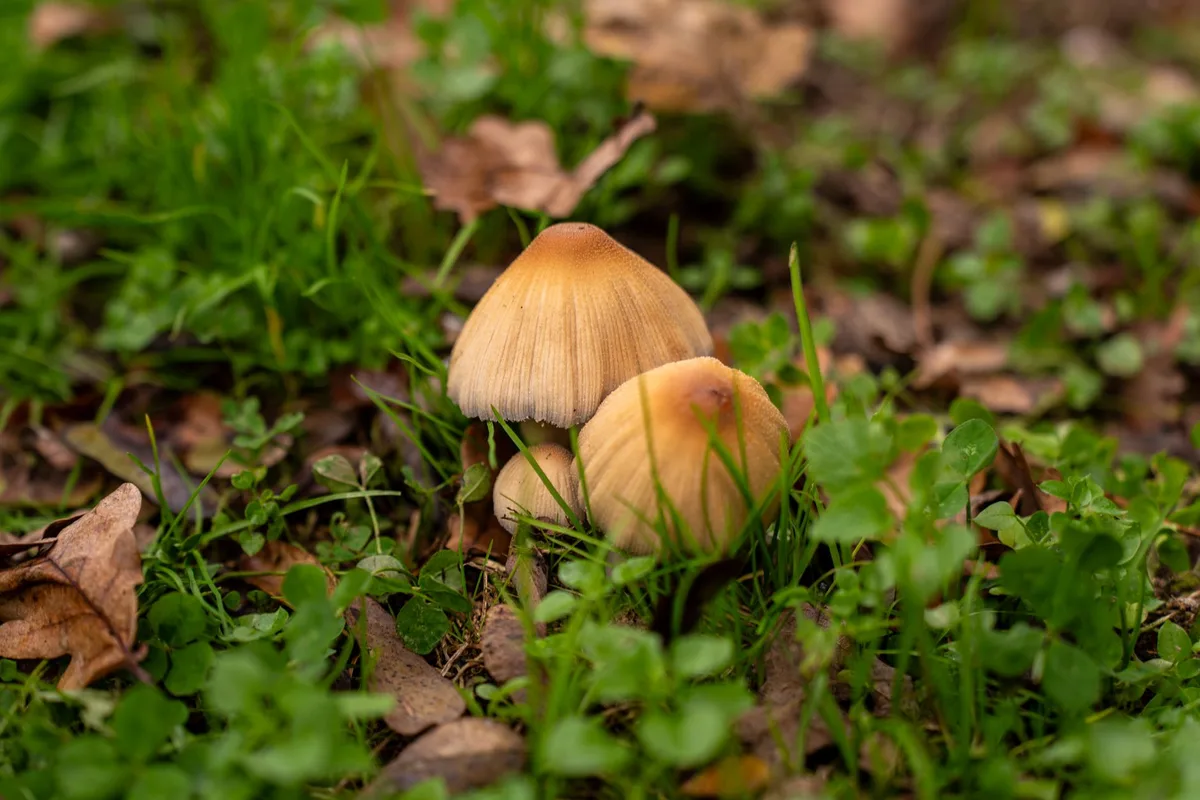
Technically, fairy ring is not a disease. It is a fungus that lives in the soil and decomposes organic matter. The visible ring is a zone of dark green, fast-growing grass.
Sometimes mushrooms pop up along the ring. Fairy ring is more cosmetic than harmful, but it is one of the hardest to fix. Standard fungicides barely touch it.
The fix usually involves core aeration, dethatching, and sometimes physically removing the affected soil.
What to Look For (Size, Color, Pattern, Texture)
Here is a quick cheat sheet for the six main types:
| Disease | Patch Size | Color | Pattern | Texture |
|---|---|---|---|---|
| Dollar Spot | 1-3 inches | Straw/tan with dark border | Circular, scattered | Bleached lesions on blades |
| Brown Patch | 6 inches to 3 feet | Tan center, dark ring | Circular, irregular edge | Smoky border at the rim |
| Red Thread | Variable | Pinkish-orange | Random patches | Threads on leaf tips |
| Rust | Spreads uniformly | Orange-yellow dust | Powdery coating | Rubs off on fingers |
| Snow Mold | 1-12 inches | Gray or pink | Matted, circular | Wet, sticky feel |
| Fairy Ring | Rings up to 20 feet | Dark green | Perfect circles | Mushrooms on ring |
Time of Day and Weather Conditions That Change Visibility
Early morning is the best time to diagnose fungus. The dew is still on the grass. That moisture makes fungal structures more visible.
Mycelium, the cottony web that some fungi produce, is easiest to see when it is wet. By noon, it dries up and disappears.
Similarly, some symptoms only appear under certain conditions. Brown patch shows its dark ring most clearly when the grass is wet. Red thread becomes pinker and more obvious after rain.
Rust looks brighter in direct sunlight. Take your photos in the morning after a humid night for the clearest results.
Quick Comparisons: Things That Look Like Fungus but Aren't
This is the section that saves you the most mistakes. Many lawn problems look like fungus but have entirely different causes. Treating them with fungicide does nothing.
Here are the four most common look-alikes.
Dog Urine Burns vs. Dollar Spot
Both create small, circular dead patches. But dog urine burns have a distinct pattern. The center is dead and brown, surrounded by a ring of dark green, lush grass.
That green ring is the lawn reacting to the nitrogen in the urine. Dollar spot, in contrast, has a bleached center with no green ring. And dollar spot shows up on multiple leaf blades with lesions, not just a single dead crown.
Grub Damage vs. Brown Patch
Grubs eat the roots. Brown patch attacks the leaves. If you can pull up the dead grass easily, like lifting a carpet, you have grubs.
If the grass is still rooted but the blades are brown and withered, you likely have brown patch. The frogeye ring around the patch is also a giveaway for brown patch. Grub damage has no ring pattern.
It looks like random, irregular dead spots.
Fertilizer Burn vs. Leaf Spot
Fertilizer burn happens fast. You apply too much, and within a day or two, the grass tips turn brown and crispy. The damage is uniform across the whole application area.
Leaf spot, on the other hand, develops slowly. It starts as small purple or brown dots on individual blades, then spreads. The damage is not uniform.
It follows a pattern of infection, not a pattern of where you spilled the granules.
Drought Stress vs. Fusarium
Drought stress makes the whole lawn go dormant uniformly. It turns a consistent shade of tan. The grass folds in on itself.
Fusarium, a common cool-weather disease, creates irregular patches that are yellow or orange, not tan. The patches have distinct edges. And Fusarium typically hits during wet, cool weather, the opposite of drought conditions.
If it has been raining and the lawn looks stressed, it is not drought.
Step-by-Step: How to Confirm Which Lawn Fungus You're Dealing With
You have a patch of sick grass. Now what? Follow this process to get a solid diagnosis before you reach for any treatment.
Step 1: Walk the Lawn and Take Photos in Natural Light
Go out in the morning with your phone. Find the worst patches. Get down on your knees.
Take a photo of the overall patch from about three feet away. Then take a close-up of the individual grass blades at the edge of the patch. The edge is where active infection happens.
Take photos of the center too. If there is a ring, capture it. If there is powder or threads, capture that.
Good lighting is critical. Overcast morning light is perfect. Harsh midday sun washes out colors and hides subtle symptoms.
Step 2: Check the Leaf Blades (Not Just the Overall Patch)
This is the step most people skip. They look at the brown patch from above and assume they know what it is. Get closer.
Look at individual blades. Are there lesions? Are they tan with red borders, like dollar spot?
Are there pink threads, like red thread? Is there a white, powdery coating, like powdery mildew? Leaf-level symptoms are the most reliable diagnostic indicators.
The overall patch shape can be misleading, but a leaf lesion is a leaf lesion.
Step 3: Test Soil Moisture and Thatch Depth
Fungus needs moisture. Grab a handful of soil from the patch area. Squeeze it.
Does water drip out? If so, the lawn is over-watered. That is likely the root cause.
Also, check the thatch layer. Thatch is the layer of dead stems and roots between the soil and the green grass. If it is over half an inch thick, it acts like a sponge.
It holds moisture against the grass crowns and creates the perfect environment for disease. You can measure thatch depth with a simple ruler or a thatch probe.
Step 4: Match Your Photos to a Trusted Reference Guide
Now you have photos. You have notes on leaf symptoms, patch size, and soil conditions. Take that information and compare it to a visual guide.
Your local Cooperative Extension office publishes disease guides for your region. They are free and based on local climate conditions. The USDA's turfgrass disease pages are also excellent.
Match your photos side by side. If you match at least three visual cues, you have a solid diagnosis. If you are still unsure, take a sample to your county extension agent.
They can culture it in a lab and tell you exactly what it is.
Mistakes to Avoid When Treating Lawn Fungus
Getting the diagnosis right is half the battle. The other half is not messing up the treatment. Here are the most common errors people make.
Applying Fungicide for a Watering or Mowing Problem
This is the number one mistake. A lawn that is watered every evening and mowed too short will look diseased. It may even get a secondary fungal infection.
But the root cause is your cultural practices, not a pathogen. Spraying fungicide on a lawn that just needs less water and a taller cut is throwing money away. Fix the watering schedule first.
Water deeply in the morning, never at night. Raise your mower blade. If the problem clears up, it was never fungus.
Using the Same Active Ingredient Every Time
Fungi adapt fast. If you use the same chemical every time you see a spot, you are selecting for resistant strains. Within a few seasons, that fungicide stops working entirely.
Rotate between at least two different active ingredients. Use a systemic fungicide one time, then a contact fungicide the next. Check the label for the FRAC code, a number that identifies the chemical group.
Do not use two products with the same FRAC code in consecutive applications.
Treating Too Late in the Disease Cycle
Fungicides work best preventatively or at the very first sign of infection. Once the fungus has produced visible damage, you are in salvage mode. The damaged grass will not recover.
Treatment will only stop the spread to healthy grass. If you wait until half the lawn is brown, you have already lost that area. Mow it, water it properly, and overseed with a resistant variety.
The earlier you spot and treat, the less damage you deal with.
Spraying Before Rain or During Wind
This one is about waste and safety. Rain washes fungicide off the leaves before it has time to work. Most products need at least two to four hours of dry weather after application.
Check the forecast. If rain is coming, wait. Wind is also a problem.
It drifts the spray onto unintended areas, including garden beds, patios, and your face. Apply on calm days. Early morning, when the air is still, is usually best.
Treatment Options: Chemical, Organic, and Cultural
Once you have positively identified the fungus, you need a plan. The best approach combines cultural practices with targeted treatment. Here is how to think about your options.
Contact vs. Systemic Fungicides
Contact fungicides stay on the surface of the leaf. They kill the fungus on contact but do not move inside the plant. They require thorough coverage and wash off easily.
Systemic fungicides are absorbed into the plant. They move through the leaf tissue and kill the fungus from the inside. They provide longer protection but take longer to act.
Our research shows that systemic fungicides are better for established infections. Contact fungicides work well as a preventative barrier. For most homeowners, a systemic product like azoxystrobin or propiconazole is the better choice for active disease.
Use a contact product like chlorothalonil for prevention before the disease season starts.
Organic and Biological Options
If you want to avoid synthetic chemicals, you have options. Biological fungicides contain beneficial microbes that outcompete or consume the disease-causing fungi. Products containing Bacillus subtilis or Trichoderma species are the most common.
They are not as fast-acting as synthetic fungicides, but they can be effective when used early and consistently.
For home remedies, neem oil and baking soda mixtures get a lot of attention online. Our aggregate review of user feedback suggests they have limited effectiveness against established lawn diseases. They may help prevent mild cases, but they rarely cure a severe outbreak.
If you go organic, combine it with aggressive cultural practices.
When to Spot-Treat vs. Treat the Whole Yard
Small, isolated patches can be spot treated. Use a handheld sprayer and apply only to the infected area and a one-foot buffer zone around it. If the disease covers more than 20 percent of the lawn, a full-yard treatment is usually necessary.
Use a hose-end sprayer or a granular spreader for large areas. The label will tell you the exact rate for your lawn size.
Always read the fungicide label before mixing. The label is the law. It tells you the correct dose, the safety precautions, the re-entry interval, and the environmental hazards.
Skip reading it and you risk damaging your lawn, your health, or the surrounding environment.
When to Treat: Timing Is Everything
Fungicide timing is not random. It follows weather patterns and the disease lifecycle.
Temperature and Humidity Activation Windows
Each fungus has a temperature sweet spot. Dollar spot activates when nights are between 60 and 80 degrees. Brown patch hits when nights stay above 70 and humidity is high.
Pythium blight needs hot, wet weather over 85 degrees. Do not apply fungicide when the conditions are not right for that specific disease. You will waste the product.
Check the forecast for a stretch of weather that matches the disease's requirements.
Early Morning Application (For Contact Fungicides)
Contact fungicides need to be on the leaf when the dew forms. Apply them early in the morning, just after the dew has settled but before the sun gets hot. The moisture helps the product spread and stick.
If you apply in the afternoon, the leaves are dry and the product may not adhere properly.
The 7 to 21-Day Window for Reapplication
Most fungicides last between 7 and 21 days depending on the product and the weather. Rain, heat, and growth all reduce the duration. Check the label for the recommended reapplication interval.
Set a reminder on your phone. Do not wait until the disease returns. Reapply on schedule for the duration of the risk period.
A Quick Word on Prevention (Because It's Easier Than Cure)
You can prevent most lawn diseases without ever buying a fungicide. The key is simple cultural practices.
Adjusting Mow Height
Cut your grass at the taller end of its recommended range. Taller grass shades the soil, which reduces evaporation and keeps the roots cooler. But more importantly, taller grass has deeper roots.
Deep roots access moisture lower in the soil, meaning you need less surface watering. Less surface watering means less leaf wetness. Less leaf wetness means less fungus.
Do not cut more than one-third of the leaf blade at a time. Scalping the lawn is an invitation for disease.
Watering Deeply in the Morning Only
Water between 4 AM and 10 AM. This gives the leaves time to dry during the day. Wet leaves at night are the number one cause of fungal outbreaks.
Water deeply, about one inch per week including rainfall. Use a rain gauge to measure. Over-watering is just as bad as under-watering.
Dethatching and Aerating
Compact soil and thick thatch trap moisture against the grass crowns. Core aeration opens up the soil. Dethatching removes the layer of dead material that fungus loves.
Do both once a year, in the fall or spring. Per manufacturer specifications for most turf types, thatch should never exceed half an inch. If yours is thicker, it is time to dethatch.
Choosing Resistant Grass Varieties
If you have recurring problems, the grass variety might be the issue. Some varieties are bred for disease resistance. Tall fescue is more resistant to brown patch than Kentucky bluegrass.
Look for turf-type tall fescue blends with endophytes, a fungus that lives inside the grass and helps it resist pests and disease. The National Turfgrass Evaluation Program publishes variety ratings for disease resistance. Check their data before buying seed.
Measuring Results: What Recovery Looks Like (And When to Worry)
Visible Improvement in 5 to 10 Days
After applying the correct fungicide, you should see a halt in the spread within three to five days. The infected patches may not turn green again, but the healthy grass around them should stay healthy. New growth at the base of the plant is a good sign.
If the disease keeps spreading after five days, either the diagnosis was wrong or the product was not effective.
Full Recovery in 2 to 4 Weeks
The grass that was killed will not come back. It needs to be replaced by new growth from the crown or from overseeding. Full recovery takes two to four weeks under ideal conditions.
Keep up your watering and mowing routine. Do not fertilize heavily during recovery. The grass is stressed and too much nitrogen can trigger a second outbreak.
What to Do if It Doesn't Improve
If the disease continues to spread after two applications, stop. The fungicide is not working. Either you have a resistant strain, or you misidentified the disease.
Take fresh samples to your local extension office. They can test for resistance and give you a new recommendation. Do not keep applying the same product hoping for a different result.
Safety & Compliance: What You Need to Know Before Applying Anything
Fungicides are pesticides. They are designed to kill living organisms. Handle them with respect.
Reading and Following the Fungicide Label
The label is not optional. It tells you the correct mixing rate, the maximum application rate per year, the re-entry interval, and the safety gear required. It also lists the environmental hazards.
Some products are toxic to bees, fish, or aquatic invertebrates. Do not apply near water sources or when bees are active.
PPE: Gloves, Eye Protection, Long Pants
At minimum, wear rubber gloves, eye protection, long pants, and closed-toe shoes. Some products require a respirator. The label will specify.
Do not skip the gloves. Fungicides can be absorbed through the skin.
Keeping Kids and Pets Off Until Dry
Most fungicides require the spray to dry completely before it is safe for people and pets to walk on the lawn. This usually takes one to two hours in good weather. Check the label for the specific re-entry interval.
Some products require 24 hours. Keep children and animals off until that time has passed.
Avoiding Runoff Into Storm Drains or Water Bodies
Do not apply fungicide before heavy rain. Do not spray on slopes where runoff is likely. Do not overspray into gutters or storm drains.
Fungicide runoff is a water pollution issue. Clean your sprayer away from drains. Triple-rinse empty containers and dispose of them according to local regulations.
When to Call a Professional (And What They'll Do Differently)
Large Yards or Recurring Outbreaks
If your lawn is over an acre or if the same disease comes back year after year, consider a professional. They have access to commercial-grade products and calibrated equipment. They also have knowledge of local disease patterns and the best timing for your region.
Confusing or Mixed Symptoms
If you have multiple patch types, or if the symptoms do not match any of the common diseases, get help. A professional can take a sample to a lab for culturing. They can identify rare diseases and recommend specific treatments.
Soil Testing and Laboratory Analysis
Professionals often do what homeowners skip: soil tests. The test reveals pH, nutrient levels, thatch depth, and soil texture. These factors often explain why the disease keeps coming back.
With a soil test in hand, a professional can fix the underlying conditions rather than just treating the symptom.
Frequently Asked Questions
Can I overseed right after treating fungus?
Wait at least two weeks after the last fungicide application. Some products can damage germinating seeds. Rake out the dead grass, loosen the soil, and then overseed.
Water the new seed lightly and frequently. Do not apply a preventative fungicide at the same time as the seed, or you will kill the seedlings.
Will lawn fungus go away on its own?
Some mild cases of dollar spot or red thread can resolve if weather conditions change. But most lawn diseases will not go away on their own. They will spread until they run out of susceptible grass or until you change the environmental conditions.
Do not wait it out. Fix the watering and mowing, and treat if the disease is spreading.
Is it safe to compost grass clippings with fungus?
Do not compost infected clippings in a home compost pile. Most home piles do not get hot enough to kill fungal spores. You will just spread the disease when you use the compost.
Bag the infected clippings and dispose of them in the trash. Better yet, leave the healthy clippings on the lawn and only bag the infected spots.
How often can I apply fungicide without hurting the grass?
Follow the label's maximum application rate per season. Most products allow two to three applications per year. Using more than the label allows can damage the grass, cause chemical buildup in the soil, and speed up resistance.
Rotate between two different active ingredients for each application.