Guide to Topdressing Lawn Benefits 2026
If your lawn looks tired, feels spongy underfoot, or has more bumps than a country road, topdressing lawn benefits might be exactly what you need. It is one of the most effective ways to improve soil health without tearing up your grass. A thin layer of compost or sand spread over your lawn can fix problems that fertilizers and watering just cannot touch.
Research from university turfgrass programs shows that a single 1/4-inch application can boost soil organic matter by about 0.5 percent in one season. That matters because healthy soil grows stronger grass with fewer chemical inputs. Let us walk through what topdressing can actually do for your lawn and when it makes sense to give it a try.
Quick Answer
Topdressing fixes soil problems at the root level. It levels bumps and fills dips. It reduces thatch naturally.
It improves drainage and water retention. It builds healthier grass over time.
What Your Lawn's Telling You: The Real Reason to Consider Topdressing
Your lawn talks to you. You just have to know what to look for.
Maybe you notice water pooling in certain spots after a rain. Maybe your mower scalps the high spots every time you cut the grass. Or maybe the soil feels as hard as concrete in July.
These are not separate problems. They all point to the same root cause: poor soil structure or uneven surface grade.
When soil gets compacted, air pockets collapse. Roots cannot breathe. Water runs off instead of soaking in.
Fertilizer sits on top and washes away. Your grass stays shallow-rooted and stressed. As of 2026, soil compaction affects roughly 60 percent of residential lawns according to turf science estimates.
Topdressing directly addresses all of these issues by adding a thin layer of material that changes the physical properties of the soil.
It does not require digging up your lawn or starting over. You spread a 1/8-inch to 1/2-inch layer over the surface. The material works its way down through the grass canopy.
Over time, it changes the soil beneath.
Think of it as a slow, gentle renovation. One that works with what you already have instead of destroying it first.
Can Topdressing Fix Your Specific Problem? A Quick Conditional Answer
This is where the decision tree starts. Because topdressing is not magic. It works brilliantly for some problems and does nothing for others.
Let us break it down by what you are dealing with.
If your lawn has visible bumps and dips, topdressing is your best option. You cannot level a lawn with fertilizer. You cannot fix uneven ground with more water.
Topdressing physically fills low spots and gradually knocks down high spots when applied in light passes over multiple seasons. It is the only method that corrects grade without killing your grass.
If your lawn feels spongy or bouncy, that is excess thatch, a layer of dead organic matter above the soil. Topdressing with compost introduces microbes that digest that thatch naturally. It works slower than dethatching with a power rake, but it does not tear up your lawn or leave it looking ragged for weeks.
If you suspect fungal issues beneath that thatch layer, check our guide on the best fungicide for lawns before you topdress.
If water pools every time it rains, payment depends on your soil type. Topdressing with sand can dramatically improve drainage on clay soils by creating channels for water to move through. On sandy soils, topdressing with compost does the opposite.
It improves water retention so your grass does not dry out in three hours.
If your grass is thin and patchy, topdressing alone will not fix it. You need to address the underlying cause first. Too much shade, improper watering, or a soil pH problem.
Use a slow release fertilizer for flowers and lawns to correct nutrient issues, then topdress after the grass starts recovering.
If your soil is rock hard and roots cannot penetrate, core aeration comes first. Topdressing works best after aeration because the compost fills the holes and improves the root zone directly. Apply topdressing right after aerating for the best results.
So ask yourself: what is my lawn actually struggling with? The answer determines everything.
What Actually Happens When You Topdress (And What Doesn't)
A lot of homeowners imagine topdressing smothers the grass. That worry stops them from trying it.
Here is the truth. When you apply the right material at the right depth, the grass grows right through it. You do not lose a single blade.
Look at a cross section of healthy lawn soil. You have the grass blades on top, then a thin thatch layer, then the root zone, then deeper soil. Topdressing sits between the blades and the existing thatch layer.
Rain and irrigation wash fine particles down into the thatch. Microbes in the compost start breaking down organic matter. Roots follow the nutrients deeper.
The magic happens slowly over several weeks.
Within the first week, moisture moves differently. The topdressing layer acts like a sponge on sandy soils or a channel-breaker on clay soils. You will notice less runoff after watering.
In weeks two through four, microbial activity ramps up. Beneficial bacteria and fungi break down thatch. This is especially helpful if you have used chemistry like organic fertilizer for fruit trees or other garden amendments that kill soil biology.
Topdressing reintroduces those microorganisms.
After a full season, the soil structure changes permanently. Organic matter content increases. Drainage improves.
The root zone deepens. You will water less and your grass will stay greener longer.
What does not happen? Thick layers. If you pile on more than 1/2 inch at a time, you can smother the grass.
That is the single biggest mistake people make. Light passes repeated over multiple seasons are better than one heavy application.
Also, topdressing does not kill weeds. It does not replace fertilizer. It does not fix shade problems.
It is a soil amendment, not a cure-all. Use it as part of a complete lawn care program.
The Honest Trade-Offs: Benefits vs. Drawbacks You Need to Know
Topdressing has real advantages, but it is not the right move for everyone. Let us lay out both sides.
Benefits
| Benefit | What It Means For You |
|---|---|
| Levels the surface | Fixes mower scalping and tripping hazards without digging |
| Reduces thatch | Natural microbial breakdown, no power raking needed |
| Improves drainage | Sand opens up clay soils; compost helps sandy soils hold water |
| Boosts soil biology | Adds beneficial bacteria and fungi that feed your grass |
| Enhances fertilizer efficiency | Roots can actually access the nutrients you apply |
| Low risk of damage | Proper application will not hurt existing grass |
Drawbacks
| Drawback | What You Need to Know |
|---|---|
| Slow results | You will not see dramatic changes for 4 to 6 weeks |
| Requires the right material | Wrong sand or compost can make things worse |
| Labor intensive | Spreading even a small lawn takes time and effort |
| Timing matters | Apply at the wrong season and you risk stressing the grass |
| Not a quick fix | It takes multiple seasons to correct serious problems |
The biggest trade-off is patience versus payoff. If you want instant results, topdressing is not for you. Rent a power rake or lay sod instead.
But if you want a long-term improvement that builds healthier soil year after year, topdressing delivers better results than any single treatment.
Cost is another factor. A cubic yard of screened compost runs between $25 and $60 depending on where you live. That covers about 1,000 square feet at a 1/4-inch depth.
Compare that to buying and laying sod, which runs $0.30 to $0.80 per square foot. Topdressing is significantly cheaper if you can do the labor yourself.
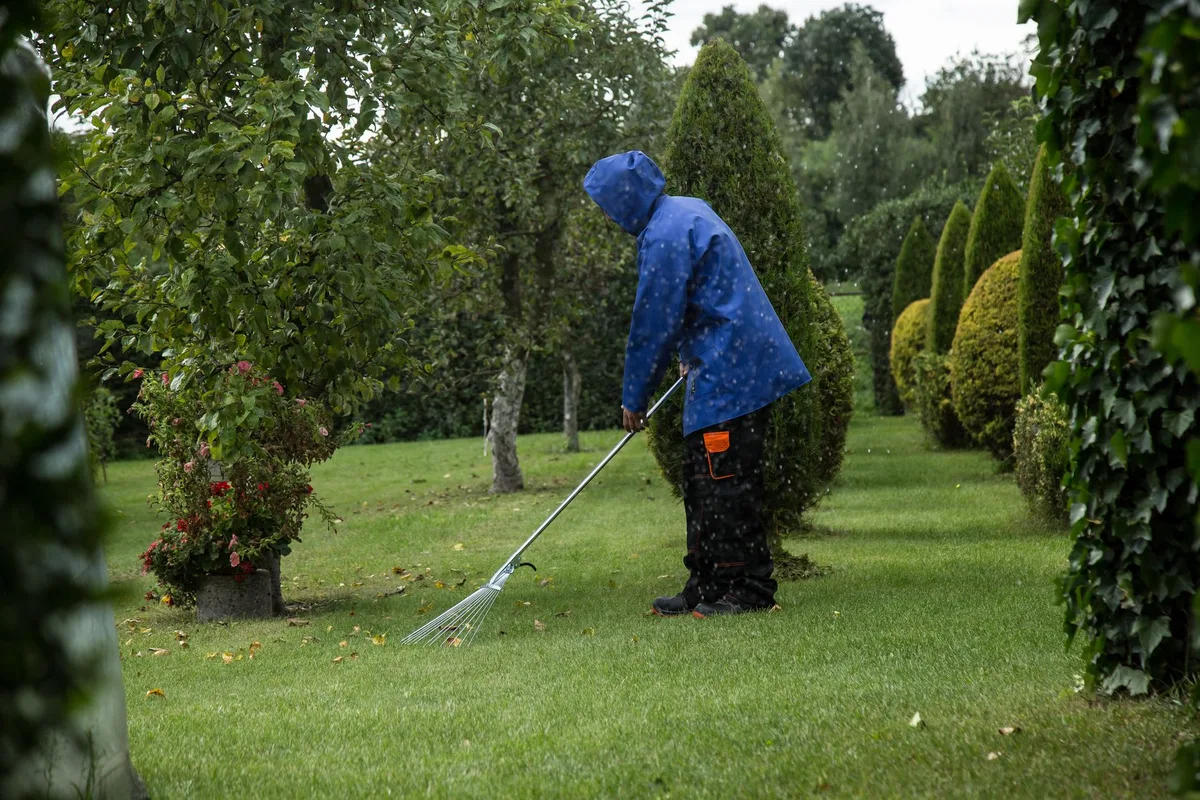
If you need to spread material over a large area, invest in the right rake. Our guide on the best rakes for pine needles covers raking tools that work well for spreading compost and sand across a lawn. A good leveling rake makes the job ten times easier.
Who Should Think Twice
Topdressing may not be right for you if:
- Your lawn has serious drainage problems that need regrading
- You have a history of fungal diseases that worsen with moisture
- Your soil test shows a pH that is way off (below 6.0 or above 7.5)
- You are renting and the landlord does not allow soil amendments
- You want a perfectly flat putting-green surface in one season
In those cases, address the bigger issues first. Then consider topdressing as part of a broader renovation plan.
For most homeowners with average soil and a bumpy, thatchy lawn, topdressing is one of the smartest investments you can make. It works with nature instead of against it. And the results compound over time.