How to Topdress a Lawn for 2026: Beginner-Friendly Guide
Topdressing is one of the most effective ways to improve your lawn's health and appearance. If you're wondering how to topdress a lawn, the process is simpler than you might think. You spread a thin layer of material over your grass and let nature work it in.
Per university extension research, a ¼-inch layer of screened compost adds enough organic matter to feed soil microbes for an entire growing season. The key is matching your material to your specific lawn condition. As of 2026, more homeowners are turning to this method instead of heavy chemical treatments.
Let's walk through exactly how to do it right.
Quick Answer
Topdressing means spreading a thin layer over your lawn. The material is usually compost, sand, or topsoil. Keep the layer at ¼ to ½ inch thick.
This improves soil and levels the surface. Apply it after aeration for best results. It feeds beneficial microbes in the soil.
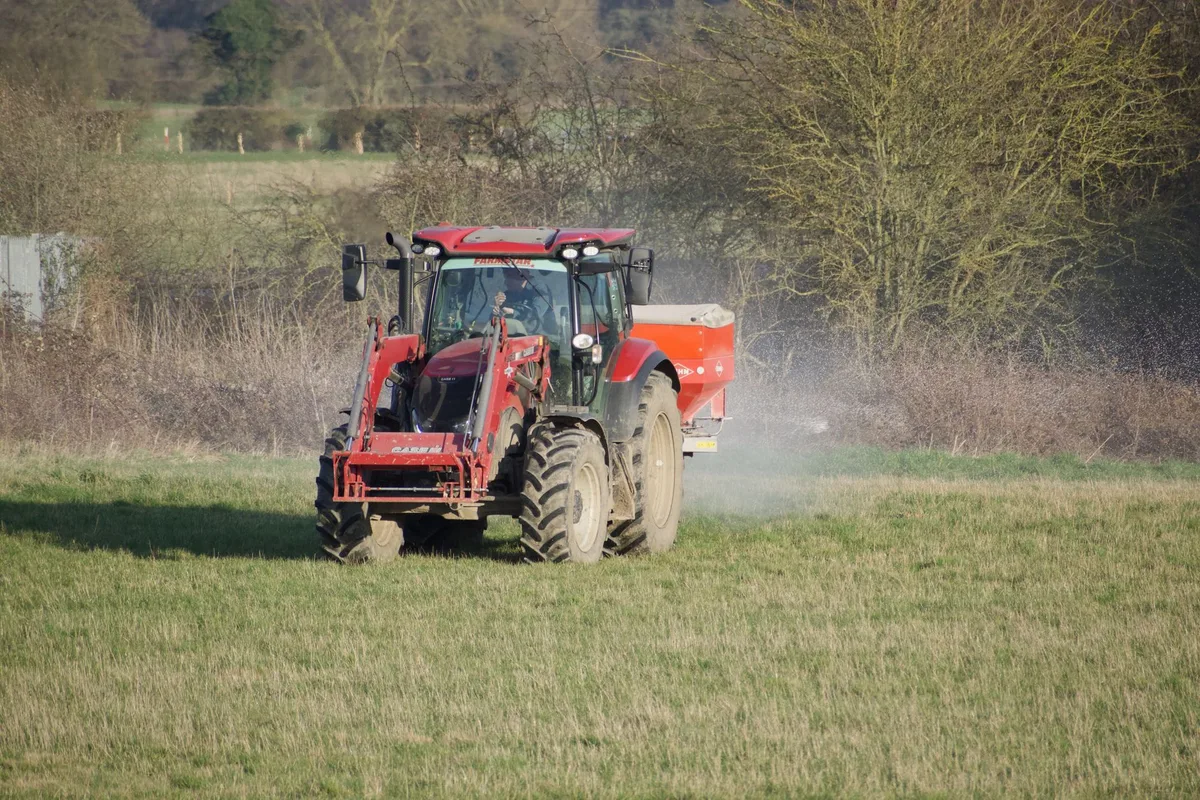
When Topdressing Actually Makes Sense (and When It Doesn't)
Topdressing is not a universal fix. It works great for some situations and does very little for others. Let's be honest about where it fits.
Topdressing makes sense when:
- Your lawn has low spots or uneven areas from settling or pet traffic
- The soil is heavy clay that drains slowly after rain
- Your grass looks thin and you're planning to overseed
- A thatch layer is building up but isn't thick enough to power-rake
- You want to build better soil without tearing up the lawn
Skip topdressing when:
- The grass is dormant (brown and not growing)
- You recently applied a weed killer or pre-emergent
- The ground is soggy or waterlogged
- Your thatch layer is over ¾ inch thick (dethatch first)
- You have a serious weed infestation that needs treatment first
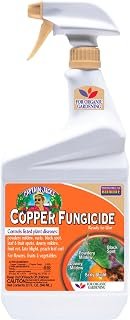
If you're dealing with disease issues in your lawn, it's smart to handle that before adding any new material. Our guide on the best fungicide for lawns covers how to identify and treat common fungal problems before you start the topdressing process.
The key takeaway here is simple. Topdressing is a soil-building maintenance practice, not a quick fix for a neglected lawn. If your lawn has major problems like deep weeds, compacted soil, or thick thatch, address those first.
First, What's Your Goal? The Decision Tree Start
Your goal determines everything else. The material you choose, how much you apply, and even the time of year all depend on what you're trying to accomplish.
Here is a simple decision tree to find your path.
Goal: Level low spots and smooth the surface
If your lawn has dips, wheel ruts, or uneven patches from settling, your focus is on physical leveling. You need a material that won't break down quickly and can fill those hollows permanently. Sand or a sand-heavy mix works best here.
Goal: Improve heavy clay soil
If water pools on your lawn after rain and the ground stays soggy, you need organic matter. Compost is your best friend. It opens up dense clay, improves drainage, and feeds the microorganisms that keep soil healthy.
Goal: Prepare for overseeding
If your grass is thin and patchy, topdressing creates the perfect seedbed. A thin layer of screened compost or fine topsoil gives seeds excellent soil contact without burying them too deep. This dramatically improves germination rates.
Goal: Reduce thatch buildup
If you have a layer of dead stems and roots between the grass and soil, compost topdressing helps microbes digest that thatch naturally. It's a slower process than dethatching, but it's gentler on the lawn.
Each goal requires a different approach. Do not skip this step. Applying the wrong material for your goal can waste your time and money.
In our research, the most common regret people report is not knowing what they wanted to accomplish before they started.
The 3 Material Choices (and How to Pick Yours)
You have three main options for topdressing material. Each one serves a different purpose. Choosing the right one is the most important decision you will make.
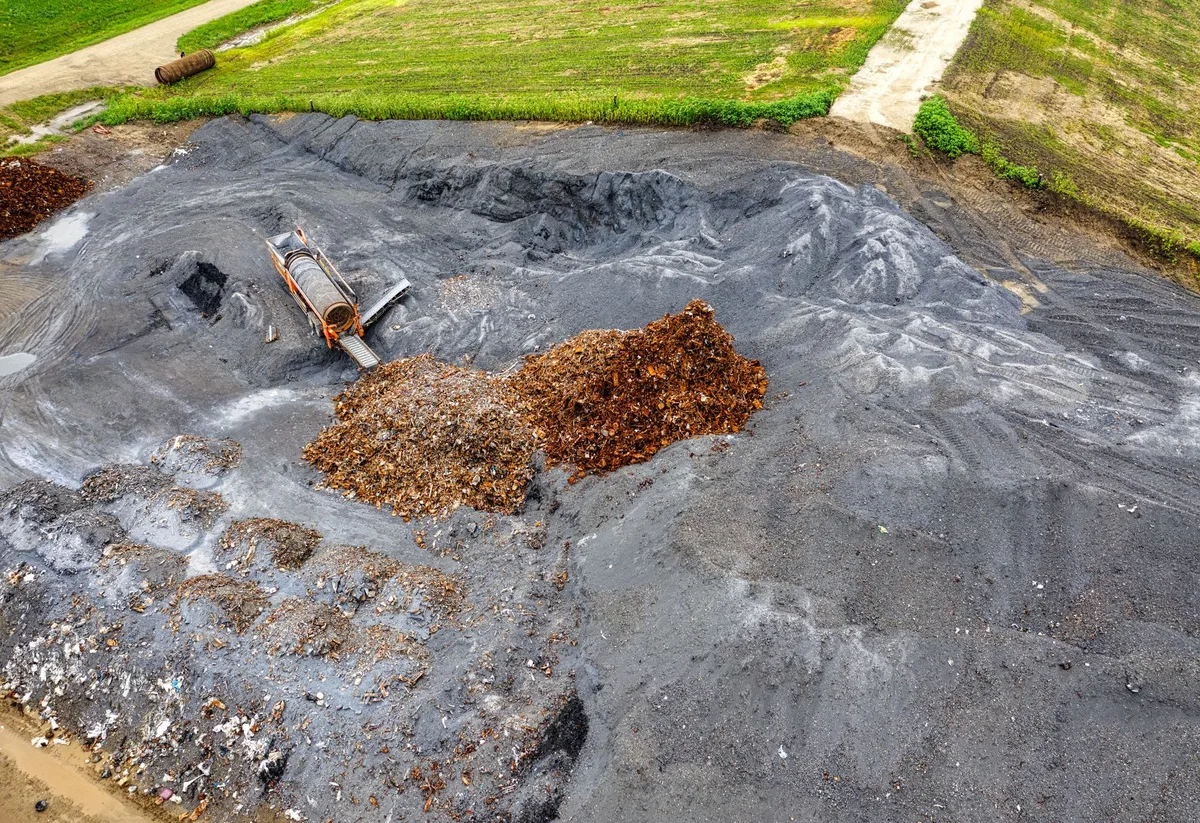
Compost
Compost is the all-around champion for soil health. It adds organic matter, feeds beneficial microbes, and improves both drainage in clay and water retention in sandy soil.
Best for: Improving soil fertility, reducing thatch, and preparing for overseeding.
What to look for: Screened, dark, earthy-smelling compost with no large chunks. Avoid anything that smells like ammonia or contains visible weed seeds. Check if the supplier follows STA (Seal of Testing Assurance) standards for quality.
Sand
Sand is for leveling only. It adds zero nutrients and does very little for soil biology. But it does not decompose, which makes it permanent for filling dips.
Best for: Leveling low spots on lawns that already have decent soil.
What to look for: Coarse, washed, sharp sand. Never use fine beach sand. It contains salt and round grains that compact into a concrete-like layer.
Topsoil
Screened topsoil sits in the middle. It provides some organic matter and some structural fill. It works well when you need a bit of both leveling and nutrient support.
Best for: General lawn improvement where you want a balance of fill and fertility.
What to look for: Screened through a ⅜-inch mesh, dark color, no clumps of clay or rocks.
Here is a quick comparison to help you decide.
| Material | Best Use | Organic Matter | Longevity | Cost per Yard |
|---|---|---|---|---|
| Compost | Soil health, thatch, seeding | High (30-50%) | Breaks down yearly | $20-$50 |
| Sand | Leveling only | Near zero | Permanent | $15-$35 |
| Topsoil | General improvement | Moderate (5-15%) | Lasts years | $20-$40 |
The right choice depends on your goal from the decision tree above. When in doubt, screened compost is the safest bet for most lawns.
How Much Material You Really Need: The Simple Math
This is where most people guess and get it wrong. The math is not hard, but you need to be accurate. Too little material won't make a difference.
Too much will smother your grass.
The formula:
Length of lawn (feet) × Width of lawn (feet) × Desired depth (inches) ÷ 324 = Cubic yards of material
Example: A 1,000 square foot lawn (say 20 ft by 50 ft) at ¼ inch depth.
20 × 50 = 1,000 square feet
1,000 × 0.25 = 250
250 ÷ 324 = 0.77 cubic yards
You would need about ¾ of a cubic yard of material. Round up to 1 cubic yard for convenience and small dips.
Desired depth by goal:
- Leveling low spots: ¼ to ½ inch
- Soil improvement: ¼ inch
- Overseeding prep: ⅛ to ¼ inch
- Thatch reduction: ¼ inch
Important notes:
One cubic yard of material covers roughly 110 to 165 square feet at ¼ inch depth. Always buy slightly more than you think you need. It is better to have a bit left over than to run short and have to match a new batch.
If your lawn has significant dips deeper than ½ inch, do not try to fix them all in one application. Multiple thin layers applied over several weeks or months are much safer for your grass.
The Step-by-Step Workflow (Based on Your Condition)
Now you know your goal, your material, and how much you need. Let's walk through the actual process based on your specific situation.
If you are leveling low spots
- Mow the grass short, about 1 to 1.5 inches
- Core aerate the entire lawn to relieve compaction
- Mix your material: 70% coarse sand and 30% screened compost
- Spread the mix over the low areas only, no more than ¼ inch at a time
- Level with a rake or a straight 2×6 board
- Water gently to settle the material
- Repeat in 2 to 3 weeks if the spot is still low
If you are improving heavy clay soil
- Mow short and core aerate
- Spread ¼ inch of screened compost over the whole lawn
- Use a rake or broom to work the compost into the aeration holes
- Water in lightly
- Plan for a second application in 3 to 4 weeks
If you are preparing for overseeding
- Mow short and core aerate
- Spread the grass seed first
- Top with ⅛ to ¼ inch of fine screened compost
- This covers the seed without burying it too deep
- Roll lightly with a lawn roller for good seed-to-soil contact
- Water daily until the new grass establishes
Remember to check for any disease issues before overseeding. The best fungicide for lawns article covers what to watch for during this vulnerable growth period.
If you are reducing thatch
- Mow short and core aerate
- Spread ¼ inch of screened compost
- The compost introduces microbes that digest thatch
- Do this twice a year, in spring and fall
- It takes one to two seasons to see significant thatch reduction
One universal rule applies to all these workflows. Never apply more than ½ inch of material at once. Thicker layers block light and air from reaching the grass crown.
This can kill your lawn in patches.
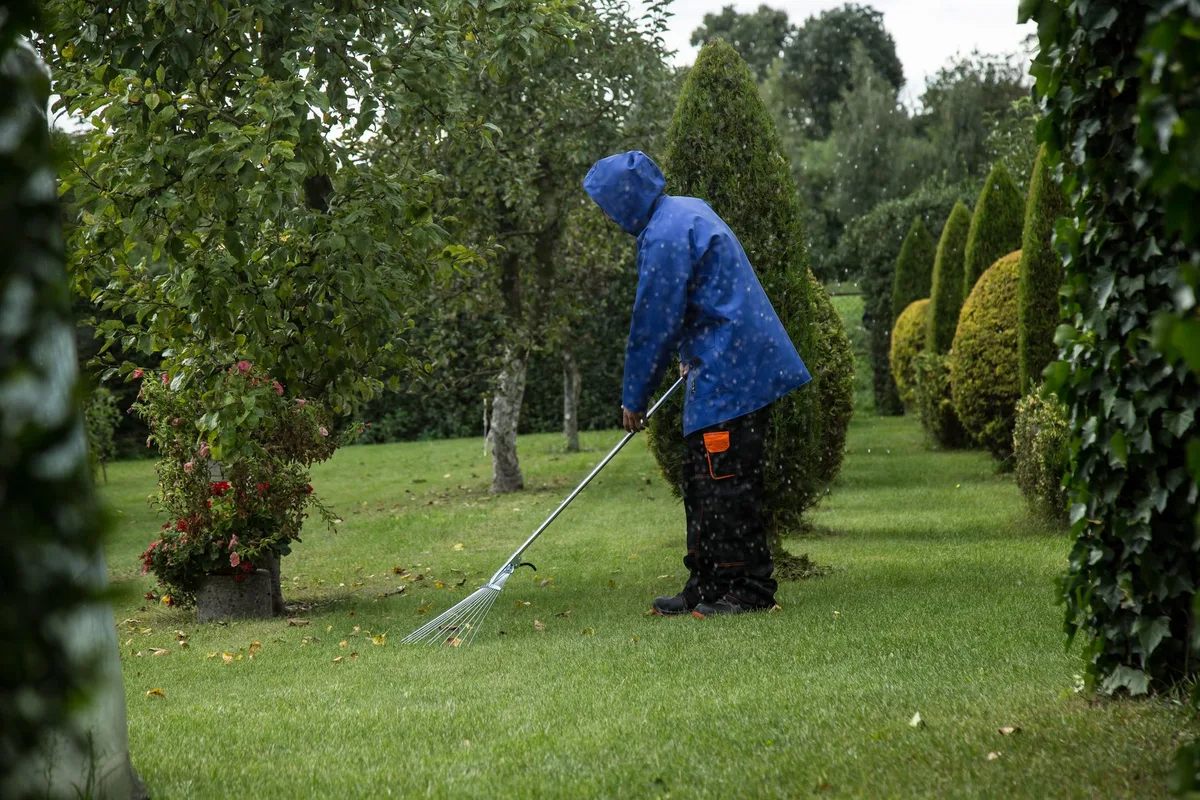
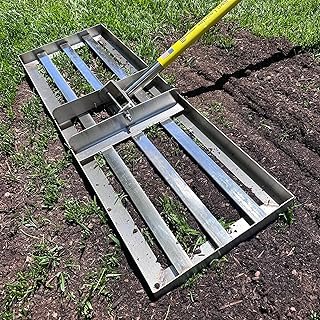
Also be mindful of the tools you use. A proper leveling rake makes spreading much easier than a standard garden rake. Our guide on the best rakes for pine needles covers rake options, but for topdressing, look for a flat aluminum leveling rake specifically.
The process is straightforward once you know your goal. Take your time with each step. Rushing leads to clumpy application and uneven results.
A slow, careful job gives you a smooth, healthy lawn that lasts.