Guide to Squash Bug Damage Symptoms (2026) — Quick Guide
If your squash plants look like they’ve given up, you’re likely seeing Squash Bug Damage Symptoms in action. The leaves start to yellow, then wilt, and before long the whole vine collapses. It’s frustrating because it happens fast.
Our research draws on university extension data and field observations. A heavy infestation can cut your yield by 30 to 50% in under two weeks once the damage sets in. But you can stop it, if you know what you’re looking at.
Why Squash Bug Damage Gets Misidentified (and Why That Costs You Your Harvest)
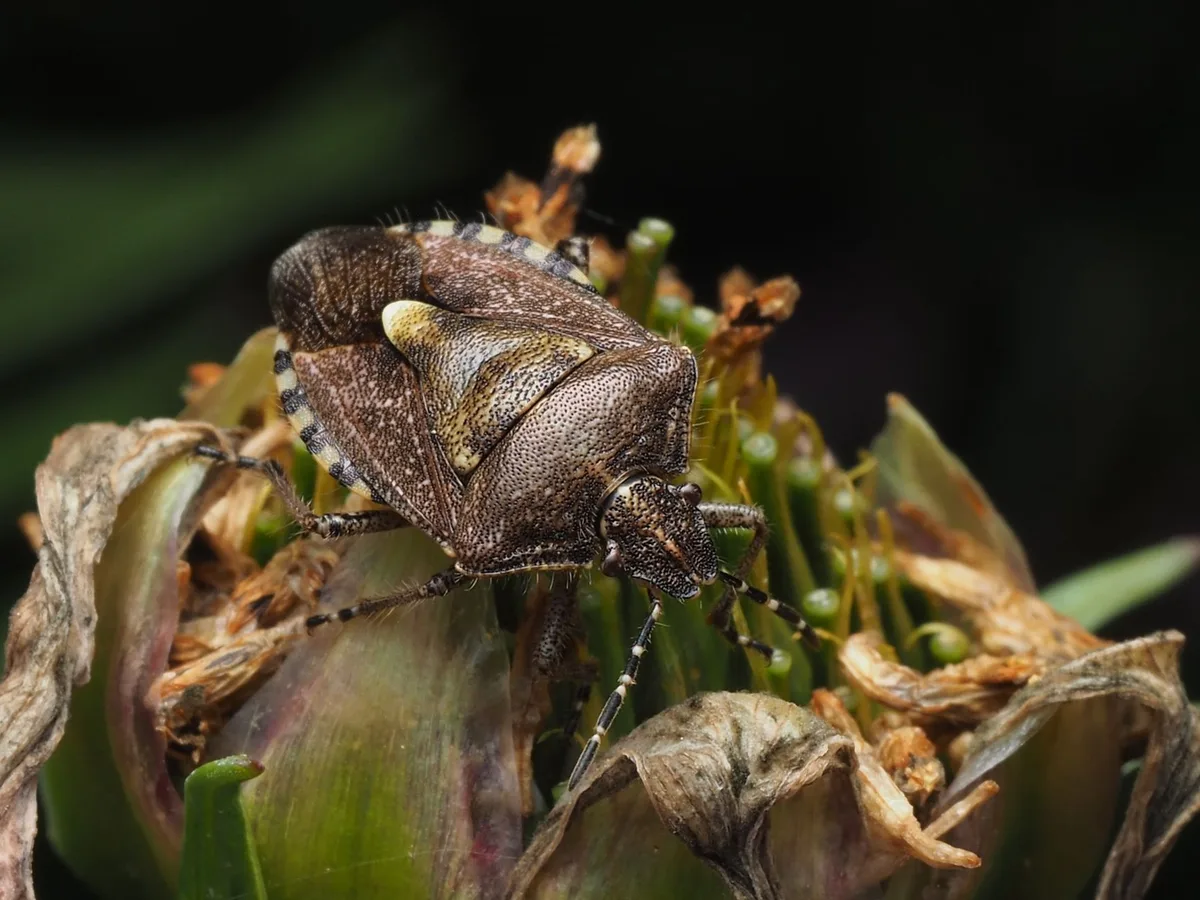
The squash bug is a master of disguise. Adults hide under leaves and along stems. Nymphs blend in with soil and debris.
Damage looks like a water issue at first.
This is why misidentification is so common. You water more, but the plant keeps wilting. Or you treat for a fungus that isn’t there.
Every wasted day lets the bugs multiply.
Many gardeners mistake early damage for a nutrient problem. The fine yellow stippling looks like a deficiency. But the real culprit is right under the leaf.
Knowing what to check first saves your harvest.
The Two Quick Signs That Say “Squash Bug” (Not Something Else)
Two visual cues tell you immediately you have squash bugs. The first is the eggs. The second is the nymphs.
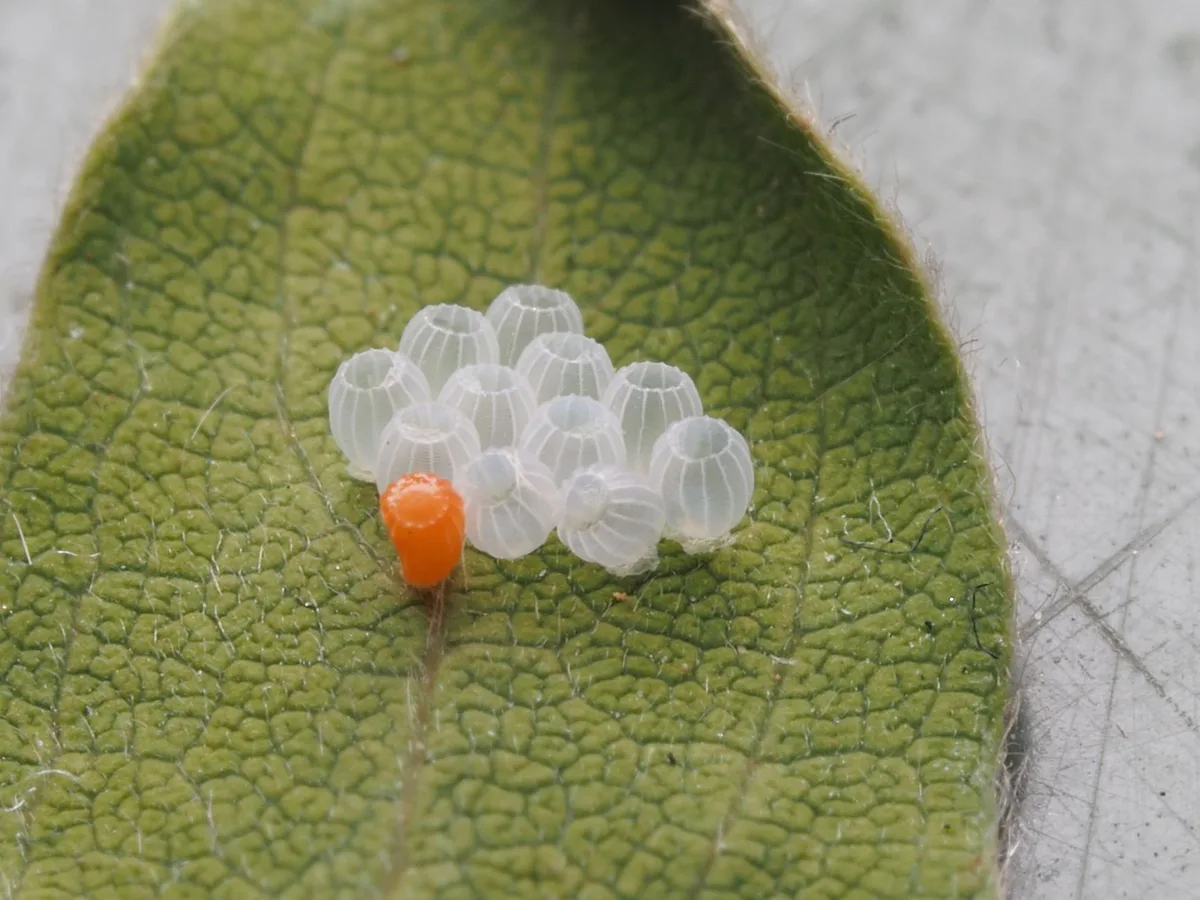
- Brick-red eggs in V-shaped clusters on leaf undersides. These are about 1/16 inch each. You’ll see 20 to 40 in a group.
- Gray nymphs with black legs clustered on stems and leaf joints. They don’t move fast. They stay in groups as they feed.
If you see either one, you’ve got squash bugs. Period. No other common cucurbit pest lays eggs like this.
No other pest has nymphs that behave this way.
Once you spot these, skip the guesswork. Move straight to treatment. Every hour counts.
Step One: Look at the Underside of Your Leaves — Three Visual Cues to Check
Go to the oldest leaves first. Turn them over. Look closely at the veins and the stem where the leaf attaches.
This is where squash bugs hang out.
Brick-Red Egg Clusters in V-Shapes
Eggs look like tiny copper coins laid in neat rows. They are oval, brick-red, and about the size of a pinhead. The female deposits them in a distinct V pattern along the leaf veins.
New eggs are shiny and bright. Older eggs turn darker before they hatch. You can scrape them off with your fingernail or a piece of tape.
Do this weekly during the season.
The Gray Nymphs That Stay in Groups
Nymphs are gray with black legs and antennae. They are soft-bodied and move slowly. You’ll find them on stems, leaf undersides, and where the stem meets the soil.
Nymphs go through five stages called instars. Each stage looks slightly larger and darker. In the early stages they look almost white.
By the fourth or fifth stage they are gray with distinct legs.
Because they stay in groups, you can catch a lot at once. A quick shake over a bucket of soapy water does the job.
The Dark Shield-Shaped Adults
Adults are dark brown or gray. They are flat, shield-shaped bugs about 5/8 inch long. They have a distinct shape that is wider at the shoulders.
Adults move slowly compared to other pests. You can pick them off by hand. They hide under leaves, along stems, and near the base of the plant.
Check early in the morning or at dusk. That is when they are most active and easiest to find.
Step Two: The Damage Pattern That Tells the Real Story
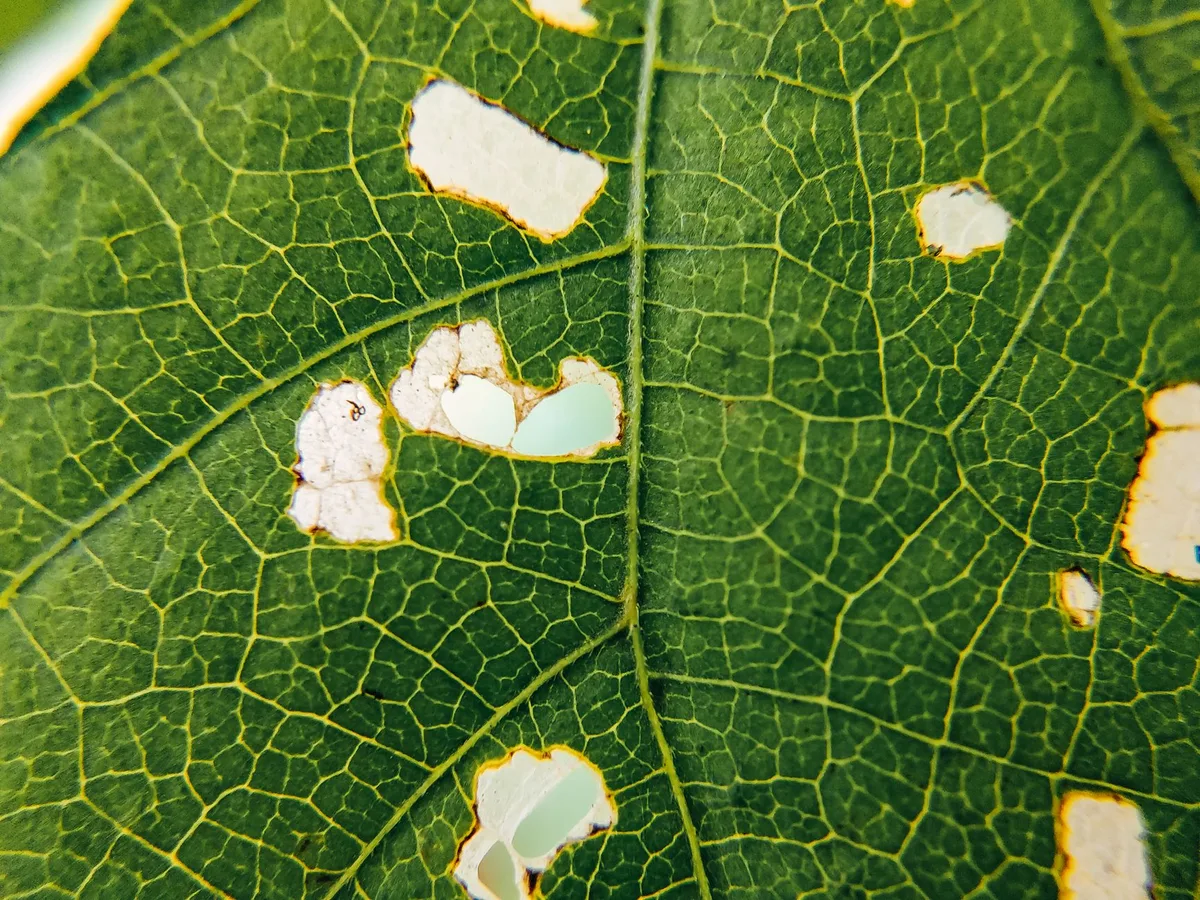
The feeding damage itself has a clear signature. It’s not random. It follows a pattern that is easy to recognize once you know it.
Stippling vs Yellowing — What’s the Difference?
Squash bugs feed by piercing plant tissue and sucking out sap. This leaves fine yellow spots called stippling. The stippling looks like tiny dots all over the leaf surface.
Nutrient deficiencies cause an overall yellowing. Stippling is speckled. It’s not uniform.
Look for a mottled look with small yellow-white spots scattered across the leaf.
This is the earliest sign of damage. If you see stippling on older leaves, check for bugs immediately.
The Wilt That Starts on Older Leaves
The damage begins on the oldest leaves near the base of the plant. Those leaves wilt first. They look like they need water, but the soil is moist.
The squash bug injects a toxin into the plant. This toxin blocks the vascular system, the plant’s plumbing. Water can’t travel from the roots to the leaves, so the leaves wilt.
This is different from a water stress problem. Underwatered plants wilt evenly. Squash bug damage starts on lower leaves and moves upward.
The Collapse Timeline: How Fast Things Go Wrong
Once wilting begins, the plant moves fast. In three to five days, the vine can collapse completely. The leaves turn brown and crispy.
The fruit stops growing.
If you catch it early, the plant can recover. If you wait until half the plant is wilted, you’ll lose most of the harvest. A proper fertilizer schedule can help the plant recover after treatment, but you have to stop the bugs first.
Squash Bug vs. The Lookalikes — Visual Side-by-Side
Many pests and diseases look similar at first glance. Here is a quick reference to tell them apart.
| Condition | Key Visual Cue | What to Check |
|---|---|---|
| Squash Bug | Stippling, egg clusters, nymphs on stems | Underside of leaves, stem bases |
| Squash Vine Borer | Frass (sawdust-like) near stem base, holes in stem | Cut open stem, look for caterpillar |
| Bacterial Wilt | Ooze from cut stem, leaves wilt fast | Stem ooze test |
| Cucumber Beetle | Chewed holes in leaves, striped/spotted beetles | On leaf surfaces, flowers |
| Spider Mites | Fine webbing, stippling on both leaf surfaces | Use white paper test |
Squash Bug vs. Squash Vine Borer (Stem Damage vs. Leaf Damage)
The vine borer attacks the stem from inside. You’ll see frass (sawdust-like material) around the stem base. The stem may have small holes.
Squash bugs attack leaves and stems from the outside.
If your plant wilts and you see frass, you have vine borer. If you see stippling and eggs on leaves, you have squash bugs. You can treat both, but the method is different.
Vine borers require cutting the stem or injecting insecticides. Squash bugs can be hand-picked.
Squash Bug vs. Bacterial Wilt (Ooze Test vs. Dry Collapse)
Bacterial wilt causes the whole plant to wilt quickly. The leaves turn dull green and then collapse. The key test is the ooze test.
Cut a stem near the base and squeeze. If milky brown ooze comes out, it’s bacterial wilt.
Squash bug wilt is dry. No ooze. The leaves yellow and wilt from the bottom up.
The plant doesn’t collapse all at once. It goes leaf by leaf.
Bacterial wilt is spread by cucumber beetles. If you see beetles, you may have both problems. Controlling the beetles with an insecticide helps prevent wilt.
Squash Bug vs. Cucumber Beetle (Chewed Holes vs. Stippling)
Cucumber beetles are small, yellow-green with black stripes or spots. They eat holes in leaves. They also transmit bacterial wilt.
Squash bugs don’t chew holes. They pierce and suck, causing stippling. If you see ragged holes with chewed edges, look for cucumber beetles.
If you see fine yellow specks with no holes, look for squash bugs.
Both pests can be on the same plant. Check for both. If you find cucumber beetles, control them too.
Squash Bug vs. Spider Mites (Webbing vs. No Webbing)
Spider mites are tiny, almost invisible. They cause stippling on both sides of the leaf. Fine webbing is the giveaway.
Squash bugs don’t produce webbing. Their stippling is on the upper leaf surface only. Mite stippling is on both sides, and you’ll see small webs between veins.
Use a white paper test for mites. Tap a leaf over a sheet of white paper. If tiny specks move around, you have spider mites.
Squash bugs are large enough to see without a test.
Diverse garden planting with companion flowers can reduce pest pressure overall. Encouraging beneficial insects is a long-term strategy that works. For immediate control, target the pest you find.
Where and When to Scout (Timing Makes the Difference)
Timing is everything with squash bugs. If you wait until you see wilting, you have already lost time. The bugs have been feeding for two weeks by then.
Start scouting as soon as your squash plants have four true leaves. That is when adults move in from overwintering sites. In most regions, this is late May or early June.
Our research shows that the most effective scouting schedule is every five to seven days. That lines up with the egg incubation period. You catch each new batch before it hatches.
Go out in the early morning or at dusk. The bugs are sluggish. They are easier to spot on the moist leaves.
Midday heat drives them into the soil or under the canopy.
Focus on the base of the plant and the oldest leaves. That is where the first damage appears. Work your way up.
Check leaf undersides on every third plant.
If you have a large garden, make a rotation. Walk a pattern. Do not skip rows.
Squash bugs spread fast once they establish.
How to Confirm It’s Squash Bug Damage (A Simple Check)
You do not need a magnifying glass for this. But it helps. A simple hand lens or jeweler’s loupe makes egg identification easy.
Here is the confirmation process in three steps:
- Look for stippling on older leaves. Fine yellow specks. Not uniform yellowing. Not chewed holes.
- Turn the leaf over. Check for brick-red eggs in V-shaped clusters. Check for nymphs on the stem.
- Check the stem near the soil line. Adults hide there. They look like small flat pebbles.
If you find any of these three signs, you have squash bug damage confirmed. No other cucurbit pest matches this combination.
One common test to rule out bacterial wilt: cut a stem near the base. Squeeze gently. If no oozing sap appears, you are dealing with squash bugs or vine borers.
If you see stippling but no bugs, check again in two days. The nymphs may have moved to a different leaf. Look at the leaf where the stippling is densest.
Step Three: What to Do Based on What You See
Your action depends entirely on what stage of the bug you find. Each stage needs a different approach.
If You Find Eggs Only
This is the best-case scenario. You caught it before the nymphs started feeding.
Scrape the eggs off with your fingernail, a butter knife, or a piece of duct tape. Drop them into a bucket of soapy water. Do not crush them on the leaf.
Some eggs can still hatch if they fall into the soil.
Check every leaf undersurface. Look especially at the lower third of the plant. Eggs are easiest to spot on older leaves.
If You Find Nymphs
Nymphs are the most vulnerable stage. They have not developed the hard shell that protects adults.
Use insecticidal soap or neem oil. Apply in the evening to avoid leaf burn. Cover the undersides of leaves and the stems.
Repeat after seven days.
Hand removal also works. Shake the plant over a bucket of soapy water. The nymphs drop off.
Do this every morning for a week.
If You Find Adults
Adults are tough. Their hard exoskeleton resists many sprays. Hand picking is the most reliable method.
Wear gloves. Drop the adults into soapy water. Check early in the morning when they move slowly.
Focus on the crown of the plant where stems meet soil.
Vacuuming works for large infestations. Use a small handheld vacuum. Empty the bag into soapy water.
Adult squash bugs can live for a few days in a sealed vacuum.
After you remove adults, apply a barrier of diatomaceous earth around the base of the plant. It cuts the bugs as they crawl back up.
Placing a simple floating row cover over young plants prevents adult bugs from reaching them. Remove the cover when flowers appear so pollinators can work.
Common Visual Mistakes That Ruin Control Efforts
The biggest mistake is confusing eggs for dirt. Squash bug eggs are perfectly uniform and laid in neat rows. Soil particles are random.
If you see a pattern, it is eggs.
Another common error is mistaking nymphs for spider mites. Nymphs are visible to the naked eye. Spider mites are barely visible.
Nymphs are gray and larger. Mites are tiny and red or tan.
People also mistake stippling for a potassium deficiency. Both cause yellow spots. But deficiency spots are larger and irregular.
Stippling from bugs is tiny and uniform across the leaf.
The third mistake is treating too late. Many gardeners wait until wilting appears. By then, the plant is already damaged.
The yield loss is already happening.
A final mistake is stopping treatment after one round. Squash bugs hatch in waves over several weeks. You need to check and treat every week for a month.
Quick Visual Reference Guide (Life Stages at a Glance)
| Life Stage | Size | Color | Location | Key Behavior |
|---|---|---|---|---|
| Egg | 1/16 inch | Brick red, orange-brown | Leaf undersides, V-shaped clusters | Hatches in 7 to 10 days |
| Nymph (instar 1) | Pinhead size | Pale white to light gray | Leaf undersides, stem joints | Groups tightly, slow moving |
| Nymph (instar 3–5) | Up to 1/2 inch | Gray with black legs | Stems, leaf crowns, soil line | Feeds actively, spreads out |
| Adult | 5/8 to 3/4 inch | Dark brown to gray | Under leaves, stem base, soil debris | Slow, shield-shaped, hides |
Use this table as a quick field guide. Take a photo on your phone. Compare what you find on your plants to the descriptions.
The earlier you identify the life stage, the better your control.
If you find only eggs, you have a week before nymphs emerge. If you find nymphs, you have two weeks before new adults start laying more eggs. If you find adults, you are dealing with a mature infestation.
Each stage needs a different strategy. Eggs need scraping. Nymphs need soap spray or neem oil.
Adults need hand removal or vacuuming.
Frequently Asked Questions
What is the first sign of squash bug damage?
The first sign is fine yellow stippling on the oldest leaves. It looks like tiny speckles. This appears before any wilting or leaf collapse.
Check leaf undersides immediately.
How fast do squash bugs kill a plant?
A heavy infestation can kill a plant in three to five days after wilting starts. The toxin blocks water transport. The plant cannot recover if more than half the leaves are wilted.
Can you save a plant that has squash bugs?
Yes, if you catch it early. Remove all bugs and nymphs. Apply neem oil or insecticidal soap.
Water the plant deeply. It may drop some leaves but will produce new growth.
Do squash bugs only attack squash?
No, they also attack pumpkins, zucchini, butternut squash, acorn squash, melons, and cucumbers. They prefer cucurbits with large, soft leaves. Butternut varieties show some resistance.
Are squash bug eggs dangerous to touch?
No, they are harmless. You can scrape them off with your fingers. They do not bite or sting.
Just drop them in soapy water to kill them.
What is the best natural way to control squash bugs?
Hand picking and egg scraping are the most effective natural methods. Neem oil and insecticidal soap work on nymphs. Diatomaceous earth creates a barrier.
Floating row covers prevent adult access.
Prevention Strategies for Next Season
Clean up your garden in fall. Remove all cucurbit debris. Squash bugs overwinter in plant matter and under mulch.
Rotate your crops. Do not plant squash in the same spot for two years. This starves out overwintering adults.
Use floating row covers on young plants. Secure the edges with soil. Remove covers when flowers appear for pollination.
What to Plant Instead (Resistant Varieties)
Butternut squash shows natural resistance. The stem is too hard for nymphs to feed on. Try varieties like ‘Waltham Butternut’ or ‘Early Butternut’.
‘Royal Acorn’ and ‘Sweet Reba’ also show tolerance. Check your local extension for varieties bred for your climate.
When to Consider Chemical Controls
Chemical controls are a last resort. Use them only if hand picking and soap sprays fail. Look for insecticides with carbaryl or permethrin.
Follow label instructions exactly. Apply in the evening to protect pollinators. Never spray open flowers.
The pre-harvest interval is usually 7 days.
Helping Your Plants Recover After Infestation
Remove damaged leaves after you kill the bugs. This reduces stress on the plant. Water deeply and apply a balanced fertilizer.
Healthy plants can push new growth within two weeks. Focus on consistent watering and good air circulation.
The Bottom Line on Squash Bug Damage
Catch it early. The key is weekly scouting and immediate action. Stippling and eggs are your early warning system.
With consistent effort, you can control squash bugs without losing your harvest. Start today. Your squash plants will thank you.