Guide to Lawn Grubs Checklist for 2026: Explained Simply
You step onto your lawn expecting green, but instead find brown patches that peel up like old carpet. You’ve watered, fertilized, maybe even sprayed for fungus. Nothing worked.
That’s when you need a lawn grubs checklist, not a guess, but a proven system for identifying, treating, and preventing these root-eating pests.
Research from university turf programs shows that over 60% of lawn damage cases misdiagnosed as drought or disease are actually white grubs. The difference? Grubs eat roots, not leaves.
A simple square-foot count can tell you exactly what you’re dealing with. Let’s walk through how to use that number and save your lawn.
Why a Lawn Grubs Checklist Is Non-Negotiable (The Real Problem)
Here’s the thing about grubs. They do their damage underground, out of sight, until the damage shows up top as dead grass. By then, you’re already behind.
The real problem isn’t the grubs themselves. It’s guessing wrong. You treat for fungus when you’ve got grubs.
You apply insecticide in spring when grubs are too big to kill. You drench your lawn with chemicals that harm bees and earthworms for no reason because your grub count was below threshold.
A proper checklist fixes all of that. It’s a repeatable system built on three things:
- Timing. Every treatment window is tied to the grub’s life stage.
- Threshold. You only treat when the count justifies it.
- Technique. Application method and watering-in matter as much as the product.
Without it, you’re throwing money at a problem you haven’t correctly identified. And that’s why so many lawns stay damaged year after year. If you’ve been fighting brown patches with fungus control options, grubs may be the real culprit.
The One Number That Changes Everything (Quick Answer / Key Insight)
That number is 5 to 10 grubs per square foot for cool-season grasses. For warm-season grasses, the threshold is 15 to 20.
Below that number? You don’t treat. Above it?
You have a green light to act.
This threshold comes from decades of integrated pest management (IPM) research by university turfgrass programs. It’s not a guess. It’s the point at which root damage starts to exceed what the grass can regrow.
So grab a shovel. Cut a square-foot section of sod about three inches deep at the edge of the damaged area. Peel it back.
Count the grubs in the soil and root zone. That one number tells you whether to spend money on treatment or let the lawn recover on its own.
Grub Lifecycle 101: Why Timing Is the Only Thing That Works
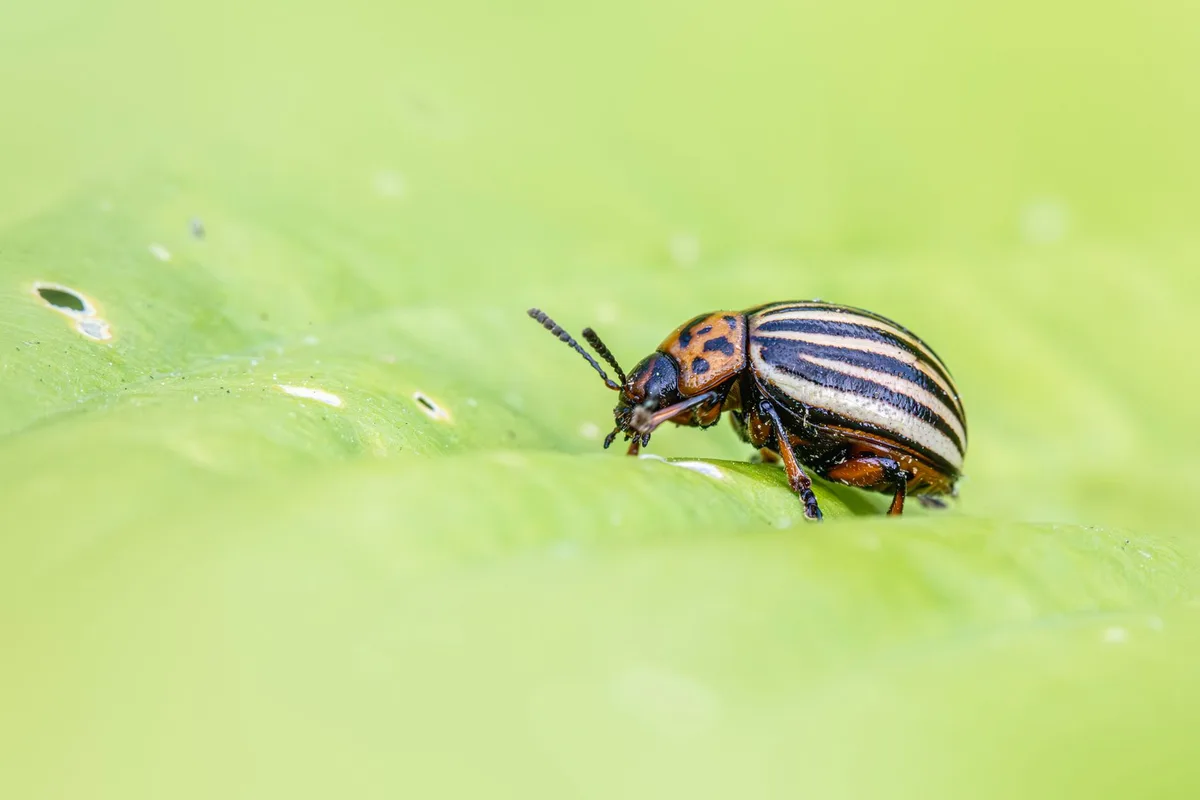
Grubs go through a predictable cycle every year. If you time your treatment to the right stage, you get excellent control. Miss the window, and you’re just making expensive mud.
Here’s how the calendar works for most of the US, using Japanese beetles as the primary species.
Mid-summer (July to early August). Adult beetles emerge, mate, and lay eggs in moist soil. Eggs are tiny and white. You can’t see them without a lens.
This is the preventive treatment window, apply products before eggs hatch.
Late summer (August to September). Eggs hatch into first instar grubs. They’re small, about 1/4 inch, and feed near the surface. This is the best time for curative treatments.
Grubs are small and vulnerable.
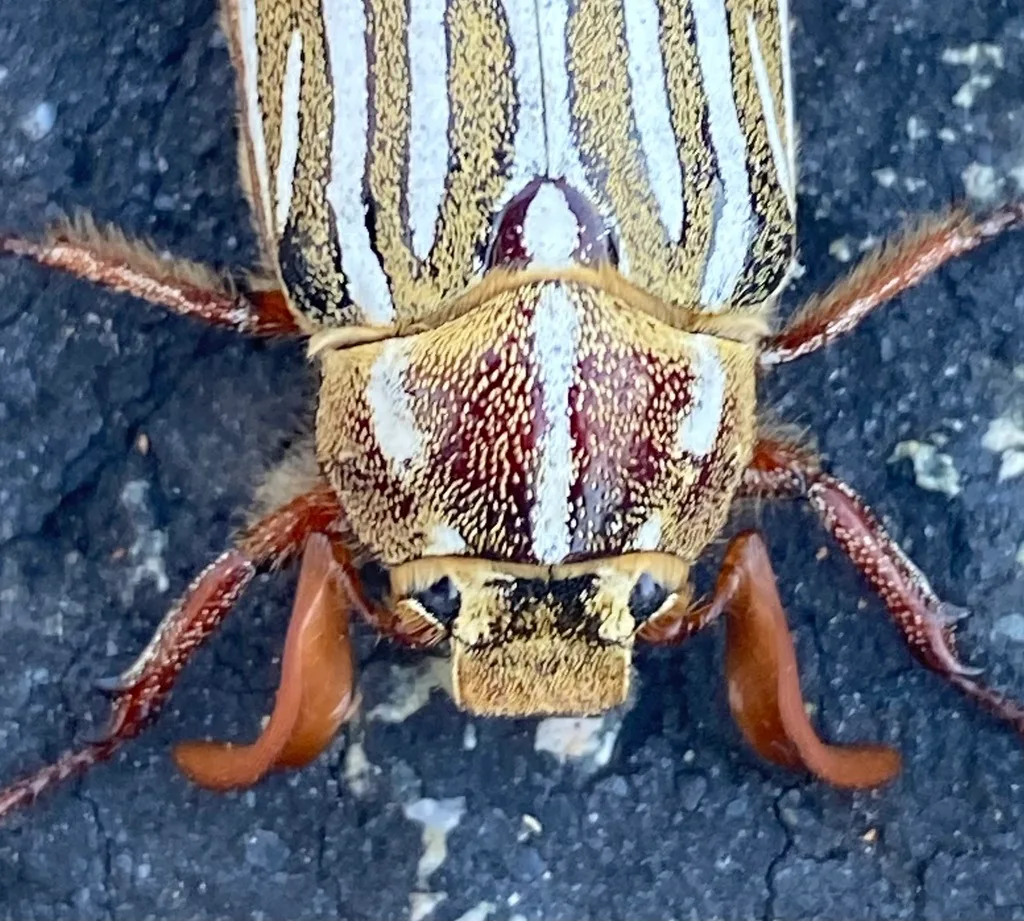
Fall (September to October). Grubs grow into second and third instars. They’re 1/2 to 1 inch, C-shaped, and fat. They feed aggressively on roots.
This is when you see the most damage. Curative products still work but are less effective on larger grubs.
Winter (November to March). Grubs move deep into the soil, below the frost line. They stop feeding. Treatment now is useless.
Spring (April to June). Grubs move back up, feed briefly, then pupate. They turn into adult beetles and emerge. Spring treatment is rarely effective because grubs stop feeding to pupate.
Don’t bother.
The key takeaway? Preventive treatments go down in July. Curative treatments go down in late August or September.
Everything else is mostly a waste.
How to Tell Grub Damage from Drought, Fungus, or Dog Urine
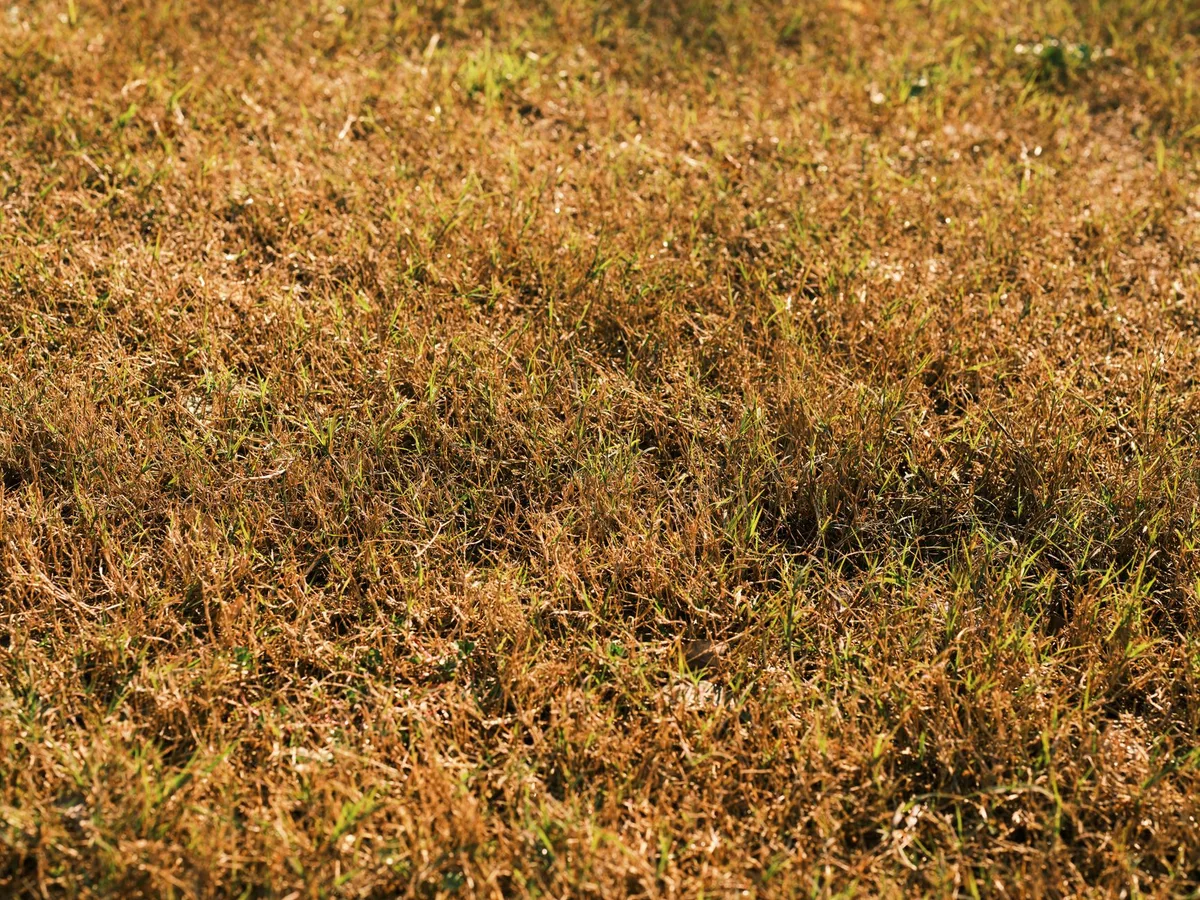
Brown patches happen for a dozen reasons. Grub damage has specific signatures that set it apart. Here’s how to spot the difference.
The tug test. Grab a handful of brown grass at the edge of the patch and pull. If it lifts easily, roots are severed. That’s grubs.
Healthy grass resists. This is your number one diagnostic tool.
Spongy turf. Walk across the damaged area. If it feels spongy or bouncy, the root system is compromised. Grubs ate the roots.
The sod is barely holding on.
Animal digging. Skunks, raccoons, and birds love grubs. If you see small dug-up patches, scattered divots, or flipped sod, animals are feeding. That’s a strong sign grubs are present.
Pattern of damage. Grub damage often starts as irregular brown patches that spread. Unlike drought, which affects the whole lawn evenly, grub damage shows up in hot spots where grub populations are highest.
What it isn’t.
- Drought. Grass goes dormant evenly. The tug test fails. Sod stays firm.
- Fungus. Look for circular patches, rings, or powdery residue on blades. Fungus attacks leaves, not roots.
- Dog urine. Dark green halo around a brown center. Usually around sidewalks or fence lines. Only in spots where the dog goes.
If you’re unsure, dig a sample. Ten minutes with a shovel tells you more than any app or photo.
What’s in Your Toolbox? Preventive vs. Curative Options
Once you’ve confirmed grubs and counted above threshold, you need a product that matches your timing. Here’s a breakdown of what works, when to use it, and what the trade-offs are.
| Treatment Type | Active Ingredient | When to Apply | Best For | Notes |
|---|---|---|---|---|
| Preventive synthetic | Imidacloprid | July (before eggs hatch) | Long-lasting season control | One application covers the season. Low toxicity to mammals but harmful to bees if applied on flowering weeds. |
| Preventive synthetic | Chlorantraniliprole | July | Extended control | Newer chemistry. Lower bee toxicity than imidacloprid. More expensive. |
| Curative synthetic | Trichlorfon | Late August to September | Active infestations | Fast-acting. Kills all life stages. Higher toxicity. Requires careful watering-in. |
| Organic | Beneficial nematodes (Hb) | Late August (soil temp 50-85°F) | Targeted grub control | Live organisms. Need refrigeration. Must be watered in immediately. No bee harm. |
| Organic | Milky spore | Spring or fall (soil temp 60-70°F) | Long-term soil inoculation | Takes 1-3 years to build up. Effective for 10+ years. Works best against Japanese beetles. |
Preventive makes sense if you’ve had grubs in previous years and want to stop them before they start. One July application of a preventive product covers the whole season.
Curative makes sense when you have damage now and need to stop active feeding. Trichlorfon works fast but requires careful handling. It’s a restricted-use product in some states.
Organic options work well if you want to avoid synthetic chemicals. Nematodes need specific conditions to survive, moist soil, proper temperature, immediate watering. Milky spore is a long game, not a quick fix.
Whichever route you choose, read the label. Every product has specific watering-in requirements, re-entry intervals, and grazing restrictions. The label is the law.
For post-treatment lawn recovery, consider organic soil care to rebuild root health and slow release feeding to support new growth after overseeding.
The Step-by-Step Lawn Grubs Checklist (How to Guide)
Now it’s time to put the plan into action. Here’s a straightforward checklist. Print it, save it, or just follow along.
Step 1: Confirm the diagnosis. Use the tug test at the outer edge of the brown patch. If the sod lifts like a carpet, dig a square foot sample. Count every grub.
If you find fewer than 5 grubs per square foot for cool-season grass or 15 for warm-season, stop here. The lawn will recover on its own. If the count is higher, move to Step 2.
Step 2: Identify your timing. Check the calendar. Is it July? Go with a preventive product.
Is it late August or September? Use a curative product. Is it spring or early summer?
Wait. Treatment now is wasted money.
Step 3: Select your product. For preventive treatment, choose imidacloprid or chlorantraniliprole. For curative treatment, choose trichlorfon or beneficial nematodes. Read the label.
Every product has specific soil temperature, moisture, and watering requirements.
Step 4: Apply correctly. For granular products, use a broadcast spreader. Calibrate it first. For liquids, use a hose-end sprayer.
For nematodes, use a pump sprayer with the filter screens removed. Water everything in immediately with half to one inch of water.
Step 5: Monitor after two weeks. Dig another sample in the same area. Look for dead, discolored, or missing grubs. If you still find live grubs above threshold, you may need a second application.
Check the product label for re-treatment intervals.
Step 6: Recover the lawn. Rake out dead thatch. Overseed with a compatible grass type. Apply a starter fertilizer to support root growth.
Water consistently until the new grass establishes.
This whole process takes about 30 minutes of active work spread over a few weeks. The payoff is a lawn that stays green and roots that resist the next season’s attack.
Organic vs. Synthetic: Which Treatment Should You Trust?
This isn’t a simple “one is better” comparison. Each approach has a clear best-use scenario. Here’s how they stack up.
| Factor | Synthetic (Imidacloprid, Trichlorfon) | Organic (Nematodes, Milky Spore) |
|---|---|---|
| Speed of results | 1 to 7 days | 3 to 14 days (nematodes) / 1 to 3 years (milky spore) |
| Duration of control | Full season (preventive) | Nematodes: short (2 weeks) / Milky spore: 10+ years |
| Bee toxicity | High (neonicotinoids) | None |
| Pet safety | Wait 12 to 24 hours after spraying | Immediate safe entry |
| Effectiveness on large grubs | High (trichlorfon) | Moderate (nematodes target small to medium grubs) |
| Cost per 1,000 sq ft | $10 to $30 | $20 to $50 |
| Effort required | Moderate (spread, water, wait) | Higher (refrigeration, live handling, watering timing) |
Synthetics are best for severe active infestations where damage is spreading fast. Trichlorfon kills grubs within 24 hours. Imidacloprid gives season-long prevention with one application.
Use them when time is short and the lawn is at risk.
Organics are best for maintenance and prevention. If your grub count is just over threshold or you want to avoid chemicals, nematodes are effective. Milky spore is ideal for long-term suppression in neighborhoods with consistent Japanese beetle pressure.
The hybrid approach works well for many homeowners. Use a preventive synthetic one season to knock down the population, then switch to organic maintenance the following year. Aggregate user experiences suggest this balances cost, safety, and results.
For post-treatment recovery, consider organic soil care practices. Nutrients that feed the soil microbiome also support stronger grass roots.
What’s Actually Safe for Bees, Pets, and Your Water Table
This is the part most online guides skip. Safety isn’t optional with grub treatments.
Bee toxicity is real. Neonicotinoids like imidacloprid are highly toxic to bees. Do not apply them to lawns with flowering weeds like clover or dandelions. Mow first to remove flowers.
Apply in the evening when bees are less active. The product label will have a bee advisory box. Read it.
Pet safety requires timing. Most synthetic insecticides require a re-entry interval of 12 to 24 hours. Keep pets off the lawn until the spray has completely dried. Granular products are safer once watered in.
Nematodes and milky spore are safe for pets immediately after application.
Water table protection matters. Do not apply insecticides within 50 feet of wells, ponds, streams, or drainage ditches. Check the label for specific buffer distances. Avoid treatment before heavy rain.
Runoff carries chemicals into storm drains and groundwater.
Personal protective equipment (PPE) is non-negotiable. Wear nitrile gloves, long sleeves, long pants, closed-toe shoes, and safety glasses when mixing or applying any synthetic insecticide. Wash clothes separately after application. Do not wash equipment near a garden or vegetable bed.
Storage and disposal. Store insecticides in their original containers, locked away from children and pets. Do not pour leftovers down the drain. Contact your county’s hazardous waste program for proper disposal.
The 5 Most Common Mistakes That Wreck Your Lawn
You can follow every step on the checklist and still fail if you fall into these traps.
Mistake 1: Treating in spring. Grubs that survived winter are large and finishing their feeding. They will stop eating soon to pupate into beetles. Spring insecticide won’t kill them efficiently.
You just waste money and hurt beneficial insects for no benefit.
Mistake 2: Not watering in the product. Granular insecticides need water to carry the active ingredient into the soil where grubs live. Dry granules sitting on top of the grass do nothing. Water immediately with half to one inch.
Skip this step, skip the results.
Mistake 3: Overapplying “just in case” prevention. More product does not kill more grubs. It kills more soil organisms and raises the risk of runoff. Stick to the labeled rate.
Stick to the threshold. If your count is below the threshold, leave the sprayer in the shed.
Mistake 4: Ignoring the second wave. One treatment can wipe out the current generation. It does not prevent new beetles from flying in from neighboring lawns and laying more eggs. Monitor again in 3 to 4 weeks.
Re-treat only if the count exceeds threshold.
Mistake 5: Confusing grub damage with fungus and treating the wrong problem. A lawn with a fungal infection needs fungicide, not insecticide. If you’ve been applying fungicides and the damage keeps spreading, do the tug test. You may have been fighting the wrong enemy this whole time.
Regional Differences and Grass Type: When to Ignore Generic Advice
Online grub advice often assumes one “national” solution. That’s not how it works.
Northern US (cool-season grasses). This region covers the Northeast, Midwest, and Pacific Northwest. Dominant species are Japanese beetles and European chafers. The threshold is 5 to 10 grubs per square foot.
Preventive treatment is standard. Lawns are typically Kentucky bluegrass, tall fescue, or perennial ryegrass.
Southern US (warm-season grasses). This region covers the Southeast, Gulf Coast, and Southwest. June beetles and masked chafers are common. Bermuda grass, zoysia, and St.
Augustine tolerate more root damage. The threshold is higher at 15 to 20 grubs per square foot. Many warm-season lawns never need treatment because the grass grows so aggressively.
Transition zone. This is a band from Virginia to Missouri to Kansas. You get both cool and warm-season species depending on the year. Check local extension office recommendations.
Their lifecycle calendar is specific to your county.
What this means for you. If you live in Minnesota with Kentucky bluegrass, follow the 5 to 10 grub threshold. If you live in Texas with Bermuda, let the count reach 15 to 20 before acting. A generic article saying “treat at 5 grubs” would have you spraying unnecessarily every summer.
Research shows that lawns in arid regions also stress differently under grub pressure. Pairing drought-resilient turfgrass varieties with proper watering reduces the need for chemical intervention.
What the Numbers Really Mean: Thresholds, Timing, and Cost
Let’s put dollars and sense together. A preventive treatment with imidacloprid costs about $15 to $25 per 1,000 square feet. A curative treatment with trichlorfon runs $10 to $20.
Nematodes cost $20 to $50.
Compare that to the cost of replacing dead sod. A pallet of sod runs $150 to $300 and covers about 450 square feet. One prevention season costs less than patching a single damaged section.
The timing window is tight. Preventive applications must go down before eggs hatch in late July. Curative applications work best in late August when grubs are small.
Miss those windows by two weeks and you lose the season.
If you’re in a region with hot, dry summers, your grass already deals with stress. Pairing a proper watering schedule with the right threshold keeps your lawn resilient without extra chemicals.
When to Call a Pro Instead of DIY
Most grub problems are DIY-friendly. But some situations call for a licensed applicator.
Call a pro if your grub count exceeds 30 per square foot. That’s a severe infestation. Professional products with higher concentrations and restricted-use labels may be needed.
Call a pro if you have a large lawn over 10,000 square feet. Calibrating spreaders and sprayers over that area takes practice. Mistakes get expensive.
Call a pro if you’ve tried treatment twice and still see damage after three weeks. You may have a different species, resistant grubs, or a separate issue like chinch bugs or sod webworms. Professional diagnosis saves time and money.
DIY is fine if your grub count is between 5 and 20, your lawn is under 5,000 square feet, and you can follow the label instructions. Most homeowners handle this well with a broadcast spreader and a hose.
The Final Verdict: One Checklist to Save Your Lawn
Here’s the short version. Dig a square foot sample. Count the grubs.
If the count is below 5 for cool-season grass or 15 for warm-season, do nothing. If it’s above, time your treatment to the lifecycle.
Prevent in July. Cure in late August. Water in every product immediately.
Monitor after two weeks. Recover with overseeding and a starter fertilizer.
That’s the whole system. It’s not complicated. It just requires doing the right thing at the right time.
Skip the guesswork and your lawn will thank you next spring.
Frequently Asked Questions
How do I know if I have grubs or something else?
Do the tug test. Grab a handful of brown grass at the edge of the damage and pull. If it lifts easily with no roots attached, it’s grubs.
If the grass stays firm, look for drought, fungus, or dog urine.
Can I treat grubs in the spring?
No. Spring treatment is almost always a waste. Grubs in spring are large and about to stop feeding to pupate into beetles.
The insecticide won’t reach them effectively. Wait until late summer.
How often should I treat for grubs?
Only treat when a sample shows the count above threshold. Many healthy lawns never need treatment. If you do treat, a preventive application in July often lasts the whole season.
Recheck in early fall.
Are grub treatments safe for pets?
Yes, with proper timing. Keep pets off the lawn until synthetic sprays dry completely (12 to 24 hours). Granular products are safe once watered in.
Nematodes and milky spore are safe immediately after application.
How long does it take for a lawn to recover after grub damage?
With proper care after treatment, you’ll see new growth in 2 to 4 weeks. Rake out dead thatch, overseed, apply starter fertilizer, and water consistently. Full recovery usually takes one growing season.