How to Identify Tree Borer Damage (2026) — Explained Simply
You walk out to your favorite tree and notice the leaves are thinning. The bark looks odd. Maybe you see small holes in the trunk.
Learning how to identify tree borer damage is the first step to saving your tree.
As of 2026, invasive borers like the emerald ash borer have killed hundreds of millions of ash trees across the US alone. Native species cause serious damage too. The difference between saving a tree and losing it often comes down to spotting the signs early.
Let’s look at what to check first.
Quick Answer
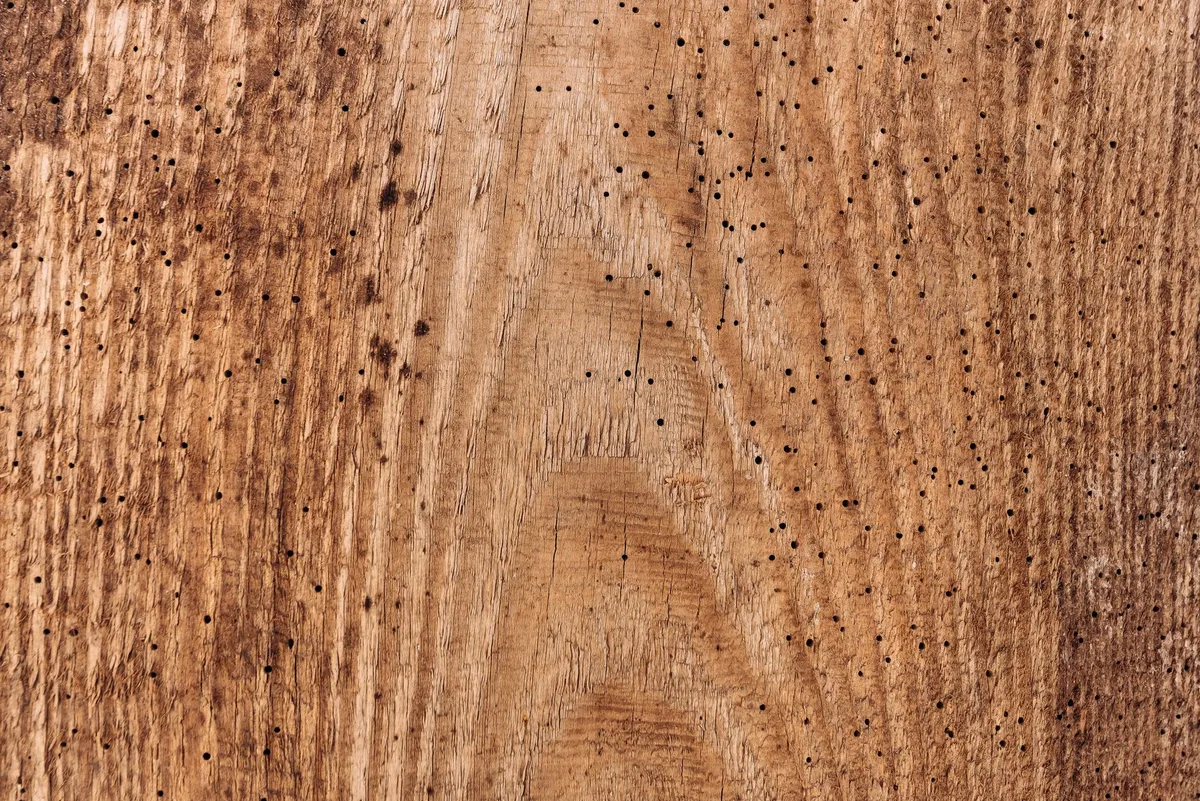
Look for D-shaped or round exit holes in the bark. Check the base of the tree for piles of sawdust or frass. Peel back loose bark to find winding tunnels called galleries.
Examine the canopy for thinning leaves, dead branches, or sucker growth. These four visual signs confirm borer activity.
Why Visuals Matter Most for Tree Borer ID
Tree borers spend most of their life hidden inside the trunk. You will not see the insect itself until it emerges as an adult. That means the damage it leaves behind is your only clue.
Exit holes, frass, and galleries are the calling cards. Each borer species leaves a distinct pattern. An emerald ash borer makes a D-shaped hole about 1/8 inch wide.
A flatheaded appletree borer leaves a round hole and a meandering gallery. Get the pattern right and you know exactly what you are dealing with.
Many tree owners mistake borer damage for a fungal canker or simple drought stress. That mistake costs time. Borers are always active once they are inside.
The earlier you spot the visual signs, the better your chance of saving the tree.
For trees already stressed by poor soil, dry weather, or lack of nutrients, borers move in faster. This is why keeping your trees healthy matters. The right care can reduce the risk of infestation.
Our guide on choosing the best trees for hot dry climates covers one way to avoid common stress factors.
The Crawl: Checking the Base and Trunk for Frass and Sawdust
The most overlooked sign of tree borer damage is right at your feet. Frass is the mixture of sawdust and insect waste that borers push out of their tunnels. It often collects around the base of the tree or gets caught in bark crevices.
Different borers produce different frass. The emerald ash borer leaves a fine, powdery sawdust. Longhorned beetles push out coarse, pellet-like material.
Ambrosia beetles leave a white or cream-colored powder that looks like flour.
You should look for frass in two places. First, check the soil right around the trunk. Use your hand to brush away leaf litter.
Second, look in the crotches of branches and along the trunk where debris might collect.
Frass that appears fresh and moist means borers are active right now. Dry, old frass might indicate a past infestation that has already cleared. Either way, it is a sign that the tree has been attacked.
Here is what to watch for:
- Fine, flour-like powder, Could be emerald ash borer or ambrosia beetle
- Coarse, pellet-like sawdust, Likely a longhorned beetle or clearwing moth
- No frass at all, Borers might still be inside, or the damage could mimic something else
The base of the tree is a natural collection point for frass. Do not skip this step. Many homeowners walk right past the most obvious evidence.
The Peek: Peeling Bark and Spotting Galleries
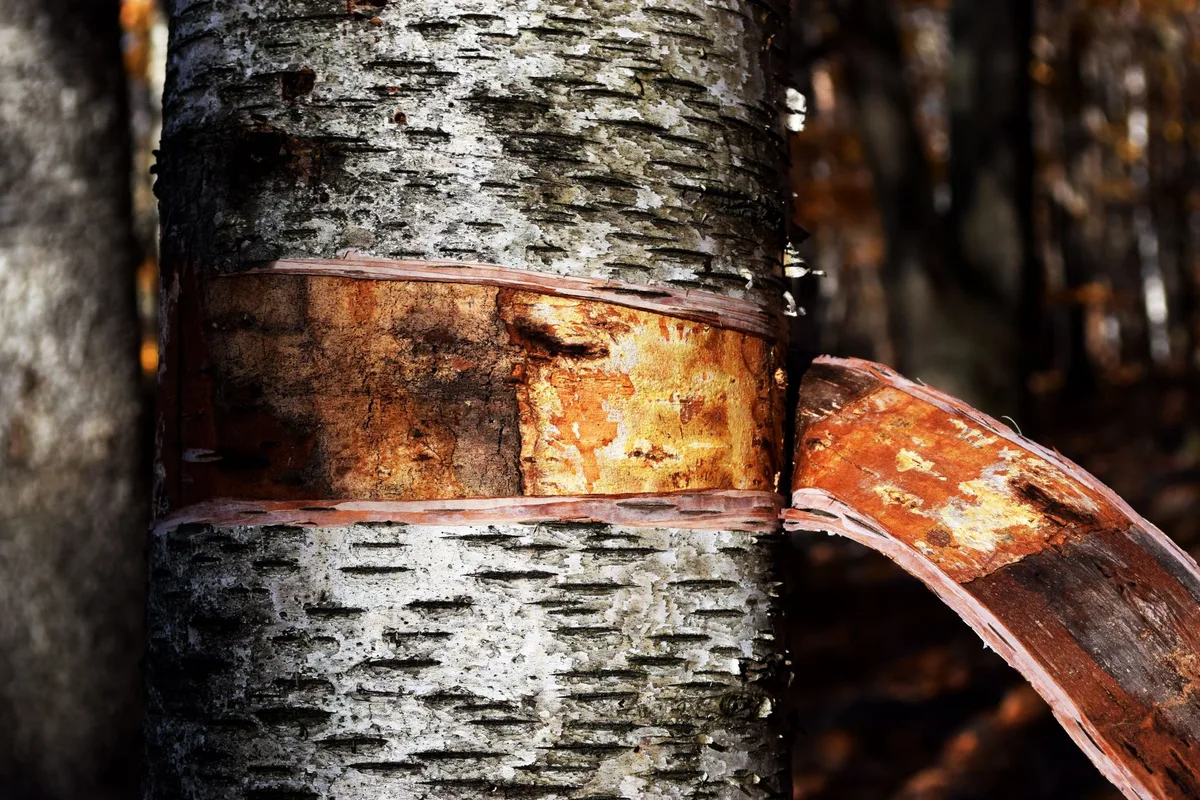
Borers tunnel between the bark and the wood. That layer is called the cambium. It is where the tree moves water and nutrients.
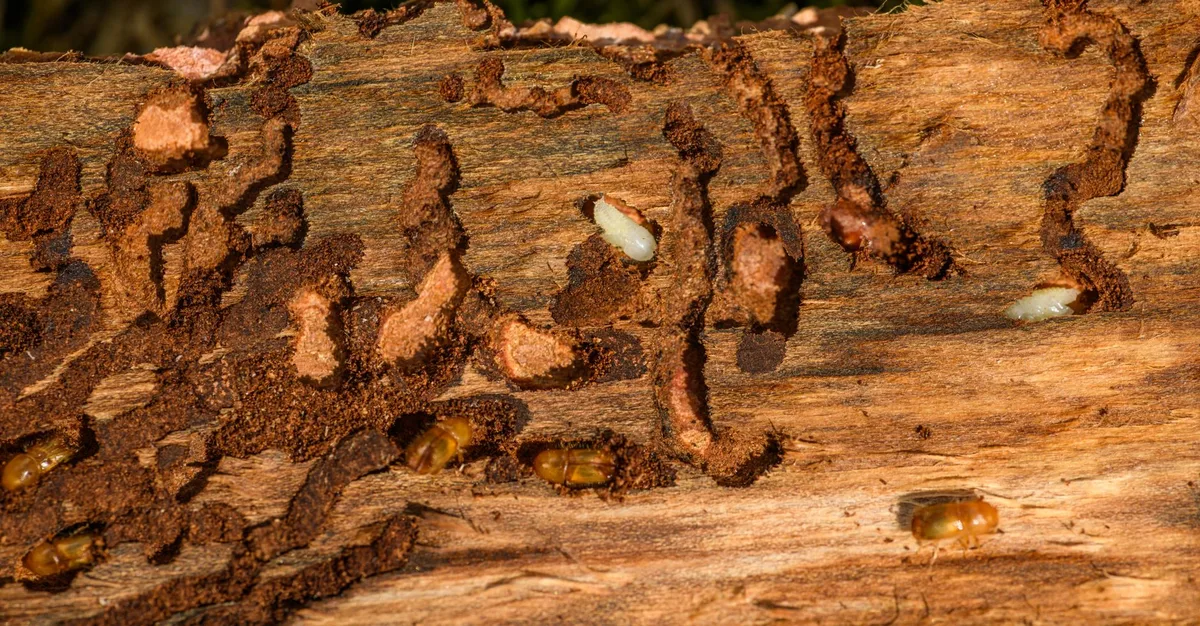
As the borers chew their way through, they leave behind winding tunnels called galleries.
The bark above these galleries often dies and pulls away from the trunk. That makes it easy to peel back. If you see loose or cracked bark, grab a small section and gently lift it.
Galleries can look different depending on the borer. Some are straight and neat. Others zigzag in random patterns.
The emerald ash borer leaves S-shaped galleries that weave back and forth. The bronze birch borer leaves a more meandering, irregular pattern.
The wood surface under the bark will be stained dark from the borer’s waste. You might also see small frass pellets packed into the tunnels. This is a dead giveaway that you have an active borer infestation.
Peeling bark also reveals the borer larvae if they are still inside. Larvae are small, white to cream-colored grubs with a dark head. They can be hard to spot against the wood, but their tunnels are impossible to miss.
If you find galleries, take a photo and note the pattern. This is one of the most reliable ways to identify the species. For trees that are already declining, peeling bark is a clear sign that the damage is advanced.
For general pest control around your property, it helps to know what other insects do damage. Our guide on controlling carpenter ants covers similar visual inspection techniques.
The Holes: Exit Hole Shapes, Sizes, and Patterns
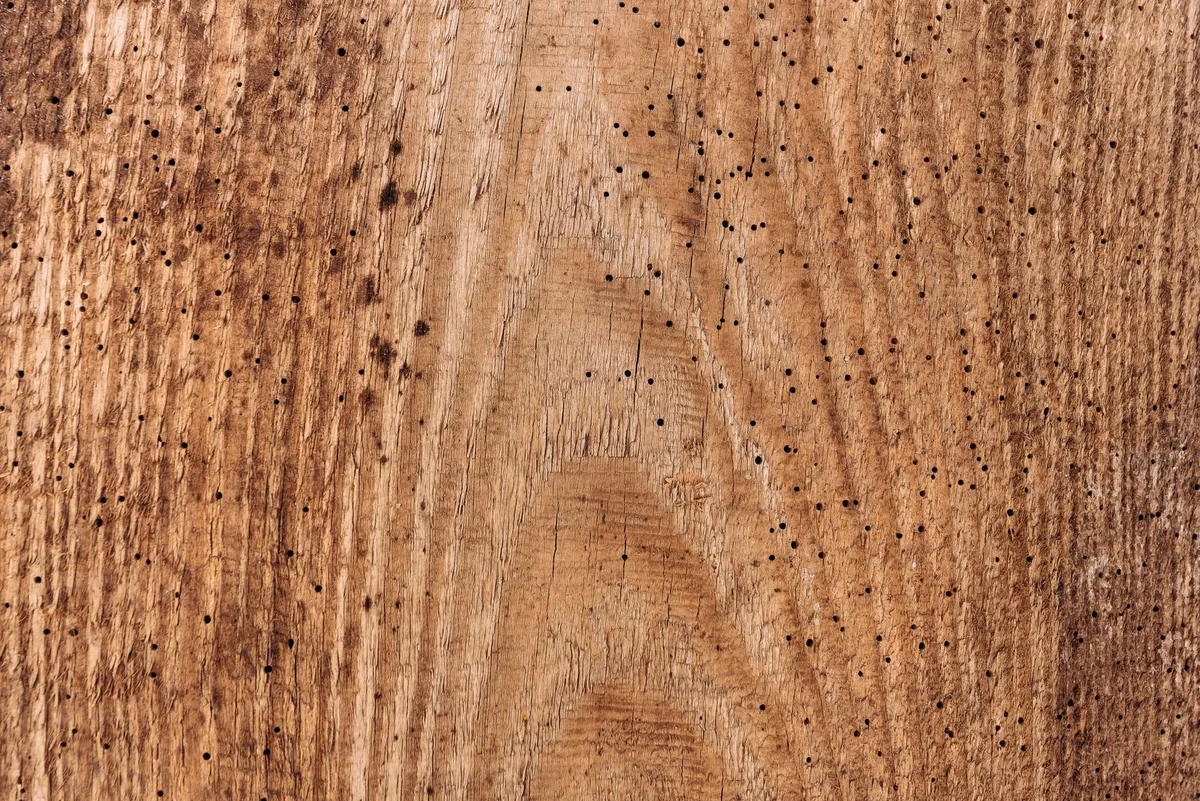
Exit holes are the most visible sign of tree borer damage. They show where the adult insect chewed its way out of the tree. The shape and size of the hole tell you which borer species you have.
D-Shaped Holes vs Round Holes
D-shaped holes are a signature of the emerald ash borer. They look like a tiny letter D punched into the bark. The flat side of the D is where the beetle’s head pushed through.
These holes are about 1/8 inch wide. If you see them on an ash tree, you have a confirmed infestation.
Round holes are much more common. Most wood-boring beetles and moths leave round exit holes. The size varies by species.
Some are as small as 1/16 inch. Others can be up to 1/2 inch wide. Round holes are left by clearwing moths, longhorned beetles, and other borers.
You can use a simple ruler or a coin to measure the holes. A dime is about 17.8mm across. A penny is 19mm.
Hold them next to the hole for scale.
| Hole Shape | Typical Size | Likely Culprit |
|---|---|---|
| D-shaped | 1/8 inch (3.2mm) | Emerald ash borer |
| Round, small | 1/16 to 1/8 inch | Ambrosia beetle |
| Round, medium | 1/4 to 3/8 inch | Clearwing moth or bronze birch borer |
| Round, large | 1/2 inch or more | Flatheaded appletree borer or pine sawyer beetle |
Fresh Holes vs Old Holes
A fresh exit hole has clean edges. The bark around it looks undisturbed. You might see a small pile of sawdust directly below it.
The wood inside the hole is light colored.
An old hole has weathered edges. The bark may have started to grow over it. The hole might be filled with dirt or lichen.
Old holes do not always mean an active infestation. They could be from last year or earlier.
The presence of multiple fresh holes on the same tree means borers are emerging right now. This is the time to act. If you only find old holes and the tree looks healthy otherwise, you might have escaped the worst.
The Canopy: Dieback, Suckers, and Thinning Foliage
The canopy tells you how the tree is handling the infestation from the inside out. Borers damage the cambium layer that moves water and nutrients. When enough cambium is destroyed, the branches above that point start to die.
Canopy dieback usually starts at the top of the tree. The leaves at the highest branches turn yellow, then brown, and fall off. Over time, the dieback moves down the tree.
This is a progressive sign. It gets worse each year.
Thinning foliage is easier to miss. The tree just looks less full than it did last year. The leaves are smaller.
They might be sparse in certain sections. This is often the first sign homeowners notice before they spot the holes.
Epicormic shoots, also called suckers, are another clue. When a tree is under stress, it sends out new growth from dormant buds on the trunk. These shoots look like little bushes growing straight out of the bark.
Borers cause this stress response in many tree species.
Suckers are not always a sign of borers. Drought, root damage, and disease can cause them too. But when you pair suckers with exit holes or frass, the picture gets clear.
Check the canopy from all sides. Walk around the tree and look up. Use binoculars if you have them.
Dieback is often worse on the side of the tree where the borers first entered.
Trees that are properly fed and watered can tolerate a low-level borer attack longer. Good nutrition helps the tree fight back. Our guide on fertilizing fruit trees offers tips that apply to all trees.
Keeping your plants in good shape is your best long-term defense.
Key Visual Identifier Table: Borer Species at a Glance
A quick reference table helps you match what you see to the most likely culprit. Keep this handy when you are inspecting your trees.
| Visual Sign | Most Likely Borer | Host Trees | Notes |
|---|---|---|---|
| D-shaped exit hole, about 1/8 inch | Emerald ash borer | Ash (all species) | Also fine powdery frass, S-shaped galleries under bark |
| Round exit hole, 1/4 to 3/8 inch | Bronze birch borer | Birch, especially white-barked varieties | Meandering galleries, canopy dieback from top down |
| Round exit hole, up to 1/2 inch | Flatheaded appletree borer | Apple, pear, maple, oak, poplar | Frass packed in galleries, sunken bark patches |
| Round exit hole, small (1/16 inch) | Ambrosia beetle | Many hardwoods | White flour-like frass, small holes in neat rows |
| No hole, but gummosis (sap ooze) | Peach tree borer | Peach, cherry, plum, nectarine | Gummy sap mixed with frass at trunk base |
| Large round holes, coarse frass | Pine sawyer beetle | Pine, spruce, fir | Can vector pine wilt nematode |
Each borer has a preferred host. If you have an ash tree with D-shaped holes, the ID is nearly certain. If you have a birch with round holes and thinning top branches, bronze birch borer is the prime suspect.
The table is a starting point. Always confirm with local extension resources. A photo of the hole, frass, and gallery pattern sent to your county office is the gold standard for species identification.
Common Visual Lookalikes (and How to Rule Them Out)
Not every hole in a tree means borers. Other problems mimic borer damage. Mistaking one for the other leads to wasted time or worse, the wrong treatment.
Borer Damage vs Canker Disease
Cankers are sunken, dead areas on the bark caused by fungi. They look like a lesion. The bark around a canker may crack, but you will not find exit holes or frass.
Cankers often ooze sap too, but the sap is clear or amber, not mixed with sawdust.
To tell them apart, gently scrape the dead bark. A canker will reveal discolored wood underneath. A borer gallery will show a tunnel packed with frass.
If you find no tunnel, it is likely a canker.
Borer Holes vs Woodpecker Foraging
Woodpeckers drill holes to find insects under the bark. Their holes are irregular in size and pattern. They often cluster in a patch.
Woodpecker holes have rough, torn edges. Borer exit holes are neat and uniformly shaped.
Check for frass. Woodpeckers do not leave sawdust piles. If you see a bunch of holes but no frass at the base, birds are the likelier culprit.
Borer Symptoms vs Drought Stress
Drought also causes leaf drop and canopy dieback. But drought affects the whole tree evenly. Borer damage is often patchy, with one side of the tree worse than the other.
Drought does not produce exit holes, frass, or galleries.
If you suspect drought, check the soil moisture. If the soil is dry and the tree shows no holes, water deeply and wait. Healthy trees often recover.
If you find holes, borers are the cause.
For trees already stressed by poor drainage or pests, proper care matters. Our guide on choosing the right fertilizer for fruit trees explains how nutrition helps trees resist borers.
When to Call an Arborist vs Keep Watching
You do not need a professional for every suspicious hole. Some situations are safe to monitor. Others demand immediate expert help.
Call an arborist if:
- You find five or more fresh exit holes on the main trunk
- The canopy shows more than 30 percent dieback
- The tree is a high-value specimen (mature oak, historic tree)
- You are unsure of the borer species and the tree is at risk
- The tree is located near other susceptible trees (ash near ash)
You can keep watching if:
- You find one or two old holes and the tree looks healthy
- The frass is dry and crumbly, not fresh
- The canopy is full with no yellowing or thinning
- The tree is a non-target species (not a known host for common borers)
An arborist can perform a resistance test. They use a tool to check for hollow wood. They also have access to stronger treatments.
If the tree is close to your house or a neighbor’s property, it is worth paying for a professional opinion.
Some municipalities offer free tree inspections for pest outbreaks. Check with your local urban forestry office. They may also have information about quarantine zones for certain borers.
Step-by-Step Documentation Process (Photos for Extension Lab)
If you want a definitive ID, you need to document the damage clearly. County extension offices rely on good photos. Here is how to take them for best results.
What you need:
- A smartphone or camera with macro mode
- A ruler or coin for scale
- A flashlight
- A plastic bag for sample collection (if needed)
Step 1: Shoot the whole tree from about 20 feet away. Capture the canopy shape and any dieback. This gives context for the damage location.
Step 2: Shoot the trunk from a few feet away. Show the area with holes. Include the base of the tree to show frass piles.
Step 3: Shoot close-ups of the holes. Hold the ruler next to the hole. Ensure the hole is in focus. Take multiple angles.
The shape is critical.
Step 4: Peel back loose bark and photograph the galleries underneath. Use the flashlight to light up the tunnels. Show the frass inside the gallery.
Step 5: Collect a sample. Put a piece of bark with an exit hole or a small larva (if you find one) into a sealed plastic bag. Label it with the tree species and date.
Step 6: Email the photos and sample info to your county extension office. They can often give you an answer within 48 hours.
Good documentation makes the difference between a maybe answer and a certain identification.
What to Do After You Confirm Borers
Once you know borers are active, you need a plan. The right action depends on the severity, the tree’s health, and the borer species.
Treatment Options by Severity
Mild infestation (a few holes, no dieback):
- Prune out affected branches. Make clean cuts at least 6 inches below the damaged area.
- Dispose of pruned wood properly. Do not store it near healthy trees.
- Apply a systemic insecticide if the borer is known to respond (emerald ash borer responds well to trunk injections).
Moderate infestation (multiple holes, some canopy thinning):
- Systemic trunk injection is the most effective option for trees you want to save.
- Foliar sprays are less effective because borers are inside the wood.
- Maintain tree health with proper watering and fertilization.
Severe infestation (more than 50 percent dieback, widespread holes):
- Removal is often the only safe choice. A heavily infested tree can become brittle and fall.
- Remove the tree stump and roots to prevent spread to nearby trees.
- Replace with a resistant species or a non-host tree.
Tree Removal vs Save Decision Guide
| Situation | Decision | Reasoning |
|---|---|---|
| Less than 30% canopy dieback, healthy overall | Save | Likely respond to treatment |
| 30 to 50% dieback, tree is young and vigorous | Save (with treatment) | Has enough reserves to recover |
| Over 50% dieback, or tree already declining | Remove | Poor survival odds, risk of falling |
| Tree is near structures or high traffic | Remove | Safety hazard if it dies and falls |
| Valuable specimen tree | Consult arborist | Worth trying aggressive treatment |
Act quickly. Borers do not rest. The longer you wait, the more the tree weakens.
Proper identification and a sound treatment plan give your tree the best chance.
Pro Tips from Arborists That Most Guides Miss
Inspect at dawn. Adult borers emerge in early morning, and you might spot one near the exit hole. Use a flashlight held flat against the bark to see small holes that sunlight hides.
Arborists also tap suspect bark with a rubber mallet. A hollow sound means galleries have destroyed the wood underneath.
Photo Checklist for Your County Extension Office
Include a ruler or coin in every close-up shot. Shoot in natural daylight, not direct flash. Submit at minimum three images: the whole tree, the affected trunk area, and a macro of the hole.
Label each photo with the tree species and your location. This helps the extension agent identify the borer faster.
The Costs of Waiting vs Acting Early
Early treatment for a mild infestation runs $200 to $500 per tree. Waiting until the canopy is half dead means removal costs $800 to $2,000 plus stump grinding. A mature shade tree takes 20 years to replace.
The math is clear. Act when you see the first signs.
Real Scenarios: What Three Different Borer Infestations Looked Like
Scenario 1: A 15-year-old ash tree with three D-shaped holes and full canopy. Treated with systemic injection. Survived.
Scenario 2: A birch with 40 percent dieback and peeling bark. Removed. Galleries circled the entire trunk.
Scenario 3: A peach tree with gummosis at the base. One larva found under the bark. Pruned and treated.
Recovered.
Frequently Asked Questions
What happens if I ignore borer holes?
The infestation spreads inside the trunk. The tree weakens over one to three years and may fall.
Can a tree survive borer damage?
Yes, if less than 30 percent of the canopy is affected and treatment starts quickly.
Do systemic insecticides work for all borers?
No. They work well for emerald ash borer and some beetles but less for clearwing moths. Check with your extension office.
How do I prevent borers from returning?
Keep the tree healthy with deep watering, proper mulch, and annual fertilization. Stressed trees attract borers.