Why Is My Grass Turning Yellow for 2026: Step-by-Step Guide
You step outside, coffee in hand, and there it is. Your lawn looks more like a wheat field than the green carpet you had in mind. If you've been asking "Why is my grass turning yellow?" you're not alone.
It's one of the most common lawn care questions we hear.
The answer usually comes down to a handful of causes, and most are easy to fix once you know what you're dealing with. According to standard turf management guidelines, grass needs about 1 to 1.5 inches of water per week to stay healthy. Anything outside that sweet spot can trigger yellowing.
Let's walk through the diagnosis step by step.
Quick Answer
Yellow grass usually means one of five things. Too much or too little water. A lack of nitrogen or iron.
Pet urine or fertilizer burn. Grubs hidden under the sod. Fungal disease.
Check your watering first. Then look at the yellowing pattern. That points you to the right fix.
The First Thing to Check: Your Watering Habits
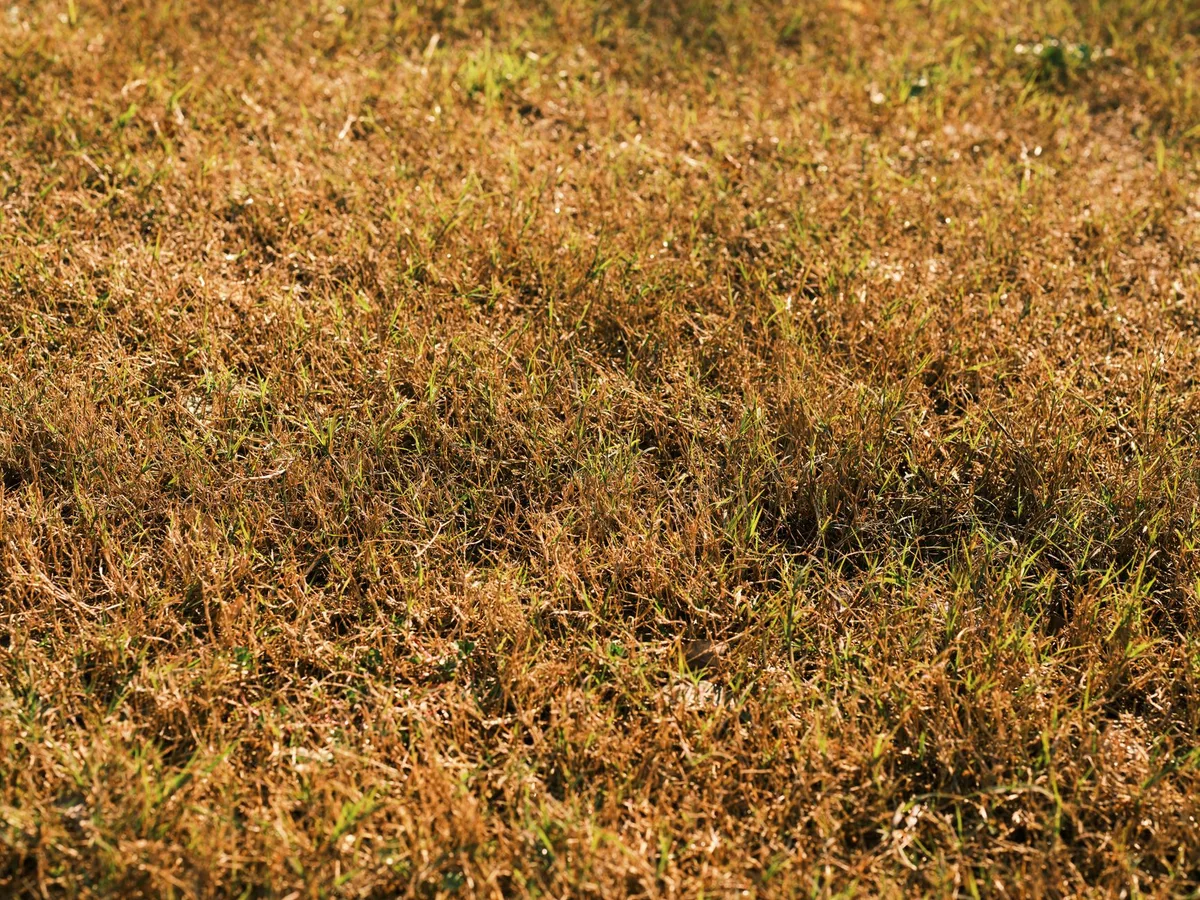
If the yellowing covers the whole lawn evenly, water is the most likely suspect. Grab a handful of soil from a few inches down. Does it feel soggy and smell musty?
That's overwatering. Grass roots need oxygen. When the soil stays waterlogged, roots suffocate and start to rot.
The grass turns yellow, then brown.
Is the soil bone dry and crumbly? You're underwatering. Grass goes into survival mode during a drought.
It stops producing chlorophyll and fades to a pale yellow. This is called dormancy, and it's the plant's way of saving energy.
The fix is simple. Water deeply, not frequently. Aim for one good soaking per week that wets the soil 6 to 8 inches down.
Use a tuna can or rain gauge to measure. When it hits 1 inch, you're done for the week.
If your watering schedule seems fine, move on to the next test.
The "Uniform Yellow" vs "Patchy Yellow" Test
This is the single most helpful visual clue you'll get. Walk your lawn and look at the pattern.
Uniform yellow across the whole lawn points to one of two things. Either a water issue (which you already checked) or a nutrient deficiency. If the grass looks pale and washed out everywhere, it's probably hungry for nitrogen.
Patchy yellow means something is affecting specific spots. Look closer at those patches. Are they circular?
That could be fungus. Are they random with a brown center and a dark green ring around the edge? That's classic dog urine damage.
Do the patches get bigger each week? Grubs might be eating the roots below.
Take a photo of the pattern with your phone. It helps to compare it to reference images from your local extension office. Patterns are your best shortcut to the right diagnosis.
How to Tell if It's a Nitrogen Deficiency
Nitrogen is the fuel that makes grass green. It's the first number on any fertilizer bag (N-P-K). When the lawn is low on nitrogen, old leaves turn yellow first.
The yellowing starts from the leaf tip and works its way down. The whole lawn takes on a pale, stunted look.
You can confirm it with a soil test kit from any garden center. But honestly, the visual clue is usually enough. If the grass is uniformly yellow and you haven't fertilized in a while, nitrogen is the culprit.
The fix here is a balanced fertilizer. Use a slow release formula to avoid burning the grass. In our research, a ratio of about 1 pound of nitrogen per 1,000 square feet per month during the growing season keeps most lawns happy.
Apply it when the grass is dry and water it in right after.
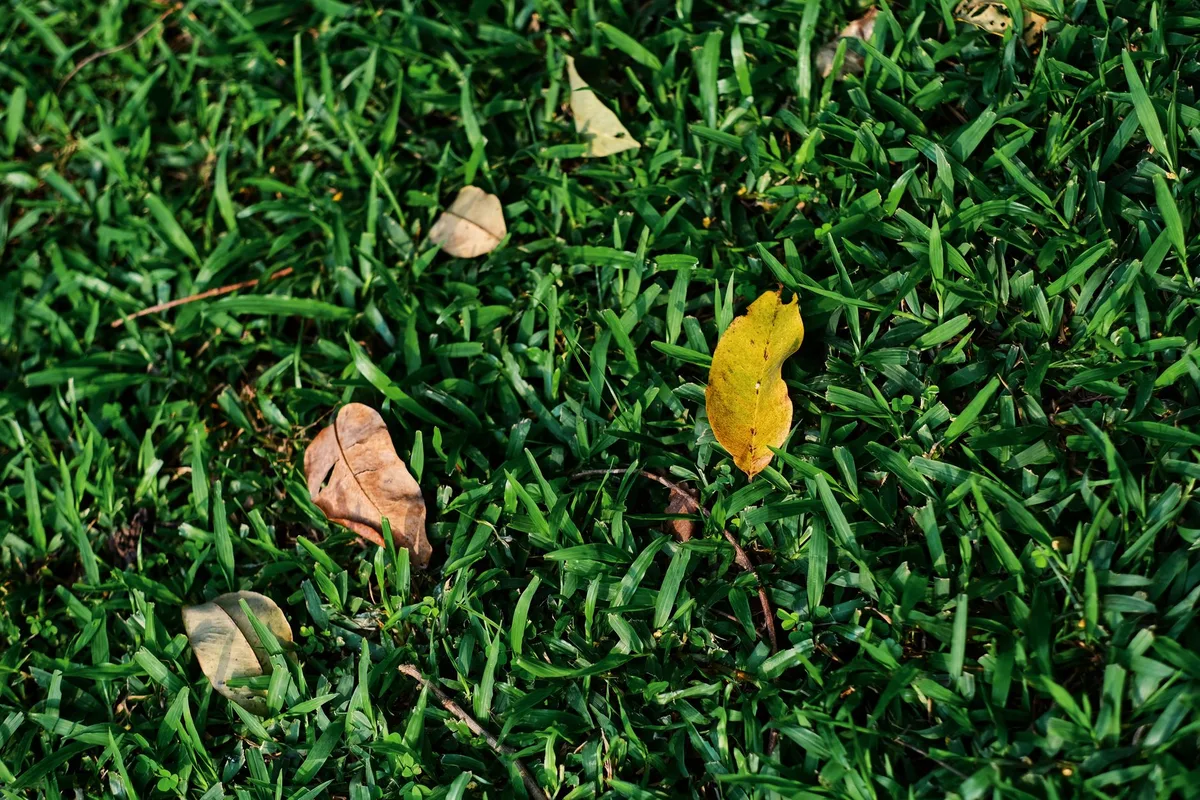
One note: if you just fertilized and the yellowing got worse, that's nitrogen burn from too much. Flush the area with water to dilute it. We cover proper rates and timing in our best slow release fertilizer guide for a deeper look.
When Yellow Leaves Have Green Veins (Iron Chlorosis)
This one looks different from nitrogen deficiency. With iron chlorosis, the leaf turns yellow but the veins stay a bright, distinct green. You'll see a fine web of green lines against a pale yellow background.
It's most common in new growth and in lawns with alkaline soil.
Iron chlorosis happens because the grass can't take up iron from the soil. The iron is there, but the pH is too high (above 7.0) and it's locked up in a form the roots can't absorb. This is surprisingly common in areas with limestone-based soil or if you've used too much lime in the past.
The quick fix is a foliar iron spray. Iron chelate or iron sulfate applied to the leaves bypasses the soil problem entirely. The grass will green up in 2 to 3 days.
For a long term solution, test your soil pH. If it's above 7.0, you'll need to lower it with sulfur or peat moss.
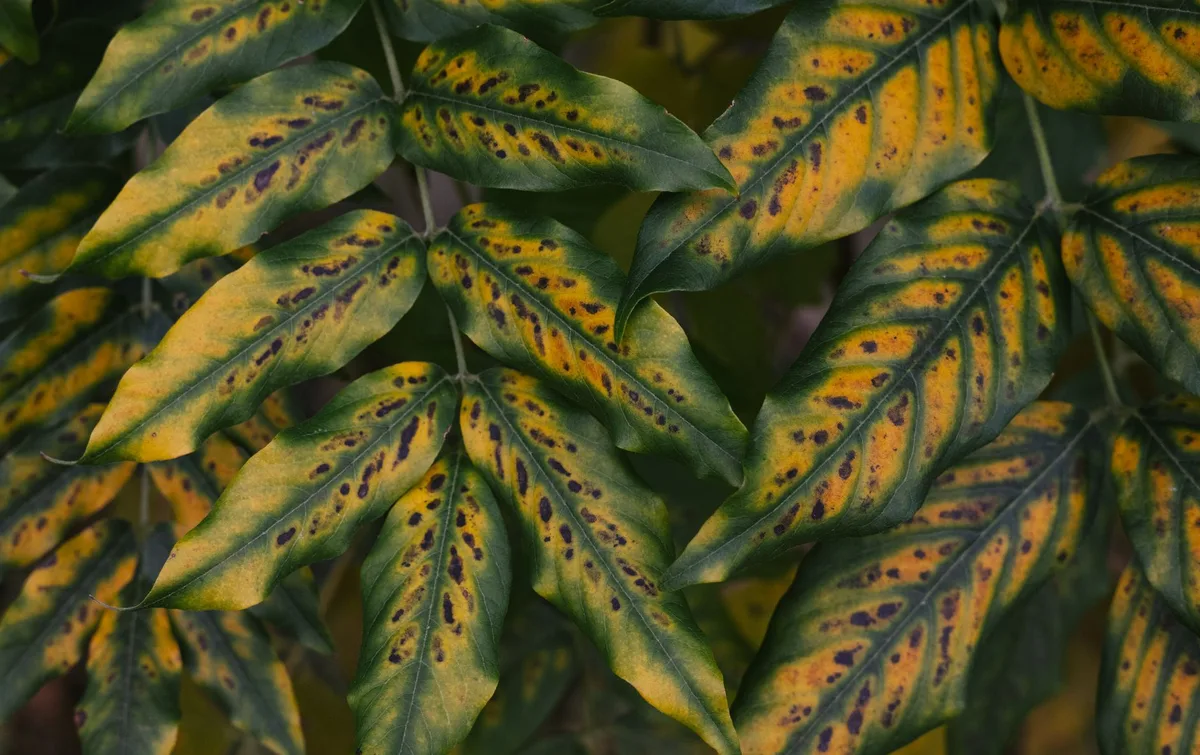
Don't confuse this with nitrogen deficiency. Applying more nitrogen won't fix iron chlorosis. It can actually make it worse by pushing more growth that can't access iron.
If you see those green veins, reach for the iron supplement, not the fertilizer bag.
Is It Dog Urine or Fertilizer Burn?
These two look almost identical, so location is your clue. Dog urine damage shows up in irregular spots where your dog regularly goes. Fertilizer burn follows the path of your spreader.
It looks like stripes or overlapping patches where you applied too much.
Dog urine contains nitrogen and salts. In small amounts it can actually green up the grass. But a concentrated spot gets burned.
The center turns brown or yellow, and the outer edge gets a dark green halo from the diluted nutrients spreading out.
The fastest remedy is water. As soon as you see your dog go, pour a gallon of water over the spot. That dilutes the urine and spreads it out.
If the damage is already done, the grass will recover in a few weeks on its own. Reseed bare patches in the fall.
Fertilizer burn happens when you apply too much granular fertilizer or spill it in a line. The salts pull moisture out of the grass blades. The affected areas turn yellow or brown within a day or two.
If you catch it early, water heavily to flush the excess fertilizer through the soil. If the grass is already dead, you'll need to reseed.
To avoid this in the future, use a drop spreader correctly. Overlap passes by half the spreader width for even coverage. And never apply fertilizer on a hot, dry day.
Water it in immediately after applying.