How to Get Rid of Flies in the House 2026: Pro Tips & Tricks
You walk into your kitchen and see a few flies. You grab a paper towel, swat them, and go back to your evening. Next morning, there are more.
It’s frustrating, but it’s not random. Understanding how to get rid of flies in the house starts with knowing exactly what kind you’re dealing with and where they came from. Spraying randomly or hanging sticky strips is a guess, not a plan.
A single fruit fly can lay up to 500 eggs in a week. That’s not a typo. Those eggs hatch into larvae within 24 hours, and the whole cycle repeats every 8 to 10 days.
That means a small problem ignored for two days is a full infestation by the weekend. Let’s fix it.
Quick Answer
Identify the fly type first. Fruit flies come from overripe produce and drains. Houseflies enter from outside through gaps.
Drain flies breed in slimy biofilm. Remove the breeding source. Set a specific trap.
Seal entry points. Repeat cleaning for two weeks.
The Real Reason You Still Have Flies Tomorrow Morning
Most people treat the symptom, not the cause. You see flies, you kill them. But adult flies are just the visible part of the problem.
The real issue is where they laid eggs before you ever saw the first one.
Flies are programmed to find rotting organic matter. That forgotten banana in the corner of the counter? Perfect nursery.
The garbage can lid that didn’t fully seal? Prime real estate. The slow-moving kitchen drain?
A five-star hotel for drain flies.
Until you remove that breeding source, new flies will keep emerging. You can kill a hundred adults today, but the larvae in that drain will hatch tomorrow. This is why a one-time spray never works long term.
You have to interrupt the full lifecycle, and that takes a systematic approach.
In our research, the most common mistake is buying a UV zapper or sticky trap and calling it a day. Those tools catch adult flies, but they don’t stop reproduction. You need to work backward: find the source, remove it, then set traps for the stragglers.
That’s the only order that works.
Let’s start with the first step: identifying which fly is plaguing your home, because the fix for fruit flies is completely different from the fix for drain flies or houseflies.
Quick ID Guide: Which Fly Is Taking Over Your Kitchen?
If you don’t know what you’re dealing with, you’ll waste money and time on the wrong treatment. The good news is that the three most common indoor flies are easy to tell apart once you know what to look for.
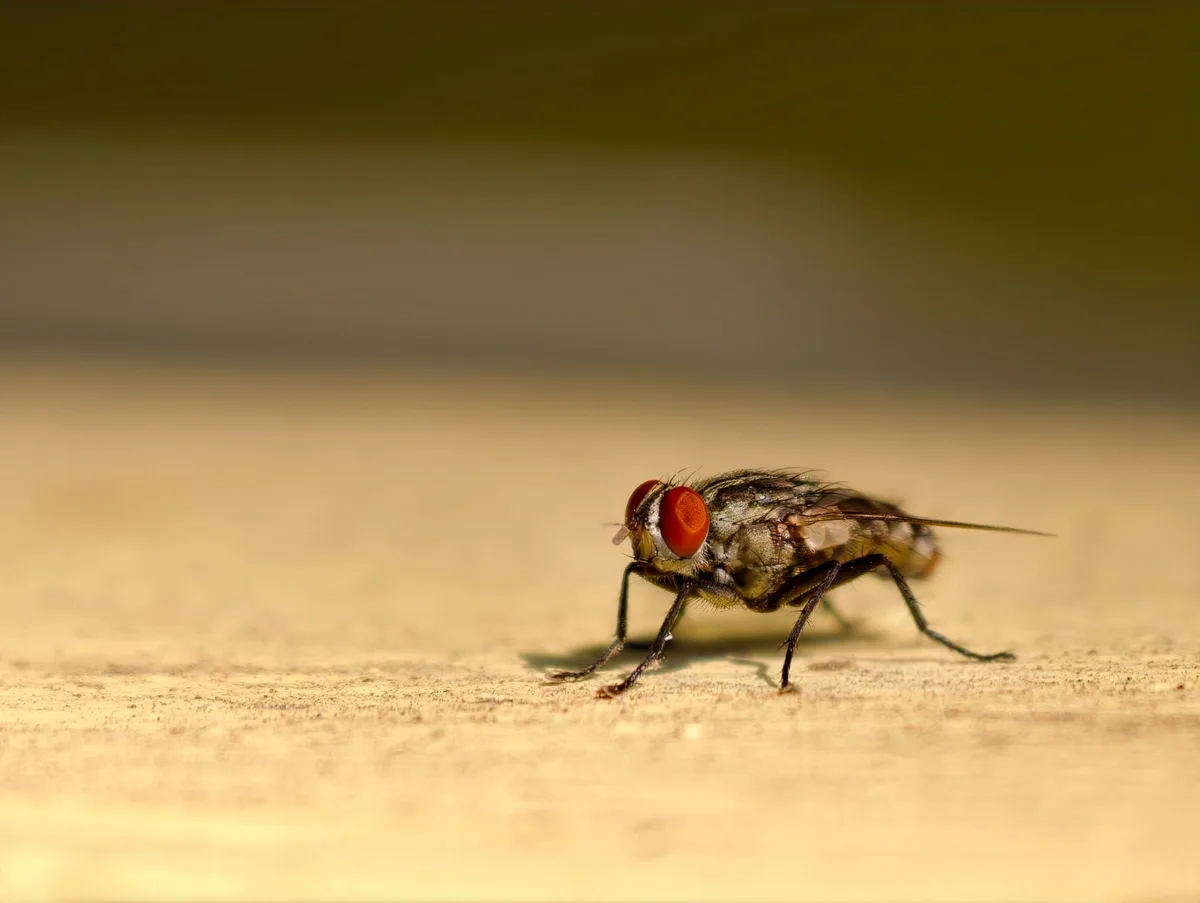
Fruit Flies
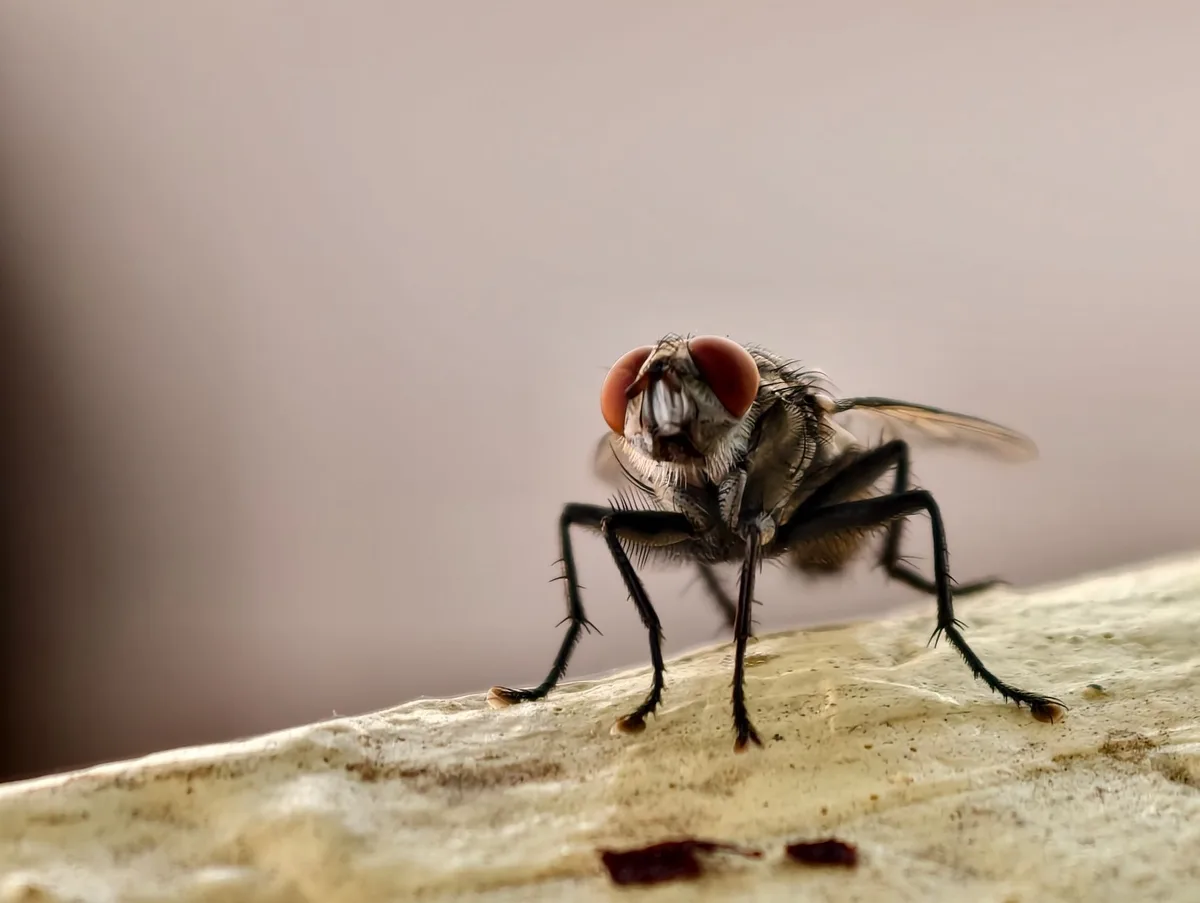
Tiny, about 3mm long. Tan or brownish body, red eyes. They hover around fruit bowls, compost bins, recycling bins, and sink drains.
They fly in a slow, looping pattern. If a fly is small and hangs around your bananas, it’s a fruit fly.
Drain Flies
Also small (2, 5mm), but they look fuzzy or moth-like. Their wings are covered in tiny hairs, giving them a velvety appearance. They tend to sit on walls near sinks, showers, or floor drains.
They don’t fly in loops; they hop or flutter weakly. If you see little fuzzy bugs near the sink, it’s a drain fly.
Houseflies
The classic housefly is 6, 7mm, gray with four dark stripes on its thorax. They buzz loudly and fly fast. They are drawn to garbage, pet waste, and food spills.
If a fly is big, quick, and lands on the ceiling, it’s a housefly.
Here’s a quick comparison:
| Fly Type | Size | Appearance | Common Hiding Spots |
|---|---|---|---|
| Fruit fly | 2–3 mm | Tan body, red eyes | Fruit, drains, compost |
| Drain fly | 2–5 mm | Velvety, moth-like | Sink drains, shower drains |
| Housefly | 6–7 mm | Gray, four stripes | Garbage, pet areas, windows |
Once you know the type, you can move to the targeted workflow. Let’s start with the most common annoyance: fruit flies.
Step 1: Find and Remove the Breeding Source
Fruit flies lay eggs on the surface of fermenting fruit. That means any piece of fruit that is even slightly overripe is a potential breeding ground. Start by checking:
- Bananas, tomatoes, apples, or citrus that have sat for more than a few days
- The compost bin or food scrap container under the sink
- The recycling bin with empty wine bottles or soda cans
- Garbage disposal or drain trap
Toss everything suspect. Wash the fruit bowl with soap and water. Empty the compost bin completely and rinse it.
If you have a compost pile outside, move it at least 20 feet from the house. Then take a flashlight and inspect the bottom of your trash can. Sticky residue attracts flies.
You need to be ruthless here. Even one forgotten potato with a soft spot can produce hundreds of flies over a week. If you’re not sure whether something is good or bad, toss it.
Better to lose $2 of fruit than fight flies for two weeks.
Step 2: Build the Right DIY Trap (Yes, Type Matters)
After you remove the source, you need to catch the adult flies that are already loose. No need to buy anything fancy. A simple vinegar trap works better than most store-bought products.
Here’s what to do.
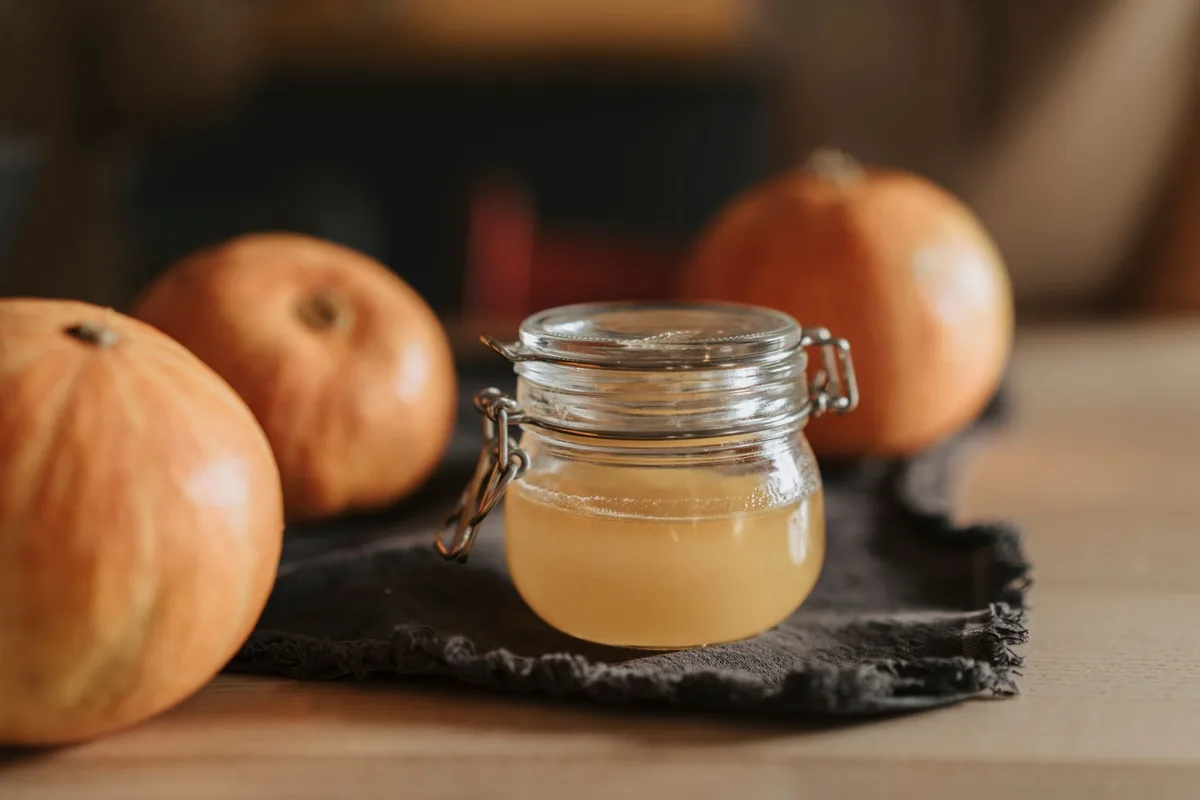
Take a small bowl or glass jar. Pour in about an inch of apple cider vinegar. Add a drop of dish soap.
That’s it. The vinegar lures fruit flies in. The soap breaks the surface tension so they sink and drown.
Cover the top with plastic wrap, poke several small holes with a toothpick, and place it near the area where you saw the most flies.
For best results, place one trap in the kitchen and another near any recycling bin. Replace the vinegar every two to three days. You will see results within 24 hours.
If you catch 20 or more in a day, the breeding source may still be active. Double check again.
Step 3: Repeat for 7 Days (The Lifecycle Rule)
Here’s the part most people skip. Adult fruit flies live about two weeks. Eggs hatch in 24 hours.
Larvae turn into adults in about 8 days. So even after you clean everything, new adults will emerge from eggs you didn’t see for up to a week.
You must keep traps active and keep surfaces clean for at least 7 consecutive days. If you stop after three days because you’re not seeing flies, you’ll get hit again on day 8. Set a calendar reminder.
After day 7, if you catch no flies for two straight days, you can remove the traps.
Drain Flies: The Hidden Biofilm Problem
Now let’s switch to drain flies. These are often mistaken for fruit flies, but they are a different animal. Drain flies breed in the slimy organic buildup inside pipes.
The key difference? A fruit fly trap won’t catch them. Vinegar doesn’t lure them.
You have to treat the drain itself.
How to Test Your Drain (The Tape Trick)
Before you treat, confirm you have drain flies. Take a piece of clear tape and place it sticky side down over the drain overnight. If you see tiny fuzzy flies stuck to the tape in the morning, you have drain flies.
They emerge from the pipe at night.
This test is important because if you treat the wrong drain, you waste time. Check every sink, shower, and floor drain in the house. Sometimes the culprit is a seldom-used basement floor drain.
How to Break the Drain Cycle
You need to physically remove the biofilm. Bleach kills surface bacteria but doesn’t remove the slime. You need a drain cleaner with enzymes that digest organic buildup.
Look for products with bacterial cultures or enzymatic cleaners. You can also use a stiff drain brush.
Instructions:
- Pour 1/2 cup of baking soda down the drain.
- Follow with 1/2 cup of white vinegar.
- Let it fizz for 15 minutes.
- Flush with boiling water.
- Repeat three nights in a row.
This mechanical and chemical combination breaks down the biofilm where drain fly larvae live. After the third treatment, use the tape test again. If you still see flies, you may need a professional drain cleaning to clear deeper buildup.
Houseflies: The Perimeter and Sanitation Workflow
Houseflies are a different beast. They breed in decaying organic matter outside: compost piles, animal waste, garbage cans, dead rodents, even grass clippings. They enter your home through gaps around doors, windows, or vents.
Indoor breeding is less common, but they will lay eggs in pet food bowls or trash.
Find the Entry Points
Walk around the outside of your home during the day. Look for:
- Gaps under exterior doors, if you can slide a business card under, a housefly can enter.
- Torn window screens, even a tiny rip is enough.
- Cracks in window frames or around AC units.
- Loose weatherstripping on garage doors.
Sealing these entry points is the most effective long-term solution. For doors, install a door sweep. For windows, repair or replace screens.
For gaps, use silicone caulk or expandable foam. You can buy a door sweep for under $15 and install it in ten minutes.
Outdoor Control First, Indoor Treatment Second
If houseflies are relentless, you need to reduce their population outside. Keep your trash cans clean and sealed. Don’t leave pet waste in the yard for more than a day.
If you have a compost pile, cover it with a layer of soil or straw. Move it away from the house if possible.
For indoor control, sticky fly paper works well for houseflies. Hang a few strips near windows and in corners where they gather. Avoid using UV zappers indoors; our research shows they attract more flies from outside and only kill a small percentage.
If you need quick action, a hand-held electric swatter or a pyrethrin-based aerosol spray can knock down visible flies.
The One Trap That Works for All Three (And the One That Doesn’t)
Now, let’s be honest. No single trap catches every type of fly perfectly. But there is one that comes closest: the sticky fly strip.
It’s cheap, non-toxic, and works passively. However, it only catches adults that happen to fly into it. It won’t remove breeding sources.
The trap that does not work for any fly type is the ultrasonic repellent. Aggregate buyer feedback consistently reports zero noticeable reduction in fly activity. Sound frequencies do not repel flies in a way that affects their behavior.
Save your money.
For a balanced approach: use vinegar traps for fruit flies, enzymatic drain treatments for drain flies, sticky strips and source removal for houseflies. Combine them with sealing entry points and you’ll be fly-free in about two weeks.
If you want a deeper comparison of specific trap brands and models, check our guide on best fly traps for inside. It covers sticky traps, bait stations, and zappers with real user feedback.
Next, we’ll cover how to seal your home without spending a fortune, and then the cleaning routine that keeps flies away long-term. But right now, identify your fly, remove the source, and start those traps. You’ll see a difference by tomorrow.